- Introduction
- Adivasi Defined
- Major Reasons of Adivasi Struggles
- Major Adivasi Struggles
Introduction
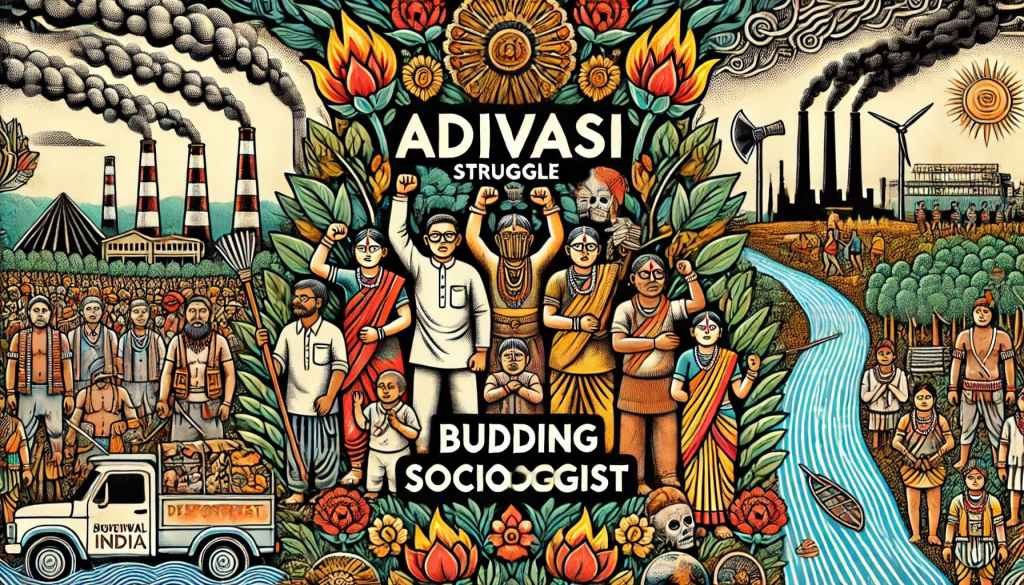
India is renowned for its Adivasi communities, denoting groups considered the original inhabitants of the land, deeply rooted in their native habitat. These tribes are characterized by shared language, distinct culture and a defined geographical territory, alongside common ancestry. They maintain cohesion through social structures based on familial ties, cultural traditions, shared belief systems, and a collective heritage passed down through generations. The habitat and cultural fabric of Adivasi groups not only foster a profound sense of freedom, self-identity, and dignity but also empower them to unite against various forms of exploitation and oppression by external forces throughout history, whether it be landlords, rulers, colonial powers like the British, or others. Consequently, the narrative of tribal India is replete with accounts of resistance and uprisings against those who sought to exploit them.
Before India gained independence, the Adivasi communities primarily directed their struggles against foreign rulers. Vaishnavist movements wielded considerable influence among various tribal groups, such as the Meithei tribe in Manipur, Bhumij in West Bengal, Nokte Naga in Assam, Bathudi in Orissa, and tribal populations in regions like Jharkhand, Bihar, Orissa, and South India. These movements also resonated with the Gonds in central India, Kondh in Orissa, and Bhils in Rajasthan. In the early stages of colonization, few communities or rulers from Indian dynasties exhibited resistance to British rule as heroic as that of numerous Adivasi and tribal communities in present-day Jharkhand, Chhattisgarh, Orissa, and Bengal.
The depletion of two vital resources for these tribal communities—land and forests—served as the focal point of many tribal movements. The erosion of tribal land rights began with the advent of British rule and administration. This erosion stemmed from various factors during the British colonial period, notably the introduction of private property rights in land and the infiltration of market forces. Many resources and products abundant in the forests traditionally belonged to the Adivasis. As the British aimed to exploit these resources, a struggle ensued between them and the Adivasis. The methods employed by the British to achieve their objectives included fraud, deceit, coercion, and the widespread practice of debt bondage.
Despite the enactment of several protective and restorative laws intended to prevent land displacement since independence, these measures have seen limited success. The primary cause of land displacement during this era is not merely individual encroachments by non-tribal individuals onto tribal territories but rather the development initiatives undertaken by the Indian government. Industrialization on a large scale, the extraction of mineral resources, the building of irrigation dams, and power projects in tribal regions have collectively led to the displacement of more people from their ancestral lands than individual transfers of land from tribal to non-tribal ownership. These issues have also significantly influenced the emergence and trajectory of Maoist movements in India.
Adivasi Defined
The Adivasi encompass diverse tribal communities throughout the Indian subcontinent. The term, originating from Sanskrit in the 1930s, was coined by political activists aiming to foster an indigenous identity among tribal populations by asserting their native origins. It also extends to ethnic minorities like the Chakmas in Bangladesh, Bhumiputara Khasas in Nepal, and Vedda in Sri Lanka.
In contrast to the colloquial use of “Adivasi,” the Indian Constitution opts for the terminology of “Scheduled Tribes” and “Janjati.” The official recognition by the government of India does not categorize tribes as indigenous peoples. Instead, these communities are grouped under the constitutional designation of “Scheduled Tribes,” identified in Article 366 (25) as entities targeted for social and economic development.
The nation officially endorsed the International Labour Organization’s Convention 107 concerning Indigenous and Tribal Peoples, adopted in 1957, while opting not to endorse the subsequent ILO Convention 169. The majority of these communities fall within the Scheduled Tribe classification as per India’s constitutional provisions.
“Adivasi” serves as the overarching term for the indigenous groups of the Indian subcontinent, purportedly predating both the Dravidians and Indo-Aryans. It denotes “various ethnic communities considered to be the original residents of the Indian subcontinent.” However, it’s important to note the distinction between “Tribal” and “Adivasi”:
- “Tribal” pertains to a societal unit.
- “Adivasi” signifies ancient inhabitants.
India does not officially acknowledge tribes as indigenous peoples. The term “Adivasi” in Hindi and Bengali translates to “Original Inhabitants,” derived from “ādi” meaning “beginning” or “origin,” and “vāsin” meaning “dweller” (from “vas,” meaning “to dwell”), essentially signifying “beginning inhabitant.” While other terms like “atavika,” “vanavāsi” (meaning “forest dwellers”), or “girijan” (referring to “mountain people”) are also used for Indian tribes, “adivāsi” specifically conveys the idea of being the original and native inhabitants of a particular region, serving as the self-identification of these tribal groups. Tribal communities and various political factions in India persist in using the term “Adivasi” as they perceive it as a unifying force for the tribal populace in the country.
Major Reasons of Adivasi Struggles
Following are the reasons behind Adivasi Struggles in India:
1. Imposition of Land Revenue Settlement: The introduction of land revenue settlements significantly impacted tribal communities. With the expansion of agricultural endeavours by non-tribal groups into tribal and forest regions, it undermined the customary system of communal land ownership among tribes. Consequently, this resulted in a rise in socio-economic disparities within their previously egalitarian framework.
2. Christian Missionaries: The presence of Christian missionaries added layers of complexity to the socio-economic and cultural interactions between tribal communities and the dominant society. Yet, amidst turmoil, their commitment to nonviolence and their efforts to dissuade rebellion against the government sometimes cast them as aligned with colonial interests, making them vulnerable to insurgent assaults.
3. Growing Demand for Goods: In the early 19th century, there was a noticeable surge in the demand for goods, primarily driven by the needs of the royal navy and later by railway construction. This led to an increased governmental regulation of forest lands. Key developments such as the establishment of the Forest Department in 1864 and the passing of the Government Forest Act of 1865 and the Indian Forest Act of 1878 collectively strengthened the government’s control over Indian forests. To manage these resources, measures were taken, including the prohibition of shifting agriculture in reserved forests from 1864 onward and the imposition of restrictions on timber harvesting and grazing rights.
4. Extension of Settled Agriculture: The spread of established farming practices into tribal territories attracted non-tribal settlers who took advantage of the native communities. This agricultural expansion caused the displacement of tribal people from their lands, forcing them into becoming agricultural workers.
5. Tax Imposition: Certain tribal revolts were incited by landlords’ efforts to enforce taxes on traditional timber and grazing practices, alongside police demands, revised excise laws, exploitation by traders and lenders from low-lying regions, and limitations on forest-based shifting cultivation.
6. Role of Outsiders: Revolts among non-frontier tribal groups often stemmed from grievances against external forces, including landlords, rulers, and the backing they received from British authorities, as well as interference in tribal life. These uprisings were identified by indigenous titles like Meli, Hool, and Ul-Gulan.
Major Adivasi Struggles
Numerous prominent Adivasi communities have fought tirelessly to assert their rights and preserve their cultural identities. Through their persistent efforts, they have achieved significant milestones in securing recognition and fulfilling their demands. Below are several notable instances of Adivasi movements in India:
1. The Chuar Revolt: The Chuars, a community settled in the northwestern area of Midnapur, primarily sustained themselves through farming and hunting, often working under the authority of local zamindars. Instead of receiving regular wages, they were allocated tax-exempt land. However, during the period of British colonization under the East India Company, when the local zamindars enforced oppressive tax requirements, the Chuars initiated a rebellion. This resistance endured for around thirty years, from 1768-69 to 1799.
2. The Kol Revolt: The Kol tribe, settled in Chotanagpur, held dear their autonomy. The uprising among the Kol people was triggered by the introduction of additional taxes enforced by the ruler of Porhat. By 1820, the King of Porhat had aligned with the British, committing to paying significant annual tributes. As part of this agreement, he extended his control over adjacent Kol lands to levy taxes, which directly impacted the Kol populace. Their resistance to this oppressive taxation led to clashes resulting in the regrettable loss of lives, including some officials.
3. The Santhal Revolt: The Santhals, predominantly agriculturalists, inhabited the dense forests of various regions, including Bankura, Midnapur, Birbhum, Manbhum, Chotanagpur, and Palamou. Originally migrating from Bhagalpur and Manbhum, they sought refuge from oppressive zamindars who had subjected their lands to control by the East India Company. Settling in the hills of Rajmahal, which they named Damin-i-Koh, they hoped for a peaceful existence. However, their oppressors pursued them, escalating their exploitation. Alongside the exploitation by zamindars and the British East India Company, local moneylenders compounded their woes with exorbitant loans. Despite their trust, the Santhals found themselves trapped in cycles of debt and high taxes, resulting in substantial losses. Eventually, under the leadership of siblings Sidhu and Kanhu, the Santhals united to resist these oppressive forces.
4. Koi Revolt: The Koi uprising stands out as a significant rebellion within the tribal communities of Bastar. Initially, the term “Kois” designated those engaged in tree cutting within the Jamindaris, but it evolved to symbolize the rebellion itself. Triggered by the oppressive British rule, this revolt emerged as a direct reaction to the authoritarian practices imposed upon the region. The indigenous people of Bastar vehemently opposed the British decision to delegate Sal tree cutting contracts to outsiders, who were known for exploiting the local tribes. Faced with such exploitation, the tribal communities united in resistance against the British administration.
5. Paralkot Rebellion: In 1825, the Paralkot rebellion emerged as a notable assertion against external domination by the indigenous Abujhmaria people, situated in what is now Chhattisgarh. Their discontent was chiefly directed at foreign dominions such as the Marathas and the British. The rebellion aimed to carve out a realm devoid of foreign influence. Under the Maratha Dynasty’s reign, the Abujhmaria community bore the brunt of exorbitant taxes, rendering them unable to meet their obligations. Confronted with this unjust imposition by foreign powers, they rose in rebellion to defy such oppressive measures. Significantly, their vision encompassed the establishment of an autonomous Bastar, liberated from external intervention.
6. Maria Rebellion: The Maria Tribe’s revolt unfolded over two decades, from 1842 to 1863, in Bastar. It was driven by a desire to protect their longstanding tradition of human sacrifice, which held immense cultural importance for the tribe. During the Anglo-Maratha Rule, indigenous customs faced pressure to assimilate, including the Maria’s sacred practices. British and Maratha forces often trespassed into tribal temples, viewed by the Marias as sacrilege. To preserve their unique identity and culture, the Marias rose against the encroaching powers. This rebellion stands as a significant moment in tribal history, symbolizing their fight to safeguard their heritage.
7. Tarapur Rebellion: During the rebellion in Bastar, the indigenous community expressed deep concerns over the erosion of their local customs and culture, along with the severe hindrance to their social, political, and economic pursuits. Responding to these grievances, they rose against the rule of the Anglo-Marathas to safeguard their cultural heritage and counter the imposition of hefty taxes. The local Diwan, tasked with collecting taxes from the populace, came to symbolize oppression in the eyes of the tribal inhabitants. As tribal resentment mounted, it eventually erupted into the Tarapur rebellion, which served as a declaration of tribal identity and a rejection of interference in their traditional way of life. The imposition of coercive taxation was a novel and unwelcome experience for the tribals, prompting fervent opposition. Notably, the decision to increase the annual tribute to the Nagpur rulers in Tarapur faced strong resistance, particularly from Dalganijan Singh, who, under pressure from the Nagpur rulers, opted to depart from Tarapur.
8. Bodo Movement: The central aim of the Bodo movement was to attain a distinct state for themselves. Originating during the colonial period, attempts were made to integrate the Bodos into the broader Assamese nationalist agenda. It was under British colonial rule that the Bodos initially articulated their desire for a separate homeland, aligning with the hill tribes of the northeastern region. The establishment of the All-Assam Plains Tribal League (AAPTL) in 1933 underscored their ambitions. Following this, the emergence of various groups reflected the Bodo community’s quest for political self-rule and autonomy. The movement entered a new phase under the leadership of Upendranath Brahma on March 2, 1987. However, government crackdowns hindered its progress, culminating in the formation of the Bodoland Autonomous Council (BAC) through the bilateral Bodo Accord in 1993.
9. Nagas Rebellion: The Nagas, comprising over 30 tribes, were historically notorious as headhunters, practicing the collection and preservation of enemy heads as trophies. However, the advent of Christianity and education has sparked a significant cultural and traditional shift among them. This transformation has given rise to the Naga national movement, fueled by factors such as ethnicity, geography, and history, alongside the resilient spirit of the Nagas, who are of Mongoloid descent and fall within the Tibeto-Burman ethnic group. Their customs and way of life are markedly different from those of the plains dwellers. To preserve their indigenous culture, the Nagas have advocated for the establishment of an independent homeland.
10. Munda Rebellion: The uprising of 1899, spearheaded by Birsa Munda in the southern reaches of Ranchi, was ignited by the grievance of land dispossession. Dubbed the “Great Tumult,” it aspired to establish Munda Raj and secure autonomy. Traditionally, the Mundas had enjoyed a privileged rent arrangement called khuntkattidar, recognizing their role as original forest clearers. However, this system gradually eroded as jagirdars and thikadars, acting as moneylenders and traders, exploited it. Under British colonialism, non-tribal settlers increasingly encroached on tribal lands, leading to the proliferation of forced labor practices. Missionary-led education raised tribal awareness of their rights, yet also deepened social divisions between Christian and non-Christian Mundas, fracturing tribal unity. Consequently, the movement’s resurgence was fuelled by agrarian discontent and the spread of Christianity, both aiming to revive tribal cohesion amid colonial pressures threatening societal integrity.
For generations, the indigenous tribes of India have steadfastly protected their territories and customs against external forces, including formidable rulers like the British. Their enduring resolve, fortitude, and commitment to preserving their way of life have long been a profound source of motivation for ordinary people and activists alike. Notably, the revolutionary spirit of their actions persists even in modern India.
Drawing from the aforementioned context, it can be observed that these movements have played a crucial role in compelling the Indian government to recognize and uphold the rights of tribal communities to inhabit and govern their forests. Persistent feelings of disenfranchisement, compounded by ineffective governance and widespread poverty, have fuelled mounting frustration among India’s tribal populace. Consequently, Maoist influence has gained ground in the mountainous regions where these communities reside.
It becomes apparent that when government and administrative mechanisms fail to protect tribal interests, they often resort to armed resistance against their oppressors. Thus, instances of tribal activism remain a reservoir of inspiration for all those confronting exploitation and marginalization.