- Introduction
- Meaning of Social Reforms
- Characteristics of Social Reform Movements
- Nature of Social Reform Movements in India
- Methods of Reform
- Social Reform Movements in India
Introduction
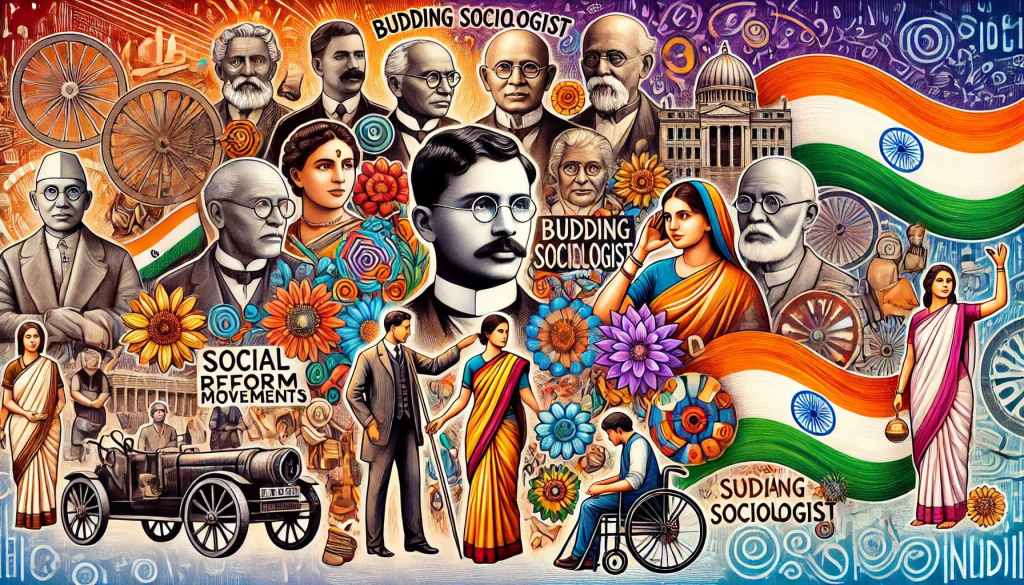
Social reform represents a significant aspect of social science discourse, characterized by voluntary endeavours aimed at driving change. Typically grounded in liberal ideology, these movements often stem from increased awareness or advocacy for particular causes. Social reformers within such movements appeal to the privileged or influential segments of society to relinquish their advantages and support fair distribution of resources and opportunities.
These movements tend to thrive in environments where freedom of expression and association exist. In India, the rise of middle-class values, especially those aligned with secular, liberal, or democratic principles during the eighteenth and nineteenth centuries, played a pivotal role in various social reform movements. Over the nineteenth and twentieth centuries, India witnessed numerous instances of social reform efforts aimed at challenging entrenched traditional customs that obstructed social progress and harmony. These movements aimed to establish a new societal framework by creating conducive conditions and advocating for revised values and practices within social institutions and daily life.
Social reform movements emerge as a subset within societies, often employing non-violent strategies due to the recognition that complete societal transformation is frequently unattainable. These movements concentrate on rectifying specific injustices, dispelling irrational beliefs, and reforming societal values that contribute to widespread suffering, aiming to establish more equitable and rational social structures. Originating from the endeavours of individual reformers who defy prevailing social norms, these movements may influence policymakers to implement new laws. For instance, Raja Rammohan Roy’s advocacy led to the passing of the Bengal Sati Regulation Act of 1829, while Iswar Chandra Vidyasagar’s campaign resulted in the enactment of the Hindu Widows’ Remarriage Act of 1856. The social reform movements witnessed in 19th and 20th century India, addressing issues like education, caste discrimination, and gender inequality, exemplify collective responses to various societal obstacles.
Throughout the nineteenth and twentieth centuries, India witnessed numerous instances of social reform endeavours. These movements aimed to address outdated customs and practices that disrupted social harmony and hindered societal progress. By advocating for change, they sought to create a more equitable and progressive social order.
In essence, social reform involves the transformation or replacement of obsolete institutions that contribute to the suffering or deprivation of a substantial segment of society. For instance, initiatives such as the abolition of Sati, the promotion of women’s education, the advocacy for women’s rights, and efforts to improve the social conditions of marginalized communities like the harijans exemplify the scope of social reform movements in India.
Characteristics of Social Reform Movements
The characteristics observed frequently across various social reform movements in 19th century India include:
1. Propagation of the Idea Monotheism: Numerous 19th-century reformers, including figures like Raja Ram Mohan Roy, Swami Vivekananda, and Dayananda Saraswati, championed a monotheistic conception of the divine while stressing the inherent unity among diverse faiths. Their objective was to foster understanding among various religious perspectives and cultivate an atmosphere of tolerance and unity.
2. Critique of Priestly Practices, Ritualism, Idol Worship, and Polytheistic Beliefs: Reformers expressed disapproval of the prominence given to rituals, idol veneration, and belief in multiple deities within conventional religious customs. Their aim was to advocate for a more logical and morally centered understanding of religion, prioritizing moral and spiritual dimensions over outward ceremonial acts.
3. Against Caste System and Child Marriage: The reformers vehemently criticized the prevalent social issues in Indian society, such as the caste system and child marriage. They acknowledged the injustice and inequality fostered by these customs and campaigned for their eradication. Their goal was to foster a society where individuals weren’t subjected to discrimination based on their birth or gender.
4. Emphasizing the Enhancement of Women’s Status: Reformers acknowledged the significance of empowering women, stressing the necessity for their education and societal advancement. They confronted existing norms limiting women’s rights, promoting gender parity, and advocating for women’s engagement in social, educational, and political arenas.
5. Contribution to National Unity: The reform movements in India played a crucial role in nurturing a collective national identity among its people. These movements sought to challenge divisive customs such as the caste system and untouchability, thereby promoting unity within Indian society. Through their endeavors, reformers aimed to cultivate a sense of dignity, self-sufficiency, and cultural pride, ultimately fostering a stronger national consciousness and patriotism among Indians.
These initiatives embodied the reformers’ aspirations for a more forward-thinking and inclusive society in 19th century India. They addressed a spectrum of social, religious, and gender-related concerns, working towards the integration and advancement of the nation as a whole.
Nature of Social Reform Movements in India
The nature of socio-religious reform movements in India during the 19th century and beyond can be delineated as follows:
1. Connection Between Religious and Social Reform Movements: At the outset, there existed a tight nexus between religious and social reform movements, owing to the fact that numerous social challenges like untouchability and gender disparity were intricately linked with religious doctrines and customs. Consequently, the impetus to address these societal dilemmas frequently stemmed from religious justifications or texts. Reformers endeavoured to confront and reshape societal conventions entrenched in religious interpretations.
2. Transition to a Secular Perspective: With the passage of time, social reform movements began to distance themselves from religious ties, opting instead for a secular outlook. This transition arose from the acknowledgment that addressing societal issues required a wider framework that surpassed religious confines. Prioritizing rationality, ethical considerations, and humanistic values prompted a gradual divergence of social reforms from religious principles.
3. Limited Social Support for Early Reform Initiatives: At the outset, the drive for social reform was chiefly spearheaded by the affluent and educated segments of society, predominantly comprising the upper and middle classes, including those from higher castes. Influenced by Western education and ideologies, these reformers endeavoured to harmonize their modern perspectives with the prevailing social norms. Their objective was to foster progressive transformations while safeguarding their societal standing and entitlements.
4. Broadening Engagement with Marginalized Communities: Over time, the reform movements extended their influence to encompass those at the lower rungs of society. The principles of equality, fairness, and human dignity championed by the educated middle class deeply influenced the trajectory of social reform. Reformers endeavoured to reshape the societal landscape by connecting with marginalized groups, understanding their unique challenges, and striving to meet their requirements.
Based on the preceding analysis, it’s evident that the socio-religious reform initiatives in India evolved substantially, shifting in both method and societal support. Initially grounded in religious reasoning, they transitioned towards a more secular stance. While commencing with limited societal backing, they eventually broadened their appeal to include marginalized groups, striving for a broader and more encompassing overhaul of societal norms.
Methods of Reforms
Socio-religious reform leaders have embraced a variety of methodologies to enact change, which can be categorized into four primary approaches.
1. From Within: This strategy, pioneered by Ram Mohan Roy and upheld throughout the 1800s, underscored the importance of societal reform originating from within. Advocates championed the idea of fostering awareness among the populace through diverse channels, including publishing pamphlets, orchestrating debates and dialogues, and addressing prevalent social concerns. Noteworthy figures like Ram Mohan Roy contested the tradition of sati, Vidyasagar campaigned for the remarriage of widows, and Malabari campaigned to elevate the age of consent.
2. Through Legislation: The alternative approach encompassed advocating for legislative intervention and reforms. Prominent figures like Keshub Chandra Sen, Mahadev Govind Ranade, and Veeresalingam asserted the importance of legal measures to enact substantial change. They lobbied for the enactment of laws endorsing reforms such as widow marriage, civil marriage, and the elevation of the age of consent. Nonetheless, they occasionally overlooked the restricted impact of legislation within colonial society and the government’s discretionary engagement in social reform.
3. Through Symbol of Change: This approach entailed establishing emblems of transformation through unconventional personal endeavours. The ‘Derozians’ or ‘Young Bengals,’ an audacious faction of reformers, epitomized this approach. They defied conventional societal standards and drew inspiration from fresh ideologies from the Western world, advocating for a logical approach to societal challenges. Prominent figures within this cohort included Krishna Mohan Banerji, Dakshinaranjan Mukherjee, and Ram Gopal Ghose.
4. Mass Movement and Social Awakening: This strategy focused on instigating change through large-scale movements and fostering societal enlightenment. Figures such as Ishwar Chandra Vidyasagar and Dayanand Saraswati utilized public engagement and widespread backing to confront outdated social norms. Their efforts were geared towards enlightening the populace, advocating for social justice, and catalyzing extensive transformation.
The varied methodologies employed by socio-religious reformers underscored the array of tactics utilized to tackle the manifold social challenges within Indian society.
Social Reform Movements in India
Here are several significant social reform movements that have been pivotal in driving social change in India:
1. Arya Samaj: The Arya Samaj, emerging from Northern India, emerged as a leading force in the social reform movement, with its inception by Swami Dayananda Saraswati on April 10th, 1875, in Bombay. Swami Dayananda Saraswati, a key figure in India’s modernization, recognized the urgent need for reform within traditional practices, advocating for new social, religious, and economic structures. In contrast to Western ideologies, he emphasized the importance of Hindutva, drawing from Vedic principles while aiming to eliminate harmful elements within Hinduism.
Under Swami Dayananda Saraswati’s leadership, the Arya Samaj aimed to break down caste barriers, ensuring universal access to the Vedas. By embracing Hinduism’s ancient values, the movement sought to purify the faith from corrupt practices, thus enhancing its societal status and discouraging conversions to other religions.
Moreover, the Arya Samaj vigorously advocated for women’s rights, condemning practices like Sati and the Purdah system. Asserting that women once held equal status with men in Vedic times, the movement campaigned for a more liberal society where women could reclaim their autonomy, dignity, and inherent value. Initiatives such as establishing Kanya Pathshalas in 1870, followed by various educational institutions such as Gurukuls, Kanya Gurukuls, and schools and colleges for both genders, highlighted the Arya Samaj’s dedication to female education and empowerment.
2. Brahmo Samaj: Raja Rammohan Roy emerged as a progressive leader challenging the idea that the Vedas held exclusive access to true religious knowledge. He advocated for universal virtues present in various religions, promoting concepts such as humanity, monotheism, and social progress. In 1828, he established the Brahmo Samaj in Calcutta, a significant step toward religious and social reform. Roy, influenced by Western ideas, aimed to eradicate social ills and superstitions ingrained in Indian society.
As a versatile scholar with Western education, Rammohan Roy founded the Atemiya Sabha in 1814 to address idolatry and superstitions within Hinduism. Through the use of print media, he spread his ideas through Bengali articles to reach a broader audience. Under his leadership, the Brahmo Samaj played a crucial role in the Bengal renaissance, paving the way for modern thought.
Roy, together with Dwarkanath Tagore, established the Brahmo Sabha in 1828, advocating for the belief in a supreme being and fostering brotherhood among people. This laid the foundation for Brahmoism, formally established by Debendranath Tagore in 1849, which emphasized the presence and knowledge of a single God.
In addition to its philosophical principles, the Brahmo Samaj played a pivotal role in driving social reforms. It vehemently opposed practices such as child marriage, Sati, and enforced widowhood, while also criticizing polygamy, the caste system, and dowry customs. The movement supported widow remarriage and championed women’s rights, opposing the exploitation of women, such as in the devdasi system.
Moreover, the Brahmo Samaj advocated for Western education, scientific exploration, and the democratization of knowledge. Figures like Debendranath Tagore emphasized the importance of indigenous language and culture alongside the promotion of Vedanta. Intellectuals such as Kesab Chandra Sen, affiliated with the Bharatiya Brahma Samaj, advocated for broad social reforms, including education for girls and the promotion of inter-caste marriages.
3. Prarthana Samaj: The inception of the Prarthana Samaj, or the ‘Prayer Society’, in Bombay in 1867 is attributed to Dr. Atmaram Pandurang. Drawing inspiration from the Brahmo Samaj, it embraced a more progressive outlook compared to its predecessor. Influential figures like Keshab Chandra Sen, Justice Mahadev Govind Ranade, and historian Ramkrishna Bhandarkar from the Brahmo movement also became affiliated with the Prarthana Samaj. At its core, the society advocated for monotheism and the encouragement of theistic worship, with the goal of instilling a reformed socio-religious mindset in society.
A key objective of the Prarthana Samaj was to challenge the existing caste system and its discriminatory norms. It actively opposed untouchability and endeavoured to uplift marginalized communities, particularly the lower castes and Dalits. Efforts were made to promote inter-caste marriages, aiming to dismantle the entrenched power dynamics that favoured the Brahmin class while marginalizing lower castes. Additionally, the society addressed the marginalized position of women, denouncing practices like child marriage and advocating for widow remarriage to enhance their societal status.
Moreover, the Prarthana Samaj stressed the significance of female education and led initiatives such as establishing night schools, orphanages, and shelters for widows. Despite its critique of societal customs, the Prarthana Samaj did not take a radical stance to break away from orthodox Hindu traditions. It respected individual beliefs, refraining from mandating the abandonment of caste, idol worship, or traditional customs among its members.
4. Satyashodhak Samaj: Jyotiba Phule was deeply attuned to the systemic obstacles confronting lower caste communities like the Mali group, and the entrenched supremacy of upper caste factions, particularly the Brahmins, in society. In Maharashtra, he took the lead in addressing these challenges as a reformer. A cornerstone of his efforts was the establishment of the Satyashodhak Samaj (Truth Seekers Society), drawing together individuals from marginalized backgrounds, including Malis, Telis, Kunbis, Saris, and Dhangars.
The primary thrust of this movement was to raise awareness, offer social assistance, and promote education among lower caste communities. Phule’s advocacy for Sarvajanik Satyadharma found resonance, envisioning a society devoid of caste hierarchies and socio-economic gaps. His emphasis lay in empowering lower caste communities and nurturing a shared sense of identity among them.
Phule played a pivotal role in advancing women’s education, founding schools dedicated to girls in collaboration with his wife. Moreover, he championed widow remarriage, a progressive stance that formed a crucial component of his movement’s agenda.
5. Ramkrishna Mission: Established in 1897 by Swami Vivekananda, the Ramakrishna Mission is deeply rooted in the teachings of Shri Ramakrishna Paramahamsa, emphasizing the essence of truth in spirituality and religion. At the core of its philosophy lies selfless devotion to the divine and compassion towards human suffering, advocating for a spiritual path grounded in Vedic and Upanishadic principles. While embracing idol worship, Ramakrishna emphasized spiritual essence over mere rituals. Swami Vivekananda, a disciple of Ramakrishna, applied contemporary rationality to interpret Hindu spiritual concepts, shaping the mission’s ideology.
The mission’s ethos revolves around serving humanity as a means of serving the divine, echoing the eternal truths of Vedanta and the Bhagavad Gita exemplified by Ramakrishna and elaborated upon by Vivekananda.
Throughout history, the Ramakrishna Mission has played a significant role in social reform, particularly in the nineteenth century. Its endeavours encompass diverse areas, with education being a focal point recognized for nurturing rationality. By providing free primary education, the Mission’s schools not only excel academically but also in extracurricular activities and sports.
Moreover, the Mission actively participates in relief and rehabilitation efforts during disasters, while also prioritizing the welfare of women by offering educational services, protection, and support. Recognizing the importance of youth, the Mission establishes recreational and cultural centers such as Balak Sanghas and Yuvak Sanghas.
In rural and tribal regions, the Mission promotes various developmental activities spanning livelihood, education, vocational training, and medical services. Overall, the Ramakrishna Mission remains dedicated to humanitarian service and spiritual enlightenment, embodying the enduring ideals of its founders.
6. Christian Missions: Christian missionaries exerted a notable influence on India during the era of British colonialism. Initially constrained from operating in regions predominantly inhabited by Hindus, the British administration eventually acknowledged the necessity of promoting religious and moral development in India. Notably, William Carey’s campaign against the practice of Sati prompted governmental measures to outlaw it. Financial backing from British authorities facilitated the expansion of missionary activities.
Targeting marginalized communities subjected to discrimination and untouchability within Hindu society, missionaries offered conversion to Christianity alongside provisions for education and livelihood support. Throughout the 19th and 20th centuries, a considerable number of tribal groups, particularly from areas like Chotanagpur, Orissa, and the North East, embraced Christianity.
In addition to emphasizing healthcare, especially for women and children, missionaries implemented projects aimed at uplifting disadvantaged groups economically. Their most significant impact came through the establishment of numerous educational institutions, notably promoting English education. Many esteemed educational establishments in India trace their roots to the endeavours of Christian missionaries, which played a pivotal role in introducing English and scientific educational approaches.
This educational revolution spurred Hindu social reformers to recognize the necessity for religious and social change within their own community. Missionaries actively confronted societal injustices such as untouchability, caste discrimination, and the subjugation of women. They campaigned against practices such as widow immolation, child marriage, and the disposal of infants in sacred rivers. Through their multifaceted endeavours, missionaries catalyzed substantial transformations in Indian society during the British colonial period.
7. Theosophical Society: Inspired by ancient Indian thought and traditions, the Theosophical Society had its roots in the southern and western parts of India. The term “theosophy” derives from Greek, blending “theos” for God and “sophia” for wisdom, indicating a quest for divine insight or ultimate understanding. The Theosophical Society of India was founded in 1986, leading to the establishment of multiple centers nationwide, including in Bangalore, Bombay, Surat, and Ludhiana. Annie Besant emerged as a key figure, advocating for the resurgence and empowerment of ancient faiths like Hinduism, Zoroastrianism, and Buddhism. This revival sparked a renewed appreciation for Indian culture, fueling patriotic sentiments and initiatives aimed at national revitalization.
At the core of theosophical doctrine lay concepts such as karma, reincarnation, liberation (moksha), and enlightenment (nirvana). Alongside philosophical pursuits, the society actively campaigned for social reform, combating practices such as child marriage, illiteracy, and alcoholism. Furthermore, the society played a significant role in education and research, notably through Besant’s founding of the Central Hindu College in Benaras. This institution merged Hindu spiritual teachings with Western scientific education, embodying the society’s commitment to holistic learning and progress.
8. Other Initiatives: The social reform movement witnessed the remarkable contributions of several influential figures, each leaving an indelible mark on society. In Bengal, Pandit Iswar Chandra Vidyasagar emerged as a prominent figure during the Bengal renaissance, renowned for his profound scholarship in Sanskrit. His enduring legacy primarily revolves around advancing education, particularly for women, and advocating for their emancipation and the practice of widow remarriage.
Similarly, Western India experienced a surge of social reformers in the latter part of the nineteenth century. Figures such as Mahadev Govind Ranade, Vishnu Parashuram Shastri Pandit, and Ramakrishna Gopal Bhandakar played significant roles in promoting widow remarriage, advocating for education among marginalized communities, espousing monotheism, and challenging caste divisions.
Within the Muslim community, Sir Syed Ahmed Khan emerged as a central figure in its rejuvenation. His keen interest in Western education spurred efforts to modernize Muslim perspectives and encourage participation in British government services. Khan stressed the importance of a comprehensive education, including scientific and technological subjects, recognizing their relevance for Muslim youth. The establishment of the Anglo-Oriental College, later evolving into Aligarh Muslim University, marked a crucial milestone in this pursuit. The Aligarh Movement aimed to provide educational opportunities for Muslim youth while revitalizing the religious and cultural aspects of the Muslim community.
The Singh Sabha, established in 1873 within the Sikh community, aimed to revive the essence of Sikhism and advocate for modern education. Influential figures like Dayal Das and Baba Ram Singh spearheaded efforts against idol worship and Hindu rituals, seeking a comprehensive transformation of Sikh society. These endeavours mirrored a broader trend of reform seen across various religious groups during that era.
The narrative illustrates how 19th-century reform movements challenged traditional practices, superstitions, and orthodox beliefs, paving the way for a more enlightened society grounded in scientific inquiry and social justice. The roots of such movements trace back to earlier centuries, coinciding with the European presence in India, which brought about significant changes in governance, culture, and thought.
Despite these reforms, progress in improving the status of women was limited. While educational initiatives under British rule had some impact, deep-seated social issues like child marriage, dowry, and caste discrimination persisted without adequate legal remedies until the advent of constitutional reforms.