- What is Agrarian Society
- Meaning and Definitions of Agrarian Society
- Characteristics of Agrarian Society
- Classes in Agrarian Society
- Challenges Faced by Agrarian Class in India
Introduction
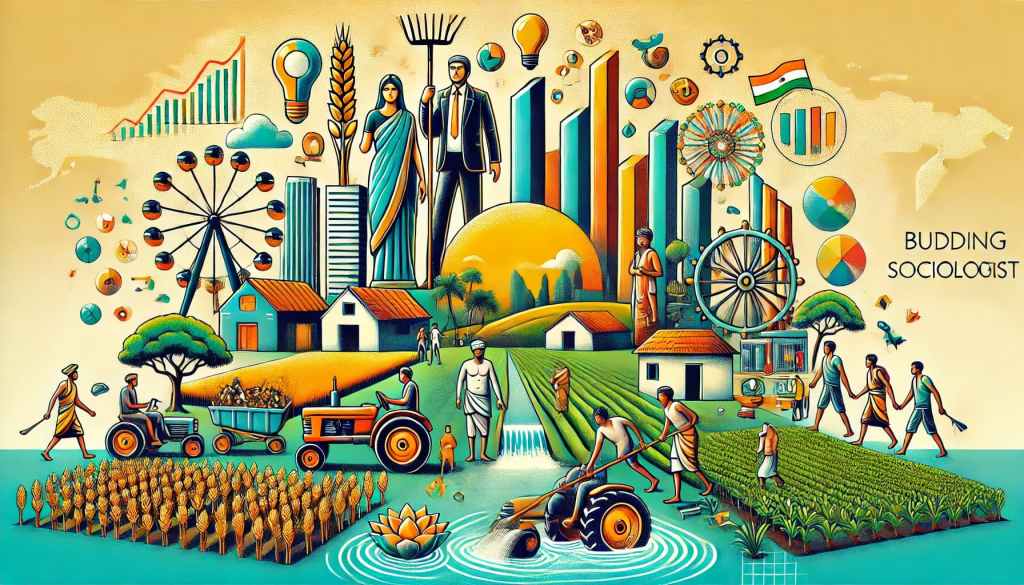
Agriculture played a crucial role in the advancement of human civilization, marking a significant transition when early humans shifted towards settled life and began practicing agricultural activities, as evidenced by the Ho culture. This transition laid the groundwork for agrarian societies, where the economy and prosperity were predominantly based on agricultural practices. The roots of agrarian societies can be traced back at least 5000 years, and they continue to persist today. Originating from the era of hunters and gatherers, agrarian societies have been a common stage in the development of civilizations worldwide.
Societies can be broadly categorized into tribal, agrarian, and industrial societies. Despite advancements in various fields, agriculture remains fundamental for sustaining life, with virtually all societies engaging in some form of agricultural activity, albeit with differing methods. These societies are heavily influenced by factors such as weather, climate, and seasonal variations, which significantly impact agricultural productivity.
The term “agrarian” pertains to matters concerning agriculture. An agrarian society relies on the cultivation of food, crops, and farmlands as the foundation of its economy. Another aspect defining an agrarian society is the proportion of its population engaged in agricultural activities. In addition to farming, individuals in such societies often pursue supplementary livelihoods and generate income from various agricultural-related endeavours. Approximately two-thirds to three-quarters of the global population resides in agrarian societies.
History of Agrarian Society
The ancient civilizations of Egypt, India, China, and the Mayans all relied heavily on agriculture. Following the Neolithic Revolution, the Industrial Revolution emerged as a monumental shift in human history. Over the last two centuries, numerous societies have transitioned to industrialization, leading to a decline in the agricultural workforce as machinery replaces manual labour.
Around 5000 years ago, humans introduced plow-based agriculture, significantly expanding cultivable land and increasing grain production by employing oxen and other large animals for plowing. Technological advancements over time led to surplus production and the accumulation of wealth, resulting in heightened social stratification. Within agrarian societies, religious beliefs often justified inequalities, with rulers perceived as divinely ordained and large landowners regarded as lords. This social hierarchy tended to persist across generations, with individuals typically remaining in the social class into which they were born—a phenomenon known in modern sociology as ascription-based stratification.
Meaning of Agrarian Society
An agrarian society, often referred to as an agricultural society, relies on the cultivation and maintenance of crops and farmland as the cornerstone of its economy. One way to characterize such a society is by assessing the proportion of a nation’s overall production dedicated to agriculture. Essentially, an agrarian society thrives on large-scale agricultural practices involving the use of plows and draft animals for food cultivation. Throughout recorded human history, agrarian societies have been the predominant form of socio-economic organization.
In conclusion, it’s evident that agrarian societies represent the foundational stage of civilization, as virtually all societies have evolved through this phase. Initially, human civilization emerged from tribal and rural communities, which later transitioned into industrial or modern societies. Essentially, an agrarian society is characterized by its reliance on agriculture as the primary occupation, with a significant portion of the population engaged in agricultural or related activities.
Characteristics of Agrarian Society
The agrarian society is defined by its heavy reliance on agriculture as the central pillar of its economy, wealth, and social structure. Both human and animal labour play crucial roles in agricultural production within these societies. They typically feature a division of labour where individuals specialize in particular tasks. Additionally, agrarian societies exhibit several other key characteristics:
1. Occupational Structure: An agrarian community is characterized by its predominant occupational pursuits, which revolve around the cultivation of crops and livestock, as well as ancillary endeavours like weaving, pottery, and various small-scale trades such as blacksmithing, cleaning, and security services. Agricultural tasks typically occupy the majority of people’s time within such societies.
2. Unequal Land Ownership: In traditional agricultural communities, there exists a hierarchical structure among landholders. This structure typically includes landlords, cultivators, sharecroppers, and landless labourers. Cultivators tend to work their own land independently, whereas landlords often employ landless labourers to tend to their fields.
3. Less Specialization: Specialized roles are scarce within the community, with the division of labour often relying on age and gender distinctions rather than sophisticated specialization. The society exhibits homogeneity across various aspects including occupations, religious affiliations, values, and cultural norms.
4. Community Centred: The nucleus of existence revolves around the village community structure, where social rankings, routines, customs, and mindsets adhere to strict and intricate patterns, largely influenced by orthodox beliefs aimed at safeguarding time-honoured traditions.
5. Family as a Dominant Unit: The family, serving as a paramount social institution, plays a central role in agrarian societies by overseeing and managing the entirety of the agrarian system. It serves not only as a source of social support but also functions as an economic entity, with all family members participating in agricultural or agriculturally related endeavours.
6. Close Contact with Nature: Rural inhabitants maintain a profound connection with nature, as their daily lives primarily revolve around the natural world and agricultural pursuits. This close relationship with their environment distinguishes them from their urban counterparts. For villagers, the land holds a special significance akin to that of a nurturing mother, as it serves as the primary source for fulfilling various necessities such as sustenance, clothing, and housing.
7. Homogeneity of Population: The rural communities exhibit a strong sense of homogeneity. The majority of residents are engaged in agricultural activities and related livelihoods, despite the presence of individuals from diverse castes, religions, and socio-economic backgrounds.
8. The Primacy of Agriculture: Agriculture serves as the cornerstone of agrarian communities, shaping the foundation of rural economies. In this context, a farmer’s responsibilities encompass a range of agricultural tasks, necessitating collaboration among family members. From sowing seeds to harvesting crops, the entire family typically engages in various agricultural activities together. This collective effort led renowned scholar Lowry Nelson to describe farming as a familial endeavour.
9. Social Stratification: The agrarian society exhibits a complex stratification system based on caste distinctions. Occupations directly linked to agriculture serve as the primary determinant of one’s caste. For instance, individuals engaged in ironwork essential for agricultural tasks are referred to as iron-smiths (lohar), while those involved in woodwork, such as crafting ploughs, are known as carpenters. Various other occupations vital to the functioning of agrarian communities exist within this framework. Notably, these professions operate within a barter system, devoid of monetary transactions.
10. Social Interaction: In rural areas, social interaction occurs with greater frequency when compared to urban settings. This interaction tends to be more consistent and enduring. Within primary groups, relationships are characterized by intimacy. Families play a central role in meeting the needs of their members and exerting control over them.
Conclusion: Based on the preceding description, it is evident that agrarian societies typically exhibit smaller sizes compared to urban communities and have relatively modest populations. It is universally acknowledged that every society has traversed through an agrarian phase. However, contemporary agrarian societies are significantly influenced by industrialization, leading to profound changes in their fundamental characteristics. These societies are no longer cohesive social entities; familial control has diminished, and external influences have grown. Commercial farming is prevalent, resulting in a simplification of social structures and a shift towards non-agricultural pursuits. Agricultural output has increased, with farmers increasingly engaging in trade and other non-farming activities. As societies endeavour to decrease their reliance on agriculture, there is a pronounced trend towards industrialization, with land being repurposed for industrial use.
Agrarian Classes in India
For centuries, India has been celebrated for its agrarian economy, which has served as the backbone of its society. Agriculture remains the primary livelihood for the majority of Indians, with approximately 70% of rural households reliant on farming and related endeavours, as highlighted by the Food and Agriculture Organization. This heavy reliance on agriculture has earned India its reputation as an agrarian nation.
In contemporary times, rural India can be classified into four distinct socio-economic classes.
| Sr. No. | Major Classes | Percentage |
| 1. | Landowners | 22.00 |
| 2. | Tenants | 27.00 |
| 3. | Agricultural Laborers | 31.00 |
| 4. | Non-agriculturalists | 20.00 |
| Total | 100.00 |
According to the data provided in the table above, the majority of individuals engaged in cultivation, constituting 60%, are categorized as marginal cultivators, possessing less than 2% of land hectares. Additionally, 16% are classified as small cultivators, holding between 2 to 5 hectares of land, while 6% fall into the category of medium cultivators, owning 5 to 10 hectares of land. The remaining 18% comprise big cultivators who possess more than 10 hectares of land. In rural areas, each family typically receives less than one acre of land, approximately 0.4 hectares. Food crops occupy 75% of the total land area, with approximately 35% of the overall production being sold by cultivators, while the remainder is utilized for personal consumption.
Numerous scholars, particularly sociologists, have endeavoured to analyse the class structure of Indian agriculture from various perspectives. Some of their insights are outlined below:
1. Daniel Thorner and P.C. Joshi: They employed the term “agrarian structure” to denote the intricate web of relationships among different communities linked to or engaged in farming activities, encompassing land, tenants, and agricultural workers. Scholars placed greater emphasis on cultivation as a productive activity and on the ownership and cultivation of land as the foundation of production relationships.
2. Andre Beteille: His focus on the agrarian system revolves around the intricacies of land management and its optimization for productive ends. Additionally, he acknowledges the interconnectedness of various structural components within agriculture, including technology, labour cycles, production organization, and agrarian hierarchy. He emphasizes the significance of land utilization over mere ownership, viewing it as pivotal for success in agricultural endeavours.
3. Michael Todaro: He views the agrarian system as encompassing the arrangement of land distribution, ownership, management, as well as the socio-institutional framework of the agrarian economy. His comprehension of the agrarian class hierarchy hinges upon land ownership, regardless of whether it is actual or nominal ownership—meaning land may be borrowed. This perspective underscores the significance of:
- having land (how much)
- type of ownership: Owner, Tenant, Partnership
Agrarian Class Structure in India: A Glimpse
Based on the preceding explanation, various scholars have categorized the intricate class structure within Indian agrarian societies in the following manner:
1. Daniel Throner: He talked about three classes:
- Malik (Big Landlords, rich landlord)
- Kisan (Small landlords, Substantial tenants)
- Mazdoor (Sharecroppers, landless, labourers)
2. R.K. Mukherjee: Renowned Indian sociologist RK Mukerjee categorised the agrarian classes in India into three distinct groups, outlined as follows:
- Class-I: Occupational groups of Landholders and superior farmers
- Class-II: Self-sufficient peasantry, cultivators and Artisans
- Class-III: Share-croppers, agricultural labourers service holders
3. G.R. Gadgil: He discussed two categories of subsequent classes.
- Substantial landlords & Trade money landers
- Landless Labourers exploited
4. P.C. Joshi: P.C. Joshi’s categorization revolves around the concept of commercial farming, wherein he delineated farmers and agrarians into four distinct classes based on this criterion:
- Big farmers
- Small farmers
- Marginal farmers
- Landless Labourers
5. Utsa Patnaik: She categorizes the comprehension of social classes through the lens of exploitation, termed as the E-factor. The type of exploitation is determined by the type of labour involved, such as family labour and labour utilization, serving as indicators for classification, outlined as follows:
- Landlords: Engage in no manual labour themselves, relying heavily on the labour of others.
- Wealthy Peasants: Employ others’ labour to a significant extent while also engaging in self-employment.
- Middle Peasants: Utilize less external labour compared to self-employed labour.
- Small Peasants: Do not employ others’ labour and engage in self-employment to a greater extent than working for others.
- Poor Peasants: Work for others more extensively than engaging in self-employment.
- Landless Labourers: Solely work for others without any self-employment.
Additionally, she further divides the peasantry based on the amount of land owned, which determines the class of the farmer/agrarian, outlined as follows:
| Peasantry | Magnitude of Land |
| Poor Peasantry | Between 1.60 acres or less |
| Middle Peasantry | Between 1.61 to 9.80 acres |
| Lower Middle | Between 1.60 to 4.60 acres |
| Upper Middle | Between 4.60 to 9.80 acres |
| Rich Capitalist Landlord | Between 9.81 and above |
6. D.S. Swamy: His examination of the agrarian class structure draws from the Marrian perspective, which centers around the means of production. Within his analysis of the differentiation within the Indian peasantry, he identifies four primary classes as follows:
- Landlord
- Poor Peasant
- Small Peasant
- Well to do Peasant
Challenges Faced by Agrarian Class in India
Currently, there is a decline in the desire to pursue farming as a profession in India. Farmers are experiencing a notable lack of respect compared to earlier times and are often undervalued in society. This concerning state of affairs within the agricultural community stems from numerous formidable challenges confronting farmers today. Some of these challenges include:
1. Indebtedness: Farmers lack the necessary collateral to secure loans from banks, leaving them with no alternative but to seek assistance from landlords who impose exorbitant interest rates. Consequently, farmers become ensnared in debt traps. Moreover, their lack of literacy renders them vulnerable to exploitation by moneylenders who deceive them into paying inflated sums. Consequently, Indian farmers find themselves burdened by debt throughout their lives, perpetuating a cycle from birth to death.
2. Unpredictable Weather Conditions: The majority of agricultural activity in India relies on rainfall and is subject to the whims of nature. With the onset of global warming, the monsoon patterns have become increasingly erratic, resulting in numerous crop failures across the country. Consequently, this unpredictability poses a significant threat to the agricultural sector, leading to potential shortages of essential products. Farmers are compelled to explore alternative crops as a means of adaptation to this challenging agricultural landscape.
3. Primitive Techniques: Despite the rapid advancements witnessed across various sectors globally, the agricultural domain in our country seems to lag behind. Many farmers continue to rely on traditional and outdated methods for cultivation. While technological innovations have emerged in agriculture, their adoption remains limited due to affordability constraints. Consequently, the use of primitive techniques often yields subpar results, prompting some farmers to abandon agriculture in favour of opportunities in other industries.
4. Lack of Awareness: Due to widespread illiteracy among farmers, many are unaware of government schemes and programs meant for them. This lack of awareness and education leaves them deprived of crucial benefits. While educated individuals may be familiar with government initiatives, the intended beneficiaries, namely farmers, often remain uninformed, leading to disillusionment and, in some cases, abandonment of farming altogether.
5. Fragmentation of land holdings: The limited size of the land makes it impractical to subdivide further. With large families, dividing the land among the next generation results in smaller plots, impacting the viability of farming. Some may opt to sell their portions due to the challenges of farming on such small plots, while others are forced to cultivate on reduced land areas. This fragmentation leads to decreased productivity, posing a significant threat to agriculture in the long run.
6. Fluctuating Prices: Agricultural product prices are typically volatile, fluctuating between highs and lows. This inconsistency often leaves farmers struggling to secure fair value for their produce, with prices frequently dipping to levels that barely cover their expenses. While minimum support prices (MSP) are in place for each crop, it’s imperative for the government to actively regulate prices to support farmers, who are integral to the nation’s backbone.
7. Low Status of Farmers: Farmers in India often do not receive the respect they deserve, despite owning significant property. In a country where agriculture is vital and many marginal farmers contribute to its success, they are unfortunately not accorded the social status they merit. Regrettably, they are sometimes viewed as inferior in the social hierarchy, leading to a lack of esteem within civil society. This lack of recognition can discourage individuals from pursuing farming as a profession.
8. Scarcity of Cold Storages: There are no facilities available for preserving perishable goods such as fruits and vegetables. This poses a significant risk to farmers as they struggle to obtain fair prices for their produce and are often forced to sell at lower rates. Particularly in remote areas, farmers lack access to cold storage options, leaving them with no alternative but to sell their goods quickly before they spoil.
9. No Agricultural Marketing: Marketing support for agricultural products in urban areas is severely lacking. Consequently, intermediaries exploit farmers by purchasing their produce at lower prices and reselling them at inflated rates, reaping significant profits. Additionally, farmers face limited access to both telecommunications and transportation services.
10. Growing Population: India’s population is experiencing rapid growth, yet there’s a decline in the number of farmers, with fewer younger individuals opting for farming as a profession. Consequently, farmers face immense pressure to utilize limited resources to sustainably feed the expanding population of the nation.
Conclusion: Based on the preceding analysis, it is evident that the agricultural sector in India is facing significant challenges, necessitating urgent measures to avert a looming crisis. Failure to address these issues could jeopardize the well-being of the populace, as food and agricultural products are indispensable for human survival.