- Introduction
- Marriage as a Form of Exchange
- Rules of Marriage
- Levi-Strauss on Alliance
- Louis Dumont on Dravidian Kinship
- Critique and Influence
Introduction
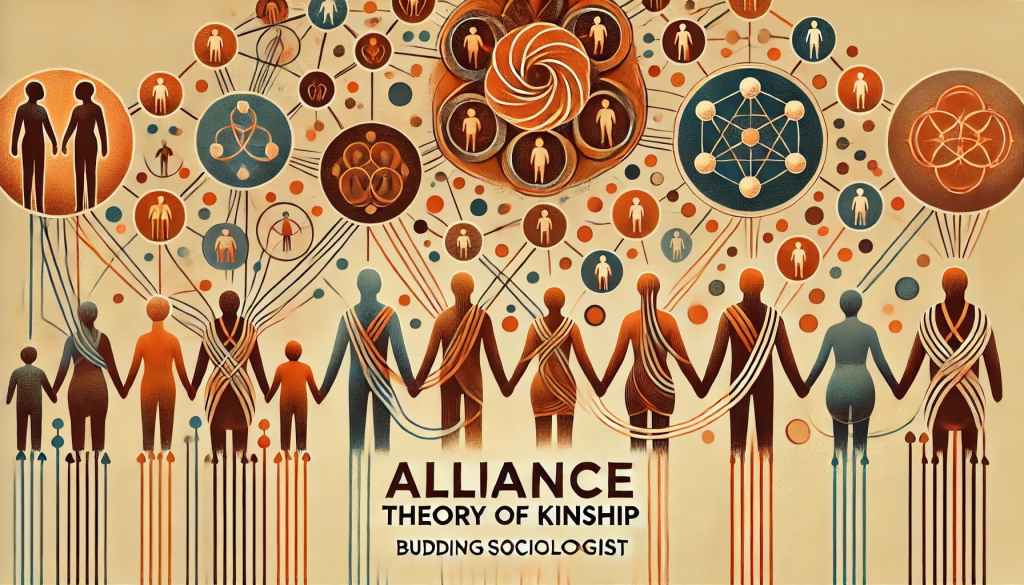
In kinship systems, alliances are essential for forming social, economic and political ties, primarily through marriage and familial connections. This concept extends far beyond the immediate family, encompassing a wider network of related families, clans or tribes. These relationships are often solidified through practices like arranged marriages or the exchange of goods and services. Alliance highlights the strategic role of marriage in fostering social cohesion, ensuring equitable resource distribution and promoting long-term political stability. Such alliances facilitate cooperation, encourage mutual support and strengthen collective security across different groups. By linking family units through marriage, communities weave a complex network of obligations and loyalties that can endure for generations, reinforcing the social fabric and perpetuating cultural traditions. Therefore, alliances are vital for integrating diverse groups, managing power dynamics and maintaining social structure and cohesion in societies.
Alliance plays a crucial role in resolving conflicts and maintaining peace within and between communities. By facilitating marriages between families, such alliances can act as informal peace treaties, creating new avenues for cooperation and reducing the likelihood of disputes. These marital bonds promote a network of mutual dependency and shared interests, which are essential for sustaining social harmony and stability.
In modern societies, the impact of alliances on social change remains significant, but in different forms. Across many cultures, family ties extend their influence into economic and political realms, where they are integral to business activities, political affiliations and upward social mobility. These familial networks offer vital resources and support, enable introductions and opportunities and help individuals and groups navigate complex social environments.
Alliances deeply influence personal identity and a sense of belonging within a community. Membership in an extended kin network offers individuals a source of identity, safety and social backing. These relationships delineate social roles, duties and expectations, affecting a range of aspects such as inheritance practices, social hierarchy and engagement in community activities.
Ultimately, the idea of alliance in kinship illustrates the complex integration of social, economic and political ties through familial connections. This underscores that kinship is not simply a biological link, but rather a sophisticated network of social bonds that weave together the fabric of societies globally.
From the 1940s to the 1960s, the descent approach was particularly prominent in British social anthropology. This perspective emerged from earlier anthropological theories that focused on the connections between kinship, territory and the interactions within family and kin groups. The descent approach analysed kinship behaviour by examining the roles of corporate groups, sibling bonds and male-line (agnatic) relationships. It highlighted key topics such as the organization of local groups, the dynamics of kinship relations and the rules governing marriage, residence, inheritance and succession.
The alliance approach represents an evolution from the descent approach and critiques it for its heavy emphasis on blood relations while neglecting relationships formed through marriage. This perspective prioritizes the understanding of kin members who are connected through marital bonds, thereby providing a comprehensive view of the kinship network. According to the alliance approach, kinship is composed of several elements, including descent, inheritance, marriage, affinity and residence. Levi-Strauss and Dumont, in their works “The Elementary Structures of Kinship” and “Marriage Alliance” respectively, explore this approach in depth. The fundamental characteristics of the alliance approach to kinship studies are:
- The fundamental principle of kinship is the prohibition of incest, which generally means that one should marry outside a group of close relatives.
- In tribal cultures, this principle is reflected at the level of the lineage or clan through the practice of exogamy.
- This rule serves to create marriage bonds between different lineages, thereby integrating the society as a whole.
- The most elementary form of this practice is symmetrical alliance, where two lineages, groups of lineages or moieties exchange women among them. Levi-Strauss termed this restricted exchange and considered it to be disharmonious, as it involved marriage alliances between only two groups. The basic unit involved was two kinship groups exchanging women.
Another variant involved asymmetrical alliances where different lineages were classified as wife-giving, wife-taking and others. Marriages were organized in a way that, in theory, created interconnections among all lineages, forming a sort of chain. Claude Levi-Strauss referred to this as harmonious exchange. This practice is observed in the highlands of South and Southeast Asia.
Marriage as a Form of Exchange
Louis Dumont defines ‘alliance’ as the recurrent pattern of intermarriage between larger or smaller groups. Claude Levi-Strauss developed the concept of marriage alliances specifically to address societies that engage in cross-cousin marriage. Levi-Strauss viewed these marriages as particular instances of a broader system where women are exchanged between groups, establishing enduring alliances through these marital exchanges. He posited that the exchange of women is the foundational form of exchange that predates the symbolic exchange of gifts, marking the transition from a natural state to a cultural one. Women were considered the ultimate gift due to their role in reproduction and thus, the most significant exchange. This exchange was necessary because the incest taboo forbids women from having sexual relations with men within their immediate group, necessitating their reciprocal exchange among different groups to sustain societal continuity. Therefore, the principles of reciprocity and the incest taboo together foster marriage alliances through the exchange of women. Such exchanges create a distinction between groups, namely wife-takers and wife-givers, which are organized hierarchically within the social structure. In a patrilineal society, wife-takers typically hold a higher status than wife-givers, whereas the reverse is true in a matrilineal society.
Rules of Marriage
Marriage encompasses more than just sexual intimacy and reproduction; it also serves as a means to strengthen alliances among different groups of people. The formation of these alliances is guided by specific rules or guidelines that dictate acceptable and prohibited marriage partners. Central to these guidelines are the concepts of incest taboo and exogamy, which play a critical role in regulating who can marry whom.
1. Incest Taboo: The incest taboo, which forbids sexual relations between specific categories of people, is a fundamental rule regulating mating behaviour. In Western cultures, incest is typically defined narrowly, prohibiting sexual relations between parents and children and between siblings. In contrast, the Nuer people, as described by Evans-Pritchard, have a broader concept of ‘rual’ which extends the incest taboo to include sexual relations between members of the same clan, cognates up to six generations and even between a man and a woman who married other men of his lineage. Regardless of whether the definition is narrow or broad, the core principle of the incest taboo is that those who are prohibited from engaging in sexual relations are also forbidden from marrying each other.
Claude Levi-Strauss expressed the incest taboo in a positive light, suggesting that it compels men to find spouses outside their own group. Because men are not permitted to marry within their group, they must seek partners elsewhere, facilitating alliances between different groups through the exchange of daughters and sisters for wives. Thus, the incest taboo not only guides the search for marriage partners but also fosters solidarity and alliances between groups. Levi-Strauss saw the rules governing marriage and sexual relations as interchangeable.
However, this perspective does not hold universally, as in some societies, certain kin may engage in sexual relations but are strictly prohibited from marrying each other. One of the key rules that govern marriage is exogamy, which requires individuals to marry outside their own group.
2. Rule of Exogamy: Exogamy is a social rule that forbids marriage within certain groups, compelling individuals to choose marriage partners from outside their immediate social circle. This rule serves to foster connections between different families and integrates them into a broader social network. In many cultures, exogamy prohibits marriage not only between close relatives but also among more distant kin, whether through direct lineage or collateral relationships. The concepts of incest prohibition and exogamy can be understood through their roles in forbidding certain unions while prescribing others, aligning with the alliance theory. This theory suggests that in every society, some relatives are off-limits for marriage, while others are preferred. Positive marriage rules specify whom one should marry, while negative rules outline whom one cannot marry. For instance, in Dravidian kinship systems, individuals are encouraged to marry their cross-cousins but prohibited from marrying their parallel cousins.
According to anthropologist Levi-Strauss, societies with specific positive marriage rules are characterized by a simpler kinship structure, whereas those with negative rules have more complex kinship systems. Thus, alliance theory addresses kinship systems that include positive marriage rules and exogamy or at least a ban on marriage between parallel cousins, aiding in a deeper understanding of kinship networks.
Levi-Strauss on Alliance
Claude Levi-Strauss, in his influential anthropological work, discusses the concept of alliance, highlighting marriage’s pivotal role in shaping and sustaining social structures. He suggests that marriage functions beyond individual union, serving as a strategic tool to form alliances among kinship groups. Levi-Strauss emphasizes that these alliances are essential for upholding social unity, managing exchange systems and resolving conflicts within and between communities. His theory underscores the profound impact of kinship networks and marriage customs on the broader dynamics of society and cultural frameworks worldwide.
Claude Levi-Strauss is celebrated for his theories concerning kinship and social organization, notably his concept known as “alliance theory.” This theory centres on the role of marriage in creating and strengthening alliances between different social groups. Following are the Levi-Strauss’s perspectives on the importance of alliance in social structures:
1. Marriage as a Form of Exchange: Levi-Strauss saw marriage not just as a personal connection between people, but as a vital social institution enabling the exchange of women between different groups. This exchange plays a crucial role in forming and sustaining alliances, which are fundamental for social organization and unity and being described as follows:
1.1. Exchange of Women: In traditional societies, Levi-Strauss contended that women play a crucial role in marriage as they are exchanged between groups. This practice serves to symbolize and solidify social bonds and alliances rather than treating women as mere commodities. The exchange of women functions to establish and strengthen relationships between different groups, turning women into pivotal social connections that unite families and communities. This system ensures ongoing interconnection and mutual dependence among diverse groups.
1.2. Alliance Formation: Marriage functions as a means to establish alliances between distinct kinship groups. When individuals marry beyond their immediate relatives, they form connections that reach beyond their own group, encouraging cooperation and unity. These alliances play a crucial role in integrating society and developing broader social networks. They contribute to peace and collaboration among various groups, thereby decreasing the chances of conflict and promoting stability within the community.
1.3. Social Structure: Levi-Strauss highlighted the significance of marital exchanges as fundamental to social structure. Through marriage, alliances are woven, linking different groups together into a unified entity. This structural perspective proposes that society transcends mere individuals, instead portraying a complex network of relationships upheld and governed by marital bonds.
2. Elementary and Complex Structures of Kinship: Levi-Strauss made a distinction between elementary and complex kinship systems, illustrating varying methods by which societies manage marital and familial connections and being described as follows:
2.1. Elementary Structures: Elementary structures are characterized by clear and strict rules regarding marriage. These rules govern specific relationships, determining permissible unions often according to familial ties and lineage. For instance, a notable practice is cross-cousin marriage, where individuals wed either their maternal uncle’s or paternal aunt’s daughter. Such marriages establish consistent frameworks for alliances and kinship.
2.2. Cross-Cousin Marriage: Cross-cousin marriage is a common characteristic found in basic social structures. It involves the practice of marrying particular types of cousins to uphold stable and distinct alliances. This tradition plays a crucial role in sustaining alliances over time, thereby establishing a lasting web of social connections across generations.
2.3. Complex Structures: Complex kinship structures are distinguished by their adaptable marriage regulations and a broader spectrum of potential marital connections. Unlike elementary structures, these systems do not adhere to rigid, predefined rules. Instead, they offer greater flexibility in choosing marriage partners, resulting in more elaborate and varied networks of kinship and alliances.
2.4. Marriage Rules Flexibility: The ability of complex structures to accommodate a wide variety of marital choices and alliances contributes to creating a social system that is more dynamic and flexible. The complex web of alliances seen in these societies mirrors the diverse and multifaceted nature of social relationships within them.
3. The Principle of Reciprocity: Reciprocity serves as a foundational principle in Levi-Strauss’s theory, essential for understanding how women are exchanged in marriage and how social alliances are structured in following ways:
3.1. Balanced Reciprocity: Balanced reciprocity facilitates a straightforward exchange of women between different groups, ensuring an equitable transfer of marriage partners. This type of reciprocity establishes a mutual understanding of obligations and advantages between groups, which promotes trust and collaboration.
3.2. Generalized Reciprocity: Generalized reciprocity represents a form of exchange that differs from direct reciprocity by not requiring an immediate return for the initial exchange. It involves a broader and longer-term exchange of marriage partners, which promote enduring relationships and alliances. The return of a marriage partner in this context can occur gradually over an extended period, supporting sustained connections and partnerships.
3.3. Social Harmony: The concept of reciprocity plays a vital role in promoting social harmony by establishing a framework of mutual responsibilities and advantages. It ensures that there is a fair exchange where no party is always at an advantage or disadvantage. This equilibrium is essential for maintaining stability and unity within society, as it nurtures perceptions of fairness and parity among different groups.
4. The Prohibition of Incest: Levi-Strauss viewed the taboo against incest as a globally shared cultural principle essential for facilitating the exchange of women and the establishment of social bonds.
4.1. Encouraging Exogamy: The prohibition against incest compels people to marry individuals who are not closely related, encouraging exogamy. This cultural norm ensures that marriage functions as a way to unite diverse groups. Exogamy enhances social connections by forging alliances between various families and kinship networks, which in turn promotes social unity and solidarity.
4.2. Social Integration: By banning incest and promoting marriage outside one’s immediate family, societies bring together diverse groups into a broader social framework. This integration serves to uphold social unity and coherence by forging marital connections between different groups. The prohibition of incest plays a crucial role in facilitating the exchange of spouses, which in turn promotes the creation of alliances and expands social networks.
4.3. Functional Role: Levi-Strauss contended that the incest taboo serves a crucial function in society. By prohibiting incest, it prevents the consolidation of power and resources within a single-family unit. This promotes wider social cooperation and integration by ensuring that marriage functions not only as a personal bond but also as a means to forge and uphold broader social alliances.
5. Alliance and Social Integration: Levi-Strauss underscored the importance of marriage alliances in facilitating the integration of diverse groups within a society and being described as follows:
5.1. Social Cohesion: Marital alliance establishes a network of social ties that encourage mutual reliance and responsibilities between groups. These alliances play a crucial role in maintaining social unity by uniting various groups into a cohesive social framework. By connecting diverse families and kinship circles, marital alliances cultivate a collective identity and solidarity, thereby reinforcing the social fabric.
5.2. Conflict Prevention: Marriage alliances play a crucial role in avoiding conflicts by establishing networks of interdependence and mutual obligation. These connections lower the chances of disagreements and promote peaceful relationships among different groups. Through marital ties, societies establish a structure that encourages cooperation and effectively manages conflicts, thereby ensuring stability and societal harmony.
5.3. Long-Term Integration: Marriage alliances play a crucial role in promoting lasting social cohesion by establishing strong connections between different groups. These connections go beyond immediate circumstances and persist across generations, thereby ensuring the ongoing stability of social ties. Through such alliances, societies are able to uphold coherence and solidarity, forming interconnected networks of groups that mutually uphold and strengthen one another.
Claude Levi-Strauss’s alliance theory offers a deep understanding of how marriage contributes to social structure and cohesion. His perspective interprets marriage as a mechanism for establishing alliances through exchanges, emphasizing the pivotal role of kinship in shaping social ties and unity. While subject to critique and subsequent elaboration, Levi-Strauss’s theory continues to stand as a foundational concept in anthropology, providing a framework to comprehend the complex network of social connections that underpin human societies.
Louis Dumont on Dravidian Kinship
Louis Dumont’s analysis of Dravidian kinship is renowned for its depth and theoretical insights. His studies highlight the complex nature of Dravidian kinship systems, which are characterized by elaborate networks of relationships and rituals. Dumont argues that these systems exemplify a holistic perspective, contrasting sharply with the individualism prevalent in Western societies. In his view, Dravidian kinship emphasizes collective identities and the interdependence among kin groups, thereby shaping broader social values and organizational structures within South Indian society. Dumont’s research remains influential in anthropology and sociology, providing a nuanced understanding of how kinship practices intersect with cultural and social dynamics. Louis Dumont’s analysis of Dravidian kinship revolves around several key features being described as follows:
1. Categorization of Kinship: In Dravidian kinship systems, people are categorized into two main groups: those deemed “close” and those deemed “distant.” This division holds significant importance as it dictates societal duties, responsibilities and acceptable interactions. The system underscores the differentiation between relatives identified as “near” or “close” (intimate kin) and those identified as “far” or “distant” (less closely related kin or non-kin).
2. Importance of Cross-Cousin Marriage: In Dravidian kinship systems, a notable characteristic involves the tradition of cross-cousin marriage, especially favouring unions with maternal cross-cousins. This custom serve to strengthen social bonds and maintain interconnected networks within the community. Dumont emphasized that such marriages are not just personal decisions but are deeply rooted in a comprehensive kinship framework that defines societal norms and responsibilities.
3. Holism vs. Individualism: Louis Dumont proposed that Dravidian kinship systems embody a “holistic” form of social organization. Here, holism denotes a focus on the unity and integrity of the social group above individual concerns. Kinship roles and relationships are complexly woven into the social structure, playing a crucial role in upholding social unity and stability. This stands in contrast to “individualistic” societies, where individual autonomy and personal choices frequently outweigh collective interests.
4. Social Hierarchy and Ritual Purity: Dumont examined the integration of Dravidian kinship systems into wider social hierarchies and concepts of ritual purity. The structured arrangement of kinship ties mirrors and upholds social divisions, shaping behaviours and interactions according to individuals’ roles within the kin network. Rules of ritual purity prescribe proper behaviour and relationships, safeguarding societal harmony and ethical standards among community members.
Critique and Influence
Louis Dumont’s analysis of Dravidian kinship systems has sparked significant debate in anthropological circles. Critics argue that his emphasis on holism and the overarching importance of social structure might oversimplify the complex dynamics of kinship practices and individual agency within these societies.
Levi-Strauss’s ideas stood in stark contrast to anthropologists who focused on kinship grounded in descent rather than marriage. The debate wasn’t merely over whether blood relations or marital ties were more fundamental. Instead, the distinction stemmed from their different objectives: structural functionalists aimed to document kinship systems within particular societies, whereas Levi-Strauss was more concerned with uncovering the roots of human culture and the formation of categories.
Both descent theory and alliance theory were criticized for their normative views of kinship, overlooking variations related to gender and different social actors, and ignoring the experiential and emotional aspects of kinship.
Feminist anthropologists and others criticized Levi-Strauss and alliance theorists for objectifying women. Additional critiques pointed out the androcentrism in both theories, their focus on “primitive” cultures, and their shortcomings in analyzing residence and other kinship aspects.
Despite these issues, Levi-Strauss significantly influenced kinship studies. His idea of treating marriage as an exchange between groups became widely accepted in anthropology. In regions like New Guinea, Indonesia, and South America—where traditional descent groups were hard to identify—this exchange principle offered a new perspective on understanding social life. On the other hand, Dumont’s research has played a pivotal role in highlighting the unique cultural aspects of kinship systems and their profound influence on social organization and values.
In short, it can be summarized that Dumont’s examination sheds light on the complex interplay among kinship, social structure and cultural values in South Indian communities. By stressing the holistic nature of these systems and their impact on social organization, Dumont offers a framework for comprehending how kinship practices both mirror broader societal norms and shape individual behaviours.
References and Readings:
The Elementary Structures of Kinship, by Claude Levi-Strauss, https://amzn.to/41Yu6dr
Sociological Theory, by Ritzer G, https://amzn.to/3Da3pcm