- Introduction
- Types of Euthanasia
- Legal Status of Euthanasia and Physician-Assisted Suicide
- Arguments in Favour of Euthanasia & Physician-Assisted Suicide (PAS)
- Arguments Against Euthanasia & Physician-Assisted Suicide (PAS)
- Religious and Cultural Perspectives on Euthanasia
Introduction
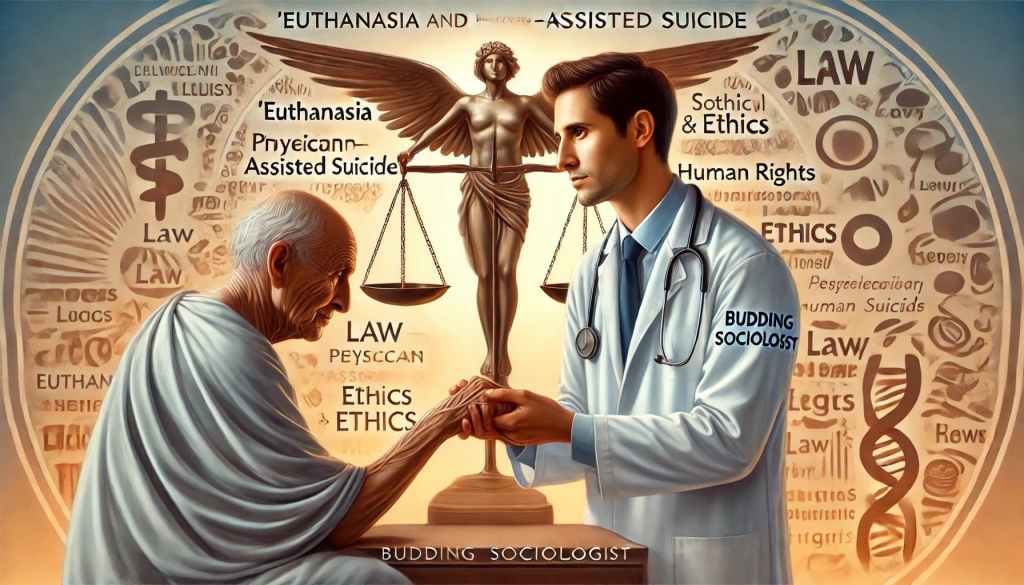
Euthanasia, often referred to as “mercy killing,” is the act of deliberately ending a person’s life to alleviate extreme suffering. In the United States, euthanasia remains illegal, while physician-assisted suicide (PAS), where a doctor prescribes life-ending medication that the patient administers, is permitted in certain states under strict legal conditions. The ethical debate over euthanasia in the U.S. is multifaceted, touching on moral, legal, medical, and religious concerns. Advocates argue that individuals suffering from terminal illnesses should have the right to end their lives on their own terms, emphasizing personal autonomy, the relief of suffering, and the dignity of dying without prolonged pain. Supporters also point to countries such as Canada and the Netherlands, where euthanasia is legal with strict safeguards, as potential models for future policy considerations in the U.S.
Conversely, critics caution against legalizing euthanasia, fearing it could lead to coercion or the devaluation of lives, particularly among vulnerable groups such as the elderly and disabled. Many religious organizations, especially those rooted in Christianity, contend that human life is sacred and that only a higher power should determine when it ends. The medical community is also divided on the issue; while some healthcare professionals believe euthanasia aligns with compassionate end-of-life care, organizations like the American Medical Association (AMA) maintain that it conflicts with a physician’s ethical duty to preserve life and do no harm. Opponents also argue that better access to palliative care and mental health support could reduce the demand for assisted dying and prevent hasty decisions made in times of distress.
Legally, euthanasia is prohibited across all U.S. states, but physician-assisted suicide is authorized in Oregon, Washington, California, Montana, Vermont, Colorado, Hawaii, New Jersey, Maine, and New Mexico under strict regulations. Laws such as Oregon’s Death with Dignity Act require patients to have a terminal diagnosis with a prognosis of six months or less to live, be mentally competent, and make repeated voluntary requests. The Supreme Court has ruled that there is no constitutional right to assisted dying, leaving the matter to state legislation. As public attitudes continue to evolve, debates over euthanasia persist, raising fundamental questions about individual rights, medical ethics, and society’s role in end-of-life decisions.
Types of Euthanasia
Euthanasia is broadly classified into active and passive euthanasia, and further divided based on the level of patient consent into voluntary, non-voluntary, and involuntary euthanasia. Another related concept is physician-assisted suicide (PAS), which is often confused with euthanasia but has distinct legal and ethical implications. Following are the types of euthanasia:
1. Active Euthanasia: Active euthanasia refers to the intentional act of ending a person’s life through a direct intervention, such as administering a lethal injection or giving a patient a fatal dose of medication. This form of euthanasia is carried out with the explicit purpose of relieving suffering, particularly in cases of terminal illness. It is considered the most controversial type because it involves a deliberate act that hastens death. Proponents argue that active euthanasia allows individuals to die with dignity and avoid prolonged pain, while opponents believe it contradicts medical ethics, particularly the principle of “do no harm.” In the United States, active euthanasia is illegal in all states, as it is classified as homicide, regardless of whether the patient consents. Countries such as the Netherlands, Belgium, and Canada have legalized active euthanasia under strict conditions.
2. Passive Euthanasia: Passive euthanasia occurs when life-sustaining treatments or medical interventions are withheld or withdrawn, allowing the patient to die naturally. Unlike active euthanasia, this type does not involve a direct action to cause death but rather an omission that leads to the end of life. Common examples of passive euthanasia include disconnecting a ventilator, stopping artificial feeding or hydration, or choosing not to resuscitate a patient who experiences cardiac arrest. In the United States, passive euthanasia is generally legal when the patient has expressed their wishes through an advance directive, such as a living will or Do Not Resuscitate (DNR) order. Ethical debates surrounding passive euthanasia focus on whether withholding treatment is morally different from actively causing death. Many argue that allowing a person to die naturally is ethically justifiable when treatment only prolongs suffering without improving quality of life.
3. Voluntary Euthanasia: Voluntary euthanasia occurs when a mentally competent patient makes an informed and explicit request to end their life. This can be either through active means (such as a lethal injection) or passive means (such as withdrawing life support). The key factor in voluntary euthanasia is patient consent—the individual must freely and repeatedly express their desire to die without external pressure. Supporters argue that voluntary euthanasia respects personal autonomy, allowing individuals to choose a dignified death rather than endure unnecessary suffering. Critics, however, worry that legalizing voluntary euthanasia could create societal pressures, particularly for elderly, disabled, or financially disadvantaged individuals who might feel obligated to choose death as a way to reduce the burden on their families. In the U.S., voluntary active euthanasia is illegal, but voluntary passive euthanasia is legal when guided by the patient’s advance directive or a legally authorized surrogate decision-maker.
4. Non-Voluntary Euthanasia: Non-voluntary euthanasia is performed when the patient is incapable of making a decision or providing consent, and the choice is made by family members or medical professionals. This situation often arises in cases of patients in persistent vegetative states, severe brain damage, advanced dementia, or irreversible coma, where they are unable to communicate their wishes. A well-known example of a non-voluntary euthanasia case is that of Terri Schiavo, a Florida woman in a persistent vegetative state whose husband sought to remove her feeding tube while her parents opposed the decision, leading to a prolonged legal battle. In the U.S., passive non-voluntary euthanasia is legal under certain conditions—such as when a court or a designated healthcare proxy makes the decision—but active non-voluntary euthanasia remains illegal. Ethical concerns surrounding non-voluntary euthanasia include the potential for abuse, misinterpretation of a patient’s best interests, and the difficulty of making irreversible decisions without explicit consent.
5. Involuntary Euthanasia: Involuntary euthanasia occurs when euthanasia is performed against the patient’s will or without their consent, despite them being capable of making a decision. This type of euthanasia is widely regarded as unethical and illegal, as it violates fundamental human rights. Involuntary euthanasia is often equated with murder because the patient has either explicitly refused euthanasia or has not been given the opportunity to consent. Historical examples of involuntary euthanasia include cases where governments or medical institutions have ended the lives of individuals deemed “unworthy” to live, such as during Nazi Germany’s T4 program, where thousands of disabled individuals were euthanized without consent. While there are no known legal cases of involuntary euthanasia in modern U.S. healthcare, concerns remain about potential coercion or abuse, especially in vulnerable populations. The fear of involuntary euthanasia is one of the main reasons why opponents argue against legalizing any form of euthanasia, as it could create a “slippery slope” leading to unethical practices.
6. Physician-Assisted Suicide (PAS) vs. Euthanasia: Physician-assisted suicide (PAS) is closely related to euthanasia but has a key distinction: in PAS, the physician provides the means for the patient to end their own life, but does not directly administer the lethal substance. This usually involves prescribing a lethal dose of medication that the patient must self-administer. In contrast, euthanasia requires a third party to actively end the patient’s life. PAS is legal in several U.S. states, including Oregon, Washington, California, Vermont, and others, under strict regulations such as requiring multiple voluntary requests, mental competency evaluations, and a terminal illness diagnosis with a life expectancy of six months or less. Ethical debates around PAS are similar to those concerning euthanasia, with advocates emphasizing personal autonomy and dignity, while opponents argue that it could lead to pressure on vulnerable individuals to end their lives prematurely.
Conclusion: The various types of euthanasia differ based on the level of patient consent and the method used to end life. Active euthanasia, which involves direct action, is illegal in the U.S., while passive euthanasia, which involves withdrawing treatment, is legally permitted under certain conditions. Voluntary euthanasia is based on the patient’s informed request, whereas non-voluntary euthanasia applies to cases where the patient cannot decide. Involuntary euthanasia is universally condemned as unethical and illegal. Physician-assisted suicide (PAS), though not technically euthanasia, is legally permitted in some U.S. states under strict conditions. The ethical debates surrounding these forms of euthanasia continue to shape medical policies and influence discussions on the right to die versus the sanctity of life.
Legal Status of Euthanasia and Physician-Assisted Suicide
In the U.S., active euthanasia, where a physician directly administers a lethal substance to end a patient’s life, is prohibited across all states. However, physician-assisted suicide (PAS)—where a physician provides medication that the patient voluntarily consumes to hasten death—is legal in certain states under strict conditions.
Since there are no federal laws explicitly allowing or prohibiting PAS, the issue is left to individual states, leading to a varied legal landscape. Some states have passed laws permitting PAS, while others have explicitly criminalized the practice. Additionally, a few states have court rulings that provide legal protections for PAS without formal legislation.
1. Federal Influence on PAS and Euthanasia: Although there is no federal law that directly legalizes or bans PAS, several U.S. Supreme Court rulings have influenced its legal status:
- Washington v. Glucksberg (1997): The Supreme Court ruled that the U.S. Constitution does not guarantee a right to physician-assisted suicide, allowing states to decide whether to permit or prohibit the practice.
- Vacco v. Quill (1997): The Court differentiated between a patient refusing life-sustaining treatment (which is legal) and a physician actively assisting in suicide (which states may regulate or ban).
- Gonzales v. Oregon (2006): The Supreme Court ruled that the federal government could not use the Controlled Substances Act to penalize doctors who prescribe life-ending medication under Oregon’s PAS law.
These rulings have established that individual states have the authority to regulate PAS while ensuring that federal agencies do not overstep their boundaries in interfering with state laws.
States Where Physician-Assisted Suicide is Legal
As of today, 10 states and Washington, D.C. allow physician-assisted suicide through legislative measures or court rulings. These states have established laws outlining strict eligibility criteria for terminally ill patients seeking PAS.
| State | Law Enacted |
| Oregon | 1997 (Death with Dignity Act) |
| Washington | 2008 (Death with Dignity Act) |
| Montana | 2009 (Court ruling: Baxter v. Montana) |
| Vermont | 2013 (Patient Choice and Control at End of Life Act) |
| California | 2016 (End of Life Option Act) |
| Colorado | 2016 (End of Life Options Act) |
| Washington D.C. | 2017 (Death with Dignity Act) |
| Hawaii | 2019 (Our Care, Our Choice Act) |
| New Jersey | 2019 (Medical Aid in Dying Act) |
| Maine | 2019 (Death with Dignity Act) |
| New Mexico | 2021 (Elizabeth Whitefield End-of-Life Options Act) |
Eligibility and Safeguards
Each of these jurisdictions has stringent requirements to ensure PAS is only available to terminally ill patients who make a well-informed and voluntary decision. Common requirements include:
- The patient must be at least 18 years old and a legal resident of the state.
- A terminal illness diagnosis with a life expectancy of six months or less must be confirmed by medical professionals.
- The patient must make multiple requests, including a written request, over a specified period.
- A mandatory waiting period (usually 15 days or longer) applies between requests.
- The patient must be evaluated for mental competence to ensure they can make an informed decision.
- The prescribed medication must be self-administered by the patient.
- Healthcare providers and institutions retain the right to opt out of participation.
These measures are in place to protect vulnerable individuals from coercion and ensure that PAS is carried out responsibly.
States That Prohibit PAS
Several states have explicitly banned physician-assisted suicide through laws, constitutional amendments, or legal rulings. These include:
- Alabama
- Arkansas
- Georgia
- Idaho
- Indiana
- Louisiana
- Missouri
- North Carolina
- South Carolina
- South Dakota
- Tennessee
- Texas
- Utah
In these states, any form of assistance in suicide is a criminal offense, often classified as manslaughter or homicide.
Montana’s Unique Legal Status
Montana differs from other states because PAS is neither explicitly legalized nor prohibited through legislation. Instead, the Montana Supreme Court’s Baxter v. Montana (2009) ruling established that state law does not prevent doctors from prescribing lethal medication to terminally ill patients who request it. However, Montana lacks specific legal protections for physicians who participate in PAS, creating legal ambiguity. Unlike other PAS-permitting states, Montana does not have a formalized regulatory framework governing the practice.
Current Legal and Legislative Trends
The debate over PAS continues to evolve, with new legislative efforts emerging in several states.
Attempts to Expand PAS Laws: Several states, including Massachusetts, Connecticut, and Maryland, have introduced bills to legalize PAS. While these efforts have faced challenges, they reflect growing public interest in expanding end-of-life options.
Challenges to Existing PAS Laws: Opposition groups have attempted to repeal or challenge PAS laws in states where they are legal. For example:
- California faced legal challenges that briefly overturned its PAS law in 2018, though the law was later reinstated.
- Oregon has debated removing the residency requirement, raising concerns about “suicide tourism.”
These ongoing legal battles highlight the deeply divided opinions on PAS in the U.S.
Comparison with Other Countries: The U.S. approach to PAS is more restrictive compared to some other nations:
- Canada legalized Medical Assistance in Dying (MAID) in 2016, allowing both PAS and active euthanasia under strict guidelines.
- The Netherlands, Belgium, and Luxembourg permit both PAS and euthanasia for terminal and non-terminal patients under certain conditions.
- Switzerland allows assisted suicide, including for non-residents, leading to “suicide tourism.”
These international laws demonstrate a broader acceptance of euthanasia and PAS in some parts of the world compared to the U.S.
Conclusion: Euthanasia and physician-assisted suicide remain legally complex and ethically controversial topics in the U.S. While PAS is permitted in a growing number of states, active euthanasia remains illegal nationwide. As legal and medical discussions continue, future legislative changes may shape the landscape of end-of-life care in the country.
Arguments in Favour of Euthanasia & Physician-Assisted Suicide (PAS)
Supporters of euthanasia and physician-assisted suicide (PAS) argue that individuals facing terminal illnesses or unbearable suffering should have the right to make informed decisions about their own lives, including the right to die with dignity. Their arguments are based on principles of personal autonomy, compassion, medical ethics and economic considerations. Following are arguments in favour:
1. Respect for Personal Autonomy: A primary argument for euthanasia and PAS is the belief that individuals have the right to make choices about their own lives, including the decision to end their suffering. In cases of terminal illness, where recovery is not possible, patients should have control over their end-of-life decisions. Just as individuals can decline medical treatments or sign Do-Not-Resuscitate (DNR) orders, they should also have the option to choose a peaceful and dignified death on their own terms.
2. Alleviation of Suffering: Many terminal diseases, such as late-stage cancer, ALS and multiple organ failure, lead to severe and persistent pain that cannot always be effectively managed by medical care. Even with palliative treatments, some patients endure unbearable suffering. Allowing euthanasia or PAS provides an alternative for individuals who wish to avoid prolonged agony and instead experience a compassionate, painless passing.
3. Prioritizing Quality of Life Over Prolonged Survival: Life is meaningful when it is accompanied by dignity, independence, and basic functional abilities. When an illness causes irreversible decline—such as the inability to move, speak, or recognize loved ones—some individuals may see continued existence as a burden rather than a benefit. Supporters argue that patients should have the choice to end their lives when they feel their quality of life has diminished beyond what they find acceptable.
4. Preserving Dignity and Control: Many individuals fear not just death, but the loss of control and dignity that often comes with terminal illnesses. Conditions that leave patients entirely dependent on caregivers for everyday tasks can strip them of their sense of self-worth. Euthanasia and PAS provide an opportunity for those who do not wish to endure a prolonged decline to take control over their passing and maintain a sense of dignity in their final moments.
5. Reducing the Financial and Emotional Strain on Families: The cost of medical care for terminal patients can be overwhelming, particularly in the U.S., where healthcare expenses can reach hundreds of thousands of dollars. Extended hospital stays, life-support machines, and long-term care facilities place significant financial burdens on families. In addition, witnessing a loved one suffer can be emotionally devastating. Euthanasia allows patients to make an informed decision to ease both their own suffering and the strain on their families.
6. Legal Consistency with the Right to Refuse Treatment: Patients already have the legal right to decline life-saving medical interventions, such as ventilators, feeding tubes, and resuscitation. This demonstrates that individuals have the power to determine the course of their medical care, even if their choice results in death. Advocates argue that euthanasia is simply an extension of this right, as it allows individuals to proactively decide when and how they die rather than relying on passive withdrawal of medical treatment.
7. Existing Medical Practices Already Shorten Life in Some Cases: In end-of-life care, doctors frequently administer high doses of pain-relieving drugs, such as morphine, knowing that these medications may hasten death. This practice, justified under the ethical principle known as the “doctrine of double effect,” is widely accepted. Additionally, terminal sedation—where patients are placed in a medically induced coma until death—effectively allows individuals to pass away without suffering. Euthanasia and PAS provide a more direct and transparent way to help individuals who wish to avoid unnecessary suffering.
8. Growing Public Support and Global Acceptance: Many countries, including Canada, the Netherlands, Belgium, and Switzerland, have legalized euthanasia or PAS under strict regulations. These nations have shown that proper legal frameworks can prevent abuse while allowing individuals to make their own choices. In the U.S., states like Oregon, Washington, and California have enacted PAS laws with rigorous safeguards, and public opinion polls indicate growing support for expanding these rights nationwide.
9. Avoiding Unnecessary Medical Intervention: Advances in medical technology have made it possible to sustain life far beyond what was once natural, but just because a life can be prolonged does not always mean it should be. Many patients are kept alive through feeding tubes, respirators, and aggressive treatments even when there is no chance of recovery. Advocates for euthanasia argue that individuals should have the option to forgo these interventions in favour of a more peaceful, planned death.
10. Addressing Psychological and Emotional Suffering: Beyond physical pain, many terminally ill patients experience profound psychological distress, including depression, anxiety, and a loss of purpose. The knowledge that they are facing a slow, painful decline can be mentally agonizing. Some patients fear becoming a burden to their families or losing their ability to make decisions. Euthanasia and PAS offer a means for individuals to take control of their final days, relieving both physical and emotional suffering.
Conclusion: Supporters of euthanasia and PAS emphasize the importance of personal choice, compassion, and respect for individual dignity. They argue that individuals facing incurable illnesses should have the right to decide when and how they die, rather than being forced to endure unnecessary pain. By implementing strict regulations and medical oversight, these practices can be safely and ethically offered to those who seek them. As attitudes toward end-of-life care evolve, the debate over euthanasia and PAS in the U.S. will continue to shape future legal and ethical discussions.
Arguments Against Euthanasia & Physician-Assisted Suicide (PAS)
Opponents of euthanasia and PAS argue that legalizing these practices raises serious ethical, medical, and societal concerns. While proponents emphasize autonomy and compassion, critics believe euthanasia undermines the value of human life, creates opportunities for abuse, and contradicts the fundamental principles of medical ethics. Following are the detailed arguments against euthanasia and PAS:
1. The Inherent Value of Life: Many opponents of euthanasia argue that human life is inherently precious and should not be intentionally ended, regardless of suffering or terminal illness. The concept of life’s sanctity is deeply rooted in various moral, religious, and legal principles, asserting that no person or institution should have the authority to take a life. Many religious beliefs, including Christianity, Islam and Judaism, oppose euthanasia, emphasizing that life is a sacred gift and only a higher power has the right to determine its end. From this perspective, euthanasia undermines society’s moral foundations and suggests that some lives are less valuable than others.
2. The Risk of Expanding Euthanasia Laws: A major concern among critics is the slippery slope argument, which suggests that once euthanasia is legalized under specific conditions, the scope will inevitably expand. Evidence from countries such as the Netherlands and Belgium, where euthanasia was initially restricted to terminally ill patients, shows that it has gradually extended to individuals with psychiatric conditions, disabilities, and even minors. Detractors fear that normalizing euthanasia could lead to a broader acceptance of assisted death for those who are not terminally ill, increasing the risk of abuse and wrongful deaths. In the U.S., concerns have been raised that financial burdens and limited healthcare access could pressure vulnerable individuals into choosing euthanasia as a more “convenient” option.
3. Conflict with Medical Ethics: The fundamental responsibility of healthcare professionals is to preserve life and alleviate suffering, as outlined in the Hippocratic Oath and other medical ethics guidelines. Allowing physicians to assist in euthanasia contradicts this principle by shifting their role from caregivers to life-ending agents. Many doctors argue that their duty is to improve the quality of life through compassionate care rather than hastening death. Furthermore, legalizing euthanasia could lead to a loss of trust between patients and healthcare providers, with some individuals fearing that doctors may encourage euthanasia rather than exploring all possible treatment options.
4. The Potential for Misdiagnosis and Unexpected Recovery: Medical diagnoses are not always accurate, and there have been cases where patients given a terminal prognosis have outlived their expected lifespan or even recovered. Diseases can progress unpredictably, and medical advancements continue to offer new treatments. Critics argue that legalizing euthanasia could result in premature decisions based on incorrect prognoses, denying patients the chance for possible recovery. Notable cases, such as that of physicist Stephen Hawking—who was given only a few years to live but survived for decades—demonstrate that predicting the course of an illness is often uncertain.
5. Impact on Suicide Prevention Efforts: Euthanasia and assisted suicide present a paradox in the context of suicide prevention programs, which aim to support individuals experiencing mental health crises. Legalizing euthanasia for those suffering from terminal or chronic illnesses may unintentionally send the message that certain lives are not worth preserving. Many terminally ill patients experience depression and moments of hopelessness, but studies suggest that adequate psychological and emotional support can significantly improve their outlook. Critics argue that instead of permitting euthanasia, society should focus on expanding access to mental health services and palliative care to help individuals find meaning and comfort in their remaining time.
6. Vulnerability of Elderly and Disabled Individuals: Elderly and disabled individuals are particularly susceptible to societal and familial pressures, raising concerns that euthanasia could become a means of coerced death rather than a voluntary choice. Financial difficulties, limited healthcare resources, and feelings of being a burden may push individuals toward choosing euthanasia, even when they do not truly wish to die. Some fear that if euthanasia becomes widely accepted, healthcare providers or family members might subtly encourage it as a cost-effective solution. Reports from Canada, where assisted dying has been offered to people with disabilities and financial struggles, highlight the ethical dangers of normalizing euthanasia for vulnerable populations.
7. The Potential for Abuse and Weak Safeguards: Even with strict regulations, there is always the possibility of euthanasia being misused. Cases from countries where euthanasia is legal show instances where individuals have been euthanized without clear consent, raising serious ethical concerns. Additionally, people suffering from dementia or cognitive decline may not be able to make an informed decision, yet euthanasia laws in some places allow surrogates to make that choice on their behalf. Critics also argue that in a profit-driven healthcare system, euthanasia could be seen as a way to reduce medical costs, making it a more financially appealing option than long-term care. These concerns highlight the difficulty of ensuring truly voluntary and well-regulated euthanasia practices.
8. Neglect of Palliative and Hospice Care: Rather than legalizing euthanasia, critics advocate for enhancing palliative care, which focuses on relieving pain and providing emotional and spiritual support for patients nearing the end of life. High-quality palliative care ensures that patients do not suffer unnecessarily and can spend their remaining time in dignity and comfort. Studies show that in countries where hospice care is well-developed, demand for euthanasia is lower. Critics argue that instead of making euthanasia more accessible, efforts should be directed toward improving pain management, expanding hospice services, and offering psychological support to patients and their families.
9. Erosion of Ethical and Legal Boundaries: Legalizing euthanasia risks blurring ethical and legal distinctions regarding the value of human life. If the law permits assisted death for terminally ill patients, critics fear it could lead to acceptance of euthanasia for individuals with non-terminal conditions, including mental illnesses and disabilities. Ethical dilemmas also arise in cases where individuals seek euthanasia due to economic hardship, loneliness, or lack of adequate healthcare, rather than unbearable suffering. Opponents argue that normalizing euthanasia could shift societal attitudes, making it easier to justify assisted dying in broader circumstances that may not align with its original intent.
10. Long-Term Cultural and Social Consequences: The widespread acceptance of euthanasia could reshape societal attitudes toward suffering, aging, and the disabled. In a culture that prioritizes convenience and cost-efficiency, there is a risk that euthanasia could become an expected or even encouraged option for those deemed to have a lower quality of life. Some fear that society’s response to suffering may shift from compassionate support to an emphasis on efficiency, devaluing perseverance and medical advancements aimed at prolonging and improving life. By rejecting euthanasia, critics argue that society affirms the principle that every human life holds dignity and worth, regardless of illness, disability, or age.
Conclusion: The debate over euthanasia and physician-assisted suicide remains one of the most complex ethical dilemmas in modern society. While proponents emphasize autonomy and relief from suffering, critics highlight concerns about potential abuse, coercion, misdiagnosis, and the erosion of medical ethics. Opponents argue that rather than legalizing euthanasia, greater efforts should be made to enhance palliative care, expand mental health resources, and ensure that all patients receive compassionate end-of-life care. The long-term implications of legalizing euthanasia must be carefully considered to protect the dignity and rights of the most vulnerable members of society.
Religious and Cultural Perspectives on Euthanasia
Euthanasia and physician-assisted suicide (PAS) remain deeply contentious topics in the United States, largely due to the influence of religious and cultural beliefs on ethical and legal frameworks. Many religious traditions consider life sacred and emphasize natural death, while others allow for nuanced perspectives depending on the circumstances. The diversity of cultures in the U.S. also adds complexity to the debate, as different ethnic and immigrant communities hold varying views on end-of-life decisions.
1. Christian Perspectives on Euthanasia: Christianity is the predominant religion in the U.S., and most Christian denominations strongly oppose euthanasia and physician-assisted suicide.
1.1 Roman Catholicism:
- The Catholic Church categorically opposes euthanasia and physician-assisted suicide, viewing them as violations of the sanctity of life and natural law.
- The Vatican’s Declaration on Euthanasia (1980) states that euthanasia is “a grave violation of the law of God.”
- Catholic teachings emphasize that suffering can have redemptive value and should be alleviated through palliative care, not by ending life.
- However, the Church allows for passive euthanasia, where life-prolonging treatments (such as ventilators or feeding tubes) can be withdrawn if they are deemed “extraordinary” or excessively burdensome.
1.2 Protestantism: Protestant views on euthanasia vary:
- Evangelical and conservative Protestant groups (e.g., Southern Baptists, Assemblies of God) strictly oppose euthanasia, citing biblical teachings that affirm the sanctity of life.
- Mainline Protestant denominations (e.g., Episcopalians, Lutherans, Presbyterians) are divided, with some supporting PAS in extreme cases where suffering is unbearable.
- The United Church of Christ has expressed openness to physician-assisted dying, recognizing autonomy and compassion as key Christian values.
1.3 Eastern Orthodox Christianity:
- Strongly opposes euthanasia, considering it a violation of divine will.
- Believes that suffering should be met with faith and palliative care, not active intervention to hasten death.
2. Judaism and Euthanasia: Jewish perspectives on euthanasia are diverse but generally lean against active euthanasia while permitting certain forms of passive euthanasia.
2.1 Orthodox Judaism:
- Strongly opposes both euthanasia and PAS, as taking life is forbidden under Jewish law (Halacha).
- Views suffering as part of God’s plan, and life must be preserved at all costs.
- Does allow for the removal of life support if a patient is terminally ill and death is imminent, provided it is done passively and not actively.
2.2 Conservative and Reform Judaism:
- More open to discussions on euthanasia, especially in cases of extreme suffering.
- Some rabbis argue that compassionate end-of-life decisions align with Jewish values of chesed (kindness) and pikuach nefesh (preservation of life), which might justify withholding life-prolonging treatments in certain cases.
- Generally supports palliative care and hospice as ethical alternatives.
2.3 Secular and Humanistic Judaism
- More supportive of physician-assisted dying, focusing on individual autonomy and dignity.
- Emphasizes ethical responsibility to reduce suffering while respecting Jewish cultural traditions.
3. Islamic Perspectives on Euthanasia: Islam strictly prohibits euthanasia and physician-assisted suicide, viewing life as a sacred gift from Allah.
3.1 Core Beliefs Against Euthanasia:
- The Quran (Surah Al-An’am 6:151) prohibits taking life unjustly: “Do not kill the soul which Allah has forbidden, except by right.”
- Hadiths reinforce that only God has the authority to give and take life.
- Sharia law considers euthanasia a form of murder, regardless of the patient’s suffering.
3.2 Palliative Care in Islam:
- Islam strongly encourages palliative care and pain management, ensuring that the terminally ill receive compassionate care without actively ending their life.
- Passive euthanasia (withholding excessive treatment) may be permissible in some interpretations, especially when prolonging life artificially is futile.
3.3 Islamic Perspectives in the U.S.:
- Many American Muslim doctors and scholars support hospice care over euthanasia.
- Muslim communities in the U.S. may struggle with hospital policies on withdrawing life support, leading to ethical dilemmas between religious beliefs and modern medical practices.
4. Hinduism and Euthanasia: Hindu views on euthanasia are diverse, influenced by beliefs in karma, dharma (duty), and the cycle of rebirth (samsara).
4.1 Arguments Against Euthanasia in Hinduism:
- Ahimsa (non-violence) – Hindu ethics discourage taking life, even to relieve suffering.
- Karma – Ending life prematurely may interfere with a person’s karma, possibly leading to negative consequences in their next life.
- Sanctity of Life – Some Hindu scriptures suggest that suffering is a test or spiritual journey, and enduring it may have a higher purpose.
4.2 Arguments Supporting Euthanasia:
- Some Hindu scholars argue that moksha (liberation) is the ultimate goal, and if a person’s suffering prevents them from attaining it, euthanasia might be justified.
- Certain Hindu traditions permit “Prayopavesa” (self-willed fasting unto death) in cases of terminal illness, but this is distinct from euthanasia as it is a voluntary spiritual act rather than medical intervention.
4.3 Hinduism in the U.S.:
- Many American Hindus align with their cultural traditions but also integrate modern medical perspectives, leading to mixed views on PAS and end-of-life care.
5. Buddhism and Euthanasia: Buddhism has a nuanced perspective on euthanasia, balancing compassion (karuna) with the principle of non-harm (ahimsa).
5.1 Traditional Buddhist Teachings:
- Taking life, even to end suffering, can generate negative karma and disrupt the cycle of rebirth.
- Suffering is part of life, and overcoming it through meditation and spiritual practice is encouraged rather than seeking euthanasia.
- Passive euthanasia (withdrawing treatment) may be seen as acceptable in certain cases.
5.2 Modern Buddhist Views:
- Some Buddhist scholars argue that euthanasia, if done with pure intentions, can be an act of compassion.
- In Theravāda Buddhism (practiced in Sri Lanka, Thailand), euthanasia is generally discouraged.
- In Mahāyāna Buddhism (Japan, China, Tibet), there is more openness to physician-assisted dying in extreme cases.
5.3 Buddhism in the U.S.:
- American Buddhists tend to support patient autonomy and palliative care, with a strong focus on mindfulness and spiritual end-of-life preparation.
6. Cultural Perspectives on Euthanasia in the U.S.:
6.1 Ethnic and Immigrant Communities:
- Latino/Hispanic communities (many of whom are Catholic) largely oppose euthanasia due to strong religious beliefs.
- African American communities often express distrust in the medical system and prefer family-based decision-making over legal euthanasia.
- Asian American communities (especially from Buddhist and Confucian backgrounds) emphasize filial piety and traditional healing, leading to mixed views on euthanasia.
6.2 Secular and Humanist Perspectives:
- Secular Americans, particularly those aligned with humanism and personal autonomy, tend to support euthanasia and PAS.
- Many argue for “death with dignity” laws, emphasizing individual rights over religious or cultural objections.
Conclusion: Religious and cultural beliefs shape the euthanasia debate in the U.S., influencing laws, medical ethics, and individual decisions. While most religious traditions oppose euthanasia, some allow for nuanced views on passive euthanasia and palliative care. Cultural diversity further complicates the debate, as different communities navigate the intersection of faith, modern medicine, and personal choice. As U.S. society becomes more secular and multicultural, the ethical and legal landscape of euthanasia will continue to evolve.
References and Readings:
Euthanasia and Physician-assisted Suicide: Killing or Caring? , by Michael Manning, https://amzn.to/4bnfJTf
The Case Against Assisted Suicide: For the Right to End-of-Life Care, by Foley, https://amzn.to/4ir9IqX
Euthanasia Examined: Ethical, Clinical and Legal Perspectives, by John Keown, https://amzn.to/4h7gil9