- Introduction
- Female Foeticide: Indian Scenario
- Causes of Female Foeticide
- Consequences of Female Foeticide
- Strategies to Combat Female Foeticide
- Conclusion
Introduction
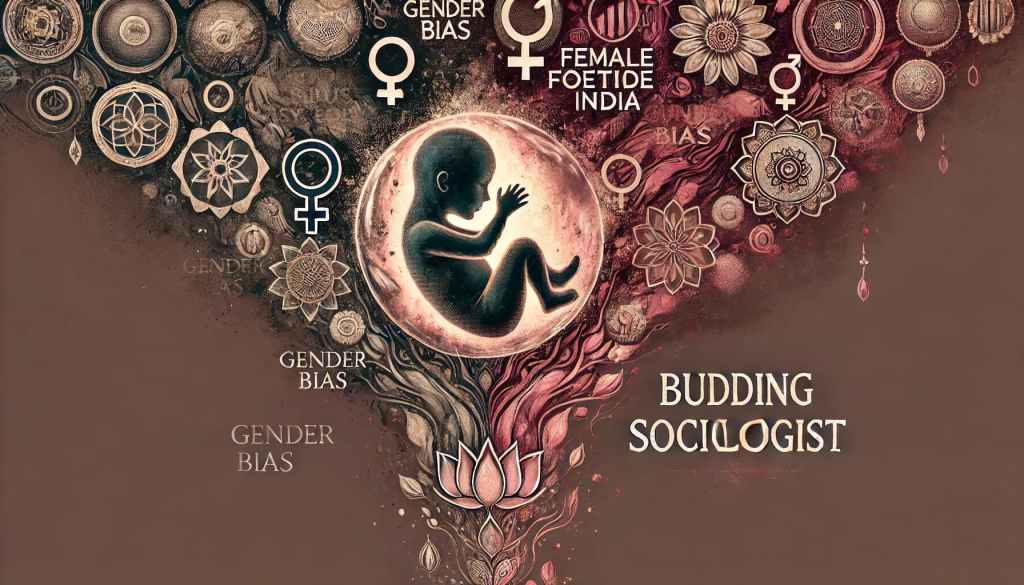
Female foeticide entails the deliberate termination of a female foetus from the mother’s womb through abortion, typically following sex determination tests such as ultrasound scans. This practice, termed as female foeticide, involves the ending of a female life before birth. It emerges from a disturbing convergence of traditional preference for male offspring, modern medical technology facilitating sex identification, alongside various societal factors such as doctors’ monetary interests and the burdensome dowry system, where daughters are seen as financial liabilities.
This issue of female foeticide has long plagued India, constituting a reprehensible act tantamount to cold-blooded murder. The deliberate termination of a female foetus based solely on gender is referred to as female feticide. This practice is often carried out upon discovering the sex of the unborn child through ultrasound scans, perpetuating a skewed gender ratio.
The prevalence of female foeticide underscores a distressing reality in India, underscored by the pervasive preference for sons over daughters, leading to a declining sex ratio. Familial pressures, whether from spouses, in-laws, or even the woman’s own parents, often compel such reprehensible actions.
Female foeticide is deeply rooted in gender-biased social constructs, reflecting systemic discrimination against women and perpetuating the notion of female inferiority within patriarchal societies. Women and girls are often perceived as economically and socially inferior to men, with daughters being deemed as burdens due to the prevalent dowry system. Families often feel compelled to marry their daughters into higher social strata, necessitating significant dowry payments in the form of land, property, or monetary assets, further exacerbating the cycle of gender discrimination.
Female Foeticide: Indian Scenario
The sex ratio, representing the number of females per 1000 males, serves as a significant metric for gauging the status and well-being of women within a society. For an extended period, countries like India, along with China and certain other South Asian nations, have grappled with a persistent deficit of females.
Of particular concern is the sex ratio within the 0-6 age bracket in India, reflecting a troubling trend. Between 2001 and 2011, it saw a decline from 927 to 914. Multiple factors contribute to this decline, including socio-economic issues like poverty and illiteracy, cultural preferences, and a bias toward male offspring.
The United Nations Children’s Fund highlights the consequences of systemic gender discrimination, estimating that as many as 50 million girls and women are missing from the Indian population. This assertion finds support in the anomalous sex ratio data recorded in the 2001 Census. Further analysis, based on fertility and mortality surveys from 1998, suggests that approximately 0.5 million female births are unaccounted for annually, indicating that around 10 million female fetuses may have been aborted over the past two decades.
Female in Indian Texts
In India, a prevailing feudal mindset perpetuates a deep-seated obsession with having sons, resulting in a skewed sex ratio that has reached critical levels in certain regions. Various studies across the country attribute this alarming trend to the practice of female foeticide.
Traditionally, ancient Indian Vedic texts accorded significant reverence to girls, portraying them as divine beings to be worshipped. Within households, women were esteemed as queens, sharing equal roles in religious rituals. Manu, a renowned lawgiver, emphasized the importance of honouring women, stating that where women are respected, divine satisfaction prevails, while disregard for them renders rites and prayers ineffective.
Despite this historical reverence for females, the preference for sons has persisted throughout Indian society. Over time, however, additional customs, rituals, and beliefs have infiltrated Indian households. Newly married brides are often blessed with wishes for numerous sons, and during pregnancy, female relatives may chant mantras hoping for a male fetus. Tragically, the practice of female infanticide has endured for centuries, with documented instances dating back to 1789, as noted by Sir Jonathan Duncan.
Female in Modern Times
Despite the advancements in technology, females continue to face bias throughout their lives, a phenomenon extending from birth to death. In Indian culture, girls are revered as goddesses, yet paradoxically, they often encounter denial of their very right to exist. This bias is starkly reflected in demographic data, as seen in the sex ratio trends over the years.
According to successive Indian censuses, the sex ratio in the 0 to 6 age group has gradually increased from 1961 to 2011. While the child sex ratio remains within the normal range in eastern and southern states, it spikes significantly in certain western and north-western regions, notably Maharashtra, Haryana, and Jammu & Kashmir. For instance, as of 2011, Maharashtra and Rajasthan reported ratios of 113 and 120, respectively.
The overall sex ratio of India, as per the latest census data, stands at 107.48 males per 100 females in 2019. This translates to 930 females per 1000 males, indicating a female population of 48.20% compared to 51.80% male population. These figures underscore the enduring challenge of gender bias faced by females in Indian society.
It is often posited that mothers are a manifestation of God’s presence because of the impossibility of divine omnipresence. Yet, it is disheartening to confront the reality that even before they can experience the wonders of the world, these divine emissaries are being unjustly denied life. Recently, the government of India has initiated various campaigns aimed at raising awareness about the significance of the girl child, accompanied by slogans such as:
- “Save the girl, save the nation”
- “Beti Bachao, Beti Padhao” (Save the Daughter, Educate the Daughter)
- “Our daughter is the bond that unites the family”
- “Female foeticide is a crime”
- “When a female foetus is terminated, it is an affront to life; halt female foeticide”
- “Say no to female foeticide”
However, it is evident that mere legislation is insufficient. Deep-rooted societal attitudes toward women must undergo transformation. Equal opportunities must be extended to the daughters of our nation, who currently lack equitable access to healthcare and education, leading them to be perceived as burdens by their parents. It is imperative to make these essential services readily available to them. By doing so, we empower them to forge their own identities and serve as inspirations for others, ultimately paving the way for a more equitable society. This transformation will not only benefit future generations but will also set a precedent for prospective parents, shaping a new societal paradigm where opportunities are equally distributed.
Causes of Female Foeticide
Various factors contribute to the practice of female foeticide, often varying based on geographical, religious, and cultural contexts. However, several common reasons underlie this phenomenon:
1. The Desire of a Boy: The primary reason behind female foeticide is the societal pressure to have a male child, viewed as a symbol of status. This pressure stems from the belief that a son will carry forward the family name, provide financial stability, and offer physical and emotional strength. Consequently, the preference for a male child leads to the tragic act of either giving birth to multiple girls or resorting to the termination of female pregnancies until a male child is conceived.
2. Obstacles in Family Line Succession for Girls: Many individuals believe that daughters cannot continue the legacy of their paternal family due to the expectation that they will move to their spouse’s family after marriage. It’s commonly assumed that daughters’ ties with their parents’ families dissolve upon marriage, leaving no one to carry on the family name or care for the parents. However, this assumption is flawed. In reality, many girls today exhibit deep devotion to their parents, often surpassing that of boys. They remain steadfastly by their parents’ side through both joyful and sorrowful times, debunking the notion that daughters forsake their parental ties after marriage.
3. Misuse of Ultrasound Technology: The ultrasound scanning device provides valuable insights into the early stages of fetal development throughout pregnancy. Regrettably, some IVF specialists abuse this technology to determine the sex of the baby, a practice that contravenes both legal and natural principles and contributes to the tragic phenomenon of female foeticide.
4. Dangers for Girls : Societal norms contribute to the tragedy of female infanticide. Young girls face harassment and ridicule from boys, whether they’re alone or in public. They endure disparaging remarks about their appearance, character, and are even subjected to sexual harassment, acid attacks, and dating violence. Consequently, parents are hesitant to allow their daughters to venture outside their homes, attend school, college, or relocate to other cities.
5. Marriage Expenses: The harmful practice of the dowry system has persisted for numerous years. Families often begin contemplating their daughter’s marriage from the moment she is born. Rather than prioritizing her education and well-being, they focus on accumulating goods and money for her eventual marriage. This tradition places a significant burden on society and contributes to the tragic deaths of many newly married women. Consequently, some parents may even hesitate to have daughters due to these societal pressures.
6. Sexual Harassment: According to a report from the United Nations on rape statistics, law enforcement annually documents around 250,000 instances of rape or attempted rape. Fear of tarnishing family reputation often deters many women from reporting such crimes, exacerbating the issue. Tragically, thousands of women worldwide fall victim to rape daily, with many losing their lives as a result. Additionally, this heinous crime significantly contributes to the practice of female foeticide.
7. Girls are not Strong like Boys: The prevailing societal belief suggests that girls are incapable of performing tasks traditionally associated with boys, leading to the alarming prevalence of female foeticide. Historically, girls have been discouraged from pursuing careers in fields such as the military, law enforcement, heavy-duty labor, clergy, transportation, and aviation. However, contemporary reality paints a different picture. Girls are breaking barriers and excelling in various domains. They possess the skill and capability to undertake any task assigned to them. All they require is an opportunity to showcase their abilities.
8. Gender Discrimination: Gender discrimination contributes significantly to the prevalence of female foeticide. Unless we address the discrimination between boys and girls, this heinous act of killing female infants will persist. It’s crucial to ensure that girls receive equal treatment and rights not just within households but also in public spaces, workplaces, and educational institutions.
9. Lack of Education: In regions with high levels of illiteracy and limited education, the incidence of female foeticide tends to be more pronounced. This trend often correlates with entrenched cultural norms that discriminate against women. Many women remain confined to domestic roles, perpetuating the belief that their primary purpose is household chores. This mindset disregards the value of women’s education and their potential contributions beyond the home.
10. Corruption in Medical Field: The medical profession, once esteemed for its integrity, has now been tainted by greed. Some doctors, driven by financial incentives, perform ultrasounds to determine the gender of the fetus in the womb. This unethical practice contributes significantly to the alarming increase in female foeticide cases, as doctors may proceed to abort female fetuses. It is imperative for medical professionals and staff to uphold their ethical responsibilities and adhere to legal regulations in their work.
Consequences of Female Foeticide
It’s a commonly held belief that every action generates a reaction, and the repercussions of this genocide are both severe and extensive. Here are the outcomes of female foeticide:
1. Skewed Sex Ratio: In India, there has been a noticeable decrease in the ratio of girls to boys over the decades. Starting at 962 girls for every 1000 boys in 1981 and declining to 945 in 1991, the trend reached its lowest point in 2001 with only 927 girls for every 1000 boys. This concerning decline continued into 2011, where the ratio stood at a precarious 914 girls for every 1000 boys.
2. Women Trafficking: Because of a scarcity of suitable life partners, young women are being sent to different regions or places in ways that defy social norms, a practice commonly referred to as illegal trafficking. These women, often girls who have recently entered puberty, are coerced into marriage for a predetermined price set by the groom. They are typically procured from nearby areas where there may be a surplus of girls. Due to their young age, pregnancies can have devastating consequences, leaving these girls vulnerable to victimization.
3. Increase in Rape and Assault: When women are at risk of becoming scarce, it’s inevitable that incidents of rape, assault, and violence will escalate. Those who survive must endure not only the trauma itself but also the apathetic stance of society for a lifetime. Despite the legal system potentially providing protection, they still grapple with the fear of isolation and humiliation.
4. Decline in Population: If there were no mothers or wombs to bring forth children, the absence of births would result in a decrease in the population of any given country. Many nations, such as China and India, are presently focused on managing their populations through various socially accepted scientific methods. However, widespread practices like female foeticide could significantly contribute to population decline in specific regions or countries.
Strategies to Combat Female Foeticide
Here are the recommended actions that can be implemented to address this issue:
1. Change in Thinking: To alter the mindset of those who believe that girls are incapable of changing the world, it’s essential to highlight the fundamental truth that every man is born from a woman. Thus, women possess the same abilities and potential as men. Mothers, in particular, should take a stand against any family member who advocates for female foeticide merely because the unborn child is a girl. Girls deserve equal nurturing and preparation for life’s challenges and careers, rather than solely being groomed for domestic roles as wives and mothers.
2. Strong Law: We must enhance and reinforce existing laws and establish international regulations to ensure that individuals carefully consider the consequences before committing significant crimes. It’s imperative to implement stringent measures against medical professionals, laboratories, and hospitals involved in activities such as abortions.
3. Alteration in Ultrasound Machines: Ultrasound device manufacturers ought to develop novel technology that conceals fetal gender identification during ultrasounds. Presently, ultrasound scans primarily serve the purpose of determining the sex of the fetus in utero. Therefore, engineers and developers should implement alterations to these machines to prevent fetal sex detection.
4. Public Awareness Programs: Both the government and citizens, regardless of their social status, must unite to combat this injustice and strive to raise awareness and promote education about gender inequality in society. Incorporating discussions on female foeticide into school and college curricula, conducting frequent awareness events in both rural and urban areas, leveraging technology for dissemination, ensuring the safety of girls, abolishing the dowry system, and addressing any other contributing factors to female foeticide are essential steps that should be taken.
In summary, it is emphasized that both boys and girls hold significance within a family unit. Each plays a vital role in shaping the future and contributing to society. It is imperative to prioritize their well-being, opportunities, and education, irrespective of gender. Let’s always keep in mind that “A family thrives not solely through the efforts of men but with the invaluable contributions of women.”
Based on the above description, it becomes evident that female foeticide presents a significant contemporary challenge, stemming from technological progress, jeopardizing the future of society. It is undeniable that the presence of girls is vital for the sustenance of the present, past, and future. Female foeticide represents a self-destructive act that undermines societal continuity. Therefore, safeguarding the girl child is imperative to ensure a secure future; failure to do so may lead to perilous consequences. Census projections indicate a potential scarcity of brides in India over the next two decades due to an adverse sex ratio. Consequently, urgent action and contemplation are warranted to address this pressing issue.