- Inequality: An Introduction
- Characteristics of Inequality
- Causes of Inequality
- Types of Inequality
- Social Inequality
- Characteristics of Social Inequality
- Measures to Address Social Inequality
Inequality: An Introduction
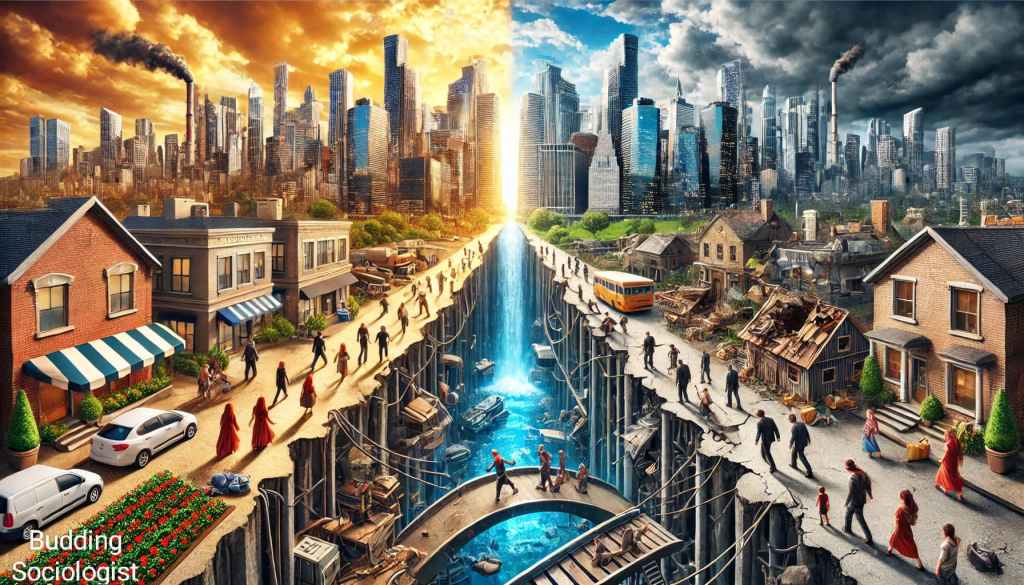
Inequality remains a widespread and complex issue impacting societies around the world. It refers to the uneven distribution of resources, opportunities and rights among different individuals and groups, often resulting in significant gaps in living standards, access to basic services and overall well-being. While some degree of inequality may arise from differences in personal effort, talent or choice, the kind of inequality that is of concern to policymakers and social advocates is frequently linked to structural, systemic and historical factors. These forms of inequality are evident in various areas, including economic, social, political and cultural domains and create obstacles that prevent individuals from realizing their full potential.
In recent years, factors like globalization, technological progress and rapid economic growth have resulted in unprecedented wealth creation. However, they have also deepened existing inequalities in many regions. The gap between the wealthy and the impoverished has grown and marginalized groups—such as women, racial and ethnic minorities and people with disabilities—continue to experience systemic exclusion and discrimination. These disparities not only limit individual progress but also threaten social unity, economic stability and the functioning of democratic systems. As a result, addressing inequality is not just a matter of fairness but also a fundamental step toward building inclusive, peaceful and sustainable communities.
Inequality extends beyond just economic disparities; it also manifests in social and political dimensions. Social inequality stems from discrimination and exclusion based on factors such as race, gender, religion or other aspects of identity, resulting in unequal opportunities and treatment. Political inequality, conversely, involves an uneven distribution of power and influence, where marginalized communities often struggle to have adequate representation or a voice in decision-making. This lack of representation can lead to policies that prioritize the interests of the powerful while sidelining the needs of the general population.
Addressing inequality is vital for building social harmony, driving economic development and maintaining the health of democratic institutions. It demands a comprehensive strategy that not only addresses the immediate effects of inequality but also tackles its underlying causes. Governments, civil society and the private sector must collaborate to create policies that ensure fair access to resources, opportunities and rights. This includes improving access to education and healthcare, implementing progressive tax systems, enhancing social safety nets and promoting inclusive governance. Ultimately, reducing inequality is not just a matter of fairness, but a crucial step toward creating resilient and sustainable societies where everyone has the chance to prosper.
Characteristics of Inequality
Social inequality is a complex and multifaceted issue that manifests in various forms across societies. Below are key characteristics that define inequality, reflecting its widespread impact on individuals and communities:
1. Economic Disparities: Economic inequality refers to the unequal distribution of resources, wealth and opportunities, leading to disparities in living standards and quality of life. The concentration of wealth and resources in the hands of a few individuals or groups creates significant economic gaps, where the wealthy have greater access to financial services, housing, education and healthcare. Inequality in earnings, wealth accumulation, and employment opportunities leaves many individuals or groups at a disadvantage, with limited upward mobility.
2. Social Stratification: Social inequality is deeply connected to social stratification, where society is divided into different hierarchical categories based on socio-economic factors. Social stratification categorizes people into classes, often separating the wealthy, middle class, and lower-income groups, with each class enjoying differing levels of power, prestige, and access to resources. This hierarchical structure limits opportunities for those in lower strata, trapping them in cycles of poverty and restricting their social and economic mobility.
3. Discrimination Based on Race, Ethnicity and Caste: Inequality often stems from discrimination based on race, ethnicity, or caste, resulting in unequal treatment and marginalization of certain groups. Individuals from racial minorities face systemic disadvantages, including limited access to education, jobs and healthcare. Social divisions along ethnic or caste lines perpetuate exclusion and discrimination, where certain groups are denied equal opportunities and social acceptance. These forms of discrimination often manifest in unequal living conditions, poor health outcomes and under representation in power structures.
4. Gender Inequality: Gender inequality refers to the unequal treatment of individuals based on their gender, often disadvantaging women and gender minorities. Women generally earn less than men for similar work, and gendered job segregation results in fewer high-paying opportunities for women. In many parts of the world, girls face barriers to education, limiting their future economic opportunities and independence. Women and gender minorities are often underrepresented in leadership roles, politics and decision-making bodies, reducing their influence on societal change.
5. Limited Access to Education and Skills: Unequal access to education and skills development is a central characteristic of social inequality, determining individuals’ life chances and opportunities. Disparities in educational resources lead to unequal educational outcomes, with children from wealthier families receiving better education than those from disadvantaged backgrounds. Access to universities and colleges is often limited by financial constraints or social status, preventing many from achieving higher educational qualifications. This unequal access to education directly affects employment prospects and contributes to the persistence of poverty across generations.
6. Health Inequality: Health inequality refers to the uneven distribution of health resources and outcomes, which varies depending on socio-economic, geographic, and demographic factors. Because of disparities in health outcomes the disadvantaged groups typically experience poorer health outcomes, including higher rates of chronic illnesses and lower life expectancy. The access to healthcare system specifically for lower-income or marginalized communities is not available equally. This is determined on the basis of social determinants like poverty, housing, and employment status further contribute to health inequality, limiting opportunities for individuals to lead healthy lives.
7. Political and Legal Inequality: Inequality in political and legal spheres involves unequal participation in political processes, as well as disparities in legal protections and rights. Marginalized groups, such as racial minorities or the economically disadvantaged, often have limited political representation, which leads to policies that fail to address their needs. Discriminatory laws or practices can suppress voter participation among certain groups, making it difficult for them to influence political outcomes. Some groups face biases within the legal system, where they may receive harsher sentences, unequal protection or be subject to discriminatory laws.
8. Social Exclusion: Social exclusion occurs when individuals or groups are systematically marginalized and excluded from full participation in societal life. Certain cultural, religious, or linguistic groups may be socially excluded, leading to their limited integration into mainstream society. People from low-income backgrounds are often excluded from the benefits of social welfare systems, including housing, employment and education. Rural or isolated communities may lack access to essential services like healthcare, transportation or educational institutions, further deepening social divides.
9. Intersectionality: Intersectionality refers to the interconnected nature of various forms of inequality (e.g., race, gender, class, etc.) that interact to create compounded disadvantages. Individuals from multiple marginalized groups face a unique set of challenges and experiences. For example, a woman from a racial minority may face both gender and racial discrimination, which together create a deeper form of inequality. This intersectional perspective helps us understand that inequality cannot be fully addressed by looking at individual factors in isolation.
10. Invisibility and Stigmatization: Some groups or individuals experience inequality through being rendered invisible or stigmatized, where their needs, identities, or contributions are overlooked or devalued. Certain groups may be marginalized in cultural narratives or media, which leads to their exclusion from societal discussions. Negative stereotypes and prejudices often result in social stigmas attached to certain groups, which can have severe social and psychological effects, affecting their opportunities and self-worth.
On the basis of above description, it can be stated that inequality is a persistent issue that affects multiple aspects of social life, including economic, educational, political and health outcomes. Its various characteristics—economic disparity, social stratification, and exclusion based on race, gender, and other factors—combine to create and reinforce disparities between individuals and groups. Addressing inequality requires systemic change, with policies and practices designed to promote inclusivity, equality of opportunity, and the fair distribution of resources across all segments of society.
Causes of Inequality
Inequality refers to the uneven allocation of resources, opportunities and advantages within communities and between nations. It appears in several forms, such as economic, social, political and educational, often influenced by deep-rooted historical, structural and cultural factors. While some level of inequality is natural in any society, persistent or extreme disparities can impede social unity, economic development and individual prosperity. Recognizing the underlying causes of inequality is crucial for finding effective solutions to promote a more just and fair society:
1. Historical Factors: Historical events such as colonialism, slavery, segregation and caste-based discrimination have created lasting impacts on inequality. Colonial powers exploited local resources and disrupted indigenous economies, leaving many former colonies with fragile institutions and significant socio-economic divides. In India, the caste system has long hindered the social and economic advancement of lower castes, reinforcing rigid social hierarchies. These past injustices continue to limit marginalized groups’ access to education, jobs and economic opportunities, ensuring that inequality is passed down through generations.
2. Structural Factors: Structural inequalities are deeply ingrained in the economic, political and social frameworks that govern societies, influencing how wealth, power and opportunities are distributed. In capitalist systems, wealth tends to accumulate more for those who own assets—such as business owners and investors—than for workers, leading to large disparities in both income and wealth. The labour market amplifies these inequalities by offering higher rewards to individuals with specialized skills, while those with fewer qualifications or skills earn significantly less. Globalization and technological advancements like automation further deepen these divides. On the political front, ineffective governance and corruption allow powerful elites to consolidate both wealth and political influence, often disregarding the needs of disadvantaged groups. This uneven political representation enables the rich and powerful to shape policies that primarily serve their interests, leaving the larger population with fewer benefits.
3. Social and Cultural Norms: Social and cultural norms are pivotal in sustaining and reinforcing inequality. Discrimination rooted in race, ethnicity, gender and religion often restricts marginalized groups from accessing essential resources like education, employment and healthcare. For example, racial minorities frequently encounter systemic obstacles in housing and the job market, while women, especially in patriarchal societies, face gender-based discrimination that hinders their economic and social involvement. Cultural practices, such as caste discrimination in India or rigid gender roles that curtail women’s independence, further entrench inequality. These entrenched norms perpetuate a cycle of exclusion, preventing disadvantaged groups from seizing opportunities for social and economic advancement.
4. Technological Change: While technological advancements fuel economic growth and promote innovation, they can also deepen existing inequalities. Automation and artificial intelligence have boosted productivity, but the benefits are primarily seen by high-skilled workers, while low-skilled workers face the threat of job loss and stagnant wages. Another significant challenge is the digital divide, where access to technology and digital skills is not evenly distributed. Rural areas and low-income communities often lack the necessary resources to fully engage in the digital economy. This gap restricts access to education, employment and vital services for disadvantaged groups, further widening social and economic disparities.
5. Globalization: Globalization has integrated economies and boosted trade, but it has also contributed to growing disparities both within and between countries. The imbalanced nature of international trade often results in developing nations being reliant on exporting raw materials while importing finished products, which can have negative economic consequences. Additionally, many developing countries face significant debt burdens, compelling them to adopt strict measures that reduce social spending and worsen poverty levels. Domestically, globalization has fuelled urbanization, leading to the concentration of wealth and opportunities in cities, while rural areas remain marginalized. Furthermore, the migration of skilled workers from developing nations to more developed countries, known as “brain drain,” robs these nations of valuable talent and expertise, increasing inequalities at both global and regional levels.
6. Educational Inequality: Education plays a crucial role in facilitating social and economic advancement, but opportunities for quality education are still unevenly distributed. Children from low-income households, rural regions and marginalized groups often face significant challenges in accessing well-resourced schools, experienced educators and adequate learning materials. Schools in underprivileged areas may struggle with insufficient infrastructure, which negatively impacts educational achievement and limits access to higher education opportunities. Additionally, the cost of higher education serves as a major barrier for many students, deepening the cycle of poverty. This difference in educational access hinders individuals’ ability to develop the skills necessary for well-paying careers, thereby perpetuating social and economic inequality across generations.
7. Inheritance and Wealth Transfer: Wealth inequality is often sustained through inheritance and the transfer of assets between generations. Wealthy families pass down property, businesses and financial investments to their heirs, giving them considerable economic advantages. In contrast, families with little or no wealth face challenges in providing similar opportunities for their children, such as access to quality education or the capital needed to start a business. This pattern of wealth concentration enables well-to-do families to preserve their economic and social standing over time, while less wealthy families struggle with limited opportunities for upward mobility. Thus, inheritance and wealth transfer contribute significantly to perpetuating and deepening inequality across generations.
8. Health Inequality: Health inequality stems from disparities in access to essential resources like healthcare, nutritious food, clean water and safe living environments. These gaps are often influenced by factors such as socio-economic status, geographical location and social identity. Marginalized and low-income communities often reside in areas with limited healthcare services, leading to higher rates of illness and lower life expectancy. Financial limitations further limit access to quality healthcare and increases health differences. Additionally, issues such as racial discrimination within healthcare systems and unequal allocation of medical resources contribute to widening these inequalities. Health inequality not only impacts individuals’ well-being but also hinders productivity and economic development on a broader scale.
9. Environmental Inequality: Environmental inequality refers to the disproportionate exposure of different social groups to environmental risks and unequal access to environmental amenities. Marginalized and low-income communities are often located in areas with higher pollution levels, hazardous waste sites and limited access to clean water and air. These communities are also more vulnerable to climate change impacts, such as flooding, droughts and extreme weather events, due to their lack of resources for adaptation and recovery. In contrast, wealthier populations benefit from cleaner environments, renewable energy sources and better disaster preparedness. This disparity not only harms health and well-being but also deepens socio-economic inequalities by disproportionately affecting already disadvantaged groups.
10. Legal and Justice Inequality: Legal and justice inequality arises when specific groups face unequal access to legal representation, fair trials and just outcomes. Marginalized populations, including racial and ethnic minorities, low-income individuals and women, often encounter systemic bias within the legal framework. These groups are more prone to wrongful arrests, harsher sentencing and limited access to legal counsel due to financial problems. Additionally, certain laws or policies may disproportionately target particular behaviours or communities, further entrenching inequality. Such disparities within the justice system undermine trust in legal institutions, promote social exclusion and perpetuate cycles of poverty and marginalization.
Types of Inequality
Inequality can be divided into various forms, each with its own set of features, underlying causes and effects. These different types of inequality are often interrelated and tend to amplify each other, which makes the issue of inequality complex and multifaceted:
1. Economic Inequality: Economic inequality refers to the uneven distribution of wealth, income and other financial resources within a society, resulting in significant differences between different individuals or groups. It is a clear and quantifiable aspect of inequality that reveals differences in people’s living standards, access to basic services and overall well-being. Several factors contribute to economic inequality, such as unequal educational opportunities, variations in inheritance and control over resources. As a result, wealth tends to become concentrated among a small segment of the population, increasing the gap between the rich and the poor. This concentration of wealth can restrict opportunities for upward mobility, deepen poverty levels and potentially lead to societal tensions and political instability.
2. Social Inequality: Social inequality refers to the uneven distribution of resources, opportunities and privileges that arise from factors like race, ethnicity, caste, religion, gender and disability. Unlike economic inequality, which is primarily driven by financial disparities, social inequality is deeply embedded in cultural, historical and institutional practices that maintain exclusion and discrimination. For example, discrimination based on race or caste can result in unequal access to education, healthcare and housing. Additionally, people from marginalized groups often encounter obstacles in obtaining justice or building social connections, which further deepens their disadvantage. The effects of social inequality are profound, contributing to societal division, reinforcing harmful stereotypes and hindering individuals from achieving their full potential.
3. Gender Inequality: Gender inequality is a form of social inequality that occurs when individuals are treated unfairly or unequally due to their gender. While it affects all genders, women and girls tend to face the most severe disadvantages. This inequality is evident in various ways, such as wage disparities, the lack of female representation in leadership positions and the prevalence of gender-based violence. Additionally, societal expectations and cultural norms often confine people to specific roles based on their gender, restricting their access to education, job opportunities and personal growth. Gender inequality not only impedes the advancement of individuals but also hampers broader economic and social progress by limiting the full potential of a large segment of the population.
4. Political Inequality: Political inequality refers to the uneven distribution of political power and influence across different sections of society. It arises when certain individuals or groups, such as elites, corporations or powerful social classes, hold disproportionate control over political processes and decision-making. This imbalance often results in policies that prioritize the interests of a select few, while sidelining the needs and concerns of the broader population, thereby weakening democratic governance and diminishing public trust in political systems. Political inequality can also be seen in practices like voter suppression, underrepresentation of marginalized communities and unequal access to civic participation, all of which can undermine the strength and integrity of democracy.
5. Educational Inequality: Educational inequality refers to the differences in access to high-quality education that arise due to factors such as socio-economic status, location, ethnicity or gender. Education plays a vital role in shaping an individual’s future opportunities and when access to it is unequal, it can reinforce cycles of poverty and marginalization. Children from less privileged backgrounds often attend schools with fewer resources, lower-quality teaching staff and limited extracurricular activities. These disparities result in gaps in knowledge and skills, which hinder their ability to compete for jobs and achieve upward mobility. Educational inequality not only restricts the potential of individuals but also limits overall economic growth and social unity by promoting a divided society.
6. Health Inequality: Health inequality refers to the disparities in access to healthcare, living conditions and opportunities for maintaining physical and mental well-being. Various factors such as income, education, race and geographic location, significantly influence an individual’s health outcomes. For instance, people with lower incomes may face challenges in accessing preventive healthcare, nutritious food and safe living environments, which can result in higher rates of chronic illnesses and reduced life expectancy. Additionally, inequalities in healthcare infrastructure, insurance coverage and cultural obstacles that discourage certain groups from seeking medical attention worsen these differences. Tackling health inequality is crucial to creating a healthier, more equitable society where all individuals have the chance to lead fulfilling lives.
Different forms of inequality impact individuals and societies in unique ways, but they are closely linked. Economic inequality tends to amplify social, gender and political inequalities, leading to a persistent cycle of disadvantage that is hard to overcome. Recognizing the various types of inequality is essential for creating effective solutions to reduce these disparities and promote a fairer and more inclusive world.
Social Inequality
Social inequality refers to the unequal and unjust distribution of resources, opportunities, rights, and privileges among individuals or groups within a society. It occurs when certain sections of society enjoy greater access to wealth, education, healthcare, political influence, or other social benefits, while others face systematic barriers and disadvantages based on factors like socioeconomic class, gender, race, ethnicity, caste, religion, or other characteristics.
This inequality stems from societal norms and structures that reinforce disparities in power and privilege. It may be overt, such as through discriminatory laws, or subtle, like cultural biases and restricted access to essential resources. Social inequality impacts various aspects of life, including economic well-being, access to education, health outcomes, and upward mobility.
Characteristics of Social Inequality
Social inequality refers to the unequal distribution of resources, opportunities, rights, and privileges among individuals or groups in a society. Below are some of key characteristics of social inequality:
1. Unequal Access to Resources: Social inequality involves disparities in access to essential resources like wealth, education, healthcare, housing, and employment opportunities. Some groups have a disproportionate share of these resources, while others struggle to meet their basic needs. For instance, economic wealth is often concentrated among a small percentage of the population, leaving many without adequate financial stability.
2. Presence of Social Stratification: Societies are divided into hierarchical layers based on criteria such as class, caste, or status. These divisions determine an individual’s position in society and their level of access to privileges and opportunities. Examples include caste-based hierarchies in India and class systems in capitalist societies.
3. Multidimensional Nature: Social inequality is multidimensional in nature and exists in following various forms:
- Economic: Differences in income and wealth.
- Political: Unequal access to power and influence in governance.
- Cultural: Favouring specific cultural practices, languages, or traditions.
- Social: Exclusion or discrimination based on gender, race, religion, or ethnicity.
4. Institutionalized in Social Structures: Social inequality is embedded in institutions like education systems, healthcare, and politics. These structures often perpetuate disparities by favouring certain groups over others. For example, unequal funding in schools in low-income areas can hinder the educational progress of marginalized communities.
5. It is Rooted in Historical Contexts: Many forms of inequality have origins in historical practices such as colonialism, slavery, feudal systems or patriarchal norms. These historical factors have shaped modern societal structures, often favouring dominant groups while marginalizing others. The effects of colonial exploitation continue to influence economic disparities between developed and developing nations.
6. Inherited Across Generations: Social inequality often becomes a cycle that is passed down through generations. Disadvantaged groups face challenges like poor education, limited job opportunities, and restricted social mobility, making it difficult to break the cycle. Children born into poverty, for example, are less likely to have access to quality education, which impacts their future prospects.
7. Relational Aspect: Social inequality is relational, meaning that the advantages enjoyed by one group often come at the expense of another. For instance, the concentration of political or economic power among elite groups often limits opportunities for marginalized communities.
8. Based on Social Characteristics: Social inequality arises from differences in characteristics such as:
- Economic Class: Income and wealth disparities.
- Gender: Discrimination against women and gender minorities.
- Race/Ethnicity: Systematic exclusion of certain racial or ethnic groups.
- Caste: Hierarchical divisions based on birth.
- Religion: Unequal treatment of religious minorities.
- Geography: Disparities between urban and rural areas or developed and underdeveloped regions.
9. Evolving in Nature: The forms and intensity of social inequality change over time. While traditional inequalities, like caste or feudal systems, may decline, new forms such as economic inequality or the digital divide may emerge. Globalization and technological advancements have introduced fresh dimensions of disparity, such as unequal access to digital resources.
10. Creates Power Imbalances: Social inequality results in uneven distribution of power, with dominant groups having greater influence in politics, business, and social institutions. Marginalized groups often have limited representation and struggle to advocate for their rights.
11. Leads to Social Exclusion: It often results in the marginalization of certain groups, denying them full participation in societal activities and access to opportunities. Exclusion can occur due to factors like race, gender, socioeconomic status, or disability. For instance, gender inequality may limit women’s participation in decision-making processes.
12. Causes Social Conflicts: Inequality often leads to tensions and conflicts within society, such as protests, uprisings, or class struggles. For example, economic disparities and systemic racism have sparked movements advocating for social and economic justice, such as the civil rights movement and feminist activism.
13. Limits Social Mobility: Inequality restricts upward mobility, making it difficult for disadvantaged groups to improve their socioeconomic status. Barriers like limited education, healthcare, and job opportunities keep marginalized individuals in their existing social strata.
14. Global Dimensions: Social inequality exists on a global scale, with disparities between nations in terms of wealth, healthcare, and opportunities. Developed countries often enjoy better standards of living, while developing nations face challenges like poverty and limited access to resources.
On the basis of above description, it can be stated that social inequality is a complex issue shaped by historical, cultural, and institutional factors. Its characteristics highlight the various ways in which inequality manifests and persists, emphasizing the need for reforms to promote equity and social justice.
Measures to Address Social Inequality
Eliminating social inequality involves a multi-faceted approach, requiring systemic changes and concerted efforts at various levels of society. Following are some of key measures to reduce social inequality:
1. Affirmative Action: Affirmative action refers to policies designed to provide special consideration to historically marginalized groups in areas like education, employment and political representation. Quotas in universities and job sectors that give preference to individuals from underrepresented communities. It will help to reduce disparities and offer equal opportunities to those who have been historically disadvantaged.
2. Wealth Redistribution: Wealth redistribution focuses on transferring resources from wealthier individuals or sectors to those in need, reducing the gap between rich and poor. It can be with the help of progressive taxation, where higher-income individuals pay a larger share of their earnings. Also, with the help of social welfare programs like unemployment benefits and subsidized housing economic inequality can be reduced.
3. Equal Education Opportunities: Ensuring equal access to education for everyone, irrespective of their socio-economic background, gender or other demographic factors can be a good measure to tackle social inequality. It can be reduced with the help of government initiatives to make education affordable or free for low-income families as well as by providing scholarships, financial aid and initiatives to improve education quality in underserved areas.
4. Legal Reforms and Protection: Changing and enforcing laws to promote equality and safeguard the rights of marginalized groups. Anti-discrimination laws that prevent unfair treatment based on race, gender or disability. Laws ensuring equal pay for equal work can remove institutionalized barriers that hinder equal rights and opportunities for all individuals.
5. Gender Equality Measures: Gender equality initiatives aim to address disparities between men and women in all spheres of life, including in the workforce and political spaces. Legislation to protect against gender-based violence and discrimination and encouraging women’s participation in leadership roles and providing equal pay for equal work. It will ensure that men and women can participate equally in all aspects of society, irrespective of gender.
6. Combatting Caste and Racial Discrimination: Addressing discrimination based on race and caste through laws and societal reforms. Enacting laws against caste-based discrimination in India and other countries on the one hand and on the other by taking affirmative action to increase representation of minorities in education and employment the social inequality can be reduced and ensure equal rights and opportunities for all individuals.
7. Expanding Access to Healthcare: Ensuring that healthcare services are available to all, particularly marginalized groups who might otherwise lack access. The universal health insurance or state-funded healthcare programs to cover essential health services and public health initiatives in underserved communities. It will reduce health disparities that often arise from unequal access to medical services, leading to improved outcomes for disadvantaged groups.
8. Social Welfare Programs: Welfare programs designed to support individuals who are economically disadvantaged, ensuring that basic needs are met. To create a safety net that ensures everyone can meet their basic living requirements, reducing extreme poverty. It can be implemented effectively by ensuring universal basic income or direct cash transfers to low-income families and food assistance programs and subsidized housing for economically vulnerable groups.
9. Economic Empowerment and Job Creation: Providing employment opportunities and encouraging entrepreneurship to boost economic independence in marginalized groups. It can be strategized by creating targeted job-oriented programs that support disadvantaged communities. Entrepreneurial training and micro-loans for individuals from low-income backgrounds. It will provide marginalized groups with the tools and opportunities to improve their economic status and reduce dependency on welfare.
10. Public Awareness and Education: Raising awareness about social inequality and encouraging inclusive attitudes through education and media campaigns. Public campaigns to challenge stereotypes and raise awareness about the impact of inequality. Inclusion of diversity and social justice topics in educational curricula. It will help to create a more inclusive society by changing public attitudes toward marginalized groups and promoting equality.
11. Promoting Political and Social Participation: Ensuring that marginalized groups have a voice in political decision-making and societal change. Policies that encourage the political participation of women, minorities and disadvantaged groups. Expanding voter rights and access, especially for those facing barriers due to location or socio-economic status.
On the basis of above description, it can be stated that addressing social inequality is a complex, ongoing challenge that requires broad and sustained efforts across multiple sectors. From legal and economic reforms to educational and healthcare access, every level of society has a role to play in reducing disparities. By implementing these measures, we can work toward a more equitable society where every individual, regardless of background, has the opportunity to succeed.