- What is Plural Society
- Meaning of Plural Society
- Characteristics of Plural Society
- India as a Plural Society
Introduction
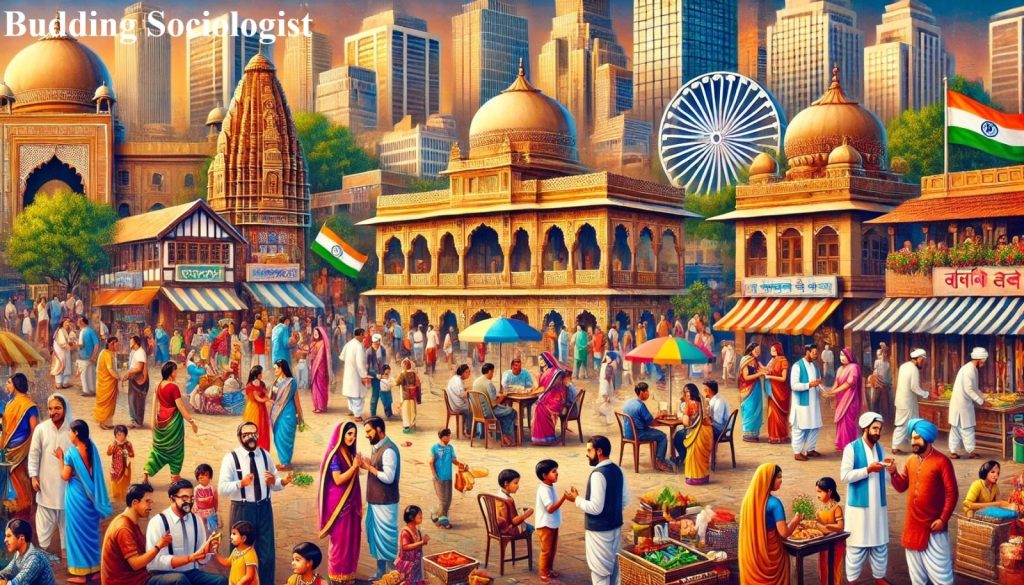
Plural societies denote the amalgamation of diverse communities with varying cultural, linguistic, and belief systems. Schools, for instance, are not mandated to group students solely based on language or culture, fostering a collective learning environment that promotes values like respect and humility. While some sociologists argued that plural societies effectively balance economic and ecological concerns, R.T. Smith critiqued this notion in 1958, contending that such a system accentuates differences without fostering unity in diversity. Philosophically, pluralism, contrasting with monism and dualism, posits that reality comprises multiple fundamental forms of existence.
In 1967, Dahl proposed the concept of a plural society, likening it to a system with a fair distribution of power. A key benefit of such a society is the inclusion of all voices, thereby mitigating inequality prevalent in other stratified systems. Initially, discussions centered on class equality, yet distinctions arose due to economic disparities resulting from class divisions. Nonetheless, pluralistic societies comprise groups unified by commonalities irrespective of economic status, class, or other barriers.
India serves as a notable example of a pluralistic society, epitomizing unity amid diversity. Despite over 2,400 castes and various religions, individuals interact as equals, exemplified by workplaces where people of diverse faiths collaborate harmoniously. Similarly, Lebanon showcases the peaceful coexistence of its main Muslim populations, Shia and Sunni, alongside the Christian minority, fostering a multicultural ethos. While achieving complete equality may be unattainable, a pluralistic society can effectively navigate and reconcile differences.
Meaning of Pluralism
Various religious traditions and cultural influences shape societies worldwide today. However, understanding pluralism is crucial. Consider these key points:
1. Pluralism goes beyond mere diversity; it involves actively engaging with diverse perspectives. Simply having a variety of religions doesn’t guarantee meaningful interaction. Without genuine encounters and relationships, societal tensions can escalate.
2. Pluralism isn’t merely about tolerance but entails actively seeking understanding across different beliefs. While tolerance is important, it doesn’t automatically foster knowledge or empathy among Christians, Muslims, Hindus, Jews, and secularists. Without efforts to bridge gaps, ignorance and stereotypes persist, fuelling division and conflict.
3. Pluralism rejects relativism and emphasizes mutual obligation. It doesn’t require individuals to abandon their identities or convictions but encourages maintaining connections amid differences. Pluralism acknowledges and respects diverse commitments, including religious ones.
4. Dialogue is central to pluralism, involving open communication, exchange of ideas, and self-reflection. It’s about both speaking and listening, uncovering common ground, and acknowledging real differences. Pluralism embraces the diversity of voices and viewpoints at the table.
A pluralistic society is one where authority isn’t centralized in a single source. Pluralists argue that sovereignty isn’t singular or exclusive but manifests diversely and can be shared. Scholars like Professor Lasky and Mr. Krabbe suggest re-evaluating the concept of sovereignty in political philosophy. Barker highlights the emergence of associations that unite individuals toward broader goals, potentially rivalling states in influence and autonomy.
The Characteristics of Pluralism
The characteristics of pluralism can be summarised as under:
1. Dominated by multiplicity: Pluralist societies are characterized by the absence of dominance by a single elite group; instead, they are governed by diverse, often smaller groups, some of which possess substantial organization and financial resources. However, it’s important to note that these groups vary in size and influence, with certain ones holding greater sway than others. Despite this, their authority is typically confined to specific domains like defence, agriculture or finance, rather than being universally pervasive.
2. Politically Sovereignty: Collective entities possess political autonomy, granting them the liberty to engage in the political arena. Their success hinges not on the benevolence of higher powers but on their capacity to rally political assets. Given the multitude of potential factions within a diverse society, political independence guarantees sustained, broad and vigorous rivalry among these entities.
3. Countervailing Influence: Countervailing involves equal opposition forces, promote inter-group competition and subsequently, the counterbalancing impact of pluralism. This dynamic tends to maintain a rough equilibrium in the power dynamics among groups. Additionally, group memberships often intersect, with individuals belonging to multiple, sometimes conflicting, groups. This overlapping membership dilutes conflict intensity as loyalties are dispersed across various organizations.
4. Openness of the System: Pluralism operates on two fronts of openness. Initially, organizations subscribing to pluralism maintain an ongoing connection to external sources. They consistently welcome new members from diverse backgrounds, ensuring a continuous influx that enables adaptation to evolving circumstances. Secondly, the presence of unexplored resources serves as a catalyst for the emergence of fresh groups. Faced with challenges to their interests or heightened awareness of injustices, individuals often band together for political advocacy, believing that collective political engagement is pivotal for effecting change within a pluralistic society.
5. Equality of Political Opportunity: Pluralists assess societies based on the extent of political opportunity available rather than absolute equality. In nations such as India, characterized by democracy, citizens engage in discourse and enjoy relatively equal chances to engage in governance. Through resource mobilization, such as gathering petition signatures, individuals can influence established groups to distribute their power or establish new entities to rival existing ones. Consequently, an increasing number of political parties and organizations, including NGOs and community-based organizations (CBOs), function as interest groups focusing on particular concerns.
6. Endless Quest for Public Support: In a pluralistic framework, organizations and individuals continually seek public backing. Citizens possess both a direct and indirect role in selecting their government, casting votes at various levels such as local wards, state assemblies, and national parliament. While direct elections determine the composition of the Lok Sabha, the Rajya Sabha members are chosen indirectly through state assembly representatives. Consequently, garnering public support remains a paramount objective in pluralistic societies. Even without direct governance, public sentiment serves as a valuable asset for organizations, influencing their interactions. In nations where popular sovereignty is deeply entrenched, there’s a pervasive need to sway public opinion, often determining success or failure through public opinion polls.
7. Influence of Leader: The populace also holds sway by electing officials, many of whom support and receive support from organized factions. This duty holds such significance that a scholar has characterized democracy as “a structured system for reaching political conclusions wherein [groups] acquire decision-making authority through vying for popular support.”
8. Consensus: Pluralism represents a shared understanding of the foundational principles guiding governance. It hinges on a collective acceptance among political participants and figures regarding democratic norms and ideals, serving as the adhesive for the system. Within this framework, there is acknowledgment of regular and transparent elections, the fundamental right to vote, adherence to majority decisions, political equality, freedom of speech, the freedom to assemble, and other regulations conducive to the maintenance of a peaceful and structured governance. This consensus allows for the accommodation of diverse viewpoints, with a crucial commitment to respecting the outcomes of elections.
9. Acceptance of Democratic Norms: Certain pluralists argue that resolving political disagreements is most effective at the upper echelons of leadership, where adherence to democratic principles tends to be stronger than among the populace. By mitigating the influence of intolerant and myopic crowds, stability and security within the system are safeguarded. Essentially, proponents of this theory contend that the enduring freedom of the U.S. government stems from the consensus among key decision-makers to uphold behavioural norms that may not be universally embraced by the broader public.
Factors responsible for the Development of Pluralism
1. The concept of constraining state authority was championed by individuals, a perspective that pluralists adopted. Nonetheless, the disparity between individualists and pluralists lies in their emphasis: individualists prioritize the rights and liberties of singular persons, while pluralists prioritize the collective rights and liberties of individuals and guilds.
2. Both individualists and pluralists stressed the necessity of collaboration among states and other entities to advance the common welfare.
3. In contemporary times, global interdependence binds nations together, necessitating the curtailment of national sovereignty.
4. Renowned figures like the German legal scholar Otto von Girke (1844-1921), F.W. Maitland, a prominent English jurist, and J.N. Figgis, along with others, contended that medieval churches and guilds were founded upon internal autonomy and sovereignty, positing them as collectively owned entities. Their argument suggests that if churches and guilds enjoyed autonomy in the Middle Ages, contemporary associations should likewise have freedom and self-governance.
5. Anarchism and guild socialism were focused on restraining national sovereignty, a principle that propelled the advancement of pluralism.
Pluralism in India
India’s rich tapestry of cultures and pluralistic society shapes discussions on education, intertwining with community dynamics and conflicts. Rather than being confined by borders, communities are defined by shared experiences. However, the current educational pursuit often disregards the societal and national ideals we aspire to. Mandated by our Constitution, India strives to be a socialist, secular, and democratic nation, emphasizing the need to minimize social disparities and prioritize social justice.
Historically, India’s social structure revolved around a rigid caste system, inherently undermining individual dignity. This reflects the “duty-first values of Indian culture” and underscores differences between Indian and European political traditions. While European political thought often emphasizes the interplay between individuals, society, and the state, India has historically viewed individuals and society as being in conflict with each other.
However, several studies examining the influence of Hindu social norms on Muslims in India have indicated that the persistence of caste among Muslims contributes to this influence, albeit incompletely explaining their predominant stratification according to caste norms in the region. Additionally, the role of certain ulama, Islamic jurists, cannot be overlooked, as they utilize the concept of kafa’a to provide religious validation to caste distinctions.
Originating from the Rig Veda, an ancient Brahmanic text, the caste system delineates a social structure aimed at preserving societal equilibrium, categorizing individuals into four main varnas, with “untouchables” (avarnas) existing outside this framework. Despite constitutional prohibitions against caste-based discrimination since India’s 1950 Constitution, such practices persist widely in society.
Both caste and religious dynamics are intertwined and multifaceted, challenging conventional notions of the nation-state. India has witnessed escalating signs of crisis over the past decade, marked by numerous social, particularly caste-based, and religious conflicts that jeopardize secularism and democracy. Consequently, re-evaluating questions concerning India’s political identity becomes imperative, necessitating open-ended dialogues. It is unrealistic to expect comprehensive solutions or a strictly logical progression in such discussions. Rather, the focus should be on raising pertinent inquiries with tangible policy and societal ramifications, guiding towards potential directions for resolution. This approach underscores the eclectic nature of dialogue, fostering a tentative exploration of concepts and conclusions within the analytical framework.
India, a vast nation characterized by its rich diversity in languages, religions, and cultural practices, presents a mosaic of lifestyles across its various regions. The distinctiveness of the cold Himalayan terrain contrasts sharply with the hot and humid climate of South India, reflecting varied clothing, customs, and ways of life. This diversity finds expression in the plethora of literature that flourishes in different linguistic realms throughout the country.
India stands as a microcosm of global ethnic amalgamation, housing diverse groups like Aryans, Dravidians, and Mongolians. However, beneath this surface diversity lies a remarkable unity forged over millennia of coexistence. This cultural cohesion was exemplified over a millennium ago by Sri Sankara, who established educational hubs at strategic locations across India’s borders: Badrinath in the north, Sringeri in the south, Dwaraka in the west, and Puri in the east. Even today, the intermingling continues, as exemplified by South Indian priests officiating rituals in the north and vice versa.
According to the 2011 census, Hinduism claims the allegiance of 79.8% of India’s populace, followed by Islam at 14.2%, with the remaining 6% adhering to Christianity, Sikhism, Buddhism, Jainism, and various indigenous faiths rooted in ethnic traditions. Notably, Christianity ranks as the third-largest religion in India. Furthermore, India harbours significant communities of followers of Judaism and Zoroastrianism, despite their non-indigenous origins. The country hosts the largest concentration of adherents to these faiths globally.
Beyond indigenous religions, India has fostered a spiritual nexus with other world religions. For instance, the Baha’i faith acknowledges figures like Buddha and Krishna as divine manifestations. This interconnectedness underscores India’s role as a beacon of religious pluralism and spiritual synthesis on the global stage.
India, renowned as the birthplace of Ahmadiyya Islam, hosts the world’s third-largest Shia population and boasts a significant Ahmadi Muslim community numbering at least two million. The country is also revered for its sacred sites, including the shrines of esteemed Sufi saints like Nizamuddin Auliya and Moinuddin Chishti, attracting pilgrims globally. Noteworthy Islamic architectural wonders, such as the Taj Mahal and the Qutub Minar, grace the Indian landscape. Civil matters within the Muslim community are governed by the Muslim Personal Law, with its primacy in family affairs established through constitutional revisions in 1985.
In addition to its Islamic diversity, India showcases a rich tapestry of religious demographics. Christians constitute the majority in Mizoram (85%), Meghalaya (64%), and Nagaland (87%), while Muslims comprise a significant portion of the population in Assam (28%) and West Bengal (24%). Buddhism thrives notably in Sikkim (27%) and Arunachal Pradesh (13%). Indigenous tribes, such as those practicing Donyi Polo in Arunachal Pradesh, venerate nature spirits, including the sun and moon.
This brief overview underscores the pluralistic essence of Indian society, a melting pot of diverse religious beliefs and cultural practices:
1. Plurality in Religion: The complex tapestry of religious traditions in India reflects a rich history of syncretism and evolution. Hinduism, often considered India’s indigenous faith, encompasses a diverse array of beliefs and practices, drawing from ancient scriptures such as the Puranas and Vedas. Its identity solidified during the Gupta dynasty, blending various regional and philosophical strands into a cohesive whole.
Challenges to Hinduism arose with the emergence of Jainism and Buddhism during the Upanishadic period, offering alternative paths focused on inner experience rather than ritual sacrifice. While Buddhism waned, Saivism and Vaisnavism flourished, reflecting a synthesis of Brahmanic and local traditions.
Islam, the second-largest religion in India, brought by various branches including Sunni, Shia, and Ismaili, has deeply influenced Indian culture, particularly evident in Muslim cities like Hyderabad. Similarly, Christianity, practiced by a growing minority, traces its roots back to ancient communities like the Syrian Christians, with conversions observed across the country.
Sikhism, with its distinctive identity symbolized by the turban and steel bangle, is professed mainly in Punjab but also has significant communities in other states. Meanwhile, Buddhism, once nearly extinct in its birthplace, experienced a revival, spurred by factors such as Dalit embrace and the resettlement of Tibetan refugees, culminating in significant conversions led by figures like B.R. Ambedkar.
Jainism, with its emphasis on nonviolence and asceticism, continues to thrive, particularly in western India, influencing diverse fields from commerce to philosophy. Its impact extends to shaping Gandhian principles of nonviolent resistance.
In essence, India’s religious landscape reflects a dynamic interplay of tradition, adaptation, and innovation, contributing to the nation’s cultural tapestry and social fabric.
2. Plurality in Languages: India’s constitution acknowledges 18 official languages, with over 1,600 dialects spoken across the country. Hindi, written in Devnagri script, holds the official status, yet English remains the working language. For many educated Indians, English practically functions as their primary language, and for numerous multilingual individuals, it serves as their secondary tongue. The nation exhibits a rich tapestry of local languages, often delineating state borders along linguistic lines. Apart from Hindi and English, widely spoken languages include Assamese, Bengali, Gujarati, Kannada, Kashmiri, Konkani, Sanskrit, Sindhi, Tamil, Malayalam, Marathi, Punjabi, Oriya, Telugu, and Urdu.
Several Indian languages trace their origins to the Indo-European family, spoken by the Aryans who migrated to India. These languages collectively form the Indo-Aryan language group. Conversely, Dravidian languages, originating in South India, have been influenced by Sanskrit and Hindi. Most Indian languages possess unique scripts and coexist with English within their respective regions.
Hindi serves as the mother tongue for approximately 20 percent of the population, primarily in the Hindi belt encompassing Bihar, Madhya Pradesh, Rajasthan, and Uttar Pradesh. It also holds the status of the official language of the Indian Union.
The transition from oral to written literature in ancient India occurred between the Ashoka and Gupta Empires. The earliest legible texts, dated to the 3rd century B.C., are Ashokan edicts. Knowledge of other ancient texts relies on scholarly reconstructions and comparison with archaeological findings such as coins, sites, and artwork.
3. Plurality in Society: Indian society is deeply rooted in its cultural fabric, with its foundation resting on the intricate Varna system comprising Brahmins, Kshatriyas, Vaisyas, and Sudras. Alongside these classifications, there exist numerous outcasts and untouchables, forming a complex social hierarchy. This hierarchical structure has been ingrained in Indian civilization for centuries, with the caste system being closely intertwined with Hinduism, a notion even revered figures like Mahatma Gandhi refrained from challenging. Gandhi, in fact, viewed caste as a natural manifestation of human disparities, attributing certain roles and duties to individuals based on their inherent abilities.
Despite claims of freedom and constitutional amendments abolishing untouchability, the Brahmanic notions of “purity” and “impurity” continue to dictate India’s social order. The extreme aversion to pollution led to the ostracization of a marginalized group known as “Untouchables,” relegated to the lowest rungs of Hindu society. Over the past century and a half, traditional caste and class structures have undergone significant transformations under the influences of Western modernity and independent Indian modernization.
Since 1950, the Indian Constitution, through Article 17, has explicitly prohibited untouchability in all its forms, signifying a legal shift towards equality. However, the deep-seated prejudices persist, albeit gradually diminishing. Dr. B.R. Ambedkar, a pivotal figure in India’s constitutional drafting process, epitomized this struggle against caste-based discrimination. His disillusionment with the system led him to embrace Buddhism, inspiring millions of others from low-caste backgrounds to convert to alternative faiths like Islam and Christianity.
Traditionally, untouchables have been responsible for providing essential services to caste Hindus, ranging from sweeping and corpse disposal to leatherwork and medicine. While legal measures have abolished untouchability in modern India, globalization has ushered in changes affecting traditional family structures and values. Historically, women were relegated to minor status, requiring protection first from their fathers, then husbands, and eventually sons, perpetuating a cycle of dependency. Even prostitutes were often considered as “God’s servants,” maintained by temple Brahmins.
Unity in Diversity
India’s rich cultural tapestry spanning millennia reveals a remarkable undercurrent of unity amidst its vast diversity, a cohesion nurtured not by the dominance of powerful factions but by the wisdom of visionaries, the introspection of saints and philosophers, and the creativity of poets and artists. However, despite this profound unity, the exploration of India’s intricate social fabric, balancing unity with diversity, has remained largely uncharted territory. This could be attributed to the challenges inherent in integrating India’s diverse society within the framework of the nation-state discourse, fraught with complexities and risks.
Language has been a persistent challenge for Indian leaders, including the late Prime Minister Jawaharlal Nehru, who approached the issue with foresight and pragmatism. The crux of the problem lies in the inadequate attention given to regional languages amidst the dominance of English and the burgeoning demand for Hindi. There is a legitimate concern that regional languages, many boasting ancient and rich literary traditions, might continue to languish as remnants of British colonial rule. To ensure the comprehensive development of these languages, they must be promoted as mediums of education across all levels, including universities. Recognizing the imperative for inclusivity, the Indian Constitution has officially acknowledged eighteen languages, striving to address the need for linguistic integration.
The term “caste” finds its origins not in indigenous Indian language but in the Portuguese term “casta,” denoting breed, race, or lineage. This aspect of Indian society has long been a subject of intense debate and scrutiny. Susan Bayly’s insightful analysis delves into the historical and anthropological underpinnings of what evolved into the so-called “caste society” from pre-colonial times to the modern era. She situates her study within India’s dynamic socio-economic framework, portraying caste not as an intrinsic element of Indian culture but as a response to the colonial-era political transformations. Additionally, Bayly explores the depiction of caste in Western and Indian orientalist discourse.
Traditionally, scholarly examinations of caste in India have predominantly focused on the classical Hindu caste system or its contemporary manifestations among Hindus. Given that caste is deeply ingrained in Hindu social structure and scriptures, the discourse has been largely Hindu-centric. Consequently, the presence of caste-like structures among non-Hindu, including Muslim, communities has often been attributed to the influence of Hinduism on these communities or their interactions with Hindu neighbours. However, such assertions rely on the problematic assumption of an initially pure and egalitarian Muslim community in India later being shaped by Hinduism.
India, boasting the title of the world’s largest democracy, boasts a rich civilization with roots extending over five millennia, drawing from multiple cultural sources. The cultural heritage of the Indian subcontinent can be traced back to the ancient Indus Valley Civilizations, whose remnants continue to be cherished today. From the late 18th century until August 15, 1947, India was under British colonial rule until gaining independence. India stands as a mosaic of diverse cultures, religions, and communities, each region offering its unique customs and traditions. Despite linguistic diversity, the unity in diversity ethos has been a hallmark of Indian culture, as evidenced by the active participation of individuals from various castes and religions throughout history.
Conclusion: India currently grapples with several pressing issues, chief among them being communalism and terrorism, posing significant threats to both humanity and the nation’s unity. Gender disparity stands out as another major concern deeply entrenched in Indian society, where biases against women persist. Predominantly male-dominated, societal and political spheres often sideline women, with customs like dowry exacerbating their subjugation. However, evolving societal awareness acknowledges women’s pivotal role, advocating for their education and greater involvement in decision-making processes. Despite strides in economic development, poverty remains rampant, depriving millions of basic necessities like healthcare, housing, and education. To truly enhance the quality of life for all citizens, substantial political reforms are imperative.
Education, still a privilege in India, remains a focal point for societal betterment. While governmental efforts aimed at providing basic education persist, the desired outcomes are yet to be realized. Lack of education emerges as a formidable barrier to national progress and must be addressed to fulfill India’s aspirations of becoming a global knowledge hub. Additionally, fostering cultural pluralism is crucial, recognizing and celebrating diverse identities without suppression. Programs promoting cultural heritage and democratic values can instill a sense of national pride and civic responsibility.
However, while advocating for pluralism, it’s vital to navigate the delicate balance between individual and collective rights, as well as the tensions between diversity and equality. Embracing diversity should not inadvertently perpetuate inequalities or hinder the pursuit of common welfare. Multiculturalism must not disregard the fluidity of identities or reinforce existing power dynamics, which can lead to marginalization and discrimination. Striking a balance between preserving cultural differences and upholding individual autonomy is paramount, ensuring inclusivity without compromising cross-cultural universals or empowering certain groups at the expense of others.