- Introduction
- Meaning of Patriarchy
- Etymological Meaning of Patriarchy
- Characteristics of Patriarchy
- Aspects of Patriarchy
- Approaches to Understand Patriarchy
- Sources of Patriarchy
- Areas Showing Patriarchal Control
Introduction
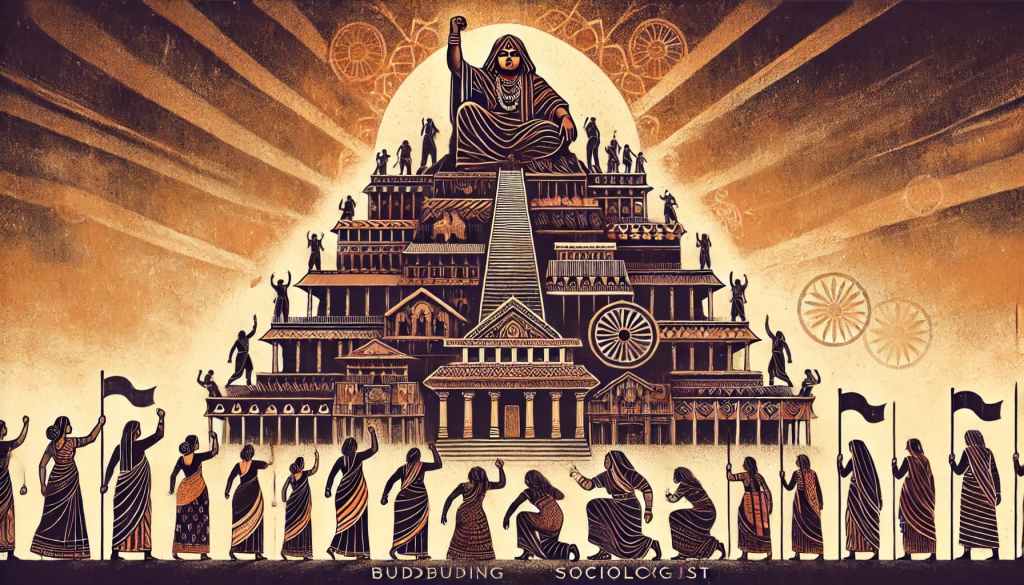
Patriarchy manifests as a hierarchical system where the most influential men in society exert control over others. This structure intertwines with various forms of oppression, resulting in diverse experiences of power and inequality across different genders and within different cultural contexts. Key institutions such as family, education, religion, media, healthcare, and employment are shaped by masculine hegemony, embedding patriarchy into societal norms and practices. This dominance not only influences societal structures but also regulates individuals’ lives and bodies. Consequently, those who deviate from traditional gender norms, including non-heteronormative individuals, often face discrimination and violence aimed at enforcing conformity.
Understanding patriarchy is crucial for comprehending contemporary gender dynamics. Its presence skews power dynamics between women and men, commonly associated with male dominance. Within this framework, two pivotal terms emerge:
1. Patriarchy: The term “patriarchy” originates from the Greek roots meaning “rule of the father.” It serves as an analytical framework describing a societal structure where political, social, and economic institutions are organized around gender disparities, favouring men over women. In patriarchal systems, women face systemic exclusion from complete engagement in political, social, and economic spheres. Essentially, patriarchy represents a culturally endorsed set of norms, beliefs, and practices entrenched within societal systems, perpetuating gender inequality between men and women.
Originally, the term “patriarch” referred to a specific type of household structure characterized by male dominance, wherein a dominant male ruled over a large household consisting of women, younger men, children, slaves, and domestic servants.
Today, the term has evolved to encompass broader notions of male domination, reflecting power dynamics where men exert control over women and perpetuate systems of female subordination. In regions like South Asia, it’s referred to as pitrsatta in Hindi, pidarshahi in Urdu, and pitritontro in Bangla.
The subordination of women, irrespective of their social class, manifests in various forms such as discrimination, disrespect, coercion, exploitation, oppression, and violence. These experiences occur within families, workplaces, and broader society, with specific details varying while the underlying theme remains consistent.
Patriarchy exhibits diverse manifestations across various social strata, societies and historical epochs. Its dynamics vary between classes within the same community, across different cultures, and throughout distinct historical periods. The experiences of patriarchy in our grandparents’ era diverge significantly from contemporary times, and disparities exist between tribal, upper-caste Hindu, American, and Indian women. Each societal framework and historical epoch presents unique iterations of patriarchal functioning and distinct social and cultural norms. Despite these variations, the overarching principle persists: male dominance prevails, with men wielding control over the majority of economic resources and dominating social, economic, and political institutions.
Patriarchy operates as both a social construct and an entrenched belief system that upholds male superiority. Religious narratives have historically played a pivotal role in promoting and perpetuating patriarchal ideologies. These narratives often depict men as inherently superior, exemplified by stories like Eve’s creation from Adam’s rib or the notion that man is made in the image of God. Presently, modern media and educational institutions continue to reinforce patriarchal beliefs, portraying men as authoritative decision-makers while portraying women as dependent consumers, often fostering jealousy and competition. Ideological frameworks serve to rationalize social behaviours and perpetuate socio-economic structures. For instance, media depictions that objectify women contribute to a culture of violence against them. Ideology, thus, functions as a mechanism for shaping social norms and controlling individual perceptions.
Typically, patriarchal influence extends over several facets of women’s lives and communities:
- Women’s contribution to labour or productivity.
- Women’s reproductive rights and choices.
- Women’s sexual autonomy.
- Women’s freedom of movement.
- Ownership of property and access to economic resources.
- Influence within social, cultural, and political spheres.
An examination of society’s key institutions — including the family, religion, law, politics, education, economics, media and knowledge systems — reveals a clear patriarchal underpinning. These institutions collectively form the backbone of patriarchal structures, appearing entrenched and formidable. This entrenched system not only renders patriarchy seemingly impregnable but also imbues it with an air of naturalness.
Within patriarchal frameworks, various forms of violence may be wielded to assert control over and subjugate women, often legitimizing such violence. Feminist perspectives assert that violence against women is not only prevalent but also systemic within patriarchal societies.
However, it’s important to note that the existence of patriarchy doesn’t equate to absolute powerlessness or lack of rights, influence, and resources for women. Indeed, no unequal system can persist without the involvement of the oppressed, some of whom may derive certain advantages from it. This holds true within patriarchal systems as well. Women have ascended to positions of power, intermittently held control, and secured benefits to varying degrees. Nonetheless, these instances of empowerment don’t alter the fundamental reality of male dominance within the system; women are merely accommodated within it through diverse means. To draw a parallel, in a capitalist economy, workers fulfill vital roles and may even partake in management to some extent, yet they do not hold ultimate control. Similarly, women, for a multitude of intricate reasons, both uphold and perpetuate patriarchy, internalizing its values and not always free from patriarchal ideology.
To maintain their advantage, women continually navigate their influence within the familial power dynamics, sometimes at the expense of other women. Yet, it’s crucial to examine the overarching framework and understand the factors driving this collaboration. It’s undeniable that women often favour their sons, limit their daughters’ education, curtail their freedom, mistreat daughters-in-law, and so forth. These actions must be contextualized within the power dynamics existing between men and women within both the family and society.
An insightful perspective on this was shared by a rural woman, who likened men in families to the sun, possessing their own radiance (such as mobility, decision-making freedom, etc.), while women are akin to satellites, reliant on the sun’s light for their own shine. Consequently, women find themselves in a perpetual competition for a greater share of this metaphorical sunlight, recognizing its necessity for their existence.
The term “paternalistic dominance” aptly characterizes male authority over women. While it denotes control, it also encompasses a paternalistic provision of shelter, sustenance, and protection against external threats. While paternalistic dominance carries oppressive undertones, it also entails reciprocal obligations and is often not perceived as solely oppressive. This complexity complicates its identification and resistance.
Meaning of Patriarchy
Patriarchy refers to a social structure where men primarily hold positions of power and privilege. It stems from the idea of paternal or elder male authority within families, extending to control over women and subordinate younger males. This dominance often manifests in various forms, including men having societal advantages leading to exploitation and oppression, such as controlling moral authority and property.
The term “patriarchy” originates from the Latin words “pater,” meaning father, and “arche,” meaning rule, dating back to the nineteenth century. Friedrich Engels was among the first to use “patriarchy” to describe the generalized dominance of men over women, introducing a feminist perspective on the term by highlighting women’s oppression. Since then, feminists have adopted “patriarchy” to describe the broader social system of male domination over women, making it a central concept in gender studies.
Etymological Meaning of Patriarchy
Patriarchy originates from the Greek word “patriarkhēs,” which translates to “father or chief of a race.” It denotes a system where power is centralized in male figures, with “patria” referring to lineage and “patēr” to fatherhood, coupled with “arkhē” signifying dominance or authority.
Initially used to denote autocratic control within familial settings, the term expanded during the latter part of the 20th century to encompass broader social structures where adult men primarily hold power. Figures like Kate Millett, associated with second-wave feminism, utilized the concept to challenge male dominance and advocate for women’s liberation, framing patriarchy as a social construct rather than a biological inevitability.
As an adjective, “patriarchal” characterizes societies where men wield authority over women across various facets, including familial, communal, and institutional realms. Such systems foster a power dynamic that grants men privileges denied to women.
Within feminist discourse, patriarchy serves as a cornerstone for understanding gender-based power imbalances and the resultant disparities in privilege. It elucidates how societal structures perpetuate and reinforce male dominance through objective metrics of power distribution.
In historical contexts, patriarchal societies were characterized by elder males holding and passing down power. In contemporary analysis, a patriarchal society signifies male predominance in positions of authority, whether within the family unit, social groups, workplaces, or governmental bodies.
Moreover, patriarchy often entails hierarchical arrangements among men themselves. Traditional setups saw elder men exerting authority over younger generations, while modern iterations exhibit variations where certain men wield greater power and privilege based on their positions, with such hierarchies deemed acceptable within the framework of patriarchal norms.
Patriarchy inherently grants advantages to men, leaving women with limited access to societal resources—whether material, sexual, or intellectual. In such a system, women often face significant hurdles in pursuing education, owning property, or having autonomy in matters like marriage. Conversely, men typically enjoy inherent entitlements to these resources, enabling them to shape their lives more freely.
Within patriarchal frameworks, societal norms dictate narrow roles for women, primarily as mothers and wives, which can confine their social identities. Moreover, the system rewards women who conform to these roles, portraying wifehood and motherhood as esteemed positions. These roles not only receive societal approval but are also glorified in various cultural expressions such as folklore, literature, and religious narratives. Consequently, women are encouraged to actively embrace and perpetuate these roles, thus reinforcing the patriarchal status quo.
Characteristics of Patriarchy
In patriarchal societies, whether contemporary or historical, certain common traits can be observed. These traits include:
1. Male Dominance: In many societies, patriarchal culture perpetuates male dominance as a central element. This dominance often stems from a belief system where men regard themselves as superior to women in terms of strength, intelligence, and overall capability. Women are frequently relegated to roles seen as inferior, primarily confined to domestic duties and childbearing. Patriarchy manifests in men holding exclusive control over decision-making processes within both the family structure and broader society. They occupy positions of power and authority, maintaining an entrenched sense of superiority across all facets of life.
2. Male Identification: In a patriarchal society, male identification entails embracing traits like control, strength, and competitiveness. Men are driven to assert dominance, prioritize rationality, and uphold a robust work ethic. This identification is crucial to patriarchy as it prevents men from expressing their true selves and enables the exclusion of women from participation.
3. Male Centeredness: In a patriarchal society, male-centeredness denotes the notion that men are attributed with the primary role in driving activities and societal progress forward. They are often regarded as the main instigators and contributors to inventions and significant events. Within the framework of patriarchy, men are commonly hailed as heroes in various circumstances, and they tend to dominate the center stage in realms of leisure, social interactions, and entertainment.
4. Important to Control Family: In patriarchal societies, there exists a pervasive drive among men to maintain control. Within such a framework, men feel compelled to assert dominance in all facets of life, whether familial or social. This extends to the realms of education and finances, where they assume sole responsibility for decision-making. Furthermore, any attempt by women to challenge this established order is met with oppression. In such a system, women are systematically deprived of leadership opportunities, autonomy, and the ability to instigate change without the consent of men.
5. Patriarchal Structure: In patriarchal societies, the hierarchical structure isn’t solely upheld by men; women also play integral roles. They are often expected to conform to subservient and submissive roles, tending to men’s needs and desires without protest. Gerda Lerner, in her book “The Creation of Patriarchy” published in the 1960s, delved into the concept of patriarchy. She was among the few women who initially examined how patriarchy marginalized women. As a dedicated feminist, Lerner spent over five decades researching these dynamics, becoming a prominent advocate for women worldwide.
6. Domestic Violence: In societies dominated by patriarchy, there exists a tacit acceptance of domestic violence, albeit not overtly acknowledged. Women are pressured to conform to expectations of passivity and submissiveness, leaving them vulnerable to severe physical abuse, including sexual assault. Any display of defiance risks triggering further aggression, both physically and mentally, from the husband towards the wife or even the children.
7. Ingrained the Idea of Masculinity: In patriarchal cultures, the concept of ‘masculinity’ is ingrained in boys from an early stage. They are taught to uphold and display traits associated with masculinity, while avoiding anything perceived as feminine. For example, showing emotion like crying is often seen as feminine, leading boys to suppress such expressions from a young age. This perpetuates the belief in their inherent superiority over females, starting from childhood. Within households, sons frequently receive preferential treatment compared to daughters.
8. Legal System: In our society, the legal framework exhibits a clear bias towards men. Laws and regulations predominantly favour males, resulting in women often finding themselves without adequate rights or support when necessary. For instance, in the event of a marriage dissolution, fathers commonly retain custody of the children, leaving wives without entitlement to custody or financial assistance.
9. Divorce is not Accepted: In numerous patriarchal societies, divorce is heavily stigmatized. Women, regardless of the challenges they may face within their marriages, are often pressured or expected to remain with their husbands, largely due to the assumption that they will be granted custody of any children. This expectation stems from the belief that a woman cannot sustain herself independently and would face dire financial circumstances and moral risks without a husband. Similarly, despite any issues of violence or instability, patriarchal norms maintain that a father’s involvement is crucial for the well-being of the child, further discouraging divorce within these societies.
10. Male Dominated Inheritance: In scenarios of inheritance, only male offspring within a family are granted a portion of the familial assets, including property, finances, and valuables, while females, regardless of their status as daughters, are excluded from such entitlements. This practice reflects a patriarchal structure wherein positions of prestige predominantly favour males. This bias extends beyond familial settings and permeates political, social, and economic spheres. Historically, men have been deemed more suitable for political leadership roles and have dominated professions such as medicine, law, engineering, and management. Nevertheless, there are gradual shifts occurring in this paradigm.
Aspects of Patriarchy
In modern discussions surrounding gender dynamics, patriarchy emerges as a focal point extensively analyzed by feminist thinkers to elucidate the varying societal roles of men and women. This concept delineates the systematic dominance of men over women and manifests in multifaceted ways. Broadly categorized, patriarchy encompasses two primary dimensions, outlined as follows:
1. Productive Aspect: The patriarchal framework delineates prescribed identities and expectations for women. Within this construct, societal expectations confine women primarily to roles as mothers and wives, viewing them essentially as mechanisms for childbirth and upholding societal continuity. Women who conform to these roles passively are often rewarded within this system. Wifehood and motherhood are elevated and praised, receiving societal approval through folklore, literature, and religion. Consequently, women are encouraged to embrace and fulfill these roles actively, thereby perpetuating the patriarchal structure.
2. Punitive Aspect: In societies, women who choose to remain single and eschew marriage often face societal disdain. Likewise, women who are infertile or unable to bear children, particularly sons, are subject to ridicule and contempt, relegating them to a marginalized position within the family. The plight of widows, especially those from higher castes in patriarchal systems, is particularly dire. Widow remarriage is forbidden, leaving widows excluded from both social and religious family functions, confined to domestic duties within the household. Women who defy these societal norms, refusing to fade into invisibility and rejecting the notion that their worth is defined solely by fertility and domestic roles, are often chastised and labelled as stubborn or even unnatural, going against the grain of their biological imperative.
In various societies, women who remained unmarried, were infertile, or became widows at a young age faced forms of defeminisation. Take, for instance, the customs in India where upper caste widows were mandated to shave their heads, abstain from wearing ornaments, and dress in colourless garments due to societal suspicion. These women, having diverged from conventional reproductive norms, were relegated to a diminished status and position.
Patriarchy extends beyond the mere subjugation of women. It’s been observed that within patriarchal systems, not all men wield equal power. For instance, younger men within families hold less authority and must defer to their elder counterparts until their turn to exert power arrives. Additionally, men from lower classes or marginalized groups, such as ‘dalit men’ in the Indian context, often lack authority compared to those from upper classes or more privileged backgrounds. These oppressed men are denied access to societal resources and may even struggle to assert their own masculine identity. Despite this, it remains true that certain classes and categories of men bear the brunt of patriarchal dominance. Nonetheless, men, in general, find it easier to claim resources and power within their families or communities compared to women.
Approaches to Understand Patriarchy
Here are several prominent approaches for examining patriarchy across various societies:
1. Liberal Feminism: Liberal feminism advocates for achieving gender equality within the existing framework of liberal democratic societies, primarily through political and legal reforms. Unlike more radical approaches, it doesn’t aim to fundamentally reshape society but rather aims to integrate women into mainstream societal structures. The focus is on areas such as laws, political institutions, education, and employment, viewing the lack of equal legal and political rights as the primary barrier to equality. Liberal feminists actively engage in mainstream politics to advance women’s rights and participation. This ideology is characterized by its inclusivity and progressive stance, while generally supporting the established institutions of power in liberal democratic contexts. It’s often associated with centrism and a reformist approach, attracting primarily middle-class women who are generally content with the current social order.
2. Radical Feminism: Radical feminism advocates for a profound restructuring of society, aiming to eradicate male dominance across all social and economic spheres. It acknowledges that women’s experiences are also influenced by intersecting social divisions such as race, class, and sexual orientation. Emerging in the 1960s, this ideology perceives society as inherently patriarchal, with men holding power and oppressing women. Its proponents aim to dismantle this patriarchy as part of a broader effort to challenge societal norms and institutions, striving for liberation from injustice for all. They argue that global society operates under patriarchy, where men oppress women, identifying this oppression as the most foundational and enduring form of societal injustice.
3. Marxist Feminism: Marxist feminism is a branch of feminist thought that integrates and expands upon Marxist principles. It delves into how women experience exploitation within capitalist structures and the framework of private property ownership. According to Marxist feminists, true emancipation for women can only occur by dismantling the capitalist framework, wherein much of women’s labour remains uncompensated. They further analyze unpaid domestic work and sexual dynamics through a Marxist lens. From this perspective, the conventional nuclear family is seen as a product of capitalism, and the traditional role of women as homemakers perpetuates and sustains the capitalist system. Thus, women are viewed as facing dual oppression from both the nuclear family structure and the capitalist economic system.
4. Socialist Feminism: This concept gained traction as a holistic approach towards advancing women’s rights, blending both theoretical analysis and practical strategies. It delved into the interplay between the subjugation of women and other societal injustices like racism and economic inequality. Socialist feminism acknowledged the inherent oppression embedded within a capitalist framework and underscored the unique challenges faced by women within patriarchal systems. Rather than viewing class and gender as separate entities, adherents argued they were interconnected, insisting that addressing one necessitated addressing the other. Their aim was to incorporate an acknowledgment of gender-based discrimination into broader efforts aimed at securing justice and equality for women, the working class, the impoverished, and humanity as a whole.
Based on the preceding discussion, it appears that contemporary feminists are increasingly employing the concept of patriarchy to understand the intricate mechanisms that sustain oppression. This includes societal expectations regarding women’s behavior in professional settings, which poses challenges for men to reconcile with this entrenched cultural framework. As noted by Max Weber, patriarchal traditions endure due to their historical longevity and perceived immutability. Dismantling patriarchy thus presents a formidable challenge, as it is intertwined with various aspects of society, and its abolition may entail significant consequences.
Sources of Patriarchy
The term “patriarchy” refers to a social system where men hold the majority of power and influence. Sylvia Walby contends that despite changes over the 20th century, modern society still largely operates under patriarchy. While historically it manifested as direct control of women within households, it has evolved into a more intricate system permeating all levels of society. In her seminal work on feminist theory, Sylvia Walby delineates six key sources of patriarchal control, which are outlined as follows:
1. Paid Work: Women face various challenges in the workplace, including unequal pay compared to men, limited opportunities for advancement into senior positions known as the glass ceiling, and societal pressures that push them towards traditional caregiver roles, often leading to career interruptions or part-time employment. These factors contribute to a landscape where many women opt out of or limit their participation in the workforce due to a combination of limited job prospects and social expectations.
2. Housework: Walby describes this concept as “patriarchal relations of production.” She contends that men continue to reap advantages from women’s unpaid labour, primarily in household chores and childcare. While women traditionally shoulder these responsibilities, the increased ease of divorce has provided them with more autonomy compared to the past, when marriage served as a more binding constraint. Additionally, some black feminists perceive family dynamics as less exploitative than the labour market, which is plagued by pervasive racism.
3. Culture: According to Walby, Western societies have long maintained a cultural divide between men and women, prescribing distinct behaviours for each. However, these expected norms have evolved over time. Today, femininity is primarily associated with sexual allure, a trait valued not only in younger women but also in older ones. Moreover, the proliferation of pornography is seen to amplify men’s freedom while jeopardizing that of women. Walby contends that pornography, with its lens predominantly shaped by the male perspective, perpetuates the objectification of women and fosters sexual aggression.
4. Sexuality: Even in the wake of the sexual revolution of the 1960s, a lingering “sexual double standard” persists in our society. Women who embrace their sexuality are often unfairly labeled as promiscuous, while those who don’t are criticized for being prudish. Meanwhile, men who have many sexual partners are often praised. Additionally, Walby suggests that heterosexuality reinforces patriarchal norms, placing greater pressure on women to engage in heterosexual relationships and fulfill traditional gender roles by marrying and catering to men.
5. Violence: Walby conceptualizes violence against women as a manifestation of male dominance over women, a persistent issue faced by numerous women in contemporary society. She acknowledges the challenge of accurately gauging progress in addressing this issue due to validity issues surrounding statistical data.
6. The State: Significant changes have occurred since the early 20th century, when women were disenfranchised from voting rights. As of October 2022, many countries have witnessed the appointment of female prime ministers or heads of state. However, the landscape of politics remains predominantly male-dominated. Women constitute a minority in parliamentary representation, and decisions affecting all citizens are predominantly made by men. According to Walby, the state still exhibits patriarchal, racist, and capitalist tendencies. She contends that little progress has been made in advancing women’s positions in the public sphere, and enforcement of equal opportunities legislation is often lacking.
Areas Showing Patriarchal Control
Various facets of women’s experiences are purportedly subject to direct patriarchal influence, while also being overseen by men in diverse societies, the parameters of which are largely dictated by the prevailing cultural norms.
1. Women’s Productive Power: In our society, there exists a dynamic where men wield significant influence over women’s productivity, both within the confines of the household and in paid employment. Within the domestic sphere, women contribute extensively by providing various services to their spouses, children, and other family members over their lifetimes. Regrettably, the invaluable work undertaken by housewives often goes unrecognized and is dismissed as non-work, leading to their dependency on their husbands. Moreover, men exert control over women’s labour beyond the household, compelling them to engage in wage labour or prohibiting them from pursuing employment opportunities altogether. In instances where women do participate in the workforce, they often encounter barriers that limit their access to higher-paying positions, relegating them to low-wage jobs or home-based production, which itself operates within an exploitative framework. Consequently, men derive material benefits from this system of control and exploitation, perpetuating their economic advantage through the subjugation of women. This economic dynamic serves as the foundation of patriarchy, wherein men accrue economic benefits from the subordinate position of women.
2. Women’s Reproduction: Men wield significant control over women’s reproductive autonomy across various societies. Women often find themselves devoid of decision-making power regarding their own reproductive capacities. They lack the agency to determine the number of children they wish to have, whether to utilize contraceptives, or whether to terminate a pregnancy. Moreover, men predominantly dominate key social institutions such as religion and politics, further consolidating their control. This control is solidified through institutional mechanisms that dictate rules governing women’s reproductive choices.
For instance, within the Catholic Church, male religious authorities dictate the permissibility of contraceptive use for both men and women. Similarly, contemporary patriarchal states exert influence over women’s reproduction through initiatives like family planning programs. These programs often dictate the desired population size, as seen in India where measures limit family size and discourage women from having more than two children. Conversely, in regions like Europe, where birth rates are declining, women are enticed to have more children through various incentives such as extended paid maternity leave, accessible childcare, and part-time job opportunities.
Patriarchal structures idealize motherhood, imposing societal expectations that compel women to fulfill maternal roles. This idealization not only serves as a cornerstone of women’s oppression but also perpetuates gender stereotypes, reinforcing the dominance of masculinity over femininity. Consequently, women’s mobility is restricted, and male dominance is perpetuated, as patriarchal ideologies continue to shape societal norms and values.
3. Control Over Women’s Sexuality: In many societies, there’s an expectation for women to fulfill their husbands’ sexual needs and desires. Both moral and legal standards are in place to limit women’s sexual expression outside of marriage, while male promiscuity is often overlooked. The threat or occurrence of rape can be used as a means to control women’s sexuality, leveraging concepts of shame, honour, and family reputation. Additionally, women’s behaviours, attire, and movements are closely regulated by family members and societal norms rooted in cultural, religious, and social codes.
4. Control Over Women’s Mobility: In addition to regulating women’s sexuality and reproductive roles, men also exert authority over their freedom of movement. Measures like enforcing purdah to confine women to their homes and restricting interactions between genders serve as means for patriarchal societies to curb women’s mobility and autonomy. These constraints specifically target women, while men typically do not face similar limitations.
5. Economic Resources: In many cultures, the majority of property and valuable assets are predominantly under the control of men, often being passed down from fathers to sons. Even in regions where women have legal entitlements to inherit property, entrenched customs, societal norms, and emotional influences frequently hinder their ability to gain significant control over these resources. According to data from the United Nations, despite women contributing over 60% of the total global work hours, their earnings represent only 10% of the world’s income, and their ownership of property is a mere 1%.