- Introduction
- Historical Roots of Political Resistance in India
- Forms of Political Resistance
- Factors Driving Political Resistance in India
- Challenges Being Faced by Political Resistance in India
- Impact of Political Resistance in India
Introduction
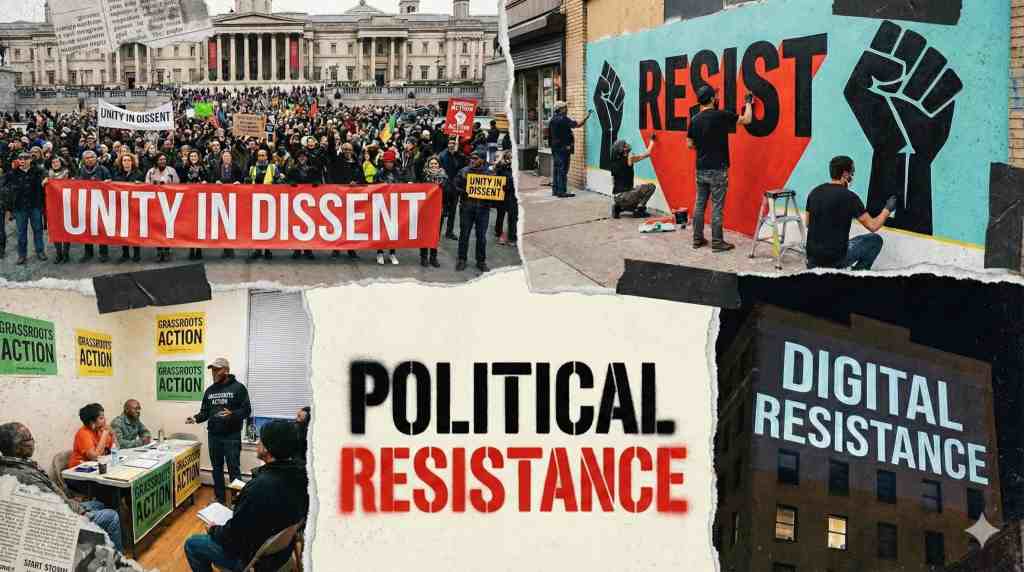
Resistance in politics has been a defining feature of India’s historical and contemporary landscape, reflecting the country’s vibrant democratic ethos and its complex social realities. From the colonial period to the present day, resistance has taken various forms as a means for marginalized communities, political groups and ordinary citizens to challenge existing power structures, assert their rights and demand social and political change. The roots of political resistance in India can be traced back to the anti-colonial struggle against British rule, where diverse methods, ranging from Mahatma Gandhi’s non-violent civil disobedience campaigns to revolutionary armed uprisings mobilized millions of Indians against colonial domination. This historic legacy established a powerful tradition of political engagement that continues to inspire contemporary movements and dissent.
In Independent India, resistance in politics has evolved and multiplied, reflecting the country’s pluralistic society and democratic framework. Social movements have been instrumental in voicing the concerns of historically marginalized groups such as Dalits, Adivasis and women, who have challenged systemic discrimination and sought greater inclusion and justice. For example, Dalit movements have resisted caste-based oppression and fought for political representation, social dignity and economic rights. Similarly, women’s movements have continuously opposed gender-based violence and inequality, advocating for legal reforms and social awareness. Beyond social justice, environmental resistance has emerged as a critical political force, where grassroots campaigns challenge state-led development projects that threaten local livelihoods and ecosystems, such as the Narmada Bachao Andolan.
Resistance also plays out strongly in the electoral and party politics of India. Opposition parties and civil society actors frequently contest the policies and governance of ruling powers, ensuring that political authority is continuously scrutinized and held accountable. India’s multiparty democracy provides space for ideological contestation, where debates around secularism, nationalism, economic policies and minority rights often lead to organized political resistance. Additionally, identity-based movements demanding regional autonomy or recognition of cultural distinctiveness have been significant forms of political resistance. Movements in Kashmir, the Northeast and Telangana highlight how ethnic and regional identities shape political dissent and demands for self-determination.
The drivers of political resistance in India are deeply embedded in structural inequalities and socio-economic disparities that persist despite constitutional guarantees. The democratic space afforded by India’s political system enables resistance movements to organize, mobilize and engage in public discourse, although they sometimes face repression or attempts of criminalization. The rapid changes brought about by globalization and neoliberal economic reforms have also sparked resistance from workers, farmers and communities affected by privatization, land acquisition and environmental degradation. Furthermore, increasing political polarization around issues such as communalism and nationalism has intensified ideological resistance and social mobilization.
Despite challenges like state suppression and co-optation, political resistance in India has contributed significantly to social transformation and democratic deepening. Movements and protests have led to landmark legislations, greater awareness of human rights and expanded political participation among marginalized groups. Resistance remains a dynamic expression of the people’s will, continuously shaping the contours of Indian politics and society. It embodies the ongoing struggle for justice, equity and democratic empowerment in one of the world’s largest and most diverse democracies.
Historical Roots of Political Resistance in India
The origins of political resistance in India are deeply embedded in its long history of foreign rule, social stratification and cultural pluralism. Long before India became an independent nation-state in 1947, the Indian subcontinent witnessed varied and widespread forms of resistance against domination, exploitation and injustice. The anti-colonial struggle, in particular, laid the foundation for India’s vibrant tradition of political dissent, mass mobilization and democratic assertion.
Political resistance has risen through following stages:
1. Early Resistance to Colonialism (18th–19th Century): Resistance in India began almost immediately after the British East India Company started acquiring territorial and administrative control in the 18th century. Early uprisings were largely localized and driven by economic grievances, loss of traditional authority and cultural alienation. It further can be understood through following:
- Tribal and Peasant Revolts: Tribals and peasants were among the first to rise against British policies, particularly those that disrupted traditional landholding systems, imposed harsh taxes or introduced exploitative revenue collection methods.
- The Santhal Rebellion (1855–56) was a massive tribal uprising against land alienation and exploitation by moneylenders and British officials in present-day Jharkhand.
- The Indigo Rebellion (1859–60) in Bengal saw peasants resisting forced indigo cultivation under exploitative contracts.
- The 1857 Revolt (First War of Independence): The Revolt of 1857, often regarded as India’s first major war of independence, was a widespread and armed resistance involving soldiers (sepoys), peasants, zamindars and displaced rulers. Though it was eventually suppressed, it symbolized a collective defiance against British domination and inspired future generations of freedom fighters.
2. Organized Nationalist Resistance (Late 19th–Early 20th Century): The late 19th century witnessed the emergence of organized political resistance through the formation of associations, newspapers and political parties. It can further understood through following:
- Formation of the Indian National Congress (INC): Established in 1885, the INC became the principal platform for nationalist resistance. Initially moderate in its demands, the INC gradually adopted a more assertive stance under leaders like Bal Gangadhar Tilak, Lala Lajpat Rai and Bipin Chandra Pal, known as the Lal-Bal-Pal trio.
- Swadeshi and Boycott Movements: The partition of Bengal in 1905 by the British was met with a powerful resistance movement involving boycotts of British goods, promotion of indigenous industries and street-level mobilizations. The Swadeshi Movement marked a turning point in political resistance by combining economic self-reliance with mass protest.
- Revolutionary Activities: Parallel to constitutional methods, underground revolutionary groups like; Anushilan Samiti, Ghadar Party and individuals like Bhagat Singh, Chandra Shekhar Azad and Ram Prasad Bismil took to armed resistance. These groups sought to overthrow British rule through bold and often violent acts, including bombings, assassinations and jail-breaks, to inspire the masses.
3. Gandhian Era and Mass Civil Disobedience (1915–1947): The arrival of Mahatma Gandhi in 1915 transformed political resistance into a mass-based, non-violent movement rooted in moral authority and civil disobedience. It can further understood through following:
- Champaran Satyagraha (1917): Gandhi’s first major resistance campaign in India was in Champaran (Bihar), where he led farmers against the forced cultivation of indigo under exploitative European planters. This movement demonstrated the power of peaceful resistance.
- Non-Cooperation Movement (1920–22): Following the Jallianwala Bagh massacre and the betrayal over the Khilafat cause, Gandhi launched a nationwide campaign urging Indians to boycott British institutions, titles and products.
- Civil Disobedience Movement (1930–34): Initiated with the Salt March (Dandi March), this movement mobilized millions to break the British salt laws. It emphasized the principle of defying unjust laws through mass participation and non-violence.
- Quit India Movement (1942): Launched during World War II, this was a direct call for the British to “Quit India.” Despite severe repression, arrests and violence, the movement demonstrated the Indian people’s unwavering resolve for freedom.
4. Resistance in Princely States and Peripheral Regions: While British India was the primary site of resistance, princely states like Hyderabad, Travancore and Kashmir also witnessed movements against autocratic rulers and British interference. Tribal and regional uprisings in Northeast India and Central India played significant roles in resisting external domination and asserting cultural identity.
Forms of Political Resistance
Political resistance in India is a vital expression of democracy, where diverse groups and communities challenge injustice, assert rights and demand accountability from the state. Rooted in the country’s historical struggles against colonialism and social inequality, resistance today takes multiple forms, from mass protests and legal battles to digital activism and electoral opposition. It reflects the dynamic interplay between power and dissent in a complex, pluralistic society. As India grapples with rising authoritarian tendencies, socio-economic disparities and identity-based conflicts, political resistance remains essential for safeguarding constitutional values, promoting inclusion and ensuring that democratic institutions remain responsive and accountable.
Following are the forms of political resistance in India:
1. Mass Movements and Street Protests: Mass movements and street protests are among the most visible and immediate forms of political resistance in India. These movements allow citizens to directly challenge state policies, demand accountability and articulate collective grievances. From the JP Movement to the India Against Corruption movement, public protest has been a defining feature of India’s democratic tradition. More recently, the anti-CAA protests and the farmers’ protests demonstrated how large-scale, peaceful mobilization can confront the state and influence public policy. These protests often act as moral and political reminders of constitutional promises.
2. Dalit and Adivasi Resistance: Dalits and Adivasis, historically oppressed and socially excluded, have developed strong traditions of political resistance. Inspired by Dr. B.R. Ambedkar’s emancipatory vision, Dalit movements challenge caste hierarchies, demand political representation and fight for access to education and land rights. Organizations such as the Bhim Army and Dalit Panthers represent assertive forms of resistance against caste-based violence. Similarly, Adivasi resistance, often centered around land and forest rights, includes mobilizations against displacement, mining and state neglect. Movements in Bastar (Chhattisgarh) and Niyamgiri (Odisha) highlight tribal resistance to corporate exploitation and environmental degradation.
3. Farmers’ and Agrarian Movements: Agrarian resistance reflects deep structural issues in rural India such as debt, low productivity, unequal land ownership and policy neglect. Farmers’ movements have historically mobilized to demand fair prices, subsidies, loan waivers and agricultural reforms. The Shetkari Sanghatana in Maharashtra and All India Kisan Sabha (AIKS) have led long-standing struggles. The 2020–21 farmers’ protest against the three central farm laws stands out as a landmark moment in contemporary Indian politics demonstrating sustained, democratic resistance by rural citizens. The protest’s success in forcing the government to repeal the laws highlighted the resilience and organizing capacity of agrarian communities.
4. Women’s Movements and Feminist Resistance: Women’s movements in India have evolved from localized struggles to national campaigns addressing a wide range of gender issues like domestic violence, sexual harassment, political representation, labour rights and reproductive autonomy. The Nirbhaya protests (2012) marked a significant shift, leading to crucial legal reforms. The #MeToo movement in India (2018 onwards) uncovered systemic sexual abuse in various sectors, especially media, academia and politics. At the grassroots level, collectives like the Self-Employed Women’s Association (SEWA) and Gulabi Gang organize resistance against patriarchal structures and economic exploitation, especially among poor and rural women.
5. Student and Youth Activism: Students and youth have always been at the forefront of political change in India. From the freedom struggle to the JP Movement and more recently the protests in JNU, AMU and Jamia Millia Islamia, student activism continues to question state authoritarianism, communalism and social injustice. Student organizations mobilize youth across ideological spectrums. Student-led resistance addresses issues like fee hikes, caste discrimination in campuses, state repression and curriculum changes. With increasing digital engagement, youth activism also shapes online narratives and mobilizes across platforms.
6. Regional and Ethnic Movements: India’s vast cultural and linguistic diversity gives rise to resistance based on regional identity and ethnic assertion. Movements for statehood (e.g., Telangana, Gorkhaland), language rights (e.g., resistance to Hindi imposition) and cultural autonomy are expressions of regional resistance to central authority. In the Northeast, groups have historically demanded self-rule or secession, driven by perceptions of neglect and cultural marginalization. The abrogation of Article 370 in Kashmir (2019) triggered political and civil resistance due to the perceived erosion of regional autonomy. These movements reveal the tension between national integration and pluralistic federalism.
7. Electoral and Parliamentary Resistance: India’s multiparty democracy enables political resistance through electoral and legislative processes. Opposition parties, both national and regional, provide ideological and policy alternatives to ruling coalitions. In Parliament, they resist through debate, disruption, walkouts and committee interventions. For example, opposition parties resisted the farm laws, demonetization and GST rollout through parliamentary and public engagement. The electoral space also allows smaller or emerging parties to represent dissenting constituencies and influence governance.
8. Civil Society and NGO-Led Advocacy: Civil society organizations serve as crucial mediators between the state and citizens, especially in promoting transparency, human rights and inclusive development. Groups like Mazdoor Kisan Shakti Sangathan (MKSS) spearheaded the movement for the Right to Information Act (2005). NGOs working on child rights, tribal welfare, minority rights and environment have challenged state apathy and exploitation. These organizations organize public hearings, fact-finding missions and legal aid, often facing state repression through laws like the FCRA (Foreign Contribution Regulation Act), which restricts foreign funding. Despite these challenges, civil society remains a vibrant space of resistance and reform.
9. Legal and Judicial Resistance: The judiciary in India, particularly through Public Interest Litigations (PILs) and constitutional challenges, provides an institutional route for political resistance. The courts have intervened in cases of environmental protection (e.g., Ganga pollution), minority rights (e.g., Triple Talaq verdict) and civil liberties (e.g., Right to Privacy, 2017). Legal resistance is often led by activist lawyers, rights organizations and public intellectuals. While the judiciary is not free from critique (e.g., delays, executive pressure), it continues to serve as a check on executive excess and a forum where constitutional values are defended.
10. Media and Digital Resistance: With the explosion of digital platforms, new forms of political resistance have emerged in online spaces. Hashtag campaigns like #DalitLivesMatter mobilize mass attention, solidarity and action. Independent journalism outlets such as The Wire, Scroll.in, Alt News and The Caravan investigate issues the mainstream media often ignores. Citizen journalism and alternative media platforms allow marginalized voices to challenge dominant narratives. However, digital resistance also faces threats like internet shutdowns, online trolling, surveillance and legal persecution under sedition or anti-terror laws. Despite this, digital spaces remain vital for dissent and democratization.
On the basis of above description, it can be stated that political resistance in contemporary India is deeply embedded in its democratic ethos. It manifests across various platforms challenging power imbalances, social hierarchies and undemocratic policies. While it often faces state repression, criminalization and co-optation, resistance remains a powerful force for political accountability, social justice and constitutional values. In a country as diverse and complex as India, resistance is not merely an act of opposition but it is a continuing process of negotiating rights, dignity and inclusion.
Factors Driving Political Resistance in India
Political resistance in India is a powerful expression of the country’s vibrant democracy and complex social fabric. Rooted in historical struggles against colonial rule, resistance continues to shape India’s political landscape today. It emerges from deep structural inequalities such as caste, class and gender oppression, as well as from demands for democratic rights, economic justice and cultural identity. Diverse groups use various forms of resistance to challenge exclusion, authoritarianism and environmental degradation.
Following are some driving factors responsible for political resistance:
1. Structural Inequalities: One of the most profound drivers of political resistance in India is the persistence of structural inequalities rooted in caste, class and gender. The caste system, a hierarchical social order, has systematically marginalized Dalits, Adivasis and other lower caste groups, depriving them of equal access to resources, education and political power. Despite constitutional protections like reservation, caste-based discrimination and violence continue to provoke resistance movements demanding dignity, justice and equal rights. Similarly, class divisions, with a large section of the population living in poverty or working as informal labourers, fuel economic grievances that often translate into protests and labour strikes. Gender-based oppression also plays a critical role, as women and sexual minorities resist patriarchal norms and fight for equal rights, safety and representation in political and social spheres. Together, these structural inequalities create a fertile ground for sustained political resistance aimed at social transformation.
2. Democratic Rights and Civil Liberties: India’s democracy guarantees fundamental rights such as freedom of speech, assembly and association, which form the legal foundation for political resistance. However, when these rights are threatened by authoritarian measures such as censorship, police crackdowns and restrictive laws citizens mobilize to reclaim their democratic space. For example, activists, journalists and students have frequently resisted government attempts to silence dissent or curtail freedom of expression. The use of laws like sedition and the Unlawful Activities (Prevention) Act (UAPA) to target dissenters has sparked widespread protests demanding accountability and the protection of civil liberties. Furthermore, marginalized communities who are underrepresented in political institutions resist through advocacy and agitation, demanding greater inclusion and participatory democracy. In this way, the struggle to protect and expand democratic rights remains a central impetus for political resistance in India.
3. Economic Disparities and Neoliberal Reforms: Economic changes following India’s liberalization in the 1990s have led to rapid growth but also significant disparities. The benefits of economic reforms have been unevenly distributed, often leaving farmers, informal workers and the poor behind. This economic discontent has manifested in numerous resistance movements. For example, the large-scale protests by farmers against new agricultural laws in 2020-21 reflected fears over corporatization and loss of livelihoods. Similarly, industrial projects leading to land acquisition and displacement have provoked grassroots opposition, especially from tribal communities and small farmers who depend on land for survival. Urban informal workers face precarious employment and limited social security, resulting in labour strikes and demands for better rights. In sum, neoliberal economic policies have been a catalyst for resistance among those adversely affected by market-driven development.
4. Identity Politics and Cultural Assertion: India’s social diversity is a source of cultural richness but also political contestation. Resistance movements frequently arise from communities asserting their distinct identities in response to perceived marginalization or threats to their cultural autonomy. Religious minorities like Muslims, Christians and Sikhs have organized to oppose communal violence, discriminatory policies and erosion of secular values. Similarly, linguistic and regional groups demand recognition and autonomy, leading to movements such as the Telangana statehood struggle and the Gorkhaland demand. Tribal groups have long resisted assimilation policies and encroachments on their traditional lands and governance structures. These identity-based resistances reflect a desire not only for political power but also for respect, recognition and preservation of cultural heritage in a pluralistic society.
5. Youth, Education and Political Consciousness: The youth of India have historically been at the forefront of political resistance and this continues today. Educational institutions are often hotbeds of political awareness and activism, where students challenge issues like fee hikes, discrimination and suppression of free speech. Movements at different universities have drawn national attention and mobilized youth participation in politics. The rise of social media and digital platforms has also empowered young people to organize rapidly, share information and challenge dominant narratives. Cultural expressions like music, literature and art have become vehicles of resistance, especially among marginalized youth. This growing political consciousness among the young generation fuels sustained engagement with social justice causes and democratic rights.
6. Environmental and Climate Concerns: Environmental degradation and climate change have become critical drivers of political resistance in India. As industrialization and infrastructure projects expand, local communities often face displacement, loss of livelihood and ecological destruction. Movements like the Narmada Bachao Andolan, which opposed large dam construction on the Narmada river, highlight the resistance against development projects that disregard environmental and social costs. Indigenous communities frequently resist the destruction of forests and water bodies critical to their survival. Additionally, the global youth-led climate justice movement has found resonance in India, demanding urgent action against climate change and sustainable development policies that prioritize people and the planet. These struggles reflect growing awareness of the interconnectedness of environmental health and social justice.
7. Political Polarization and Rise of Authoritarianism: In recent years, India has witnessed increasing political polarization and concerns over authoritarian tendencies. The rise of majoritarian politics, characterized by the privileging of the majority religion in state policies and rhetoric, has triggered resistance from minority communities and secular groups who fear erosion of pluralism. Controversial laws such as the Citizenship Amendment Act (CAA) and proposed National Register of Citizens (NRC) sparked nationwide protests, highlighting fears of exclusion and discrimination. Resistance also comes from civil society groups, intellectuals and journalists who challenge attempts to curb dissent, control the media and undermine democratic institutions. This polarized political environment has intensified contestations around identity, rights and governance, making resistance an essential mechanism to safeguard democratic values.
8. Historical Legacy of Colonialism and Anti-Colonial Struggles: India’s history of colonial subjugation has left a lasting impact on political resistance. The anti-colonial freedom struggle against British rule institutionalized resistance as a legitimate form of political engagement. Non-violent civil disobedience, mass mobilization and revolutionary activities became powerful tools of resistance. The legacy of this struggle continues to inspire contemporary movements, especially those resisting authoritarianism, inequality and injustice. Post-independence, many political groups have drawn on the rhetoric and strategies of the freedom movement to frame their demands for social justice, human rights and political autonomy. This historical legacy shapes both the form and ethos of resistance in India today.
9. Media and Information Control: The increasing control and polarization of media in India act as both a trigger for resistance and a battlefield for political contestation. When mainstream media is perceived as biased or state-controlled, alternative media platforms, independent journalists and social media activists resist attempts to manipulate public opinion or suppress dissenting voices. Fake news, censorship and intimidation of journalists have led to protests defending press freedom. The digital revolution has enabled new forms of resistance by providing platforms for citizen journalism and activism but has also introduced challenges such as misinformation. Thus, struggles over the control of information are central to India’s political resistance landscape.
10. Globalization and Transnational Influences: Globalization has exposed India to international economic and cultural flows that influence political resistance. While it has created opportunities, it has also led to resistance against perceived cultural imperialism, exploitation by multinational corporations and unequal global trade regimes. Transnational networks of activists and diaspora groups contribute to India’s political resistance by raising awareness, pressuring international institutions and promoting solidarity across borders. Global human rights norms and environmental concerns have also been incorporated into local struggles. Resistance to globalization-related challenges reflects a negotiation between local identities and global processes, emphasizing the interconnected nature of contemporary political struggles.
On the basis of above description, it can be stated that political resistance in India is a powerful expression of democratic vitality shaped by deep-rooted social inequalities, economic challenges, identity assertions and evolving political dynamics. From caste and class struggles to environmental activism and youth-led movements, resistance reflects the aspirations of marginalized communities and citizens demanding justice, equality and inclusion. Despite challenges like repression and polarization, resistance continues to safeguard democratic freedoms and promote social change. It embodies the ongoing negotiation between power and people in India’s pluralistic society, making political resistance an essential force driving the country’s progress toward a more equitable and participatory democracy.
Challenges Being Faced by Political Resistance in India
Political resistance in India has been a vital force shaping the nation’s democratic and social landscape. Rooted in a rich history of anti-colonial struggles and continuing through diverse contemporary movements, resistance reflects the efforts of marginalized groups and citizens to challenge injustice and inequality. However, this resistance faces numerous challenges, including state repression, social fragmentation, legal obstacles and media bias. Economic changes and political co-optation further complicate these struggles.
Following are multifaceted challenges being faced by political resistance in India:
1. State Repression and Criminalization of Dissent: One of the most critical challenges faced by political resistance in India is the persistent repression by the state machinery. Although the Indian Constitution guarantees fundamental rights such as freedom of speech, assembly and protest, the reality often falls short. Security forces frequently respond to dissent with police brutality, arbitrary arrests and intimidation. Protestors have often been met with excessive force during demonstrations, creating a climate of fear. Furthermore, laws such as the Unlawful Activities (Prevention) Act (UAPA), sedition laws and anti-terror statutes are increasingly used to criminalize activists and dissenters. These laws allow prolonged detention without formal charges, thereby weakening movements by removing key leaders and dissuading others from joining. This criminalization blurs the line between legitimate dissent and anti-national activities, undermining democratic rights and shrinking the space for political resistance.
2. Fragmentation and Lack of Unity Among Resistance Movements: Political resistance in India suffers from significant fragmentation, which often weakens its overall impact. India’s diversity in terms of language, religion, caste and regional identity translates into a complex landscape of resistance where groups often prioritize their own specific agendas. For example, Dalit movements may differ sharply from tribal or religious minority movements in their goals and methods. Such ideological and identity-based divisions can hinder the formation of broad coalitions needed to challenge powerful state or corporate interests effectively. Internal conflicts, leadership rivalries and differences in organizational strategy further complicate unity. These fractures dilute the collective voice and make it easier for authorities or political actors to dismiss or divide resistance efforts.
3. Co-optation and Political Manipulation: Another major challenge is the co-optation of resistance movements by established political parties or elites. Resistance groups often face overt or covert attempts to absorb their leadership into mainstream politics through patronage or electoral incentives. While this can sometimes help achieve certain policy gains, it frequently leads to the dilution or abandonment of original movement goals. Token concessions or superficial policy changes are offered to placate protesters temporarily without addressing systemic issues. Moreover, political actors employ ‘divide and rule’ tactics to exploit existing social divisions within resistance movements, weakening their ability to present a united front. This manipulation suffocate the transformative potential of resistance and perpetuates existing power hierarchies.
4. Media Bias and Information Control: The media landscape plays a crucial role in framing political resistance, but in India, mainstream media often reflects elite interests and political biases. Protest movements, particularly those involving marginalized groups, frequently encounter distorted or minimal coverage. Negative stereotyping of activists as violent or anti-national affects public opinion and delegitimizes their demands. Moreover, digital surveillance, internet shutdowns and censorship have become common in regions experiencing unrest, limiting the ability of movements to communicate and organize. The spread of misinformation or selective reporting by media outlets can isolate resistance groups, reduce their visibility and hinder the mobilization of wider public support.
5. Structural Social Inequalities: India’s entrenched social hierarchies based on caste, class, gender and ethnicity present deep-rooted challenges to political resistance. Marginalized communities like Dalits, Adivasis and economically disadvantaged groups often lack access to education, political representation and economic resources. These structural inequalities limit their ability to sustain long-term resistance efforts and amplify their voices in political debates. Gender discrimination further complicates participation, as women activists frequently face additional layers of marginalization both within society and their own movements. Economic vulnerability forces many potential participants to prioritize daily survival over political activism. Consequently, resistance movements must navigate these social barriers while attempting to build inclusive and effective campaigns.
6. Legal and Bureaucratic Hurdles: Despite the availability of legal mechanisms like; Public Interest Litigations (PILs) and constitutional protections, political resistance encounters numerous legal and bureaucratic obstacles. Judicial processes are often slow and overburdened, resulting in delayed justice for protestors. The regulatory environment poses additional challenges, with laws governing public assemblies, protest permits and movement restrictions creating bureaucratic hurdles that limit the organization of effective resistance. Electoral systems dominated by elite interests marginalize dissenting voices and many resistance groups find it difficult to translate their struggles into legislative gains. These systemic hurdles restrict the practical avenues for resistance and political participation.
7. Globalization and Neoliberal Policy Pressures: The forces of globalization and neoliberal economic reforms have introduced new challenges to political resistance in India. Economic liberalization since the 1990s has led to privatization, deregulation and an emphasis on market-driven growth, often at the expense of vulnerable populations. Large infrastructure projects, land acquisitions and environmental degradation have displaced indigenous peoples, farmers and workers, fuelling resistance. However, the global economic context also limits the capacity of national movements to challenge policies that are often influenced by international financial institutions and multinational corporations. This global integration restricts policy space and complicates demands for socio-economic justice.
8. Lack of Sustained Funding and Resources: Many political resistance movements in India operate with limited financial and logistical resources. Grassroots activists often rely on donations, voluntary labour and small-scale fundraising, which may be insufficient to sustain prolonged struggles. The absence of stable funding restricts outreach, mobilization, legal battles and the capacity to support affected communities during resistance. This lack of resources can lead to burnout among activists and the eventual weakening or dissolution of movements.
9. Public Apathy and Fear: In some instances, political resistance struggles to gain mass participation due to public apathy or fear. Citizens, especially in economically vulnerable communities, may hesitate to join protests fearing job loss, police harassment or social ostracization. Additionally, a growing culture of individualism and consumerism can reduce the collective will to engage in activism. When people feel powerless or skeptical about the outcomes of resistance, movements face difficulties in mobilizing broad-based support.
10. Changing Nature of Resistance and State Response: The evolution of political resistance, especially with the rise of digital activism, presents both opportunities and challenges. While social media enables faster communication and organization, it also makes activists vulnerable to digital surveillance and cyberattacks. State responses have adapted accordingly, using sophisticated technologies for monitoring and controlling dissent. Furthermore, the rapid pace of modern resistance sometimes undermines deep community organizing, leading to short-lived or fragmented campaigns that struggle to sustain momentum.
On the basis of above description, it can be stated that political resistance in India is confronted by a complex web of challenges ranging from direct state repression and legal hurdles to social fragmentation and economic vulnerabilities. Media bias, political co-optation and globalization further complicate the struggle for justice and democratic rights. Despite these obstacles, resistance movements continue to evolve and assert themselves, often finding new strategies and forms of solidarity. Understanding these challenges is vital to appreciating the resilience and significance of political resistance in shaping India’s socio-political future.
Impact of Political Resistance in India
Political resistance has had a deep and multifaceted impact on the India’s political, social and economic development. From the colonial times to modern times, resistance movements have not only challenged dominant power structures but also helped shape India’s democratic framework, social justice policies and collective consciousness. The impacts of political resistance in India can be understood through following various dimensions:
1. Achievement of Political Independence and Democratic Foundations: Political resistance in India played a central role in ending nearly two centuries of British colonial rule. The persistent efforts of millions through various movements challenged the legitimacy of colonial authority and mobilized diverse sections of society, cutting across class, caste, religion and region. The civil disobedience campaigns led by Mahatma Gandhi, including the Salt March and Quit India Movement, instilled a spirit of collective action and self-determination. This resistance culminated in India gaining independence in 1947, but its impact went beyond ending foreign rule. It laid the foundation for the world’s largest democracy, grounded in principles such as universal suffrage, the rule of law and fundamental freedoms. The constitutional framework that emerged was deeply influenced by the ideals and struggles of these resistance movements, ensuring that democratic participation and dissent would be integral to the new nation’s political culture.
2. Expansion of Social Justice and Rights: The legacy of political resistance is most evident in the expanded rights and social justice frameworks that India has built post-independence. Marginalized communities historically excluded from social and political power, have been able to leverage resistance movements to claim constitutional safeguards like reservations in education and government employment. These movements have challenged entrenched caste discrimination and worked towards greater equality and representation. Similarly, feminist movements resisting patriarchal structures have achieved significant legislative reforms addressing gender-based violence and discrimination.
3. Policy Reforms and Socio-Economic Change: Resistance movements in India have consistently influenced policy reforms, particularly in the realms of land rights, labour laws and environmental protection. Peasant uprisings and tribal protests against land dispossession have pressured governments to implement land reforms and provide compensation to displaced communities, thereby addressing rural inequalities. Labour unions and workers’ strikes have improved working conditions and wages, compelling governments and industries to reconsider labour policies. Environmental resistance movements, such as the Narmada Bachao Andolan, brought global attention to the ecological and human costs of large dam projects, influencing the approach of policymakers towards more sustainable and participatory development models.
4. Strengthening Democratic Practices and Political Accountability: The continuous presence of political resistance strengthens democratic institutions by promoting political accountability and protecting civil liberties. India’s democratic framework allows opposition parties, activists and civil society to challenge government decisions through peaceful protest, judicial interventions and media scrutiny. For example, the resistance against the Emergency period (1975-77), when civil liberties were severely curtailed, reaffirmed the resilience of India’s democracy and led to important safeguards against authoritarianism. Grassroots resistance and advocacy have contributed to decentralization efforts, empowering local governance bodies and enhancing citizen participation at the village and municipal levels.
5. Cultural and Ideological Impact: Resistance movements have significantly influenced India’s cultural and ideological milieu. The struggle against colonial rule helped forge a unified nationalist identity, bringing together diverse peoples with a shared vision of self-rule. In the post-independence era, resistance has articulated and preserved the pluralistic nature of Indian society by asserting regional, caste, religious and linguistic identities. These movements have broadened ideological debates, enriching democratic discourse with perspectives such as socialism, feminism, environmentalism and Dalit liberation. By challenging dominant narratives and raising marginalized voices, political resistance has promoted a more inclusive and reflective national culture, shaping how Indians understand their collective identity and democratic rights.
6. Promotion of Political Awareness and Civic Engagement: Resistance movements have played a crucial role in increasing political awareness and encouraging active civic participation across India. Through protests, rallies and public campaigns, these movements educate citizens about their rights and the political process. For example, campaigns for land rights, women’s empowerment or environmental protection often include extensive community engagement and mobilization. This grassroots activism helps build a politically conscious citizenry that is better equipped to participate in democratic processes and hold leaders accountable. Political resistance thus acts as a vital educational force, strengthening the democratic fabric of the country by promoting an engaged and informed public.
7. Encouragement of Pluralism and Social Harmony: Political resistance in India has often emphasized the need to respect diversity and promote social harmony amid differences. Many movements advocate for the rights of religious, linguistic and ethnic minorities, helping to maintain India’s pluralistic character. By resisting communalism and majoritarianism, such movements work towards protecting the secular nature of the Indian state. This insistence on pluralism encourages dialogue and co-existence among different communities, which is essential for the stability and unity of a diverse nation like India.
8. Advancement of Legal and Institutional Reforms: Resistance in politics has triggered significant legal and institutional reforms. Public interest litigations (PILs), often initiated or supported by activist groups, have brought issues such as environmental degradation, human rights abuses and corruption before the judiciary. These legal battles have led to landmark judgments strengthening protections for vulnerable groups and holding authorities accountable. The activism inspired by resistance movements has also pushed for reforms in policing, governance and electoral processes, improving transparency and fairness in public administration.
9. Influence on International Human Rights and Development Agendas: India’s resistance movements have also influenced global discourses on human rights and development. The Gandhian philosophy of non-violent resistance has inspired civil rights movements worldwide, including the American civil rights struggle led by Martin Luther King Jr. Similarly, India’s ongoing struggles for social justice and environmental protection resonate with international campaigns advocating for equality and sustainability. Indian resistance movements have thus helped project India’s values and concerns onto the global stage, shaping international policies and solidarity networks.
10. Creation of Alternative Political and Social Spaces: Resistance has led to the formation of alternative political parties, social organizations and cultural spaces that challenge mainstream power structures. Movements arising from Dalit, tribal, feminist and environmental struggles have often resulted in the establishment of political parties or NGOs focused on specific agendas. These organizations provide platforms for marginalized voices and innovative policy ideas, enriching India’s political diversity and offering alternatives to dominant paradigms. Such spaces are crucial for sustaining ongoing resistance and ensuring that diverse interests continue to be represented in India’s democracy.
On the basis of above description, it can be stated that political resistance in India has been a powerful catalyst for change, shaping the nation’s independence, democracy and social justice. It has empowered marginalized communities, influenced policy reforms and strengthened democratic accountability. Beyond political outcomes, resistance has enriched India’s cultural and ideological diversity, promoted civic engagement and promoted pluralism. Despite challenges such as repression and social tensions, resistance remains vital for safeguarding rights and pushing for equitable development. Ultimately, the ongoing tradition of political resistance reflects India’s vibrant democracy and the continuous struggle for justice, dignity and inclusive progress.
References and Readings:
Politics from below: Essays on subalternity and resistance in India, by Alf Gunwald Nilsen, https://amzn.to/3XQIdPj
Dispossession and Resistance in India: The River and the Rage, by Alf Gunvald Nilsen, https://amzn.to/4pGpRNc
Indian Idea of Political Resistance: Aurobindo, Tilak, Gandhi, and Ambedkar, by Ashok S. Chousalkar
The SAGE Handbook of Resistance, Edited by, Steven Vallas & David Courpasson