- Power: An Introduction
- Meaning and Definitions of Power
- Sources of Power
- Orders of Power
- Types of Power
- Authority: An Introduction
- Meaning and Definitions of Authority
- Sources of Authority
- Types of Authority
- Difference between Power and Authority
Power: An Introduction
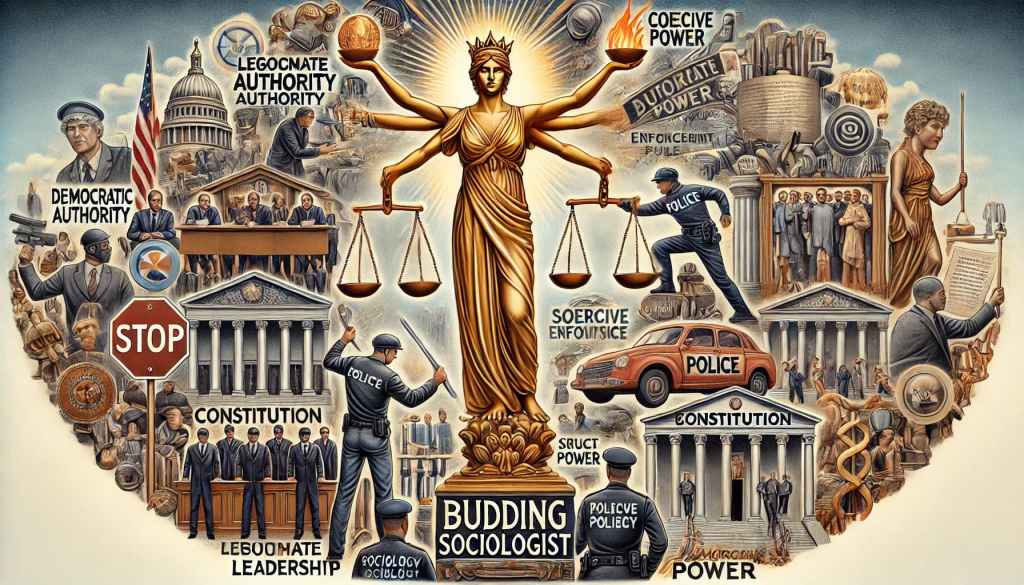
For centuries, scholars across various disciplines have delved into the concept of power, arriving at a commonly agreed definition: the ability of an individual to influence the actions or decisions of others. This influence extends beyond interpersonal relationships, shaping dynamics within social groups, professional settings and governmental structures. The power wielded by governments extends beyond mere control over citizens, aiming instead at the welfare and effective governance of society as a whole.
In organizational contexts, power manifests primarily through direct control, often stemming from ownership of resources or means of production. This control is exercised through delegation, as authority is passed down from higher levels to lower tiers within the organizational hierarchy.
While power is frequently associated with politics, its presence permeates all social interactions. Sociologists focus on understanding power dynamics within various social structures, recognizing its pervasive influence on human behaviour. Contemporary sociological inquiry aims to unravel the nuanced complexities of power relationships, particularly those between the state and society.
Power enables individuals to assert their will over others, sometimes even in opposition to their desires. Decision-makers wield significant power, often leading to decisions being made without challenge. At the micro level of society, power dynamics are evident in everyday interactions, from intimate relationships to professional environments and beyond.
Before delving deeper, it’s essential to clarify four fundamental elements of political power: power itself, authority, legitimacy, and sovereignty. Power denotes the capacity to influence behaviour and shape events. Authority grants individuals or groups the right to wield power, make decisions, and enforce compliance. Legitimacy hinges on the belief of citizens that their leaders possess the rightful authority to govern. Sovereignty represents the pinnacle of political power, embodying supreme authority that cannot be overridden by external forces.
Meaning of Power
Power is commonly understood as the ability of an individual to exert influence over others, shaping their beliefs, behaviours, or values according to the desires of those in authority or reinforcing existing beliefs and behaviours. At its core, power entails control over the actions of others.
The term “power” finds its origins in the French word “pouair,” which stems from the Old French infinitive “to be able,” and also traces back to the Latin “potere/potis,” signifying strength or ability, with usage in academia dating back to the 13th century.
Over time, “power” has become a ubiquitous term in everyday discourse, akin to “society.” Its meaning evolved from denoting individuals with authority in the late 14th century to representing a specific capacity or ability by the early 15th century. By 1726, it extended to describe the influence of states or nations on the global stage.
The term gained traction from the 1660s onward, taking on new connotations such as energy for work from 1727 and electrical supply from 1896, with phrases like “power failure” emerging in 1911 and “power steering” appearing from 1921. Today, power manifests as an inherent aspect of group dynamics and organizational structures, impacting society both positively and negatively.
In sociology, power serves as a lens through which to examine social interactions and relationships, profoundly influencing human behaviour. It represents the imposition of one’s will upon others, often irrespective of their consent. Thus, power operates at the micro level within social relationships and within various institutional contexts, constituting social power—the ability to pursue objectives even in the face of opposition.
Sources of Power
As previously outlined, power refers to an individual’s capacity to exert their will, potentially overriding the desires of others. This power derives from various sources, which can be categorized as follows:
1. Force: Force manifests as either direct physical coercion or implied coercion used to assert dominance over others. Leaders resorting to the imprisonment or execution of political dissenters exemplify the application of force, whether through physical violence or threats to the individual’s life or their loved ones. Through the implementation of force, individuals can be constrained physically and coerced into compliance with the desired tasks.
2. Influence: It denotes the utilization of authority via persuasive means. It embodies the capacity to sway the choices and behaviours of others. For instance, a citizen might alter their stance following a political leader’s speech at a rally, showcasing how persuasive endeavours can shift public opinion.
3. Authority: In a broader context, authority represents a sanctioned form of control. It denotes power that has been formalized within institutions and is acknowledged by the individuals subject to it. This authority is established for the purpose of decision-making and directing the behaviours of others. Legitimacy in this context entails the acknowledgment of governmental consent. Through processes such as elections, people grant leaders the authority to govern and they comply willingly without coercion. For instance, individuals are expected to adhere to the directives of police officers because society recognizes their entitlement to authority in specific circumstances. Authority thus embodies a mutually accepted and legitimate dynamic of dominance and submission.
Orders of Power
Max Weber posited the existence of three distinct and equally significant orders of power, as follows:
1. Economic Power: According to Marx, all forms of power, including political power, stem from economic power. This economic power is rooted in one’s position within the modes of production, their standing in the labour market and their opportunities. It signifies the capacity to influence events due to material advantages.
2. Social Power: The dynamics of informal community views, familial standing, honour, prestige and lifestyle choices form the basis of societal structures. Weber highlighted the significance of social influence, often surpassing economic motivations. Present-day sociologists similarly highlight the significance of social status, occasionally downplaying the role of political power.
3. Political Power: Political power is intricately tied to legal frameworks, party allegiances and expansive bureaucratic systems. Within this setup, governmental bureaucracies serve as institutionalized embodiments of political authority. There’s a longstanding notion that these bureaucracies are steered by a minute, handpicked elite—a select and advantaged few. Moreover, political power isn’t confined within national borders; rather, it transcends them. Networks of political influence can extend across nations and even globally. At its core, political power encompasses the ability to levy taxes and allocate resources to the populace.
Types of Power
The concept of power is interpreted variably among scholars and individuals. It can generally be classified into three distinct types, which are elaborated upon as follows:
1. Legitimate Power: Legitimate power, alternatively termed as position power or official power, emerges when the authority vested in an institution is acknowledged, grounded entirely in established rules. This form of power grants the ability to manage resources and administer rewards and penalties. Individuals adhere to this authority because they perceive it as essential and beneficial for upholding societal order and discipline. Examples include parents, educators, supervisors, and law enforcement officials, who wield legitimate power when their positional authority is recognized.
2. Charismatic Power: Charismatic authority, alternatively recognized as the power of personality, is inherent to individuals. It embodies the allure or dedication that one person inspires in another. Followers are guided by their emotions to adhere. This authority aids subordinates in recognizing and appreciating their superiors. Utilizing their personal leadership qualities, charismatic leaders guide groups or individuals, directing them to act in accordance with their vision and expectations. Historical figures such as Joan of Arc in France, Mahatma Gandhi and Netaji Subhash Chandra Bose in India epitomize this charismatic leadership.
3. Expert Power: Expert power, alternatively referred to as the authority of knowledge, emanates from specialized education and experience. It represents the proficiency and adeptness in a particular domain crucial for accomplishing tasks effectively. An individual’s professional competency and expertise grant them expert power, enhancing their credibility. Through this authority, individuals can inspire trust in their judgments and decisions, thereby potentially leading others.
4. Reward Power: Reward power stems from a position of authority, derived from the capacity to acknowledge commendable conduct. Leaders wield the authority to offer concrete incentives such as promotions, time off, and desirable tasks to their subordinates. Moreover, they can provide psychological rewards like praise, appreciation, approval and recognition. The subordinate must perceive that access to higher authorities enables them to dispense rewards. Additionally, this form of power can bolster the leader’s charismatic and legitimate authority.
5. Coercive Power: This power derives from the ability to exert influence or enforce consequences. Tangible forms of punishment may include dismissal, demotion or receiving low ratings. Psychological repercussions might involve criticism, avoidance, disapproval or sarcastic remarks directed towards subordinates. Conversely, reward power serves to avert undesirable outcomes, boosting the self-esteem of subordinates through positive reinforcement while diminishing it through punishment or coercion.
6. Political Power: This power stems from the backing of individuals and springs from a leader’s adeptness at collaborating with people and societal structures to earn their allegiance and backing. It manifests across all organizations. Various strategies exist for leaders to amass political influence. One such strategy involves social exchange, which operates on the principle of reciprocity: “If you do something for me, I’ll do something for you.” This relies on the societal norm wherein individuals in ongoing relationships feel compelled to reciprocate social favours. When these exchanges are successful, both parties attain desired outcomes. Another method of attaining political power is by providing selective assistance to supporters.
Authority: An Introduction
Authority refers to the sanctioned use of power within a societal framework. Max Weber conceptualized authority as the likelihood of commands being followed by a specific group. It denotes the legitimate or socially accepted control that one person or group holds over others. Legitimate authority is mutually recognized and justified by both the governing and the governed parties. Legitimacy is essential for authority, serving as the primary factor distinguishing it from mere power.
In essence, authority encompasses the ability to enforce rules or issue directives. It represents the authorized capacity to command obedience—a legalized form of power and a sanctioned privilege.
Authority is not a spontaneous occurrence; rather, it evolves through several components:
- It entails a conferred right. This right is bestowed upon a subordinate by a superior, positioning individuals to regulate the behavior of those under their authority.
- The authority’s right to issue orders is legitimate, sanctioned by the established norms or laws.
- Decision-making authority accompanies the role, enabling individuals to determine what actions are necessary, when they should occur, and who should execute them.
- Authority aims to influence the behavior of subordinates, ensuring that correct actions are taken at appropriate times.
- The exercise of authority is inherently subjective, influenced by the personality traits of both the authority figure and those subjected to their directives.
Meaning of Authority
Authority represents a sanctioned form of power, encompassing the right or capacity to have proposals or instructions accepted without the need for persuasion, negotiation or coercion. It is rooted in an acknowledged duty to obey rather than manipulation or force.
The concept of authority stems from the Latin words auctoritas and auctor, where an auctor is one who brings about the existence or fosters the growth and prosperity of an object, whether by original creation or by ensuring its continuity.
In essence, authority denotes a legitimate right to govern, recognized when subordinates accept the authority of their superiors to issue directives. It surpasses mere voluntary compliance and is akin to a permission granted by an agency or institution, often in the form of a license or endorsement to perform a task or take action. This authority may derive from established laws or the consent of the governed, which could be unanimous or based on majority opinion.
Sources of Authority
There are differing perspectives on the direction of authority flow within organizations. While some argue that authority originates from higher-ranking individuals and trickles down to subordinates, others contend that it emanates from the bottom and ascends, supported by the acceptance of those it impacts. Various theories of authority address these dynamics:
1. Legal/Formal Authority: According to this concept, authority is derived from an individual’s rank or position, and it may be conferred either by legislation or by social norms upheld by the law. For instance, a law may empower a police officer to apprehend individuals engaged in criminal activities. Similarly, within a company, the president possesses the authority to take disciplinary action against an employee who violates established rules, as conferred by company regulations. This type of authority is referred to as formal authority and is prominently displayed within bureaucratic structures, which represent the quintessential embodiment of legal authority. Within bureaucracies, authority is exercised by individuals who are contracted or appointed to their positions. In a corporate setting, shareholders elect a Board of Directors to wield authority on their behalf. The Board then delegates its authority to the Chief Executive Officer (CEO), who further delegates it to managers and other staff members within the hierarchy.
2. Traditional Authority: Traditional authority stems from a historical framework of societal structure and communal bonds, characterized by the relationship between a ruling figure and their compliant subjects. Within this system, the traditional leader wields power according to personal discretion and autonomy, often considering factors such as ethnic fairness and moral justice in their decision-making. This authority typically passes down hereditarily, from father to son, exemplified within familial structures where the father assumes authority over household members. This pattern of traditional authority is commonly observed in the Indian family dynamic, where the father’s guidance holds sway and familial members adhere out of reverence and adherence to established customs. Unlike formal legal systems or structured governance, traditional authority relies on personal allegiance and fidelity, rather than the enforcement of explicit rules or obligations dictated by official roles.
3. Acceptance: Acceptance stands as a significant pillar of authority, according to Chester Bernard. He emphasizes that the effectiveness of a superior’s authority hinges upon its acceptance by subordinates. Simply possessing authority holds little value if it isn’t embraced by those under it. Bernard stresses that the pivotal factor lies in the acceptance of authority rather than its mere existence. He outlines several conditions under which subordinates are likely to accept an order:
- Clear understanding of the order.
- Perception of alignment with organizational objectives.
- Harmony with personal interests.
- Capacity, both mentally and physically, to comply.
Subordinates may weigh the benefits of complying against the consequences of defiance, ultimately influencing their decision. The manifestation of acceptance in behavior is evident when individuals willingly obey or execute orders. Acceptance can flow both upwards and downwards within the organizational hierarchy.
4. Competence: There’s a prevailing notion that authority can stem from an individual’s personal competence rather than just their formal position. Someone might find their directives followed not solely due to their official rank, but because of their personal attributes. These qualities, whether they’re inherent traits or technical skills, can grant individuals a certain degree of authority. Even without formal titles, some individuals wield influence based on their intellect, expertise and experience.
For instance, when a doctor advises a patient to rest, the patient complies not just because of the doctor’s title, but because of the doctor’s expertise in the matter. The patient’s recovery hinges on following the doctor’s advice. Similarly, we trust a car mechanic’s recommendations without hesitation because of their demonstrated skill in their field. Therefore, it’s the knowledge and competence of individuals that earns them recognition and acceptance of their authority by others.
5. Charismatic Power: Charismatic power represents another dimension of authority, stemming from the personal magnetism of a leader or figure who commands the admiration of their followers. Individual qualities such as physical attractiveness, intellect, and integrity exert a significant influence, compelling people to adhere to the guidance of these figures. Followers are drawn to such leaders with the belief that they will facilitate the attainment of their aspirations. Charismatic leaders often possess exceptional oratory skills, captivating their audience with a compelling presence. This form of authority is evident in both religious and political spheres, exemplified by figures such as Ayatollah Khomeini in Iran, John F. Kennedy in America, and Mahatma Gandhi in India. The charismatic effect extends beyond traditional leadership roles to encompass figures in entertainment and military contexts. Film actors and actresses, along with war heroes, have demonstrated the ability to rally support and raise substantial funds for humanitarian causes, showcasing the impact of their charismatic personas. Additionally, political parties leverage the appeal of actors and actresses to draw crowds to their rallies, further illustrating the pervasive influence of charismatic personalities in various domains.
Types of Authority
Max Weber, renowned for his contributions to sociology, delineates authority based on its legitimacy. His conceptualization of legitimacy extends beyond mere legality. Weber’s framework identifies three primary types of authority, acknowledging that while it may not be exhaustive, it remains influential. Although other forms of authority may exist, Weber’s classification is widely recognized. According to him, the three main types of authority are:
1. Traditional Authority: It denotes the rightful influence granted by long-standing custom, tradition, or widely acknowledged norms. Traditional authority evolves over time, often associated with figures such as monarchs, established dynasties, or religious heads. This authority derives its legitimacy from an ingrained collective belief in its propriety and enduring nature, thus warranting acceptance. In patriarchal settings, the authority of husbands over wives or fathers over their children is upheld due to its customary adherence. Likewise, the ascension of a monarch to the throne is accepted solely by virtue of inheriting the royal lineage. In traditional leadership, authority emanates from adherence to customs or traditions, tied to inherited positions rather than personal attributes.
2. Charismatic Authority: Weber also noted that power can gain legitimacy through an individual’s charisma. Charisma is a unique aspect of someone’s personality that distinguishes them from ordinary individuals and is perceived as possessing supernatural or exceptional qualities. It is characterized by spontaneity and the ability to inspire new movements and structures. Charismatic authority refers to power that is legitimized by the extraordinary personal traits of a leader, such as heroism, mysticism, revelations or perceived magical abilities. Charisma enables a person to lead or inspire others without relying on established rules or traditions. Charismatic authority stems from the leader’s personality and the myths surrounding them, as seen in figures like Jesus, Mahatma Gandhi, Martin Luther King, and Hitler.
3. Legal—Rational Authority: Legal authority is defined by established laws or formal regulations that dictate the governance of society. This type of authority permeates various spheres including workplaces, government, educational institutions like schools and colleges and other major social structures. Leaders within these domains derive their authority from adherence to written rules and regulations within political systems. Modern bureaucratic organizations, in particular, epitomize this form of authority. Rational authority hinges on a leader’s legal prerogatives rather than familial or personal attributes.
Conclusion: Based on the preceding explanation, it is evident that Max Weber categorized authority into three distinct types: traditional, charismatic, and legal-rational, which are regarded as ideal constructs and typically not encountered in their pure forms in practical situations. Rather, leaders and political structures often exhibit a blend of these forms. Additionally, some modern scholars have introduced a fourth category known as professional authority, which is founded on expertise. Examples include the authority held by physicians, atomic scientists, botanists, and similar professionals.
Difference between Power and Authority
Power refers to an individual’s capacity to influence others’ actions, regardless of hierarchical structures or boundaries. It encompasses the ability to persuade others to act or refrain from acting. In contrast, authority denotes the legal and formal right granted to individuals, typically in higher positions, enabling them to issue orders, make decisions, and command others in performing specific tasks. It is a sanctioned form of power, recognized within organizational or societal frameworks.
The disparity between power and authority can be delineated as follows:
- Power denotes an individual’s capability to sway others and manage their behaviours, whereas authority represents the lawful entitlement to issue directives, make decisions and command obedience.
- Power is often acquired through personal traits and skills, while authority is vested formally in designated roles, such as managerial or executive positions.
- Knowledge and expertise serve as primary sources of power, whereas authority is largely derived from one’s position or title within a hierarchy.
- Power can manifest in various directions—upward, downward, lateral—while authority typically flows downward, from superiors to subordinates.
- Power resides within individuals, acquired through personal attributes, whereas authority is tied to official roles or designations.
- Authority is inherently legitimate, backed by legal or organizational frameworks, whereas power may not always carry the same level of legitimacy.
Conclusion: Based on the preceding description, it becomes evident that power and authority are distinct notions. Unlike power, which is unrelated to managerial hierarchy or position, authority is wholly contingent upon these factors. Specifically, one’s position within the hierarchy dictates the extent of their authority. Furthermore, organizational charts illustrate the hierarchical relationships of authority, particularly between superiors and subordinates.
Reference and Readings:
Sociology by C.N. Shankar Rao, https://amzn.to/41A3Wh4
Sociology Themes and Perspectives by Michael Haralambos and Martin Holborn, https://amzn.to/4ibTgdY