- Introduction
- Privatized Healthcare
- Key Features of Privatized Healthcare
- Universal Healthcare
- Key Features of Universal Healthcare
- Countries with Universal Healthcare Systems
- Comparing Privatized Healthcare and Universal Healthcare
- Which System is Better?
Introduction
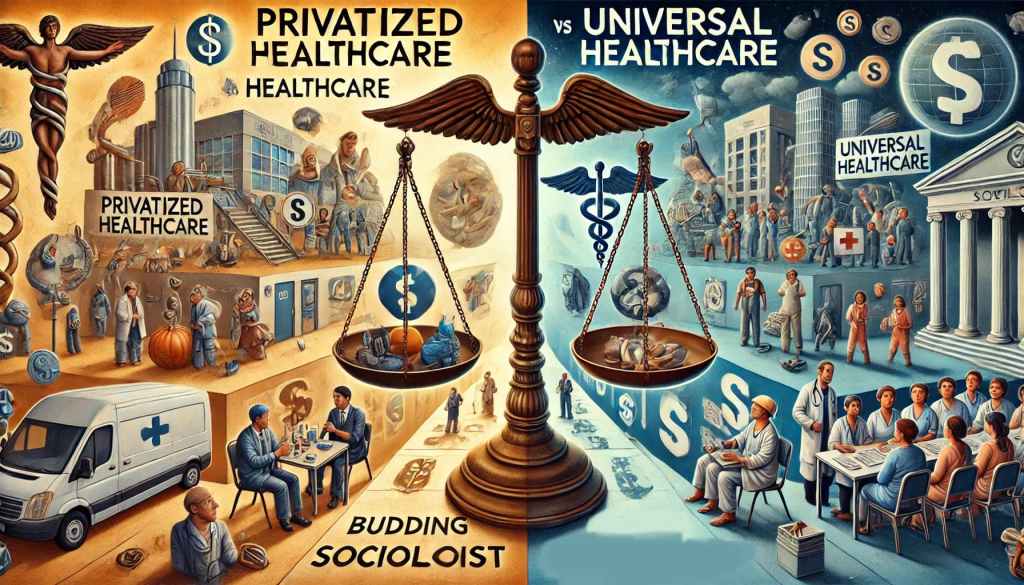
Privatized healthcare and universal healthcare are two contrasting approaches to providing medical services, each with its own benefits and challenges. Privatized healthcare is based on a market-driven system where individuals either pay out-of-pocket or obtain insurance, often through their employers. This system is commonly seen in countries like the United States, where private competition is believed to encourage innovation, efficiency, and a wider range of treatment options. Supporters argue that this model leads to high-quality care, shorter wait times, and continuous advancements in medical technology. However, critics point out that privatized healthcare often results in high costs, unequal access, and disparities in care, particularly for lower-income individuals who may struggle to afford necessary treatments.
In contrast, Universal healthcare ensures that medical services are available to all residents, regardless of their financial status. This system is usually funded through taxes or government subsidies and is implemented in countries such as Canada, Sweden, and the United Kingdom. Universal healthcare prioritizes equal access to medical care, helping to eliminate financial barriers and improve public health. Advocates highlight its advantages, including affordability, comprehensive coverage, and a focus on preventive care, which can lead to lower overall healthcare expenses in the long run. However, opponents argue that this model may result in longer wait times for specialized treatments, increased government spending, and bureaucratic inefficiencies.
The key difference between these two models lies in their core principles: privatized healthcare emphasizes personal responsibility and market-driven efficiency, whereas universal healthcare focuses on collective well-being and accessibility. Some countries adopt hybrid systems that incorporate elements of both approaches to balance affordability and quality. The debate between privatized and universal healthcare remains ongoing, shaped by economic, political, and social factors unique to each nation.
Privatized Healthcare
Privatized healthcare is a system where medical services are primarily operated by private companies, hospitals, and insurance providers rather than the government. In this model, healthcare functions as a business, and access to medical services is based largely on an individual’s ability to pay. The government’s role is often limited to regulation and oversight, rather than direct service provision. This system is commonly found in countries like the United States and Switzerland, where private healthcare providers dominate the industry, though some government programs exist to support specific groups.
Key Features of Privatized Healthcare
Privatized healthcare is based on a market-driven approach where private entities, including hospitals, insurance companies, and pharmaceutical firms, are the primary providers of medical services. Unlike government-funded universal healthcare systems, privatized healthcare places the financial responsibility on individuals and employers to cover medical costs. While this system fosters high-quality medical services and technological advancements, it also results in expensive care, disparities in access, and financial barriers for lower-income populations. Following are the essential characteristics of privatized healthcare that define its structure and operation:
1. Market-Driven Structure: Privatized healthcare operates within a competitive market, where hospitals, clinics, and insurance providers function as businesses aiming to attract customers. Unlike public healthcare, which is designed as a universal right, private healthcare is a consumer-driven service, meaning that people pay for the level of care they can afford. The competition encourages investment in modern medical technology, advanced facilities, and highly trained professionals, ensuring high-quality treatment. However, the profit-driven nature of privatized healthcare often leads to escalating costs, potential overuse of expensive procedures, and an emphasis on revenue over patient well-being.
2. Insurance-Based Healthcare Access: In a privatized system, healthcare is largely accessed through private insurance plans, which individuals acquire either through their employer or by purchasing coverage independently. The cost of these plans depends on factors such as age, health conditions, and level of coverage chosen. Many policies come with monthly premiums, deductibles (out-of-pocket costs before insurance coverage starts), and co-payments (fixed charges for medical visits and prescriptions). Those who are uninsured or underinsured often face high medical expenses, sometimes forcing them to delay or avoid necessary medical treatment due to cost concerns.
3. Limited Government Involvement: In contrast to universal healthcare systems, which are funded and managed by the government, privatized healthcare relies on minimal state intervention. The government’s role is usually limited to overseeing healthcare regulations, licensing professionals, approving medical treatments, and enforcing safety standards. However, because the government does not directly fund most healthcare services, private corporations and investors wield significant influence over pricing, insurance coverage, and treatment availability. In some countries, hybrid systems exist where the government enforces pricing controls to maintain affordability while allowing private providers to operate freely.
4. Faster and More Personalized Healthcare Services: A key advantage of privatized healthcare is the speed and efficiency of medical services. Since private hospitals and clinics function on a business model, they aim to provide shorter wait times, quicker specialist appointments, and personalized patient care to attract customers. Unlike public healthcare systems, where patients may experience delays in receiving non-urgent treatments, privatized systems allow priority access for those who can afford it. Additionally, private hospitals often offer superior amenities, such as private rooms, concierge medical services, and advanced treatment options, making them particularly appealing to those seeking high-end medical care.
5. High Healthcare Costs and Out-of-Pocket Payments: One of the most significant downsides of privatized healthcare is the financial burden on patients. Since private providers operate for profit, medical costs are generally higher than in government-subsidized systems. Patients are responsible for paying for insurance coverage, doctor visits, medical procedures, hospital stays, and prescription medications. In countries with fully privatized systems, a hospital visit or major surgery can lead to financial hardship, especially for those without insurance. Even insured individuals may struggle with high deductibles, co-payments, and unexpected costs, making healthcare unaffordable for many.
6. Inequality in Healthcare Access: Privatized healthcare creates disparities in medical access, where those with higher incomes receive superior healthcare compared to those with limited financial means. Since healthcare is not universally available, individuals without adequate insurance or the ability to pay out-of-pocket often face obstacles in receiving essential medical care. This leads to poorer health outcomes for low-income groups, who may delay treatment or forgo medical attention altogether. Additionally, rural communities experience reduced access to healthcare facilities, as private healthcare providers often establish hospitals and specialist clinics in wealthier urban areas where patients can afford costly treatments.
7. Corporate Influence Over Healthcare Decisions: In privatized systems, large healthcare corporations, insurance companies, and pharmaceutical firms hold significant power in shaping healthcare policies and costs. Many hospitals and insurance providers prioritize financial success over patient-centered care, leading to higher drug prices, costly insurance premiums, and restricted access to expensive treatments. Pharmaceutical companies also control the pricing of medications, often setting rates based on profitability rather than affordability. As a result, patients may be denied coverage for costly but necessary procedures, while hospitals focus on revenue-generating services rather than general healthcare needs.
8. Employment-Dependent Insurance Coverage: In many privatized healthcare systems, employer-sponsored insurance is the primary way people access medical coverage. This model ties healthcare benefits to one’s job status, creating challenges for the unemployed, freelancers, and gig workers. When individuals lose their jobs, they often lose their health insurance as well, leaving them vulnerable to medical expenses they may not be able to afford. This reliance on employment for healthcare coverage creates financial insecurity and discourages entrepreneurship or job transitions, as many employees remain in positions solely to retain health benefits.
9. Limited Emphasis on Preventative Healthcare: A privatized healthcare system often prioritizes treatment over prevention, as preventative care is less profitable for private hospitals and insurance companies. Many people avoid routine check-ups and screenings due to high costs, lack of coverage, or insurance restrictions, leading to late-stage diagnoses of serious conditions. In contrast, universal healthcare systems emphasize early interventions and preventive medicine, reducing overall healthcare costs and improving public health. The lack of widespread preventative care in privatized healthcare contributes to higher rates of chronic diseases, more hospitalizations, and increased long-term medical expenses.
10. Vulnerability to Economic Instability: Privatized healthcare is deeply affected by economic conditions, meaning healthcare access can become more difficult during recessions, market downturns, or job losses. Since many people receive health insurance through their employers, economic downturns often result in mass losses of coverage, forcing individuals to either purchase expensive private plans or go without healthcare. Additionally, private insurance premiums tend to rise annually, making it harder for families to maintain coverage over time. Unlike universal healthcare systems that provide continuous access regardless of economic shifts, privatized systems remain unstable, disproportionately affecting lower-income populations and unemployed individuals.
Conclusion: Privatized healthcare is designed to promote competition, efficiency, and innovation in the medical sector. However, this system also results in high costs, unequal healthcare access, and dependence on employer-based insurance coverage. While privatized healthcare excels in delivering high-quality treatment and reducing wait times, it often fails to ensure equitable and affordable healthcare for all citizens. The system’s reliance on private companies, profit-driven motives, and limited government intervention makes healthcare more accessible for those with financial means but creates challenges for lower-income individuals, making it a topic of ongoing debate in many countries.
Universal Healthcare
Universal healthcare is a system in which all individuals have access to essential health services, regardless of their financial status, employment, or ability to pay. It is based on the principle that healthcare is a fundamental human right, rather than a privilege or commodity. Universal healthcare systems aim to ensure equitable access to medical services while managing healthcare costs efficiently.
Key Features of Universal Healthcare
Universal healthcare is a system designed to ensure that all individuals have access to medical services, regardless of their financial status, employment, or pre-existing health conditions. It is based on the idea that healthcare is a fundamental right rather than a privilege. While implementation varies across countries, universal healthcare systems share several common characteristics that promote affordability, accessibility and improved health outcomes. Following are those characteristics:
1. Government-Funded Healthcare System: A defining feature of universal healthcare is that it is primarily financed by the government rather than private entities. Funding sources typically include general taxation, mandatory health insurance contributions, or a combination of both. Some nations, such as the United Kingdom, rely on tax revenues to support their healthcare systems, while others, like Germany and Japan, require citizens and employers to contribute to mandatory insurance programs. This collective funding model spreads financial risk across the population, preventing individuals from facing extreme medical expenses. Unlike privatized healthcare, where high out-of-pocket costs can be a barrier, universal healthcare ensures that medical treatment is accessible to everyone without excessive financial strain.
2. Equal Access to Medical Services: Universal healthcare eliminates financial barriers to medical care, ensuring that all individuals receive essential health services regardless of their income level or employment status. Unlike private systems, where healthcare quality often depends on a person’s financial resources, universal healthcare provides equal treatment opportunities for everyone. This prevents individuals from delaying or avoiding medical attention due to cost concerns. By making healthcare a right rather than a privilege, universal systems help improve overall public health, reduce long-term medical expenses, and enhance quality of life. Countries like France and Canada have demonstrated that ensuring healthcare access for all can significantly reduce health inequalities and improve national health outcomes.
3. Lower Per Capita Healthcare Costs: One of the major advantages of universal healthcare is that it generally results in lower healthcare costs per individual compared to privatized systems. This cost reduction is achieved through government regulations on drug prices, standardized medical service fees, and lower administrative expenses. In many countries, governments negotiate medication prices with pharmaceutical companies, making prescription drugs more affordable. Additionally, universal healthcare reduces administrative overhead by eliminating the complexity of multiple private insurers. With fewer middlemen and lower profit-driven costs, healthcare becomes more affordable both for individuals and for the government.
4. Collaboration Between Public and Private Sectors: Even in countries with universal healthcare, private providers often play a role in delivering medical services. This creates a hybrid model in which the government ensures coverage for essential healthcare services while allowing individuals the option to seek private care for specialized treatments or faster service. For instance, Germany has a public health insurance system but allows private insurers to operate under strict government regulations. In Canada, the government funds basic healthcare, but private insurance is available for services like dental and vision care. This collaboration allows for a balance between efficiency, affordability, and patient choice while maintaining universal access.
5. Focus on Preventive Healthcare: Preventive care is a key element of universal healthcare, helping to reduce overall medical costs and improve public health. Governments invest in preventive measures such as vaccinations, regular health screenings, and early detection programs for chronic diseases. In Japan, for example, citizens undergo routine health checkups to detect illnesses such as heart disease and diabetes at an early stage. By prioritizing prevention, universal healthcare systems reduce the incidence of severe illnesses, decrease hospital admissions, and improve long-term health outcomes. This proactive approach not only enhances the quality of life but also helps sustain healthcare systems financially.
6. Regulation of Healthcare Providers: In universal healthcare systems, strict government regulations ensure that healthcare services remain accessible, affordable, and high-quality. Unlike privatized systems, where profits can sometimes drive medical decisions, universal healthcare focuses on patient care and well-being. Governments set price controls on medical services and prescription drugs to prevent excessive costs. Additionally, regulations help maintain consistent treatment standards across all healthcare facilities, ensuring that patients receive high-quality care regardless of their financial status. In Sweden, for example, doctors can operate privately but must follow government-set pricing structures to prevent overcharging.
7. Coverage for Essential Medical Services: A significant benefit of universal healthcare is its comprehensive coverage of essential medical services. These typically include doctor visits, emergency care, hospitalization, maternity services, mental health support, and prescription drugs. However, some services such as dental, vision, and elective procedures may not be covered by the government and may require additional private insurance or out-of-pocket payments. In Canada, for example, hospital stays and physician services are fully covered, but dental and vision care require private insurance. Despite some limitations, universal healthcare ensures that essential medical needs are met for the majority of the population.
8. Efficient Resource Allocation to Prevent Overuse: Since universal healthcare is publicly funded, governments implement measures to ensure resources are used effectively and to prevent unnecessary medical expenditures. One common approach is requiring patients to consult a general practitioner (GP) before seeing a specialist. This system, used in countries like Denmark, helps control costs by ensuring that specialist services are only utilized when necessary. Additionally, healthcare budgets are carefully planned, and prescription guidelines are in place to avoid the overuse of medications and treatments. These measures help maintain financial sustainability while ensuring that patients receive appropriate care.
9. Strong Public Trust and Government Accountability: Universal healthcare systems tend to have high levels of public trust and political support. Because healthcare is considered a fundamental right, citizens expect their governments to maintain and improve healthcare services. In nations like Norway and Sweden, where healthcare is tax-funded, people generally support the system because it eliminates financial barriers to medical care and protects individuals from medical debt. Additionally, governments are held accountable for ensuring the quality and efficiency of healthcare services, leading to continuous improvements in public health policies. In contrast, privatized healthcare systems often face criticism due to high costs and unequal access, which can diminish public trust.
10. Effective Crisis Management and Public Health Response: One of the major advantages of universal healthcare is its ability to respond effectively to public health emergencies such as pandemics, natural disasters, and disease outbreaks. Because healthcare services are centrally coordinated, governments can efficiently implement mass vaccination programs, allocate hospital resources, and coordinate emergency responses. During the COVID-19 pandemic, countries with universal healthcare, such as Germany and South Korea, were able to provide free testing, hospital care, and vaccinations to all citizens. This ensured that economic disparities did not affect access to life-saving treatments. The ability to rapidly mobilize healthcare resources is a crucial advantage of universal healthcare systems.
Conclusion: Universal healthcare systems prioritize accessibility, affordability, and high-quality medical care for all citizens. Through government-backed funding, equal access policies, cost control strategies, and an emphasis on preventive care, these systems ensure that healthcare remains a right rather than a privilege. While challenges such as taxation and wait times exist, the overall benefits—such as improved health outcomes, reduced financial burden on individuals, and effective crisis management—make universal healthcare one of the most successful approaches to delivering medical services. Countries that implement universal healthcare consistently experience better public health indicators, lower per capita healthcare costs, and higher citizen satisfaction compared to nations with privatized healthcare models.
Countries with Universal Healthcare Systems
| Country | Healthcare System Type | Funding Source | Key Features |
| United Kingdom | National Health Service (NHS) | General taxation | Free at the point of use, government-run hospitals, universal access |
| Canada | Single-payer system | Public taxation | Provincial administration, essential services covered, private insurance for additional benefits |
| Germany | Multi-payer social health insurance | Mandatory insurance contributions | Public and private insurance coexist, employer-employee contributions |
| France | Universal health insurance (Sécurité Sociale) | Payroll taxes, government subsidies | Public-private mix, high reimbursement rates for medical expenses |
| Sweden | Tax-funded universal healthcare | Local and national taxation | Decentralized healthcare delivery, high public investment |
| Japan | Statutory health insurance system | Employer and employee contributions | Mandatory health insurance, private providers with government oversight |
| Australia | Medicare (Universal healthcare with private options) | General taxation, Medicare levy | Public hospital care covered, private insurance for elective services |
| South Korea | National Health Insurance Service (NHIS) | Payroll taxes, government subsidies | Single insurer, mandatory participation, low out-of-pocket costs |
| India | Ayushman Bharat (PM-JAY) and State Schemes | General taxation, state and central government funding | Free health coverage for low-income families, expanding hospital access, mix of public and private providers |
India has made significant progress toward universal healthcare with the Ayushman Bharat Pradhan Mantri Jan Arogya Yojana (PM-JAY), which provides free health coverage to economically disadvantaged families. The country also has various state-level healthcare initiatives that aim to improve accessibility and affordability. While India’s system is not entirely universal yet, it is steadily moving towards broader coverage through public and private healthcare partnerships.
Comparing Privatized Healthcare and Universal Healthcare
Healthcare systems around the world generally fall into two major categories: privatized healthcare and universal healthcare. Each model has its own structure, advantages, and challenges, which impact factors like cost, accessibility, quality, efficiency and government involvement. Following is the comparison of private healthcare and universal healthcare:
1. Cost to Patients:
| Privatized Healthcare | Universal Healthcare |
| Individuals pay for healthcare through insurance premiums, co-pays, deductibles, or direct out-of-pocket expenses. | Medical expenses are largely covered by taxes, reducing direct costs for individuals. |
| The cost of medical treatments can vary widely, and those without insurance face high expenses. | Healthcare services are available at little to no cost at the point of use. |
| Private insurers often adjust prices based on a person’s age, health conditions, and risk profile. | Costs are spread across the population through taxation, ensuring affordability. |
| High medical costs can lead to significant financial strain or medical debt. | Patients do not face financial hardship due to medical expenses. |
Universal healthcare provides better financial security, while privatized systems may create higher financial burdens for individuals.
2. Waiting Times:
| Privatized Healthcare | Universal Healthcare |
| Faster access to elective procedures and specialist care, especially for those who can afford premium services. | Non-urgent procedures may involve longer wait times due to high demand. |
| Patients with private insurance can choose faster service options. | Prioritization is based on medical urgency rather than financial capability. |
| Private providers often compete to reduce wait times and attract patients. | Government-regulated funding may limit the availability of specialists, leading to delays. |
Privatized healthcare generally offers shorter wait times, while universal healthcare may result in delays for elective procedures.
3. Quality of Care and Medical Advancements:
| Privatized Healthcare | Universal Healthcare |
| Competition encourages innovation and the adoption of advanced medical technologies. | Innovation is present but may be limited by government budget constraints. |
| Private hospitals often invest in the latest equipment and research to remain competitive. | Treatments are standardized, prioritizing cost-effectiveness over rapid technological adoption. |
| Pharmaceutical companies and medical device manufacturers thrive in competitive, profit-driven markets. | Government price regulations may slow down the development of new treatments. |
Privatized systems encourage more innovation and advanced medical technology, whereas universal healthcare focuses on affordability and equal distribution of resources.
4. Accessibility and Healthcare Equity:
| Privatized Healthcare | Universal Healthcare |
| Healthcare access depends on financial ability and insurance coverage. | All citizens have equal access to healthcare irrespective of their income. |
| Lower-income individuals may struggle to afford medical services. | Public funding ensures that no one is denied care due to financial reasons. |
| Uninsured individuals often delay or avoid medical treatments. | Early intervention is more common since cost is not a barrier. |
Universal healthcare ensures fair access to all, while privatized systems create gaps based on financial status.
5. Government Involvement:
| Privatized Healthcare | Universal Healthcare |
| The government plays a limited role, mainly in setting regulations and guidelines. | The government oversees funding, regulation, and administration. |
| Prices for medical services are set by market forces. | The government negotiates costs, keeping healthcare more affordable. |
| Government programs (e.g., Medicare, Medicaid) may exist to support specific populations. | Healthcare is universally available, eliminating the need for separate insurance programs. |
Universal healthcare systems rely on strong government oversight, while privatized systems are market-driven with minimal intervention.
6. Choice of Doctors and Facilities:
| Privatized Healthcare | Universal Healthcare |
| Patients have more freedom to choose doctors, hospitals, and specialists. | Patients may have limited choices based on government-approved providers. |
| Private facilities often offer premium services at a higher cost. | Standardized care is available for all, but private options may still exist. |
| Some insurance plans limit provider networks, restricting patient choices. | Patients are typically assigned to healthcare providers based on regional availability. |
Privatized healthcare offers greater flexibility in choosing providers, while universal healthcare focuses on equal access rather than personal choice.
7. Administrative Costs and Efficiency:
| Privatized Healthcare | Universal Healthcare |
| High administrative costs due to complex insurance systems, billing, and claims. | Lower administrative costs due to streamlined government operations. |
| Hospitals and providers spend significant time managing insurance claims. | Less bureaucracy allows healthcare professionals to focus more on patient care. |
| Some private insurers may deny claims or require extensive paperwork for approval. | The system is more straightforward, with fewer delays caused by insurance approvals. |
Universal healthcare is more efficient with lower administrative burdens, while privatized healthcare involves higher complexity and costs.
8. Public Satisfaction and Health Outcomes:
| Privatized Healthcare | Universal Healthcare |
| Higher satisfaction among individuals who can afford premium care. | Higher overall satisfaction as no one is excluded from healthcare access. |
| Better outcomes for those with financial resources. | Better national health statistics due to widespread preventive care. |
| Health disparities exist based on income and insurance status. | Greater focus on preventive care leads to long-term improvements in public health. |
Universal healthcare systems typically have higher national health outcomes and public satisfaction, whereas privatized systems benefit wealthier individuals more.
9. Economic Impact on Society:
| Privatized Healthcare | Universal Healthcare |
| Expensive medical costs can limit economic mobility for lower-income individuals. | Reduces financial burden on individuals, allowing them to spend on other necessities. |
| High healthcare costs can discourage entrepreneurship due to reliance on employer-based insurance. | More people may pursue self-employment since healthcare is not tied to jobs. |
| Unequal access to healthcare can lead to a less productive workforce. | A healthier population leads to increased productivity and economic stability. |
Universal healthcare supports economic stability and workforce productivity, while privatized healthcare may create financial barriers for individuals.
10. Sustainability and Future Challenges:
| Privatized Healthcare | Universal Healthcare |
| Rising medical costs make the system unsustainable for many individuals. | Requires consistent government funding, which can be challenging in economic downturns. |
| The aging population increases demand, leading to higher insurance premiums. | Governments must plan for an aging population and increasing healthcare costs. |
| Profit-driven motives can lead to unnecessary procedures and inflated prices. | Cost control measures may sometimes limit access to certain treatments. |
Both systems face long-term sustainability challenges, but universal healthcare ensures broader access despite financial pressures.
Summary Table: Privatized vs. Universal Healthcare
| Factor | Privatized Healthcare | Universal Healthcare |
| Cost to Patients | High out-of-pocket costs | Low, tax-funded healthcare |
| Waiting Times | Shorter for private care | Longer for non-urgent care |
| Quality & Innovation | High due to competition | Moderate, prioritizing cost-effectiveness |
| Equity & Accessibility | Unequal based on income | Equal access for all |
| Government Role | Limited involvement | Strong regulatory role |
| Choice of Providers | Greater flexibility | More standardized care |
| Administrative Costs | Higher due to insurance complexity | Lower, streamlined government processes |
| Public Satisfaction | Higher for wealthy individuals | Higher national satisfaction rates |
| Economic Impact | Can limit financial mobility | Supports workforce and economy |
| Sustainability | Rising costs create challenges | Requires stable government funding |
Conclusion: Both privatized and universal healthcare models have unique benefits and limitations. While privatized healthcare prioritizes speed, innovation, and choice, universal healthcare ensures affordability, equity, and long-term public health benefits. Many countries incorporate elements of both systems to achieve a balance between accessibility and efficiency.
Which System is Better?
Deciding whether privatized healthcare or universal healthcare is superior involves evaluating several critical factors, such as cost, efficiency, accessibility, quality of care, patient choice, and the level of government involvement. Both systems come with their own strengths and weaknesses, and countries around the world have chosen different models based on their specific economic, political, and social contexts. There is no one-size-fits-all answer, as the effectiveness of each system often depends on how well it aligns with a nation’s unique needs and priorities.
1. Cost and Financial Impact: The financial aspect is one of the most significant differences between universal healthcare and privatized healthcare. Universal healthcare is primarily funded through taxation or government-mandated insurance, making medical services widely accessible and reducing out-of-pocket expenses. In contrast, privatized healthcare requires individuals to pay for their medical needs directly or through private insurance, often resulting in higher medical bills, financial strain, and medical debt. In countries without a universal system, such as the U.S., medical expenses can be overwhelming, sometimes leading to bankruptcy.
2. Availability and Access to Care: A major benefit of universal healthcare is that it provides equal access to medical services, ensuring that individuals receive treatment regardless of their financial status or employment situation. This model prevents the issue of uninsured individuals being denied healthcare due to high costs. Privatized healthcare, however, often limits access to those who can afford insurance or out-of-pocket expenses, leaving many without adequate medical care. In nations where healthcare is tied to employment, job loss can also mean losing health coverage, creating additional uncertainty for individuals and families.
3. Healthcare Quality and Innovation: Private healthcare systems tend to drive competition among providers, leading to technological advancements, superior medical treatments, and more personalized care. These systems often encourage the rapid development of new therapies and medical breakthroughs. However, universal healthcare systems also contribute to medical research and public health improvements, although the pace of innovation may be slower due to government budget constraints and regulations.
4. Waiting Periods for Treatment: One of the most frequently debated aspects of universal healthcare is the possibility of longer wait times for elective and non-urgent medical procedures. Because healthcare is available to everyone, demand for services may exceed supply, leading to delays in specialist consultations and surgeries. Privatized healthcare, in contrast, generally has shorter wait times, as private hospitals operate within a profit-driven system that prioritizes efficiency and faster service. However, these benefits are primarily accessible to those who can afford them, leaving lower-income individuals with limited options.
5. Role of Government in Healthcare: Universal healthcare is heavily regulated and funded by the government, ensuring cost control and equal access for all citizens. While this system helps maintain affordability, it can also lead to administrative inefficiencies and delays in approving treatments. Privatized healthcare, on the other hand, is market-driven, with minimal government involvement. While this allows for greater competition and flexibility, it can also result in rising costs, profit-driven practices, and disparities in healthcare quality based on income levels.
6. Long-Term Costs and Economic Sustainability: While universal healthcare requires higher taxation, it often reduces long-term healthcare costs by prioritizing preventive medicine and early treatment. This approach helps decrease the number of hospitalizations and emergency room visits, ultimately reducing the financial burden on the system. Privatized healthcare, despite appearing cost-effective in some cases, often leads to higher overall healthcare spending per person due to expensive treatments, administrative complexities, and profit margins. The U.S., for example, has one of the highest healthcare expenditures globally, despite lacking universal coverage.
7. Equity in Healthcare Access: One of the strongest arguments in favour of universal healthcare is its ability to promote fairness and equal access to medical services. Since healthcare is treated as a public right rather than a commodity, no individual is denied treatment based on financial status. Conversely, privatized healthcare tends to favour those with higher incomes, as they can afford better insurance plans, specialized treatments, and high-quality healthcare facilities, leaving marginalized populations with fewer options. Countries with universal healthcare generally report lower rates of preventable diseases, higher life expectancy, and reduced infant mortality compared to those with privatized systems.
8. Choice of Healthcare Providers: In privatized healthcare, individuals usually have more freedom in selecting their healthcare providers, including hospitals, doctors, and specialists. Private institutions strive to attract patients by offering higher-quality care, personalized treatment options, and faster service. Universal healthcare, while ensuring accessibility, may offer fewer choices due to government regulations and funding limitations. In some cases, individuals may have to wait for approval to access certain specialists or procedures. However, many nations with universal healthcare, such as Germany and France, have hybrid models that integrate private healthcare providers into the public system, maintaining both accessibility and patient choice.
9. Impact on Workforce and Economic Growth: A well-functioning healthcare system plays a crucial role in workforce productivity and economic stability. In universal healthcare systems, individuals have the security of knowing they will receive medical care regardless of their employment status, allowing them to change jobs or start businesses without fear of losing coverage. In privatized healthcare, the cost of medical treatment can discourage people from seeking care, resulting in higher absenteeism, untreated chronic illnesses, and reduced overall productivity. Additionally, businesses in privatized systems often bear the financial burden of providing employee health insurance, increasing operational costs and limiting economic competitiveness.
10. Hybrid Healthcare Systems: A Balanced Approach: Recognizing the strengths and weaknesses of both models, many countries have developed hybrid healthcare systems that merge public funding with private healthcare services. Nations like Germany, Switzerland, and France provide universal coverage while allowing private healthcare providers and insurers to compete, ensuring both affordability and high-quality medical services. These hybrid models strike a balance by integrating government support for basic care with market-driven incentives to encourage innovation and efficiency. By combining the advantages of both systems, hybrid models offer a sustainable, efficient, and inclusive healthcare approach.
Conclusion: Determining whether universal healthcare or privatized healthcare is superior depends on a nation’s priorities, economic capabilities, and social policies. Universal healthcare is the preferred choice for countries that value equal access, affordability, and long-term cost reduction, while privatized healthcare is more appealing to those who prioritize medical innovation, individual choice, and shorter wait times. Many nations have successfully implemented hybrid healthcare models, incorporating government-funded accessibility with private sector efficiency. Ultimately, an effective healthcare system should aim to provide affordable, high-quality, and accessible care while ensuring sustainability and continuous improvement.
References and Readings:
Economics of Public and Private Healthcare and Health Insurance in India, by Brijesh C. Purohit, https://amzn.to/3Dmjf3v
Affordable Health Care Systems in India, by Dr. (Prof.) Krishna Gopal Karmakar, https://amzn.to/4bpx91v
Universalising Healthcare in India: From Care to Coverage, Edited by Imrana Qadeer, K. B. Saxena, P. M. Arathi, https://amzn.to/41jbqU4
Indian Health Sector and Healthcare System: A Critical Insight, By Prashant Mehta, https://amzn.to/4isPxJg