- Introduction
- Gay and Lesbian Perspective of Family
- Features of Same-sex Families
- Impact of Same-sex Family on Society
- Impact of Same-Sex Family on Traditional Hindu Society
Introduction
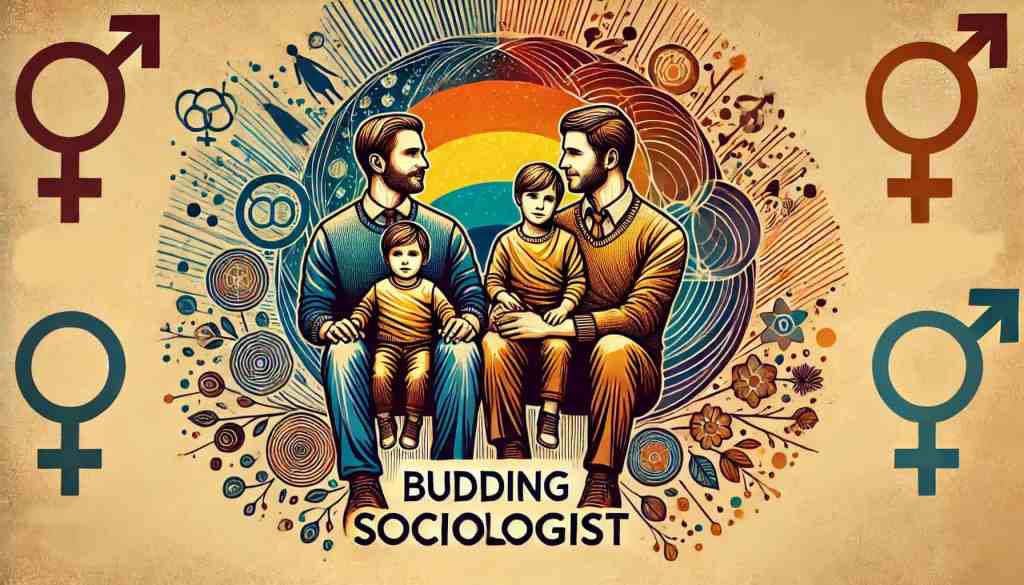
The family is a close-knit group composed of individuals connected by blood, marriage or adoption. Recognized as the smallest and most fundamental social unit, it plays a crucial role as a primary group within any community. Typically, a family includes a mother, father and one or more children, serving as the first social environment a child encounters. This group is not only long-lasting but also significantly shapes an individual’s life experiences from birth to death, representing the most persistent social relationship in society.
“Gay” and “lesbian” are terms that denote sexual orientations and families constituted by them are known as same-sex families which is an outcome of the same-sex marriage and can be understood in more precise way as follows:
- Gay is a broad term encompassing individuals primarily attracted to the same sex, often used specifically for men attracted to other men. It acknowledges a diverse range of identities and experiences within the male same-sex community.
- Lesbian specifically describes women attracted to other women, emphasizing their unique cultural, social, and personal contexts within same-sex relationships. These individuals when get married to each other, then these marriages are known as same-sex marriages and as result of which same-sex family is said to be have formed.
In the realm of same-sex marriage, “gay” and “lesbian” denote individuals who are romantically or sexually attracted and married to other individual of the same gender. These identities are crucial for understanding the dynamics of same-sex marriage, which legally acknowledges and validates relationships and commitments between same-sex partners.
Gay and lesbian perspectives on family reveal a diverse array of experiences, obstacles and hopes, underscoring both variability and a common dedication to affection and belonging. Historically, family dynamics were predominantly seen through a heterosexual perspective, guided by societal standards that defined familial structures. They frequently highlight the significance of chosen families groups of friends and loved ones who offer emotional encouragement and unwavering approval. These chosen families assume a pivotal role, particularly in instances where biological families may not provide comparable support or acceptance.
Parenting within these families is characterized by careful planning and legal consideration, prioritizing the welfare and rights of their children. Methods such as adoption, surrogacy and co-parenting are frequently employed, illustrating the diverse avenues through which gay and lesbian individuals form and nurture their families.
Despite these strides forward, persistent challenges remain. Numerous gay and lesbian individuals encounter societal prejudice and legal barriers that complicate their family lives. In certain areas, discrimination and lack of legal recognition necessitate ongoing legal and social efforts for equality and acceptance. Consequently, the gay and lesbian viewpoint on family underscores inclusivity, resilience and the embrace of diverse relationships and forms of support.
Discussions regarding the impact of gay and lesbian perspectives on families require sensitivity and acknowledgment of diverse experiences. Critics suggest that non-traditional family structures, like those led by gay and lesbian couples, may challenge established social norms on family dynamics. Concerns include potential disruptions to traditional gender roles and confusion for children regarding parental roles. Critics also worry about stigmatization and bullying that children in these families may encounter due to societal prejudices. They argue that the absence of both male and female parental role models could influence a child’s development and understanding of gender roles.
Gay and Lesbian Perspective of Family
In sociology, the experiences and identities of gay and lesbian individuals are examined from various angles to understand their social interactions, structures, and the broader implications of their sexual orientation. Following is a comprehensive exploration of these perspectives:
1. Identity Formation: From gay and lesbian perspective, identity can be formatted as follows:
1.1 Social Construction of Sexuality: Sexual identities are viewed as socially constructed rather than innate. The labels “gay” and “lesbian” are understood within cultural and historical contexts.
1.2 Labelling Theory: This theory looks at how labelling someone as gay or lesbian can shape their self-identity and behaviour, exploring the application and social consequences of these labels.
2. Socialization and Coming Out: Socialization and out-come of gay and lesbian perspective can be understood in following ways:
2.1 Family Dynamics: Sociologists study how families respond to a member’s sexual orientation, including acceptance, rejection, and the spectrum of support or hostility.
2.2 Peer Influence: The attitudes of peers towards homosexuality significantly affect the self-esteem and social integration of gay and lesbian individuals, where acceptance can foster well-being, and bullying can have adverse effects.
3. Community and Subculture: Community formation and development of sub-culture among gay and lesbian can be described as follows:
3.1 LGBTQ+ Communities: Gay and lesbian individuals often join communities that offer support and a sense of belonging. These communities can be physical, like gay neighbourhoods, or virtual, such as online forums and social media.
3.2 Subcultures: Within the larger LGBTQ+ community, there are distinct subcultures with their own norms, values, and traditions, which sociologists study to understand social cohesion and identity.
4. Discrimination and Inequality: Discrimination and inequality as compared to normal civil population can be seen as follows:
4.1 Heteronormativity: This concept involves societal norms that privilege heterosexuality. Sociologists analyze how these norms shape institutions and interactions, marginalizing non-heterosexual orientations.
4.2 Homophobia: The study of homophobia includes its origins, manifestations, and impacts on gay and lesbian individuals, focusing on institutional discrimination (e.g., laws, workplace policies) and social discrimination (e.g., hate crimes, bullying).
5. Legal and Political Aspects: Following are legal and political aspects of gay and lesbian perspective:
5.1 Marriage Equality: Research examines the implications of marriage equality, including the fight for legal recognition and the resulting social benefits and challenges.
5.2 Policy and Advocacy: Sociologists study the effects of policies on the lives of gay and lesbian individuals and the role of advocacy groups in influencing public opinion and policy changes.
6. Health and Wellbeing: Health of all sorts play an important role in the lives of individual and in case of gay and lesbian, since they are feeling deprived off and managed these issues as follows:
6.1 Mental Health: The stress of being a minority in a heteronormative society can lead to higher rates of mental health issues among gay and lesbian individuals. Sociological studies focus on these impacts and mitigating factors, such as social support networks.
6.2 Healthcare Access: Research highlights disparities in healthcare access and outcomes, emphasizing the need for sensitive and appropriate healthcare for gay and lesbian individuals.
7. Intersectionality: Intersectionality among gay and lesbian perspective of family can be described as follows:
7.1 Multiple Marginalization: Intersectionality theory examines how different aspects of identity (e.g., race, gender, class) intersect with sexual orientation to create unique experiences of oppression or privilege.
7.2 Diverse Experiences: The experiences of gay and lesbian individuals are varied. Sociologists consider factors like race, ethnicity, and socioeconomic status to understand these diverse experiences.
8. Representation and Media: Media and representations by different sections of society play an important role in this perspective in following ways:
8.1 Media Analysis: Sociologists analyze media representations of gay and lesbian individuals. Positive portrayals can foster acceptance, while negative stereotypes can perpetuate discrimination.
8.2 Cultural Visibility: The visibility of gay and lesbian identities in mainstream culture is studied to understand its impact on societal attitudes and the self-perception of individuals within these groups.
9. Theoretical Approaches: Following theoretical approaches are being used prominently to describe this perspective:
9.1 Queer Theory: This framework challenges fixed categories of sexual orientation and gender, advocating for a more fluid understanding of identity and critiquing normative assumptions and societal binaries.
9.2 Feminist Theory: Feminist sociologists explore how gender and sexuality intersect, examining the ways patriarchy and heteronormativity oppress both women and LGBTQ+ individuals.
On the basis of above description, it can be stated that the sociological study of gay and lesbian individuals encompasses various aspects, from identity formation and community dynamics to discrimination, health, and representation. By exploring these factors, sociologists aim to understand the complexities of sexual orientation and promote a more inclusive and equitable society.
Features of Same-sex Families
Same-sex families, similar to all families, exhibit distinct characteristics that can greatly differ based on their particular situations, cultural milieu and individual members. Nevertheless, there are several commonly observed traits and features inherent to same-sex families. Following are the features of same-sex families:
1. Diverse Family Structures: Same-sex families demonstrate a wide array of structures that mirror the diversity of their members and their paths to becoming parents. These families may consist of two mothers or two fathers, each contributing unique experiences and perspectives to their roles as parents. Sometimes, same-sex couples distribute parenting responsibilities more evenly compared to heterosexual couples, promoting a collaborative and supportive partnership. Same-sex families cannot be formed naturally and involves various methods such as adoption and surrogacy, which often necessitate navigating complex legal and medical frameworks.
2. Legal Challenges and Protections: The legal situation for same-sex families varies widely and can have a profound impact on their lives. In regions where same-sex marriages are fully acknowledged, these families benefit from legal protections similar to those enjoyed by heterosexual couples. These include rights such as joint adoption and parental privileges. However, in areas where recognition is limited or non-existent, same-sex families encounter substantial obstacles in establishing legal parentage, securing inheritance rights and accessing family-related benefits. Addressing these challenges often involves navigating legal processes like second-parent adoption, particularly when only one parent is biologically related to the child. Overcoming these complexities requires significant effort and often involves legal advocacy to ensure equitable treatment under the law.
3. Social Dynamics and Challenges: Same-sex families frequently navigate a multifaceted social environment marked by both acceptance and bias. Despite growing societal openness towards same-sex families, many same-sex households continue to confront prejudice and discrimination across different domains such as education and healthcare. These experiences can promote feelings of isolation and necessitate resilience in response to adversity. Nevertheless, within LGBTQ+ communities, same-sex families often discover strong support systems that provide resources, advocacy and a profound sense of community. These networks play a crucial role in helping them navigate societal obstacles and affirm their identities.
4. Parenting Styles and Roles: Same-sex parents frequently adopt inclusive and egalitarian parenting approaches that align with their principles of equality and acceptance. They often divide parenting duties more equally than heterosexual couples, promoting a harmonious and supportive family atmosphere. This strategy not only cultivates a sense of partnership and cooperation but also serves as a model for shared caregiving among their children. Additionally, same-sex parents actively encourage open communication, inclusivity and respect for diversity within their families.
5. Legal and Financial Considerations: Same-sex families often encounter distinctive legal and financial hurdles that demand meticulous foresight and management. Securing legal custody for both parents may necessitate extra legal procedures like second-parent adoptions or formal guardianship, particularly in regions where same-sex partnerships lack full recognition. Financial planning for these families often entails navigating complex legal and tax frameworks to safeguard family assets and ensure the welfare of their children in the long term.
6. Visibility and Advocacy: Same-sex families play a vital role in society by enhancing visibility and advocating for equal rights. Through their open existence, they defy stereotypes and promote a more comprehensive view of family diversity. Their active presence in communities, schools and workplaces serves to normalize same-sex parenting, promoting inclusivity and acceptance. Additionally, many same-sex families engage in advocacy, striving to improve legal protections and social acceptance for themselves. Their visibility and efforts contribute significantly to a cultural shift towards equality and respect for diverse family configurations.
7. Cultural and Social Adaptation: Same-sex families face distinctive challenges when navigating social environments that may lack inclusivity. To overcome these obstacles, they frequently employ strategies to educate and engage with schools, workplaces and healthcare providers, advocating for environments that respect and support their families. They try to change family traditions and rituals according to their suitability which is crucial for affirming their identities and values. Additionally, many same-sex families participate actively in community activities and support networks that celebrate diversity, building connections and solidarity within their community.
8. Impact of Societal Changes: Societal transformations, exemplified by the approval of same-sex marriage and growing endorsement of LGBTQ+ rights, have notably influenced the standing and acknowledgment of same-sex families. These legal strides offer enhanced assurance and equitable treatment, safeguarding the rights and welfare of same-sex families. Moreover, cultural shifts towards inclusivity have promoted a more supportive climate, diminishing prejudice and greater acceptance and integration of these families into societies across the world.
9. Educational and Institutional Engagement: Same-sex families frequently promote inclusive educational approaches that acknowledge and honour diverse family configurations. Their efforts aim to promote supportive school environments that embrace family diversity through inclusive curricula. Despite encountering institutions that may not initially support same-sex families, these families actively advocate for policy reforms and inclusive practices. Their advocacy contributes to the creation of fairer and more supportive environments that benefit all families.
Impact of Same-sex Family on Society
Same-sex families have increasingly been recognized for their impact on society. Following are the impacts of same-sex families on society:
1. Social Acceptance and Diversity: Same-sex families are instrumental in broadening societal perspectives on family structures. Through their visible presence and active role in child-rearing, they defy conventional definitions of family. This diversity promotes greater social acceptance and understanding by introducing communities to various models of forming affectionate and dependable family units. Gradually, this exposure aids in dismantling stereotypes and biases, promoting a more inclusive society where every family is appreciated and embraced.
2. Legal and Policy Changes: Recognition of same-sex families has led to substantial legal progress globally. This encompasses the legalization of same-sex marriage and adoption, providing equal legal rights and protections for same-sex couples. These legal reforms not only safeguard fundamental human rights but also promote a fairer and more inclusive society, ensuring that all families can flourish free from discrimination or legal uncertainty.
3. Parenting and Child Development: Research consistently indicates that children raised in households headed by same-sex couples exhibit comparable levels of emotional, cognitive and social development to those raised in heterosexual households. Findings suggest that the key determinants of child outcomes are the quality of parenting and the strength of familial bonds. These insights challenge stereotypes and misconceptions regarding the parenting capabilities of same-sex couples, underscoring that factors such as love, support and stability play pivotal roles in promoting optimal child development.
4. Community and Support Networks: Same-sex families frequently establish strong community connections and support structures, essential for navigating societal obstacles and addressing social stigma. These networks offer emotional encouragement, opportunities to share experiences and practical assistance to families confronting discrimination or marginalization. Through alliances with other same-sex families and supporters, these communities cultivate safe environments where individuals can affirm their identities and collectively promote their rights.
5. Cultural Influence: Same-sex families play a crucial role in influencing cultural change through their portrayal in media, literature and the arts. By depicting diverse family structures in popular culture, these representations help to normalize and celebrate alternative paths to forming families. This visibility not only confronts outdated stereotypes but also cultivates deeper empathy and understanding among audiences. By portraying the ordinary experiences and obstacles faced by same-sex families, cultural depictions actively shape societal perspectives and encourage broader acceptance.
6. Economic Contributions: Same-sex families play a crucial role in the economy through their spending habits, workforce participation and community investments. By promoting and supporting these relationships, there is potential for substantial economic benefits, such as reducing workplace discrimination and boosting overall productivity. Research indicates that inclusive policies accommodating diverse family structures can promote economic resilience and advancement, ultimately enriching societal welfare.
7. Advancement of Human Rights: The increased presence and advocacy efforts of same-sex families have played a crucial role in advancing human rights agendas worldwide. Their activism has led to significant legal reforms, the establishment of anti-discrimination measures and the promotion of equality across various domains including family rights, healthcare, education and employment. Through their persistent advocacy, same-sex families have not only secured greater rights for themselves but have also set a precedent for the protection and recognition of human rights among all marginalized communities.
8. Innovation in Family Law and Social Policies: Recognition of same-sex families has driven advancements in family law and social policies. Nations that have embraced same-sex marriage and adoption have had to modify their legal frameworks to encompass a wider range of family structures. This shift has sparked reforms in inheritance rights, parental leave provisions and healthcare accessibility. These changes not only support same-sex families but also promote more inclusive legal systems that cater more effectively to the needs of all families.
9. Global Influence and Cultural Exchange: The recognition and societal acceptance of same-sex families within a nation can reverberate globally, shaping attitudes and policies in other parts of the world. Same-sex relationships on an international scale have facilitated cross-cultural conversations. This promotes a sense of global unity among LGBTQ+ communities, advancing universal principles of equality and respect across diverse societies and geographical boundaries.
In summary, same-sex families play a role in shaping societal norms, legal structures, cultural depictions and economic trends. Their promotion of diversity, equality and social change contributes to a society that values inclusivity and empathy, allowing individuals to lead lives with dignity.
Impact of Same-Sex Family on Traditional Hindu Society
The influence of same-sex families on traditional Hindu society can be complex and diverse, often mirroring wider societal viewpoints and religious understandings. Following are the impacts of same-sex families on traditional Hindu society:
1. Challenges to Traditional Norms: In traditional Hindu society, there is a strong adherence to heteronormative standards, highlighting the importance of the union between male (Purusha) and female (Prakriti) principles as fundamental to both familial and societal frameworks. Families formed by same-sex couples present a challenge to these norms, advocating for acknowledgment and acceptance of relationships that diverge from this binary perspective.
2. Religious Interpretations: Hinduism embraces a wide array of philosophical perspectives and understandings of its sacred texts, including the Vedas, Upanishads and Puranas. Attitudes towards same-sex relationships among Hindu scholars and communities vary significantly. Some perceive Hindu scriptures as implicitly inclusive of diverse sexual orientations, citing mythological instances like Ardhanarishvara, where Shiva and Parvati merge into a single androgynous form. Conversely, others adhere more closely to literal or traditional interpretations that may view non-heterosexual relationships as departing from dharma or the natural order.
3. Social Stigma and Acceptance: Same-sex families frequently encounter pronounced social stigma within traditional Hindu communities, where upholding family reputation and securing community acceptance are paramount. LGBTQ+ individuals and their families often confront discrimination, exclusion from religious rituals and difficulties in accessing social support systems. This stigma often originates from cultural conservatism, limited awareness of sexual orientation diversity and deeply ingrained notions about family dynamics and societal norms.
4. Legal and Policy Implications: In recent times, there have been significant legal reforms in India aimed at acknowledging and safeguarding the rights of LGBTQ+ individuals and families. The 2018 decriminalization of homosexuality in India was a landmark development, reshaping societal norms and establishing a legal basis for increased acceptance. These changes have sparked evolving attitudes within Hindu communities, influenced by regional, cultural and religious factors at different rates.
5. Cultural Evolution: Hindu society, similar to other cultures, experiences continuous cultural transformation shaped by globalization, education and shifts across generations. The rising prominence and advocacy for LGBTQ+ rights have notably altered perspectives on same-sex families. Generally, urban populations and younger demographics exhibit greater acceptance, contrasting with more traditional viewpoints often found in rural communities and among older generations. This evolving cultural terrain mirrors global movements towards greater inclusivity and diversity.
6. Spiritual and Personal Perspectives: LGBTQ+ individuals who practice Hinduism frequently navigate complex paths as they reconcile their sexual orientation with their spiritual convictions. Many discover solace in interpretations of Hindu teachings that highlight principles like ahimsa (non-violence), compassion and love, which are regarded as universal values applicable to everyone irrespective of sexual orientation. Certain LGBTQ+ Hindus actively advocate within their communities, aiming for increased acceptance and inclusion grounded in these spiritual principles.
7. Family Dynamics and Traditional Roles: Same-sex families within Hindu communities introduce a re-evaluation of traditional family dynamics rooted in gender-specific roles and expectations. They redefine parental responsibilities, caregiving roles and familial relationships, prompting discussions on how Hindu family structures can flexibly adapt to accommodate diverse familial configurations.
8. Educational and Awareness Initiatives: Efforts advocating LGBTQ+ education and awareness within Hindu communities are progressively shaping perspectives on same-sex families. These educational initiatives aim to debunk misconceptions, diminish stigma and cultivate comprehension of various sexual orientations and gender identities. They draw upon Hindu teachings’ principles of tolerance and respect to promote inclusivity and societal acceptance. These campaigns typically focus on schools, religious institutions and community organizations to promote a more inclusive environment.
9. Intersection with Caste and Class Dynamics: Same-sex families within Hindu society are mixed with complex caste and class dynamics. Throughout history, caste and socio-economic factors have significantly shaped family configurations and societal roles. LGBTQ+ individuals belonging to marginalized castes or lower socio-economic strata often encounter compounded discrimination, which can hinder their ability to freely embrace their identities or establish families. Effectively addressing these intersections necessitates nuanced strategies that uphold both LGBTQ+ rights and social justice within Hindu communities.
10. Impact on Religious Institutions and Practices: Discussions surrounding same-sex families within Hindu religious institutions are sparking debates on LGBTQ+ inclusion. Some temples and religious groups are reassessing long-held norms to embrace more inclusive practices, while others adhere to more conservative interpretations. This diversity of reactions highlights ongoing debates over how religious bodies influence societal views on LGBTQ+ matters and interpret religious texts.
In brief, the influence of same-sex families on traditional Hindu society is a nuanced balance of religious doctrines, cultural traditions, legal advancements and individual convictions. This dynamic interaction underscores ongoing discussions and changes in societal perspectives on LGBTQ+ rights, mirroring wider movements towards equality and acceptance within Hindu communities and globally.