Positivist and Constructionist Interpretation of Science
- Introduction
- Characteristics of Scientific Method
- Steps in Scientific Method
- Use of Scientific Method in Social Sciences Research
- Interpretations of Science: Positivist and Constructionist
- Features of Positivism
- Constructionist Interpretation of Science
- Development, Evolution and Key Contributors
Introduction
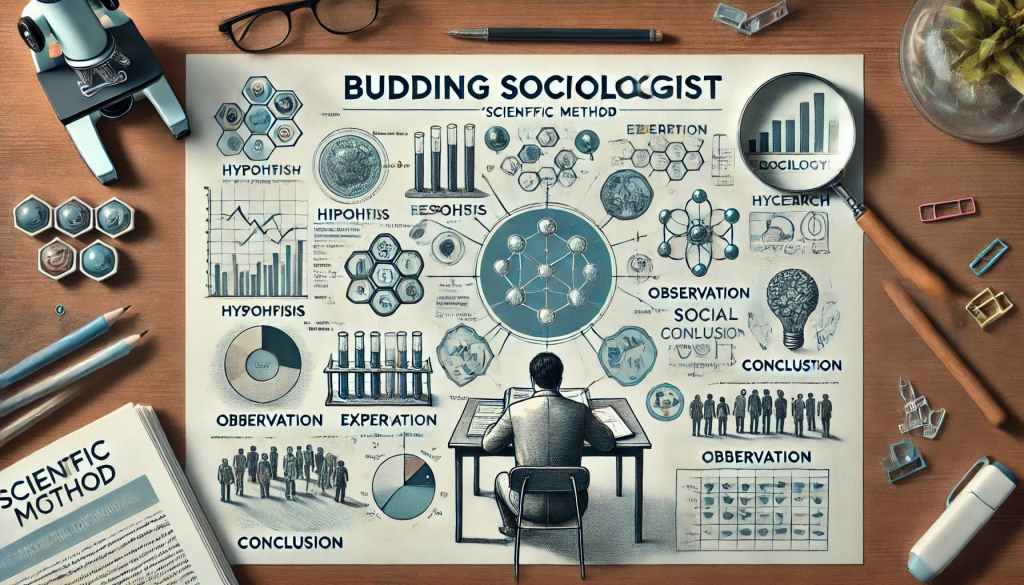
Understanding the concept of research requires a grasp of the scientific method. Research entails investigating a particular problem with specific objectives, while the scientific method encompasses the various methodologies and techniques employed across different fields of science. The scientific method can be described as a systematic approach to analyzing phenomena, aimed at accumulating reliable knowledge through objective, logical and methodical means. It’s characterized by an intellectual attitude and isn’t limited to any specific subject matter but rather to a procedure or mode of investigation. While facts can pertain to various fields, it’s the method of inquiry that defines science, making it independent of any particular subject matter.
The scientific method is distinguished by careful and accurate classification of facts, observation of their correlation and sequence, the discovery of scientific laws through creative imagination and self-criticism. Various scholars have offered definitions highlighting the comprehensive nature of the scientific method, which encompasses both physical and psychological processes and considers the entire scope of the knowable universe. Thus, a science is defined not by the nature of the phenomena it studies but by the methodological approach employed in its investigation.
As a systematic and logical process aimed at acquiring knowledge about the universe, the scientific method transcends any specific body of knowledge, embodying a step-by-step procedure rooted in reasoned inquiry.
Karl Pearson emphasizes that the scientific method is consistent across scientific disciplines, serving as the foundation for logical inquiry. He argues that the unity among sciences lies not in their subject matter but in their methodological approach. Engaging in the scientific method entails classifying facts, discerning their interrelations and describing their sequences, thereby contributing to the pursuit of truth through logical reasoning.
The essence of science lies in establishing a systematic correlation among facts. The scientific method facilitates this goal through a combination of experimentation, observation and logical deduction. By formulating propositions and assessing their compatibility with observable phenomena, researchers can determine the most suitable alternatives based on empirical evidence. This process relies on surveys, experiments and investigations, encapsulating the essence of the scientific method.
Meaning of Scientific Method
Scientific method advocates for a thorough and impartial process guided by logical and objective thinking. It encompasses a structured, rational and neutral approach designed to validate observable characteristics of natural occurrences. Scientists adhere to principles of logic, carry out inquiries systematically and maintain coherence within their methodologies. This method encompasses formulating and validating hypotheses through empirical evidence. Its essence lies in its dedication to methodical observation of the natural world, aiming for objectivity, critical thinking, skepticism and logical reasoning. It follows a set of established steps refined over centuries of scholarly inquiry.
Based on the preceding explanation, it can be asserted that the scientific method entails a structured pursuit of knowledge. It commences with identifying a subject and gathering relevant information, culminating in the accumulation and dissemination of findings through reports. In sociology, employing the scientific method involves gathering data underpinned by two foundational principles:
firstly, that understanding of the world is attained through observation
secondly, that the validity of this understanding is affirmed through independent verification, wherein others replicate the same observations.
Characteristics of Scientific Method
The scientific method is a structured approach to investigation that focuses on empirical evidence, experimentation, and logical reasoning. It is applied across different scientific disciplines to explore phenomena, gain new insights, or refine existing knowledge. The main characteristics of the scientific method include:
1. Empirical Observation: Empirical observation is a critical element of the scientific method, ensuring that scientific inquiry is based on observable, measurable, and verifiable evidence. It supports the development of reliable and valid knowledge, facilitates the replication of research, and drives discoveries and innovations across various scientific disciplines. Empirical observation depends on empiricism which further based on observable and measurable evidence, ensuring that observations are repeatable and verifiable by others. The measurable evidences can be collected through qualitative and quantitative data which further can be obtained through experiments, surveys or other research techniques.
2. Hypothesis Formulation: Hypothesis formulation is a crucial step in the scientific method, where researchers develop a testable statement or prediction about the relationship between variables. By formulating hypothesis, variables and terms are clearly defined to ensure that variables are measurable and testable.
3. Experimentation: Experimentation is essential for testing hypotheses in a controlled and systematic manner. By carefully manipulating variables, controlling conditions and analyzing results, researchers can draw meaningful conclusions about the relationships between variables. This process is critical for advancing scientific knowledge and understanding by manipulating variables in controlled conditions and repeating experiments to verify results and ensure reliability.
4. Observation and Data Collection: Observation and data collection are critical stages in the scientific method, providing the empirical evidence necessary to test hypotheses and draw conclusions. This process involves systematic monitoring and recording of information relevant to the research question and play fundamental role to support or refute scientific hypotheses. By following a systematic, objective, and detailed approach, researchers can gather reliable and valid data that forms the basis for analysis, interpretation, and advancement of knowledge.
5. Analysis and Interpretation: Analysis and interpretation are essential for making sense of collected data and drawing meaningful conclusions. By applying statistical methods, visualizing data, and critically evaluating results, researchers can test hypotheses, validate findings, and contribute to scientific knowledge. This process ensures that research is thorough, accurate, and useful for advancing understanding and informing practice.
6. Theory Development: Theory development is a critical process and one of the most important characteristics of the scientific method, involving the creation and refinement of theoretical frameworks that explain observed phenomena. Theories are comprehensive explanations based on a large body of evidence, integrating various hypotheses and empirical findings.
7. Peer Review and Publication: Publication and presentation of research finding is one the most important characteristics of scientific method. The results of the research submitted for the publication in research journal (s) specifically for peer reviewed research journal is being evaluated by other experts in the field to ensure validity, significance, and originality. Then the results share with the scientific community through journals, conferences, and other mediums, enabling further scrutiny and testing by others.
8. Revision and Refinement: This is important characteristic of scientific method which allow researcher to revise and refine the finding of the research as per the feedback or review of the outcome of the research. Ensuring that hypotheses and theories can be tested and potentially falsified. It encourages refinement in the scientific knowledge based on new evidence and perspectives.
9. Objectivity: Objectivity in scientific investigation entails a crucial aspect. It requires researchers to refrain from personal, cultural or financial biases in conducting and interpreting research. Instead, they strive to perceive phenomena in their original state. Researchers adhere to the belief that approaching truth necessitates acknowledging the objective reality of the phenomenon, irrespective of individual beliefs, desires or fears.
10. Logical Reasoning: Scientific method relies on logical reasoning and inference to forecast outcomes by establishing causal relationships among different phenomena. It operates on the premise of causality, asserting that past and future events form a continuous sequence. Guided by the principle of the “law of uniformity of nature,” which posits that nature behaves consistently under similar circumstances, it asserts that predictions must be founded on repeatedly observed patterns. The reasoning can further be divided in following two parts:
- Deductive Reasoning: Drawing specific predictions from general principles or theories.
- Inductive Reasoning: Developing general principles or theories based on specific observations and experimental outcomes.
On the basis of above description, it can be stated that the scientific method is distinguished by its reliance on empirical evidence, structured experimentation and logical analysis. It involves creating hypotheses, conducting controlled experiments, gathering and analyzing data, developing theories, undergoing peer review, and continuously updating knowledge. This method ensures that scientific inquiry is systematic, transparent, and objective, contributing to the accumulation of reliable and valid knowledge.
Steps in Scientific Method
The scientific method is an organized process used to explore and comprehend the natural world through careful observation, experimentation, and analysis. Following are some of the important steps involved in scientific method:
1. Observation: This is the initial stage where a scientist makes observations about a phenomenon or a group of phenomena. These observations are often made using the five senses (see, touch, hear, smell and listen) usually in social sciences or with the aid of scientific instruments in sciences. For example, observing that plants in a garden grow (growth of plants) differently under various light conditions.
2. Question: Usually known as research questions which are to be addressed in the research. Based on the observations, specific question (s) is/are formulated. This/these question (s) is/are aimed at understanding the observations made. For example; why do some plants grow better in sunlight than in shade?
3. Earlier Research: Conduct background research to learn what is already known about the topic is one of the most important steps of scientific method. This step helps to refine the research question (s) and develop a hypothesis. For example; reading scientific literature on photosynthesis and plant growth.
4. Hypothesis: A hypothesis is a provisional explanation or prediction that can be evaluated through experimentation. It is commonly structured as an “if-then” statement. For instance, if plants are exposed to more sunlight, then they are likely to grow taller and be healthier compared to those receiving less sunlight.
5. Experiment: This is also known as experimentation and it is being used differently in sciences and social sciences which further based on the nature of the study. Design and conduct experiments to test the hypothesis. This involves creating a controlled environment where one or more variables can be manipulated while others are kept constant. For example, growing two sets of plants, one in full sunlight and the other in partial shade, and measuring their growth over time.
The process of experimentation includes following components:
- Independent Variable: The variable that is changed (e.g., amount of sunlight).
- Dependent Variable: The variable that is measured (e.g., plant growth).
- Control Group: A group that does not receive the independent variable, used for comparison.
6. Data Collection and Analysis: Gather and analyze the data obtained from the experiments. This step involves recording observations, measurements and any other relevant information. For example, measuring the height of plants weekly and recording the number of leaves and overall health.
7. Conclusion: Based on the analysis, determine whether the data support or refute the hypothesis. Draw conclusions and consider whether the hypothesis needs to be revised. For example, concluding that plants in full sunlight grew significantly taller, thus supporting the hypothesis.
8. Report and Communicate Results: This is one of the technical steps of scientific method. Through this step findings of the research conducted are being shared with the scientific community. This can be achieved through research papers, presentations or written reports. For example, publishing the experiment results in a scientific journal or presenting them at a conference.
9. Replication and Further Testing: The results should be reproducible by other scientists. Further testing may involve repeating the experiment or testing the hypothesis in different conditions. For example, other researchers replicating the experiment to verify the findings or testing the effects of different light wavelengths on plant growth.
10. Theory Development: If a hypothesis is repeatedly confirmed through various experiments and observations, it may contribute to the development of a scientific theory, which is a well-substantiated explanation of some aspect of the natural world. For example, the theory of photosynthesis, which explains how plants convert light energy into chemical energy.
By following these steps, scientists can ensure that their investigations are systematic, reproducible, and grounded in empirical evidence.
Use of Scientific Method in Social Sciences Research
The scientific method in social science research is a systematic, organized series of steps that ensures maximum objectivity and consistency in researching a problem. The process involves several stages, typically including observation, hypothesis formulation, experimentation, data collection, analysis, and conclusion. Following is the detail of each step of scientific method being used in in social science research:
1. To Observe Phenomena: Social scientists begin by observing phenomena related to human behaviour and social patterns. This could involve noting trends, behaviours, or issues that warrant investigation. This stage often includes a literature review to understand what has already been studied and to identify gaps in knowledge.
2. Formulating a Research Question and Hypothesis: Based on observations, researchers formulate specific research questions they aim to answer. They then develop a hypothesis, which is a testable statement predicting the relationship between variables. For example, “Does increased social media usage negatively impact mental health among teenagers?”
3. Research Design and Methodology: Researchers choose appropriate methods to test their hypothesis. This involves selecting a research design (e.g., experimental, correlational, longitudinal) and methods for data collection (e.g., surveys, interviews, observations). They also determine the sample population and sampling technique.
4. Data Collection: Data is gathered according to the chosen methodology. In social sciences, this often includes quantitative data (numerical) and qualitative data (descriptive). Researchers must ensure ethical considerations, such as informed consent and confidentiality, are upheld during this process.
5. Data Analysis: The collected data is analyzed using statistical tools and software. Quantitative data might be analyzed using statistical tests to determine relationships or differences between variables. Qualitative data might be analyzed through thematic coding to identify patterns and themes.
6. Conclusion and Interpretation: Based on the analysis, researchers draw conclusions about their hypothesis. They interpret the findings in the context of the original research question, discuss the implications, and consider how the results fit into the broader field of study. They also acknowledge limitations of the study and suggest areas for future research.
7. Reporting and Peer Review: Researchers compile their findings into a report or research paper, which is then submitted for publication in academic journals. The study undergoes peer review, where other experts in the field evaluate the methodology, analysis, and conclusions. This process helps ensure the validity and reliability of the research.
8. Replication and Further Research: To validate findings, replication studies are often conducted. Other researchers may build upon the original study, testing the hypothesis in different contexts or with different populations to see if the results hold true.
9. Key Characteristics of the Scientific Method being Used in Social Science Research: Following are the key characteristics of scientific method being used in social science research by different researchers across the globe:
- Systematic and Controlled: Every step is planned and executed systematically to minimize bias and error.
- Empirical: Based on observable and measurable evidence.
- Replicable: Other researchers should be able to replicate the study and obtain similar results.
- Objective: Researchers aim to remain impartial and avoid letting personal biases influence the study.
10. Methods Used in Social Science Research: Following are some of the methods which are being used by the researchers in social science research:
- Surveys and Questionnaires: Collecting data from large groups through structured questions.
- Interviews: Gathering detailed information through direct interaction.
- Observational Studies: Watching and recording behaviours in natural settings.
- Experiments: Manipulating variables to determine causal relationships.
- Content Analysis: Analyzing the content of various media to identify patterns or themes.
- Case Studies: In-depth study
By following the scientific method, social scientists aim to produce reliable, valid, and unbiased knowledge that can contribute to understanding and solving social issues. In other words, the scientific method is a fundamental framework utilized in social research to systematically explore and comprehend various social phenomena.
Interpretations of Science: Positivist and Constructionist
Interpretations of science can vary significantly depending on philosophical perspectives, historical context, and disciplinary viewpoints. Broadly, these interpretations address the nature, scope, and methodology of science, as well as its role in society. Following are some of the major interpretations:
1. Positivism: Positivism is a philosophical stance asserting that the only authentic knowledge is scientific knowledge, which comes from positive affirmation through empirical data gathered via observation and experiment. Positivists emphasize:
- Empirical Evidence: Knowledge must be based on observable and measurable facts.
- Objectivity: Science should be value-free, and scientists should strive to eliminate bias.
- Verification Principle: Statements and theories should be verifiable through direct observation or experimentation.
2. Falsificationism: Proposed by Karl Popper, falsificationism argues that scientific theories cannot be proven true, only falsified. Key points include:
- Refutability: For a theory to be scientific, it must be testable and potentially falsifiable.
- Critical Testing: Science advances through rigorous attempts to falsify existing theories.
- Provisional Nature of Knowledge: Scientific knowledge is always tentative and open to revision.
3. Constructivism: Constructivism suggests that scientific knowledge is constructed by scientists and not simply discovered from the world. It emphasizes:
- Social Construct: Scientific knowledge is influenced by social, cultural, and historical contexts.
- Subjectivity: Scientists’ perspectives, biases, and experiences play a role in shaping scientific knowledge.
- Relativity of Truth: Scientific truths are not absolute but constructed and reconstructed over time.
4. Scientific Realism: Scientific realism holds that the aim of science is to describe and explain the reality of the natural world. Key tenets include:
- Existence of an Objective Reality: A reality exists independent of human thought or perception.
- Truth as Correspondence: Scientific theories aim to accurately represent this objective reality.
- Success of Science: The success of scientific theories suggests they are at least approximately true.
5. Instrumentalism: Instrumentalism, associated with philosophers like, John Dewey, argues that scientific theories are merely tools or instruments for predicting and controlling phenomena, not necessarily true descriptions of the world. Main points include:
- Practical Utility: The value of a theory lies in its usefulness for predicting and manipulating the environment.
- Non-Commitment to Truth: Theories do not need to correspond to reality; they only need to work effectively.
- Focus on Practice: Emphasis is on the practical application of scientific knowledge rather than its truth.
6. Kuhn’s Paradigm Theory: Thomas Kuhn’s view, articulated in “The Structure of Scientific Revolutions,” suggests that science progresses through a series of paradigms-frameworks of theories and practices. Key ideas include:
- Normal Science: Periods of stable, cumulative scientific activity within a prevailing paradigm.
- Paradigm Shifts: Revolutionary changes in scientific thought where an old paradigm is replaced by a new one.
- Incommensurability: Competing paradigms are often incommensurable, meaning they cannot be easily compared or evaluated against each other.
7. Feminist Epistemology: Feminist epistemology critiques traditional science from a feminist perspective, emphasizing the influence of gender on the production of knowledge. Core principles include:
- Situated Knowledge: Knowledge is situated in specific social and cultural contexts, including gender.
- Critique of Objectivity: Traditional notions of objectivity are challenged as reflecting male-dominated perspectives.
- Inclusivity: Advocates for more inclusive and diverse approaches to scientific inquiry.
8. Postmodernism: Postmodernism questions the existence of an objective, universal truth, and challenges the grand narratives of science. It emphasizes:
- Relativity and Plurality: Emphasizes the relative nature of truth and the existence of multiple perspectives.
- Critique of Metanarratives: Skepticism towards overarching explanations and theories.
- Deconstruction: Analyzing and deconstructing established scientific concepts and practices to reveal hidden assumptions and power structures.
9. Pragmatism: Pragmatism views science as a practical activity aimed at solving problems and improving human experience. Key aspects include:
- Action-Oriented: Emphasis on the practical consequences and applications of scientific knowledge.
- Fallibilism: Acknowledgment that all knowledge is fallible and subject to revision.
- Interdisciplinary Approach Encourages blending scientific inquiry with other disciplines to address real-world issues.
These interpretations provide diverse perspectives on what science is, how it works, and what it aims to achieve. They reflect ongoing debates and evolving understandings of the nature of scientific inquiry. Out of these mentioned interpretations, following two are being described in detail for better understanding:
- Positivist Interpretations
- Constructionist Interpretations
Positivist Interpretations
Positivism, originating from Enlightenment principles of rationality and empiricism, asserts that scientific knowledge stems from objective observation and experimentation. According to this stance, science aims primarily to unveil universal laws and objective truths regarding the natural world. In simple words positivism means use of scientific method in conduction of social research.
Positivists stress the significance of rigorous empirical validation and the utilization of quantitative approaches to establish causal connections between phenomena. From this viewpoint, scientific investigation is perceived as an iterative process, progressively refining established theories through systematic observation, hypothesis testing and the development of general principles.
This theory emerged in the early 19th century through the work of Auguste Comte, has significantly influenced both natural and social sciences. The detailed exploration of positivism can be divided in following four major parts:
- Core Principles of Positivism
- Development and Evolution
- Critical Evaluation
- Influence of Positivism on Research
1. Core Principles of Positivism: Following are the core/major principles of positivism:
1.1 Empiricism: Positivism asserts that valid knowledge must be grounded in observable phenomena and empirical data. Scientific validity requires that phenomena be experienced through the senses (sight, hearing, touch, etc.).
1.2 Scientific Method: Central to positivism is the scientific method, involving systematic observation, measurement, experimentation, and the formulation, testing, and modification of hypotheses. Positivists believe this method yields reliable and objective knowledge.
1.3 Objectivity: Positivism emphasizes the necessity of objectivity in scientific inquiry. Researchers should strive to remain detached and unbiased, ensuring that personal values, beliefs, or emotions do not influence their work.
1.4. Verification Principle: A key tenet of positivism is the verification principle, which states that a statement or hypothesis must be verifiable through direct observation or experimentation to be meaningful. Statements that cannot be empirically tested are considered nonsensical within this framework.
1.5. Reductionism: Positivism often employs a reductionist approach, suggesting that complex phenomena can be understood by breaking them down into simpler, more fundamental parts. Understanding these components is believed to lead to an understanding of the whole.
1.6. Nomothetic Approach: Positivism prefers a nomothetic approach, seeking to identify general laws or principles that can be universally applied. It aims to discover causal relationships and patterns that can predict future occurrences.
2. Development and Evolution: Development and evolution of positivism can be described as follows:
2.1 Auguste Comte-Founding Figure: Auguste Comte, a French philosopher, is considered the father of positivism. He proposed that human thought progresses through three stages: theological, metaphysical, and positive. In the positive stage, society relies on scientific explanations based on empirical evidence rather than superstition or speculative philosophy.
2.2 Logical Positivism: 20th Century: In the early 20th century, positivism evolved into logical positivism (or logical empiricism), mainly through the Vienna Circle, a group of philosophers and scientists. They aimed to eliminate metaphysics and emphasize the logical and linguistic analysis of scientific statements. Key figures included; Moritz Schlick, Rudolf Carnap, and A.J. Ayer.
2.3 Analytical Approach: Logical positivists focused on the syntax and semantics of scientific language, arguing that the meaning of a statement is its method of verification.
3. Criticisms and Limitations: There is no single theory in world, which is full-proof. Like other theories, the positivism also has some limitation and criticism, some of which are described as follows:
3.1 Verifications Critique: The verification principle itself has been criticized as self-refuting because it cannot be empirically verified. Philosophers like Karl Popper argued that falsifiability, rather than verification, is a more appropriate criterion for scientific statements.
3.2 Overemphasis on Empiricism: Critics argue that positivism’s strict reliance on empirical data neglects the theoretical and conceptual frameworks that guide scientific inquiry. Some phenomena, particularly in social sciences, are difficult to observe and measure directly.
3.3 Neglect of Subjectivity: Positivism’s emphasis on objectivity can overlook the subjective and interpretive dimensions of human experience. This is especially relevant in social sciences, where understanding the meaning and context of human behaviour is crucial.
3.4. Limitations in Social Sciences: In social sciences, positivism has been criticized for its inability to fully capture the complexity and dynamism of social phenomena. Human behavior is influenced by a myriad of factors, including culture, history, and personal agency, which are not easily reduced to empirical laws.
4. Influence of Positivism on Research: Despite criticisms, positivism has profoundly influenced research methodologies, particularly in the natural sciences and quantitative social sciences. Its legacy includes:
4.1 Rigorous Experimental Design: Emphasizing controlled experimentation and statistical analysis to ensure the reliability and validity of findings.
4.2 Quantitative Methods: Positivism favour numerical data and statistical tools to identify patterns, correlations, and causal relationships and over the period of time has proved one of the most effective tools of scientific investigations.
4.3 Hypothesis Testing: The formulation of hypotheses and their empirical testing as a core research practice.
On the basis of above description, it can be stated that positivism has been a cornerstone of scientific philosophy and methodology, advocating for a rigorous, empirical approach to understanding the world. While its limitations have led to the development of alternative epistemological approaches, its principles continue to underpin much of contemporary scientific practice, particularly in fields that value quantitative analysis and empirical validation.
Features of Positivism
Positivism, as an interpretation of science, embodies several key features:
1. Empirical Observation: Positivists hold the view that understanding of the world ought to stem from tangible, observable occurrences rather than abstract thought or intuition. They promote the use of systematic observation and experimentation as key approaches for gathering empirical evidence. By prioritizing empirical observation, they aim to ensure that scientific assertions are firmly rooted in tangible experiences and capable of being corroborated independently by others.
2. Objectivity: Positivists strive to uphold objectivity in their scientific investigations by mitigating the impact of personal biases, convictions and sentiments. They underscore the significance of employing standardized protocols and approaches to guarantee uniformity and dependability in data gathering and analysis. Through their commitment to objective methodologies, positivists endeavour to generate results devoid of subjective biases and amenable to evaluation by the wider scientific fraternity.
3. Verification: Positivists aim to validate scientific hypotheses by employing empirical testing and observation. They advocate for subjecting hypotheses to thorough scrutiny and experimentation to ascertain their credibility. This typically entails devising experiments to assess particular predictions derived from the hypothesis and juxtaposing the outcomes with theoretical projections. By methodically verifying findings, positivists strive to underpin the trustworthiness and soundness of scientific assertions and theories.
4. Quantifiability: Positivists are inclined towards utilizing quantifiable and objectively measurable data in their work. They argue that such data offer a more accurate and dependable foundation for scientific examination and understanding. Through quantification, positivists employ mathematical and statistical methods to discern patterns, correlations and developments, thereby enhancing comprehension of the fundamental principles that govern natural occurrences.
5. Determinism: Positivists generally embrace a deterministic perspective on the cosmos, suggesting that every occurrence is regulated by causal laws and can be foreseen. They assert that phenomena are comprehensible through cause-and-effect connections, wherein particular results are shaped by preceding circumstances and the laws of nature. Such a deterministic stance serves as the groundwork for constructing scientific theories and forecasting forthcoming events grounded in empirical data and theoretical constructs.
6. Reductionism: Positivist researchers frequently utilize reductionist approaches to examine intricate phenomena by dissecting them into more manageable elements. Their rationale lies in the conviction that comprehending the basic constituents of a system or phenomenon facilitates a deeper grasp of its behaviours and characteristics. Through the deconstruction of complex phenomena into simpler constituents, positivists can scrutinize and explore each element separately, thereby revealing their functions and relationships within the broader framework.
7. Nomothetic Approach: Positivists advocate for a nomothetic method in scientific investigation, emphasizing the establishment of universal laws, principles and theories applicable across various contexts. Their goal is to develop comprehensive explanatory frameworks capable of explaining regularities and patterns observed in nature. Through the identification of general laws and principles, positivists aim to unveil the fundamental mechanisms and causal links governing diverse phenomena, thereby fostering a more profound comprehension of the natural world.
8. Skepticism of Metaphysics: Positivists typically harbour doubts regarding metaphysical or speculative theories lacking empirical testability or verification. Their emphasis lies on empirical evidence rather than abstract or philosophical speculation, stressing the significance of rooting scientific assertions in observable occurrences. Positivists discard explanations dependent on supernatural or metaphysical notions, opting instead to concentrate on phenomena amenable to empirical investigation and scrutiny.
9. Scientific Progress: Positivists perceive science as an ongoing and forward-moving pursuit marked by the constant enhancement and broadening of understanding. They argue that scientific advancement is propelled by gathering empirical evidence, devising hypotheses that can be tested and adjusting theories based on fresh insights. Peer review and replication hold significant importance for positivists, as they serve to authenticate scientific discoveries and uphold the consistency of scientific knowledge across time.
10. Falsifiability: Positivists advocate for Karl Popper’s concept of falsifiability, suggesting that scientific hypotheses should be crafted in a manner that permits empirical disproof. They argue that for a hypothesis to be deemed scientific, it must be testable and open to potential falsification through observation or experimentation. Through empirical examination and analysis, positivists seek to either validate or challenge hypotheses based on evidence, thereby contributing to the progression of scientific insight and comprehension.
Constructionist Interpretation of Science
In contrast to positivism, constructionism presents a challenge to the idea of an absolute truth in science, emphasizing the influence of social and cultural factors on the formation of scientific knowledge. Drawing from postmodernist and social constructivist ideas, Constructionists argue that scientific theories and concepts are not uncovered but rather constructed within specific historical, cultural and institutional frameworks. From this viewpoint, science is seen as a practice rooted in society, continually negotiated, contested and revised in response to evolving societal norms and power dynamics.
The constructionist interpretation of science, also known as social constructivism, posits that scientific knowledge is not simply a direct reflection of reality but is instead shaped by social processes and interactions. This perspective underscores that scientific facts are created through collaborative efforts within the scientific community and are influenced by social, cultural, and historical contexts.
Following is a comprehensive overview of the constructionist interpretation of science:
Core Principles of Constructionism
1. Social Construction of Knowledge: According to constructionism, scientific knowledge emerges from social processes rather than being a straightforward discovery of natural phenomena. The observations, interpretations, and conclusions of scientists are shaped by their interactions and the broader cultural and social environment.
2. Contextual Influences: The creation and acceptance of scientific knowledge are influenced by various contextual factors, including; political, economic, and cultural forces. These factors can shape research priorities, funding, and the interpretation of data.
3. Negotiation and Consensus: Scientific knowledge is often the result of negotiation and consensus within the scientific community. Scientists must agree on the validity of methods, the interpretation of data, and the formulation of theories through peer review, conferences, and collaborative research.
4. Language and Discourse: Language and discourse play a crucial role in the construction of scientific knowledge. The ways in which scientific results are communicated, debated, and published influence how they are perceived and accepted.
5. Relativity of Truth: Constructionism suggests that scientific truths are not absolute but relative to the specific contexts in which they are produced. What is considered true or valid in one context may not hold in another.
6. Power Dynamics: The construction of scientific knowledge is influenced by power dynamics within the scientific community and broader society. The ability to conduct research, choose study topics, and have one’s interpretations accepted can be affected by social hierarchies and power relations.
Development, Evolution and Key Contributors
Constructionist interpretation focuses on the idea that meaning and understanding are created through social interactions and cultural contexts, rather than being inherent or fixed. This approach has profoundly influenced disciplines like legal theory, sociology, and anthropology. Following is an overview of its development, evolution, and key contributors:
Development and Evolution: The foundations of constructionism can be traced back to the sociology of knowledge, which examines how human thought is shaped by social context. Early thinkers like Karl Mannheim and Ludwik Fleck explored how scientific ideas develop within specific social and historical settings. Following is the brief description of development and evolution of the constructionism:
1. Early Foundations: The early foundations of constructionist interpretation can be described as follows:
1.1. Hermeneutics: The roots of constructionist interpretation lie in hermeneutics, the study of understanding, especially of texts. Figures such as; Friedrich Schleiermacher and Wilhelm Dilthey emphasized the importance of the interpreter’s historical context in the process of understanding texts.
1.2. Linguistic Turn: In the early 20th century, the focus shifted to the role of language in shaping reality. Philosophers like Ludwig Wittgenstein argued that meaning is derived from language use within specific social practices.
2. Rise of Social Constructionism: The rise of social constructionism can be described as follows:
2.1 Peter L. Berger and Thomas Luckmann: Their influential book, “The Social Construction of Reality” (1966), established the idea that knowledge and reality are constructed through social processes. They argued that all forms of knowledge, including common sense and scientific knowledge, are socially constructed.
2.2 Symbolic Interactionism: Developed by George Herbert Mead and furthered by Herbert Blumer, this sociological perspective emphasizes that meaning is created and modified through an interpretive process involving social interactions.
3. Legal Constructionism: Following is the description of legal constructionism:
3.1 Legal Realism: Early 20th century American Legal Realists, such as; Oliver Wendell Holmes Jr. and Karl Llewellyn, contended that legal principles are not applied mechanically but are influenced by social, political, and personal factors.
3.2 Critical Legal Studies (CLS): Emerging in the 1970s, out the work of scholars like; Roberto Unger and Duncan Kennedy argued that law is shaped by social and power dynamics rather than being a neutral set of rules.
3.3 Interpretive Theories of Law: Ronald Dworkin’s theory of “law as integrity” suggested that legal interpretation is a constructive process where judges aim to present the law in its best moral light.
4. Cultural and Critical Perspectives: The cultural and critical perspectives is the outcome of the following thinkers:
4.1 Michel Foucault: His theories on discourse and power illustrated how knowledge and truth are constructed through power relations and institutional practices. Foucault’s concept of “discursive formations” demonstrated the historical and cultural specificity of what is considered “truth.”
4.2 Postmodernism: Thinkers like; Jean-François Lyotard and Jacques Derrida highlighted the fluidity of meaning and the multiplicity of interpretations, challenging the idea of stable, universal truths.
Key Contributors: Following is the brief description of the key contributors of the constructionist perspective:
1. Friedrich Schleiermacher (1768-1834): A hermeneutics pioneer who emphasized the role of the interpreter’s historical context in understanding texts.
2. Wilhelm Dilthey (1833-1911): Expanded hermeneutics to include social and cultural sciences, arguing that human understanding is historically and culturally conditioned.
3. Ludwig Wittgenstein (1889-1951): His later work on language games and forms of life underscored that meaning is constructed through language use within specific social contexts.
4. Peter L. Berger (1929-2017) and Thomas Luckmann (1927-2016): Co-authors of “The Social Construction of Reality,” they argued that reality is constructed through processes of habituation, institutionalization, and legitimation.
5. Michel Foucault (1926-1984): His work on the relationship between power, knowledge, and discourse demonstrated how societal norms and truths are constructed and maintained through power relations.
6. Ronald Dworkin (1931-2013): His theory of law as integrity proposed that legal interpretation involves a constructive process integrating legal principles with moral reasoning.
7. Roberto Unger (b. 1947) and Duncan Kennedy (b. 1942): Prominent figures in the Critical Legal Studies movement, emphasizing the role of ideology and power in shaping legal doctrines and practices.
On the basis of description, it can be stated that the evolution of constructionist interpretation spans various intellectual traditions and has been shaped by numerous scholars. From its beginnings in hermeneutics and the linguistic turn to its growth in social constructionism and critical legal theories, this approach highlights the active role of individuals and social contexts in creating meaning and understanding. Key contributors across multiple fields have emphasized the complex interplay between language, power, and social interactions in shaping reality.