- Social Change: An Introduction
- Meaning of Social Change
- Characteristics of Social Change
- Factors of Social Change
- Theories of Social Change
- Barriers of Social Change
Social Change: An Introduction
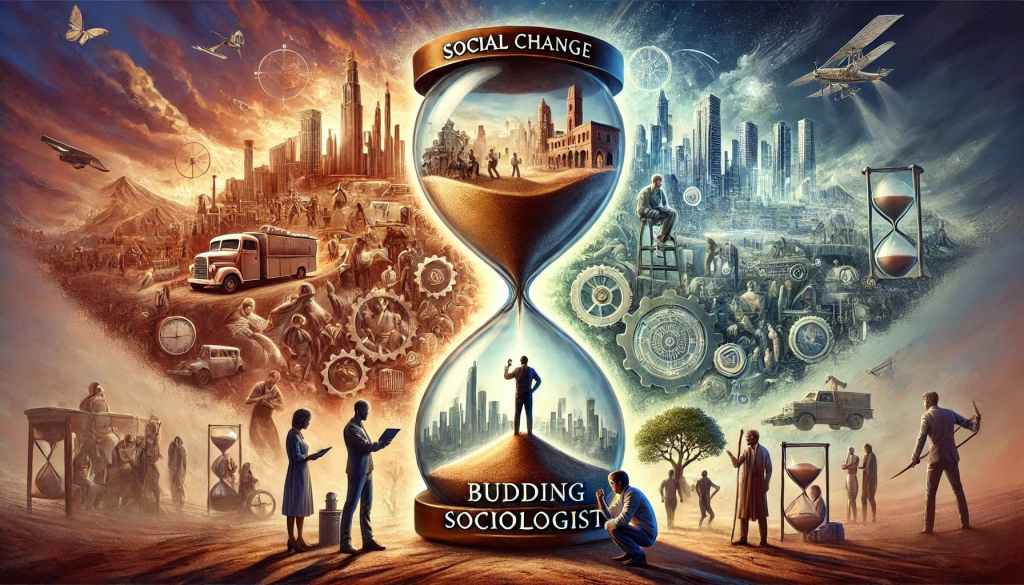
Social change refers to the transformation that occurs in the structure and functioning of a society over time. It represents shifts in social institutions, behaviours, relationships, and cultural patterns that influence human interactions. Since societies are dynamic, change is an inevitable and ongoing process. It can be seen in various aspects of life, including traditions, customs, values, norms, and laws, which evolve to adapt to new conditions and influences.
At its essence, social change reflects how societies collectively respond to internal and external factors that reshape their way of life. These factors may include technological progress, economic shifts, political movements, environmental changes and cultural interactions. While some transformations take place gradually over long periods, others occur rapidly due to events or movements that challenge the existing order.
The idea of social change highlights that no society remains unchanged. Throughout history, societies have evolved due to influences such as migration, urbanization, industrialization, and globalization. These transformations not only affect individuals but also bring modifications to social institutions like family, education, governance and the economy.
Social change is essential for societal progress, as it leads to the development of new ideas, behaviours, and institutions. It enables communities to adapt to new realities, address challenges, and discover improved ways of organizing social life. While some changes result in positive outcomes, such as better access to education and healthcare, others can create difficulties, including social inequalities and cultural tensions. However, change remains a natural and necessary process that drives the continuous development of society.
Change is a constant force in life, while stagnation leads to decline and death. Changes tell us stories of rise, growth and fall of man from the Palaeolithic age to the Neolithic age, then to the Stone Age and next to the Copper age etc. and finally we are in modern stage of human development. The wheel of time moves on and on. Biologically, old one dies and the young steps into the world and a child change into a boy, a boy into a youth and then into a man. The bud changes into a flower and finally died. Naturally, there is dawn which turns into morning, morning into noon, noon into afternoon and afternoon into night and today became yesterday, all these occurrences observe changes, most importantly even change is subject to change.
The human societies are ever-changing over the period of time. A social structure is a composed of social relationships and to regulate the structure, social system is required and it is being required as human being want to form and maintain it. The existing social structure is influenced by many factors and forces which are not static and responsible to bring change and inevitably cause it to change.
Meaning of Social Change
Social change refers to the shifts that occur in human interactions and relationships, leading to transformations in cultural norms and societal structures. It encompasses alterations in the way people live and relate to one another over time. The concept of “change” highlights a noticeable difference in the network of social connections that make up society. These connections arise from social interactions, processes, and established patterns. Therefore, social change can be understood as any significant variation in how social processes, patterns, interactions, or organizational systems operate.
Social change theorists generally agree that, in practical terms, all social systems are constantly evolving. These changes can be seen in various areas such as population demographics, life stages, occupational roles, physical and mental development, shifts in attitudes, evolving role expectations, and the accumulation of knowledge. In a broader sense, it can be said that change affects nearly every facet of society and the world at large.
Understanding the true meaning of social change is one of the most complex challenges in the scientific analysis of societal transformation. Determining the specific type and extent of change that qualifies as social change is not straightforward. Numerous scholars have explored these issues through their own theoretical frameworks.
Based on the description above, it can be inferred that two forms of change should be understood as interconnected aspects of a single social phenomenon. These include changes in the societal structure and shifts in the values and social norms that unify individuals and uphold social order—commonly referred to as the functional dimension of society. A transformation in people’s attitudes can potentially lead to structural changes within society.
Transformation of rural society into industrial society is not simply a change in the structure of society, but also a change in attitude of people as well as destruction of domestic system of production, which brought women from home to factory and office and women became independent. The attitude of independence instead of dependence upon men has become the trait of the personality of women.
Characteristics of Social Change
Social change is a complex phenomenon rather than a straightforward one. It is difficult to understand this in its totality. The unsolved problems are always pressurising scholars of social change to find an appropriate answer. To understand social change well, the nature of social change in form of characteristics is being described as follows:
1. Constant and Unavoidable: Social change is an ongoing and unavoidable process that affects all societies. No community remains unchanged over time, as shifts in beliefs, technology, and external influences continuously reshape human interactions. Even societies that try to preserve traditions experience transformations, though at a slower rate. For instance, the role of women in society has evolved significantly, with increasing participation in education, the workforce, and leadership positions over the years. While the pace may differ, change is an inherent part of social life.
2. Present in All Societies: Every society undergoes transformation, though the speed and nature of change vary. Some societies experience rapid development due to industrialization, political movements, or technological advancements, while others evolve gradually. Even isolated communities change through interactions with other cultures or environmental influences. Historical transitions, such as the shift from feudalism to modern nation-states or the global expansion of democratic governance, demonstrate that change is a universal phenomenon.
3. Occurs at Different Speeds: Social change does not happen at a uniform rate; some transformations take place quickly, while others require long periods to unfold. Technological developments, such as the rise of the internet, have rapidly altered communication, business, and education. On the other hand, cultural and social shifts, such as changing attitudes toward gender roles or caste structures, often take generations to fully materialize. Additionally, events like wars, pandemics, or economic crises can accelerate social change in unexpected ways.
4. Impacts Multiple Aspects of Life: Change in one area of society often influences several others. A shift in economic structures, for example, can lead to changes in family dynamics, political systems, and education. The Industrial Revolution was not just an economic shift but also brought about urbanization, changes in social classes, and new political ideologies. Likewise, digital technology is currently transforming employment, education, and social interactions, demonstrating how change affects multiple dimensions of life.
5. Can Be Planned or Unplanned: Some social changes occur as a result of deliberate efforts, such as policy decisions, social reforms, or activism. Examples include movements advocating for gender equality or civil rights, which have led to legal and societal transformations. However, many changes happen unexpectedly due to unforeseen circumstances. For instance, the COVID-19 pandemic brought significant shifts in work culture, healthcare practices, and digital interactions, even though these changes were not intentionally planned.
6. Driven by Multiple Factors: Several forces contribute to social change, often working together to shape its direction. Scientific and technological innovations, demographic shifts, political movements, economic transitions, and environmental factors all play a role. For example, advancements in artificial intelligence are reshaping industries, while climate change is influencing migration and government policies. No single factor is responsible for societal transformation; rather, multiple elements interact to create change.
7. Leads to a Chain Reaction: A single change often triggers multiple subsequent changes. For example, industrialization led to urban growth, which in turn influenced labour laws, housing policies and educational systems. Similarly, the rise of social media has not only changed communication but has also transformed marketing, politics, and activism. Once change begins, it often spreads across different aspects of society, creating further transformations.
8. Can Have Positive or Negative Effects: Social change does not always result in progress. While some changes improve living conditions, enhance human rights, or promote equality, others may lead to negative consequences such as economic instability, environmental damage, or political conflicts. For instance, while the industrial revolution improved productivity, it also led to worker exploitation and pollution. Likewise, social media has improved global connectivity but has also contributed to misinformation and cyberbullying. The impact of social change depends on how it is managed and adapted to by society.
9. Can Strengthen or Weaken Social Bonds: Change can either bring people together or create divisions. Some social transformations, such as movements for equality and human rights, promote unity and strengthen social cohesion. However, other changes may lead to conflicts, such as cultural clashes due to globalization or economic inequality caused by technological advancements. Rapid urbanization, for example, has led to both greater diversity and the breakdown of traditional community structures.
10. Context-Dependent and Relative: The effects and perceptions of social change vary across different societies and time periods. What is seen as progress in one culture may be viewed differently in another. For example, the adoption of democracy is celebrated in some nations but resisted in others due to cultural or historical factors. Similarly, technological advancements that benefit some communities may widen inequalities in others. Since social change is influenced by historical and cultural contexts, its impact is always relative rather than absolute.
Social change is an inevitable and continuous process that affects all societies, shaping cultural, economic, political, and technological landscapes. It occurs at different speeds, is influenced by multiple factors, and can have both positive and negative consequences. While some changes strengthen social cohesion and progress, others create divisions or unintended challenges. Whether planned or spontaneous, social transformations impact various aspects of human life, triggering ripple effects across generations. Grasping the essence of social change enables communities to adjust and tackle emerging issues more effectively. Ultimately, its impact depends on how it is managed, ensuring that progress benefits all members of society.
Factors of Social Change
Social change occurs in every society across all periods of time. A key question that arises is: why does social change happen? The term “why” refers to the reasons, causes, or factors that drive social change. These causes are a combination of interrelated factors that collectively help explain why change takes place within a society. Some of these factors are as follows:
1. Technological Progress: Technology has always been a major force in shaping societies, transforming how people live, communicate, and work. From early inventions like the wheel to modern advancements like artificial intelligence, technological innovations bring both opportunities and challenges. The internet and smartphones, for example, have revolutionized social interactions and access to information. At the same time, automation and AI are altering traditional job markets, leading to new economic structures while making some roles obsolete. While technology often improves quality of life, unequal access to advancements can deepen social inequalities.
2. Economic Influences: Economic conditions, including industrial growth, trade, globalization, and financial downturns, significantly impact social structures. The shift from agrarian to industrial economies changed lifestyles, created urban centers and introduced new labour systems. Globalization has connected economies worldwide, encouraging cultural exchange and creating job opportunities. However, wealth disparities remain a pressing issue, both within and between nations. Economic crises, such as recessions, often lead to unemployment and social instability, prompting governments to introduce reforms to stabilize economies and support citizens.
3. Political Systems and Policies: Government decisions, leadership, and political movements shape the laws and policies that direct social change. Reforms in governance, legal rights, and democratic movements have historically led to progress in civil liberties and human rights. For instance, revolutions and independence movements have redefined national identities and governance structures. On the other hand, political instability, corruption, or authoritarian rule can hinder social development. Progressive policies in education, healthcare, and labour rights contribute to societal well-being, whereas restrictive laws can limit freedoms and opportunities for change.
4. Cultural Transformations: Culture—comprising traditions, customs, and shared values—greatly influences social behaviour. Over time, cultural attitudes evolve, reshaping how societies function. Changes in gender roles, family structures, and acceptance of diverse lifestyles illustrate cultural shifts. Globalization has accelerated cultural exchanges, exposing people to different traditions, foods and languages. While modernization encourages cultural adaptation, there are also movements aimed at preserving indigenous customs and heritage. Art, literature, music, and digital media further contribute to shaping cultural narratives and influencing social trends.
5. Demographic Shifts: Population growth, migration, urbanization, and aging demographics bring significant changes to societies. An increasing population can strain resources, resulting in issues such as job shortages and overcrowded areas. Conversely, aging populations in certain regions create a need for healthcare reforms and workforce adjustments. Migration introduces cultural diversity but can also lead to integration challenges. Urbanization has transformed rural societies, leading to new economic opportunities while also creating issues like housing shortages and environmental concerns. These demographic shifts require strategic planning and policy responses.
6. Education and Awareness: Education is a key driver of social transformation, as it empowers individuals, promotes innovation, and reduces inequalities. Societies with higher literacy rates tend to experience greater economic growth and political participation. Accessible education opens opportunities for upward mobility, particularly for marginalized groups. Learning institutions play a crucial role in spreading scientific knowledge, challenging outdated beliefs, and encouraging critical thinking. Increased awareness about issues like climate change, human rights, and public health leads to informed decision-making and collective efforts toward progress.
7. Social Movements and Advocacy: Social change is often driven by activism and collective efforts demanding justice and reform. Historical movements for civil rights, gender equality, and environmental sustainability have reshaped societies and influenced laws. Advocacy groups, protests, and legal challenges push for policy changes and greater inclusivity. In the digital era, social media platforms amplify activist voices, mobilizing people worldwide to support causes such as climate action and anti-discrimination efforts. However, these movements often face resistance from groups that prefer maintaining traditional structures.
8. Environmental Changes: The natural environment directly affects human societies, influencing migration, economic systems, and policy decisions. Climate change, deforestation, and pollution pose major challenges that require sustainable solutions. Natural disasters can displace communities and disrupt economies, prompting governments to develop better disaster management strategies. In response, environmental movements advocate for renewable energy, conservation, and responsible consumption. While efforts are being made toward sustainability, industries dependent on fossil fuels and unsustainable practices often slow down environmental reforms.
9. Media and Communication: The evolution of media and communication technologies has reshaped how people access information, form opinions, and engage with society. Traditional forms of media, like newspapers and radio, once had significant influence over public discourse. Today, digital platforms and social media have accelerated the spread of ideas, allowing people to connect instantly across the globe. These platforms have been instrumental in organizing protests, spreading awareness, and influencing elections. However, they also present challenges, such as the spread of misinformation and privacy concerns. The media’s role in shaping cultural and political narratives continues to evolve in the digital age.
10. Religious and Ethical Perspectives: Religious beliefs and ethical values contribute to shaping societal norms, influencing laws, traditions, and moral principles. Throughout history, religious institutions have played both progressive and conservative roles in social change. While some movements driven by faith have contributed to social welfare and human rights, rigid interpretations of religious doctrines have also been used to resist progressive reforms. Secularization, or the decreasing influence of religion in public life, is noticeable in many modern societies, leading to shifts in perspectives on issues such as gender equality, LGBTQ+ rights, and scientific advancements. Ethical considerations in fields like bioengineering, artificial intelligence, and genetic modification continue to spark debates about morality and the future of human society.
Social change is a dynamic process influenced by various interconnected factors, including technology, economy, politics, culture, demography, education, activism, environment, media, and ethics. These elements continuously shape societies, driving progress, challenges, and adaptations. While technological advancements and education foster development, economic and political conditions can either promote or hinder social transformation. Cultural shifts, demographic changes, and environmental concerns further influence societal evolution. Media and activism play vital roles in amplifying awareness and advocating for reforms. Ultimately, understanding these factors helps societies navigate change effectively, ensuring balanced growth and social justice while addressing emerging global challenges.
Types of Social Change
Social change involves substantial alterations in a society’s structures, cultural values, norms, and institutions over time. These changes can occur gradually or quickly, and they are shaped by various factors, including advancements in technology, political activism, economic shifts, and environmental changes. The main types of social change include the following:
1. Evolutionary Social Change (A Gradual Progression in Society): Evolutionary social change is a slow, continuous transformation that occurs naturally as societies adapt to new circumstances. This type of change is not abrupt but rather unfolds over time as people modify their behaviours, beliefs and social systems in response to developments in technology, education, and economics. For instance, the transition from agrarian economies to industrial societies took place over many years as new technologies emerged and people gradually embraced new ways of working and living. Another example is the shift from large, extended families to smaller, nuclear family structures in urban areas, which has been influenced by economic independence, urbanization, and changing social expectations. Evolutionary change allows for gradual adaptation, making it less disruptive than sudden transformations.
2. Revolutionary Social Change (A Radical Shift in Society): Revolutionary social change refers to a sudden and drastic transformation in a society’s structure, institutions, and cultural norms. Unlike evolutionary change, which occurs slowly, revolutionary change happens rapidly and is often fueled by political upheavals, social movements, or conflicts. These changes can lead to entirely new social orders, governments, or ideologies. A historical example is the French Revolution, which overthrew the monarchy and led to the establishment of a republic. Similarly, the Civil Rights Movement in the United States brought about a significant shift in racial equality and civil rights laws. While revolutionary changes can lead to social progress, they often encounter resistance and instability as societies struggle to adjust to new systems.
3. Incremental Social Change (Small Adjustments Leading to Long-Term Transformation): Incremental social change involves small, steady modifications that accumulate over time, eventually leading to major societal shifts. Unlike revolutionary change, which happens suddenly, incremental change occurs gradually and allows people and institutions to adjust without major disruptions. For example, the increasing emphasis on environmental sustainability has developed over decades through awareness campaigns, policy changes, and technological innovations. Similarly, advancements in gender equality have progressed through legal reforms, workplace policies, and changing societal attitudes. Incremental change tends to be more sustainable as it enables gradual adaptation, reducing the likelihood of strong opposition.
4. Dramatic Social Change (A Sudden and Disruptive Transformation): Dramatic social change refers to rapid and often unexpected shifts that significantly alter societal structures and cultural identities. These changes can be triggered by events such as wars, pandemics, economic crises, or technological breakthroughs. Unlike gradual changes, dramatic transformations can create instability, forcing societies to adapt quickly. A recent example is the COVID-19 pandemic, which drastically altered daily life, work environments, and healthcare systems within a short period. The widespread adoption of remote work, online education, and social distancing measures reshaped human interactions. Similarly, the rise of the internet revolutionized communication, commerce, and entertainment, rapidly changing how people connect and engage with the world. While dramatic change can be disruptive, it often leads to innovation and new opportunities.
Social change can take different forms, each shaping society in unique ways. Evolutionary change occurs slowly and allows societies to adapt over time, while revolutionary change leads to rapid and fundamental shifts in social structures. Incremental change involves small but steady improvements, whereas dramatic change disrupts existing systems and requires immediate adaptation. Understanding these types of social change helps policymakers, sociologists, and individuals navigate transformations effectively, ensuring smoother transitions and sustainable development.
Theories of Social Change
Social change refers to significant shifts in societal structures, cultural norms, and institutions over time. Various sociologists have developed theories to explain the factors driving these changes. Broadly, these theories can be classified into evolutionary, cyclical, functionalist, conflict, and modernization theories and are being described as below:
1. Evolutionary Theories of Social Change: Evolutionary theories propose that societies develop progressively from simpler to more complex structures. Auguste Comte introduced a model where societies transition through three stages; theological, where religious beliefs dominate; metaphysical, where reasoning and philosophy emerge; and scientific, where knowledge is based on empirical evidence. Herbert Spencer’s social Darwinism applies the concept of “survival of the fittest” to societies, suggesting that those best adapted to change thrive while others decline. Emile Durkheim described how societies evolve from mechanical solidarity, characterized by shared customs and traditions, to organic solidarity, where individuals rely on specialized roles and interdependence. However, these theories face criticism for assuming that social progress is always linear and inevitable.
2. Cyclical Theories of Social Change: Cyclical theories argue that societal change follows a repetitive cycle rather than a continuous progression. Oswald Spengler compared civilizations to living organisms that experience phases of emergence, growth, decline, and eventual collapse. Similarly, Pitirim Sorokin proposed that societies fluctuate between three dominant cultural types: ideational, emphasizing spirituality and religious values; idealistic, balancing spiritual and material aspects; and sensate, focusing primarily on materialism and sensory experiences. While these theories offer insights into historical patterns of societal change, they have been critiqued for being too deterministic and failing to account for unique historical or cultural variations.
3. Functionalist Theories of Social Change: Functionalist theories emphasize the need for stability and gradual adaptation within societies. Talcott Parsons introduced the equilibrium theory, which views society as a system where different institutions function together to maintain balance. When disruptions occur, the system adjusts to restore harmony. Functionalists argue that social change is a response to new societal needs or external challenges. However, critics argue that this perspective underestimates the role of conflict and resistance in driving significant transformations.
4. Conflict Theories of Social Change: Conflict theories emphasize the role of power struggles and inequality as key drivers of societal transformation. Karl Marx’s conflict theory highlights class struggles between the bourgeoisie (owners of production) and the proletariat (working class), asserting that social change occurs when oppressed groups revolt against dominant forces, leading to the restructuring of society. Ralf Dahrendorf expanded this perspective, suggesting that conflicts are not limited to economic classes but can arise in any institutional setting, such as politics or education. While conflict theories effectively explain social movements and revolutions, they are often criticized for overlooking periods of stability and cooperation.
5. Modernization and Development Theories: Modernization and development theories focus on the impact of technological progress and economic growth on societal change. W.W. Rostow’s stages of economic growth model outlines five phases through which societies evolve, from a traditional economy to an age of high mass consumption characterized by advanced industrialization and widespread prosperity. However, dependency theorists like Andre Gunder Frank challenge this perspective, arguing that economic disparities between developed and developing nations result from historical exploitation, preventing poorer countries from progressing. Critics of modernization theories contend that they assume Western-style development is the universal model, ignoring cultural and structural differences among societies.
On the basis of above description, it can be stated that theories of social change offer diverse perspectives on how and why societies transform. Evolutionary and functionalist theories emphasize stability and gradual progress, whereas conflict and cyclical theories focus on struggles, disruptions, and recurring historical patterns. Modernization theories examine the role of economic and technological advancements in shaping societal development but face criticism for overlooking global inequalities. While no single theory fully explains all aspects of social change, these perspectives collectively provide a deeper understanding of how societies evolve over time.
Barriers of Social Change
Social change involves significant transformations in societal structures, cultural norms, and institutions. However, not all societies readily accept change, as various barriers can slow down or hinder progress. These obstacles may arise from cultural traditions, psychological resistance, economic limitations, political constraints, technological challenges, and social inequalities. Recognizing these barriers is essential for implementing effective reforms and fostering societal development. Following are key barriers of social change:
1. Cultural Barriers: Cultural elements including; traditions, religious beliefs, language and deeply held customs, often act as obstacles to social change. Since culture is passed down through generations, any challenge to established cultural norms is frequently met with resistance. Following are the key cultural barriers:
1.1 Tradition and Custom: Tradition and customs play a significant role in shaping societal behaviour. Many people adhere strictly to traditional practices, even when they no longer serve a useful purpose. This strong attachment to customs creates resistance to adopting new social norms, policies, or technologies. For example, in many patriarchal societies, traditional gender roles are deeply ingrained, making it difficult for women to gain equal opportunities in education and employment. Similarly, in some communities, child marriage persists despite legal prohibitions because of long-standing cultural practices.
1.2 Ethnocentrism: Ethnocentrism is the belief that one’s own culture, traditions, and values are superior to others. This mindset causes individuals to resist change, particularly when new ideas come from outside their cultural context. Societies that are highly ethnocentric may reject globalization, technological advancements, or progressive policies simply because they perceive them as foreign and threatening. For instance, in some countries, Western education models are opposed because they are seen as a challenge to indigenous knowledge systems.
1.3 Religious Conservatism: Religion plays a crucial role in shaping social norms and moral values. However, religious conservatism often resists changes that challenge traditional beliefs. Many religious institutions have historically opposed movements such as women’s rights, LGBTQ+ rights, and scientific advancements like reproductive health services. In some cases, rigid interpretations of religious texts are used to justify social inequalities, preventing progressive social reforms.
1.4 Language and Communication Barriers: Language can be a major barrier to social change, particularly in multilingual societies where information is not accessible to all groups. When new policies, technologies, or educational resources are available only in dominant languages, marginalized communities struggle to keep up. For example, rural populations in developing countries often miss out on digital transformation because online resources are primarily available in urban languages. This linguistic gap slows down the spread of modern ideas and innovations.
2. Structural and Institutional Barriers: Social structures and institutions are designed to maintain stability, but they can also obstruct social change when they become rigid and resistant to reform. Bureaucratic systems, legal frameworks, and political institutions often prioritize maintaining the status quo over embracing new ideas and become barrier to social change and are being described as follows:
2.1 Bureaucratic Rigidity: Bureaucratic structures are meant to ensure order and efficiency in governance, but their slow and rule-bound nature often hampers change. Bureaucracies tend to favour established procedures and resist alterations that require flexibility. This is evident in the slow implementation of environmental laws and welfare policies, where excessive red tape delays crucial reforms. For example, despite global awareness of climate change, many governments struggle to implement sustainable policies due to bureaucratic inefficiencies.
2.2 Political Resistance: Political institutions play a central role in facilitating or obstructing social change. Political leaders and elites who benefit from the existing social order often resist reforms that might challenge their power. Social movements advocating for democracy, human rights or labour rights are frequently suppressed in authoritarian regimes. Even in democratic systems, political parties may delay or block progressive policies due to partisan interests or pressure from influential groups.
2.3 Educational System: Education is a key driver of social change, but when educational systems are outdated, they fail to equip individuals with the knowledge and skills needed for transformation. Traditional schooling methods that emphasize rote learning over critical thinking discourage innovation and adaptation. In many countries, educational curricula do not address pressing issues such as climate change, digital literacy, or gender equality, making it harder for future generations to embrace social progress.
2.4 Legal and Policy Constraints: Legal frameworks can either promote or hinder social change. In many cases, outdated or restrictive laws act as barriers to progress. For instance, strict immigration laws prevent cultural exchange, while rigid labour laws discourage the adoption of modern work models like remote work or flexible hours. Additionally, the slow pace of legal reforms means that societies often lag behind evolving social needs, such as the recognition of digital rights and data privacy.
3. Economic Barriers: Economic factors play a crucial role in determining whether societies can implement social change. Financial constraints, economic inequality, and corporate interests often obstruct reforms that could lead to greater social justice and innovation. Following are the key economic barriers:
3.1 Poverty and Economic Inequality: Economic disparities create significant barriers to social mobility and change. Poor communities have limited access to quality education, healthcare, and technology, which prevents them from fully participating in societal transformation. For example, even though online education has the potential to democratize learning, many low-income students are excluded due to the high cost of internet access and digital devices.
3.2 Capitalist Interests: Large corporations and business elites often resist changes that threaten their financial interests. Economic policies that favour wealth redistribution, environmental regulations or labour rights reforms are frequently opposed by industries that benefit from the status quo. For instance, the fossil fuel industry has historically lobbied against climate action policies to protect its economic dominance, despite the growing need for renewable energy.
3.3 Cost of Change: Implementing social reforms requires financial investment, which can be a barrier in resource-constrained societies. Governments and organizations often struggle to fund initiatives such as universal healthcare, infrastructure development, or social welfare programs. When financial resources are limited, even well-intentioned reforms may be delayed or abandoned.
4. Psychological Barriers: Human psychology influences how individuals and societies respond to change. Fear, habit, and cognitive biases can prevent people from embracing new ideas. Following are the main psychological barriers of social change:
4.1 Fear of the Unknown: People often resist change due to uncertainty about its consequences. Fear of losing jobs, status, or stability discourages individuals from supporting reforms. For instance, automation and artificial intelligence are often opposed due to concerns about mass unemployment, even though they offer long-term benefits.
4.2 Habit and Inertia: Societies develop habits that become deeply ingrained over time. Even when alternative options are available, people prefer familiar routines. For example, many consumers continue using single-use plastics despite awareness of environmental harm, simply because they are accustomed to them.
4.3 Cognitive Dissonance: When people encounter new information that contradicts their existing beliefs, they often reject it to avoid psychological discomfort. This phenomenon, known as cognitive dissonance, explains why many individuals deny climate change or resist vaccination despite scientific evidence.
4.4 Socialization and Conformity: Social norms exert pressure on individuals to conform to existing practices. People who challenge societal expectations often face social rejection or ridicule, discouraging them from embracing progressive ideas. For example, whistle-blowers who expose corruption often face social and professional consequences.
5. Technological Barriers: Technology drives social change, but unequal access to technological advancements and fear of new innovations can hinder progress in following ways:
5.1 Digital Divide: Unequal access to technology creates disparities in education, employment, and social participation. Rural communities, low-income groups, and elderly populations often struggle to keep up with digital advancements, limiting their ability to benefit from technological progress.
5.2 Technophobia: Fear of technology prevents some individuals and industries from adopting new innovations. Resistance to automation, artificial intelligence, and digital transformation is often rooted in concerns about job displacement or loss of control.
5.3 Lack of Infrastructure: Insufficient infrastructure slows down technological adaptation. In many developing countries, unreliable electricity and poor internet connectivity prevent the widespread adoption of digital banking, e-learning, and telemedicine.
On the basis of above description, it can be stated that while social change is inevitable, various barriers slow down or prevent its progress. Cultural traditions, economic constraints, political interests, psychological resistance, and technological limitations all contribute to the persistence of existing social structures. Overcoming these obstacles requires education, policy reforms, technological advancements, and collective efforts from society. By overcoming these obstacles, communities can work towards a fairer and more forward-thinking future.
References and Readings:
Sociology by C.N. Shankar Rao, https://amzn.to/41A3Wh4
Sociology Themes and Perspectives by Michael Haralambos and Martin Holborn, https://amzn.to/4ibTgdY