- What is Class
- Meaning of Social Class
- Definitions of Social Class
- Characteristics of Social Class
- Dimensions of Class
- Difference between Caste and Class
Introduction
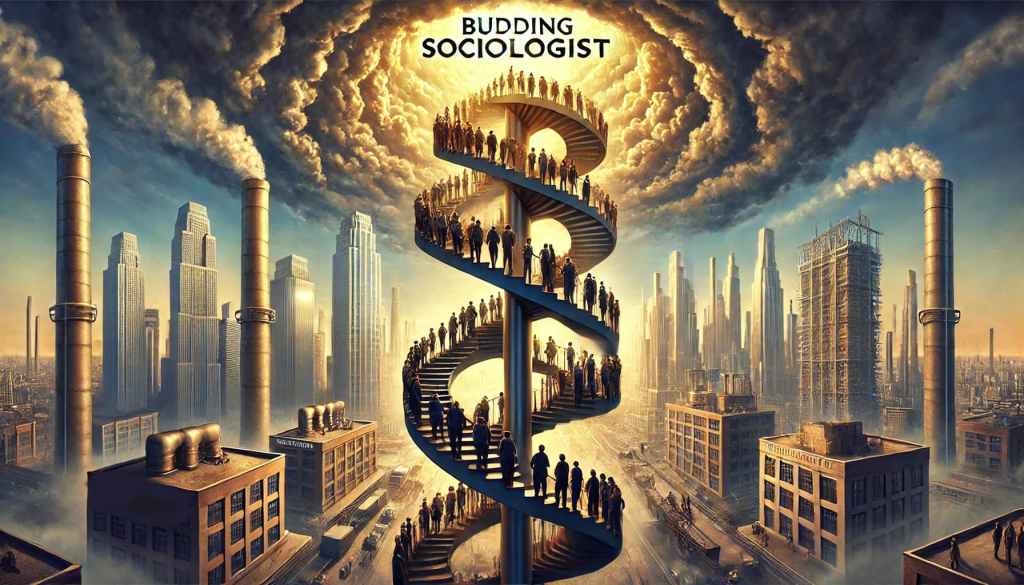
A social class comprises individuals who share similar social status and perceive themselves as socially on par. Each class upholds distinct values, attitudes, beliefs, and behavioural norms that differentiate them from others. It is characterized by shared status, values, or common traits, often reflected in lifestyle choices. Financial standing and occupation serve as primary markers for class differentiation, though education, inherited prestige, group affiliations, self-perception, and recognition by others also play significant roles.
In sociology, social classes delineate a form of social stratification wherein individuals of comparable power and wealth congregate. Unlike caste-based societies, where social position is fixed at birth, societies organized by social class theoretically allow for upward mobility. This mobility hinges not on birth but on factors like education and occupational achievement. For instance, someone born into poverty can ascend the social ladder through education, talent, hard work, or social connections. This structure permits a degree of social mobility within the societal hierarchy. As Karl Marx famously noted, humanity is inherently class-bound.
Social class operates as a hierarchical structure determined by factors such as education, social standing, and age, distinguishing between those who own and control resources and those who do not, such as capitalists and the impoverished. Various professions, educational backgrounds, and social statuses contribute to one’s class placement, fostering a sense of class consciousness within society. Individuals often identify with specific social groups or familial backgrounds, influencing their behaviours and attitudes.
Class consciousness often manifests in collective actions like the formation of trade unions, reflecting a shared sense of identity and purpose among members of a particular class. This awareness also generates feelings of superiority or inferiority within different class strata. The upper class typically perceives itself as superior, while the lower class may internalize feelings of inferiority. Moreover, within each class, there exist subclasses such as Upper Open Class, Middle Upper Class, Lower High Class, Middle Class, and Lower Class, with varying degrees of social and economic privilege.
The fluid nature of the class system allows for mobility, as individuals can transition between classes based on factors like age, gender, and socio-economic status. This fluidity enables upward or downward mobility, whereby individuals from lower classes can ascend to higher social strata, and vice versa, illustrating the dynamic nature of social class.
A class system is a ubiquitous social construct delineating various groups within a society based on their economic standing, influencing their interactions with other groups. These social classes are not formally defined by law or religion and are relatively fluid rather than rigidly structured. While economic factors undeniably underpin these divisions, they encompass more than just financial status. Originating in industrial societies since the 17th century, the interpretation and significance of belonging to a particular class evolve over time and differ among societies, particularly those where legal distinctions stem from birth or occupation. For instance, in the context of socioeconomic class, many scholars perceive societies as stratified into hierarchies based on factors such as occupation, wealth, or income. From a sociological perspective, social class denotes a cohort of individuals sharing similar roles within an economic system of production.
Within this framework, a profession holds significant sway, offering financial stability and benefits such as healthcare. The global landscape delineates five principal categories, each reflecting a social stratum characterized by comparable power and wealth. Sociologically, these social classes constitute a form of societal hierarchy, distinct from caste-based structures.
In societies organized around social class, the potential for upward mobility exists, as class delineations hinge not on birth but on variables like education and occupational success. Consider an individual born into modest circumstances who ascends to a higher status through education, talent, or networking. Such societies afford a degree of social mobility, a concept underscored by Karl Marx’s portrayal of humanity as inherently class-bound.
Social class operates as a stratification mechanism, delineated by education, social standing and age, among other factors, segregating society into distinct groups: capitalists versus the impoverished, the affluent versus the needy. These classes encompass diverse demographics, including the educated and illiterate, professionals, farmers, officials and industrialists, organized according to their roles within the production system.
Class consciousness, integral to social behaviour, manifests through phenomena like labour unions, embodying sentiments of superiority and inferiority within the class hierarchy. Subdivisions further refine this structure, encompassing upper open class, middle upper class, lower high class, middle class and various strata within the lower class. Notably, the class system remains fluid, influenced by factors such as age and gender, facilitating the potential for individuals to transition between classes. Thus, social mobility persists, allowing individuals to transcend their initial class affiliations.
Conclusion: Social class refers to the stratification of individuals within a community based on perceived social superiority or inferiority. It encompasses a broad spectrum of people sharing similar economic standings. Various scholars offer diverse perspectives on social class definitions, with some emphasizing economic factors, others highlighting social aspects and some advocating for cultural influences in determining social class membership.
Characteristic Features of Class System
Social class delineates a societal sector structured through a hierarchical arrangement of individuals and households, each with distinct status levels. Within each class, there exists a semblance of parity in status among its members, reflective of their collective influence. Examining the traits inherent to social class aids marketers in grasping its consumption behaviours. The pivotal features of social class are elaborated upon as follows:
1. Relatively Same Status: Social class delineates the relative proportion of individuals within a specific societal stratum in comparison to those belonging to other social strata. Each social class maintains a degree of internal parity among its members. Attainment of social class is predicated upon the acquisition of skills, education, affluence and acknowledgment. The status of an individual within a particular class mirrors the cumulative impact of societal acknowledgment and influence bestowed upon them, juxtaposed against other social classes.
2. Similar Behaviour and Life Style: Social classes represent uniform segments within society, characterized by shared lifestyles, values, status, prestige, and interests. Consequently, members within each class tend to exhibit similar behavioural patterns, fostering common attitudes and actions. This results in distinct behavioural trends across different social classes. For instance, while the middle class may lean towards economical vehicle choices, the affluent often opt for luxury automobiles. Thus, social classes display diverse purchasing behaviours aligned with the lifestyles, status and prestige associated with their respective members.
3. Social Class is Hierarchical: Social class delineates a structured arrangement of individuals and households distinguished by their societal standing. Advancements made by family members can propel them upward within this hierarchy. The trajectory of a family’s social status often correlates with the success of successive generations; however, if younger generations exhibit lesser financial means compared to their accomplished predecessors, they might regress within the class spectrum. This hierarchical nature of social class holds significant relevance for marketers. Consumer preferences often lean towards products endorsed by their own or higher social strata, exemplified by the allure of imported luxury automobiles. Conversely, certain products may be shunned due to perceptions of inferiority.
4. Social Class is Measured by Combination of Variables: Scholars employ a blend of factors to gauge social class, amalgamating various socioeconomic indicators to encapsulate the entirety of a social group’s standing. This approach captures the multifaceted nature of social class more accurately than relying on a solitary metric. For instance, in a study investigating consumer attitudes towards mail order and telemarketing purchases, researchers assessed socioeconomic status by considering income, occupational standing, and educational attainment collectively. The findings revealed a correlation between higher socioeconomic status and more favourable evaluations of mail and telephone orders compared to in-store purchases.
5. Social Class is Dynamic: Membership in a particular social class isn’t necessarily rigid or permanent. People have the potential to ascend or descend within social strata. Access to free education and avenues for personal growth fosters achievement in both professional and personal spheres. Individuals who succeed often find themselves ascending to higher social echelons. Presently, many young individuals embark on entrepreneurial ventures in pursuit of elevated social standing. The upper strata of society serve as benchmarks for those from humbler backgrounds striving for advancement. India offers examples of upward mobility, such as the democratization of plastic surgery. Once a luxury reserved for celebrities and the affluent, cosmetic procedures are now accessible across various economic demographics.
6. Social Class and Status Differentiation: Scholars gauge social class by evaluating social status, delineating distinct classes according to the status held by their members—a concept commonly referred to as “social stratification.” This stratification results in the assignment of specific roles within society. For instance, higher status individuals typically own cars, while those in the middle class are more likely to possess two-wheelers, and individuals of lower status may rely on bicycles. These possessions symbolically represent the roles and status associated with various social classifications.
7. Social Class is Comparatively Stable with Social Status: Class serves as a representation of one’s economic, social, or political standing, embodying a structured hierarchy within society. This system, prevalent in modern industrial and urban settings, mirrors the caste system in its delineation of distinct tiers of status. Unlike the caste system, however, class is fluid, with an individual’s position determined by their accomplishments. Consequently, class operates as a dynamic framework for social differentiation.
8. Class Consciousness and We Feeling: The primary characteristic of this class is a sense of unity that fosters solidarity among classmates. This shared sentiment cultivates cohesion within the group, prompting individuals from the working class to recognize their exploitation by the upper class and subsequently band together in rebellion. This phenomenon is driven by the development of class consciousness. Within interactions among members of different social classes, three distinct emotions emerge:
- A sense of equality among peers within one’s own class.
- A feeling of inferiority in comparison to the higher class.
- A perception of superiority over lower classes.
These emotional dynamics contribute to the formation of class consciousness within specific social strata, fostering a collective identity and a sense of belonging among its members.
9. Element of Prestige: The concept of social class is intertwined with prestige, where status signifies acknowledgment. In any given society, occupying a position within the ruling, affluent or high-status classes is deemed advantageous. The prestige attributed to a particular class is contingent upon the societal evaluations of its members.
10. Open Group based on Achieved Status: A class represents an inclusive community where individuals have the flexibility to transition between different classes, moving both horizontally and vertically. Social mobility is largely unrestricted, allowing for shifts in status and class, setting it distinctly apart from the rigid structure of caste systems.
Conclusion: Based on the description provided, it is apparent that a class operates as an inclusive system accessible to all, regardless of their background. Unlike an ascription-based system, where one’s status is predetermined, in a class-based system, individuals can enter and advance based on their profession, influence, and financial standing rather than solely on birthright. Class is determined by one’s accomplishments, particularly in terms of societal contributions, rather than by inherited traits. Additionally, there are fewer constraints on inter-class marriage, offering greater freedom and opportunities for happiness compared to other caste structures.
Dimensions of Social Class
Following are the different dimensions of social class:
1. Income: Income denotes the proceeds derived from employment or investments, whereas wealth encompasses the entirety of an individual’s possessions, including cash, savings, investments like stocks and bonds, real estate holdings, and other assets, after subtracting liabilities. While the majority of individuals accrue income through labor, a considerable fraction of the affluent population inherits a significant portion of their earnings. Consequently, wealth distribution exhibits a notably greater degree of disparity compared to income distribution, given that wealth often perpetuates across generations, assuming a pivotal role in shaping societal dynamics. This concentration of wealth within a select few facilitates their influence over societal agendas.
2. Work: Work is a significant aspect of social class, carrying weight in societal perceptions. Those in esteemed professions garner higher regard, often belonging to privileged strata. Traditionally, professions like doctors, dentists, and engineers, predominantly occupied by men, hold the highest prestige. Conversely, less prestigious roles tend to be dominated by women and people of colour.
3. Education: Education plays a pivotal role in determining social class, serving as a significant predictor of one’s future occupation, income, and wealth. Typically, higher-paying white-collar professions necessitate a college degree, while those in lower-paying white-collar roles often require less education, resulting in comparatively lower income and prestige. Additionally, the family into which one is born significantly influences educational opportunities, career paths, and financial status, arguably exerting the greatest impact on social standing. Moreover, race and ethnicity are intricately linked to one’s position within the social class hierarchy.