- Social Construction: An Introduction
- Origin of Social Construction
- Social Construction Defined
- Gender: An Introduction
- Meaning of Gender
- Gender Role and Social Construction
- Gender As Social Construction
Social Construction: An Introduction
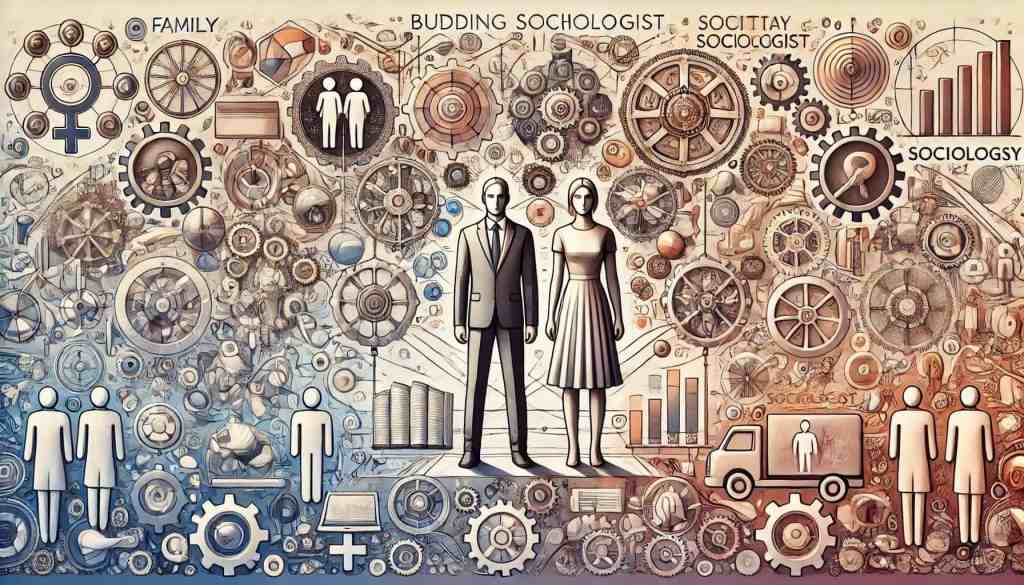
Social constructionism posits that our understanding of the world is shaped by social interactions, and much of what we perceive as reality is influenced by shared beliefs and assumptions. According to this theory, many aspects of our reality that we consider objective are actually products of social consensus and can be altered as society changes.
In essence, social constructionism argues that meaning and knowledge are not inherent but are instead constructed through social processes. Advocates of this perspective contend that concepts like gender, race, class, and disability, which are often seen as natural or fixed, are actually socially constructed and therefore do not accurately reflect objective reality. These social constructs are typically established within specific cultural and institutional contexts and have evolved throughout history, influenced by various historical, political, and economic factors. As society evolves, these constructs may also change and adapt.
Origin of Social Construction
The concept of social constructionism emerged with the publication of “The Social Construction of Reality” in 1966 by sociologists Peter L. Berger and Thomas Luckman. Their framework drew inspiration from various thinkers such as Karl Marx, Emile Durkheim, and George Herbert Mead, particularly Mead’s theory of symbolic interactionism, which emphasizes the role of social interaction in shaping identity.
In the late 1960s, three distinct intellectual movements converged to lay the groundwork for social constructionism. Firstly, there was an ideological movement that scrutinized social realities, exposing the political agendas underlying them. Secondly, there arose a literary and rhetorical endeavour to deconstruct language and its impact on our understanding of reality. Lastly, there was a critical assessment of scientific practice influenced by Thomas Kuhn, who contended that scientific discoveries are shaped by subjective realities and reflect the communities in which they originate.
Social Construction Defined
Social constructionism posits that meaning is not inherent but rather socially constructed by human societies. These constructs, although often feeling natural, are inventions of specific societies and do not necessarily mirror reality accurately. Advocates of social constructionism generally agree on three key principles:
1. Socially Constructed Knowledge: Knowledge is believed to emerge from human interactions, shaped by historical and cultural contexts. While disciplines may establish truths within their frameworks, there is no overarching truth deemed more legitimate than others.
2. Central Role of Language: Language serves as a medium for expressing emotions and thoughts, whether orally or in writing. Governed by rules, language shapes our understanding of the world, emphasizing certain aspects while disregarding others. Consequently, language both limits what we can convey and influences our perceptions of experiences and knowledge.
3. Politically-Driven Knowledge Construction: The creation of knowledge within a community carries social, cultural, and political implications. Accepted understandings within a community about truths, values, and realities can influence policies and power dynamics. These socially constructed notions contribute to shaping social reality and can lead to conflicts between communities with differing understandings of reality if not critically examined.
Gender: An Introduction
Various sociologists distinguish between sex, which is biological, and gender, which is a product of social construction. They delve into the mechanisms of gender socialization, highlighting the significant societal pressures individuals face to conform to gender norms.
From a sociological viewpoint, gender is akin to a performance, encompassing a spectrum of learned behaviours associated with and expected of a particular sex category. This categorization is based on biological traits, such as genitalia, which classify individuals as male, female, or intersex. Essentially, while sex is biologically determined, gender emerges from social constructs.
Societal norms dictate that one’s gender aligns with their sex category, leading to assumptions about an individual’s gender based on their biological sex. However, the diversity of gender identities and expressions challenges these conventional expectations. Many individuals embody a blend of traits traditionally considered both masculine and feminine, regardless of their biological sex or gender identity.
In essence, gender transcends mere biological distinctions and embraces a broader spectrum of identities. It is a socially constructed concept that goes beyond biological determinants. Rather than being solely defined by one’s biological sex, gender encompasses the roles and behaviours culturally assigned to men and women in society. Feminist scholars often emphasize the significance of gender as a powerful analytical tool for understanding social dynamics.
Meaning of Gender
The concept of gender has its roots in the 19th-century women’s movement and Marxism, emerging alongside American feminists who sought to challenge biological determinism. They favoured the term “gender” over “sex.”
Gender is viewed as a socially constructed phenomenon, a product of cultural norms rather than biological factors. It represents the societal institutionalization of sexual distinctions and has been imbued with significant meaning within feminist discourse.
Functioning as a tool for analysis, gender highlights structural inequalities between men and women. Its definition varies across time and place, shaped by cultural contexts. Feminists conceptualize gender as the socio-cultural expression of male and female identity.
Gender is a construct influenced by society and culture, subject to human interpretation. The term originates from the Latin “genus,” meaning kind or race, encompassing psychological and cultural dimensions:
- Gender pertains to one’s subjective sense of being male or female.
- It encompasses society’s labeling of behaviours as masculine or feminine.
- Social and cultural norms define the roles of men and women, creating distinct gendered experiences.
These definitions underscore the power dynamics and economic structures inherent in gender relations. Gender analysis examines the roles, constraints, and needs of individuals across various domains, reflecting social divisions and cultural distinctions. Gender shapes institutions and practices within societies, influencing power dynamics and economic relationships.
Gender Role and Social Construction
The prevailing belief in society dictates that certain tasks should be undertaken exclusively by individuals of a particular gender, based on what is deemed optimal by societal standards. These designated roles, influenced by gender, are commonly referred to as gender roles.
Gender roles, alternatively known as sex roles, encompass a spectrum of behaviours and attitudes deemed acceptable, fitting, or desirable based on an individual’s perceived or actual gender. Typically, these roles revolve around notions of femininity and masculinity, though there exist deviations and cultural variations. While specifics of these gendered expectations may differ across cultures, certain characteristics may be widely shared among various societies.
Gender roles in society encompass the prescribed behaviours, mannerisms, attire, grooming, and demeanour that are associated with our assigned gender. For instance, societal norms dictate that females should dress femininely and exhibit qualities such as politeness, accommodation, and nurturing, while males are expected to display traits like strength, assertiveness, and boldness. These roles delineate the expectations and behaviours assigned to individuals based on their gender by the broader society. Within our cultural framework, two primary gender roles are acknowledged:
- Masculine: Encompassing traits typically associated with males.
- Feminine: Encompassing traits typically associated with females.
Nature of Gender Roles
Following are characteristics of gender roles as perceived by society:
- Gender roles are acquired through social learning.
- These roles exhibit diversity across cultures, manifesting in various social, economic, and political contexts, with values and norms differing from one culture to another.
- While some aspects of gender roles may be universal, they are primarily shaped by cultural influences.
- Gender roles are influenced by a multitude of factors including age, socio-economic status, race, ethnicity, religion, and ideologies, as well as the geographical, economic, and political landscape.
- Roles can either complement each other or be in conflict.
Factors Determining Gender Roles/Stereotypes
Various factors influence gender roles:
1. Personality Traits: Societal norms often dictate that women should exhibit traits like accommodation and emotional sensitivity, while men are encouraged to be assertive and self-confident.
2. Domestic Behaviours: Traditional expectations often place women in caregiving roles such as childcare, cooking, and housekeeping, while men are expected to handle financial matters, automotive maintenance, and home repairs.
3. Occupations: Stereotypes persist regarding certain professions being more suitable for one gender over the other, with teaching and nursing commonly associated with women, and fields like piloting, medicine, and engineering stereotypically associated with men.
4. Physical Appearance: Conventional standards dictate that women should aim for a slender and graceful physique, while men are expected to possess height and muscularity. Additionally, societal norms dictate gender-specific dress and grooming practices, such as men wearing pants and sporting short hairstyles, and women wearing dresses and makeup.
Gender As Social Construction
Gender is a concept shaped by society, aimed at comprehending the mechanisms through which societal norms influence individuals. Expectations regarding behavior based on gender are ingrained from early on, manifesting in the actions and attitudes of both girls and boys. These expectations are rooted in the beliefs and customs prevalent within families, communities, neighbourhoods, and broader society. This process of internalizing gender-specific behaviours and attitudes under the influence of societal factors is known as gender socialization, a pivotal component in the social construction of gender.
In simpler terms, individuals are guided by those around them to recognize their gender identity and adhere to the corresponding societal norms and roles deemed appropriate for that gender. Consequently, gender emerges as a construct shaped by various influential factors, including:
1. Affirms Gender Socially: Traditional social institutions such as family, economy, and governance are commonly recognized as inherently social, while gender is often overlooked in this regard. Many scholars and mainstream culture tend to reduce gender to biological, genetic, hormonal, morphological, and psychological factors, neglecting its social dimension and dismissing its construction by society. Therefore, it is essential to highlight the collective, social, and flexible nature of gender to argue for its institutional significance. By examining its collective nature and its historical and geographical diversities, we acknowledge its susceptibility to human influence and its evolution over time. Consequently, it becomes evident that gender is a product of social construction.
2. Directs Attention to Social Practices: Sociologists have made significant strides in moving beyond the static notions of “ascribed status” and sex roles, with gender scholars leading the charge in this evolution. Their examination of actions such as doing, displaying, strategically asserting, performing, mobilizing, and manoeuvring in relation to gender has yielded valuable insights into the behaviours that shape the gender framework. By concentrating on these behaviours, they aim to counter the tendency to view gender as fixed or solely determined through the socialization of youth. Instead, they argue that gender is shaped by active human agents who have the capacity to alter not only gender dynamics but also other social structures. It is essential to delve into both reflexive and unreflexive forms of gender institution practices, recognizing that individuals act with intention, yet the consequences of their actions may often be unintended. This approach requires employing specific language to address these complexities effectively.
3. Highlights Power: Social organization involves the dynamics of power, as it generates distinctions that distribute resources, advantages, and opportunities unequally. Through repetitive actions, certain privileges and behaviours are reinforced, favouring specific individuals or groups. Viewing gender as an institution necessitates acknowledging the role of power. Disregarding power means overlooking the mechanisms behind “inequality and exploitation,” as well as the conflicting interests at play.
4. Reinstall the Material Body: All organizations are brought to life through action. Individuals engage in work, casting votes, or commanding armies. Events don’t unfold autonomously; rather, they are propelled by individuals who physically and narratively shape them. They discharge firearms, distribute resources, express admiration or critique, employ gendered language, and engage in physical interactions like hugs or confrontations. These actions are ingrained in practices. Even the construction of personality involves projecting identities through specific speech patterns and behaviors. While the biological body undeniably exists and influences gender to some degree, sociologically, comprehending gender as a social construct requires challenging other assumptions.
5. Acknowledges Conflicts and Change: Gender, much like other social institutions, lacks integration and coherence in terms of serving a distinct function or meeting societal needs. Instead, it emerges from the interactions of individuals occupying various positions with differing identities and interests, leading to conflicts and inconsistencies inherent to its nature. The evolution of gender dynamics, particularly under the scrutiny of second-wave feminism since the late 1960s, has unsettled traditional practices across various societal domains such as the legal system, education, marriage, work, social class, sexuality, and the military. By framing gender as a social construct, we observe both the resistance to change and the progress achieved over time.
6. Challenges Macro-micro-Separation: While it’s important not to oversimplify large social entities like corporations or the state by solely attributing their actions to individuals, it’s crucial to recognize that individuals play a role in their formation. Viewing gender through the lens of an institution encourages exploring the dynamic interplay between institutions and individuals, rather than strictly separating them into macro and micro categories. In contexts like rational-technical bureaucracy, where interactions are governed by official positions, it’s inappropriate, for instance, to expect a co-vice president to answer a telephone call. Both gender scholars and institutional scholars should pay attention to how individual actions and long-standing institutions co-construct each other, as this interaction shapes societal norms and behaviours.