- Social Control: An Introduction
- Meaning of Social Control
- Features of Social Control
- Types or Forms of Social Control
- Means of Social Control
- Agencies of Social Control: Informal and Formal
- Need of Social Control
Social Control: An Introduction
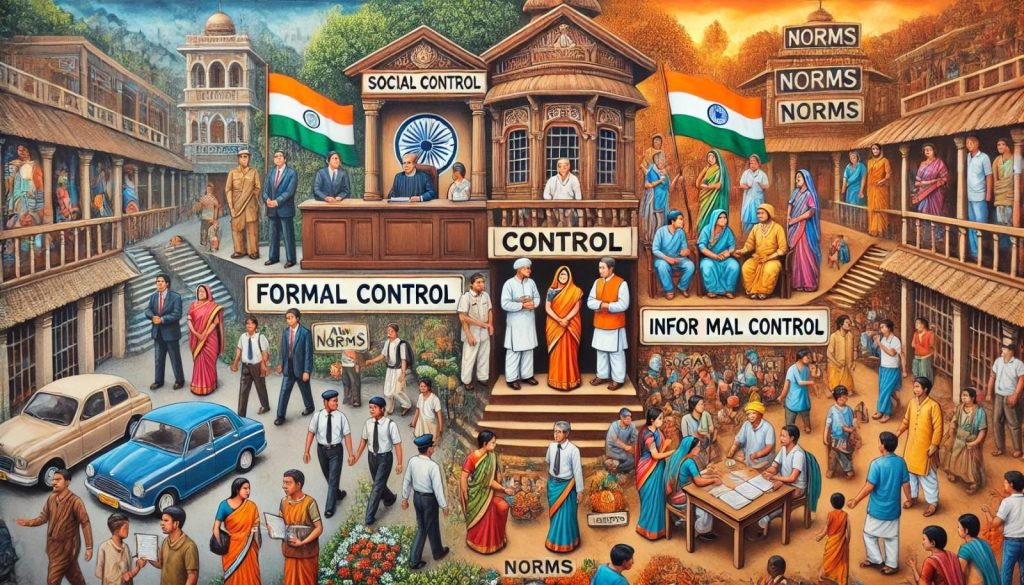
Society is composed of both groups and individuals, functioning collectively for the benefit and progress of all its members. Its existence relies on the interdependence of its parts, with groups forming based on shared interests. These groups can only endure when conflicting individual interests are balanced through cooperation and compromise. The social structure remains intact due to built-in systems of regulation and enforcement. These regulatory systems, known as mechanisms of social control, are crucial for maintaining societal order in a harmonious and accepted way.
Social control helps maintain order by guiding human behaviour to align with accepted norms and values. It is far-reaching and powerful, encouraging order, discipline and mutual respect while discouraging, and when necessary, penalizing deviant behaviour. As American sociologist Talcott Parsons aptly stated, deviant tendencies must be addressed early to prevent disruption of social order. Without such regulation, chaos could replace civility, resulting in a breakdown of societal norms and a descent into a harsh, lawless existence.
The process of socialization, which involves individuals internalizing cultural values and norms, often leads people to behave in socially accepted ways. Emotional bonds—formed through attraction, aversion, and shared experiences—further reinforce this conformity. Social control is a constant force, operating at all times. However, since societies face both external influences and internal shifts, maintaining order is complex and ever-evolving.
Some individuals may reject the prevailing system and seek fulfillment through deviant behaviour. Although such tendencies cannot be entirely eradicated, they must not be ignored. Consequently, the success of social control depends on how effectively recognized methods of regulation are implemented and coordinated to maintain social stability.
Meaning of Social Control
In broad terms, social control refers to the mechanisms through which society regulates individual behaviour. To preserve order and organization within a community, individuals must be guided and restrained to some extent. This guidance ensures that people act in socially acceptable ways, helping them cultivate traits valued by society and remain aligned with its established norms.
A stable and functioning society relies on elements like social harmony, unity and order. This cohesion can only be reached when individuals commit to common norms and values. Therefore, social control can be understood as the influence society exerts over individuals to encourage conformity.
The concept of social control was first systematically explored by American sociologist E. A. Ross in his 1901 publication Social Control. He was among the first to introduce this idea into sociological discourse.
Social control encompasses the various ways in which societal norms, laws and institutions shape and regulate individual behaviour, thoughts, and even appearance. It plays a crucial role in maintaining social order—without it, society would lack coherence and stability.
From these ideas, it can be concluded that social control includes all the influences society uses to guide its members for the collective good. It is the means through which social systems maintain consistency and adapt to change. Multiple methods and institutions work to ensure that individuals conform to the accepted standards of behaviour.
Features of Social Control
Social control refers to the mechanisms, processes, and institutions that regulate individual and group behaviour in society to maintain order and stability. It ensures that people conform to social norms, values, and laws, preventing deviant behaviour. Following are key features of social control:
1. Regulates Behaviour: Social control is essential for guiding human behaviour in a way that aligns with the accepted norms and values of society. Without it, individuals might act solely based on personal desires, leading to disorder and conflict. By setting expectations for conduct, social control ensures that people behave in ways that contribute to social harmony. This regulation can be seen in various aspects of life, such as workplace discipline, school rules, and traffic regulations, all of which guide individuals toward socially acceptable behaviour.
2. Formal and Informal: Social control functions through both formal and informal mechanisms. Formal social control includes structured systems like laws, police, courts, and government policies that enforce rules through penalties and punishments. For example, laws against theft and violence ensure public safety. Informal social control functions through societal norms such as customs, traditions, peer pressure and the expectations set by family. Social norms like respecting elders, dressing appropriately or behaving politely are reinforced without legal enforcement but through social approval or disapproval.
3. Universal Phenomenon: Social control exists in every society, regardless of its culture, geography, or historical period. It is a universal phenomenon because all human societies need mechanisms to maintain stability and regulate behaviour. Whether in tribal communities, ancient civilizations, or modern democracies, social control has always been an integral part of social organization. The methods of control may differ, but the purpose remains the same—to ensure social order.
4. Dynamic in Nature: Social regulation is dynamic, adapting continuously in response to shifts in cultural values, collective beliefs and advancements in technology. Behaviours or practices once deemed socially inappropriate might gain acceptance over time, while previously normalized conventions can face criticism or rejection. For instance, evolving attitudes toward gender equality and environmental sustainability have significantly reshaped legal systems and cultural expectations, driving reforms in workplace policies and conservation efforts. Contemporary challenges, such as debates around digital ethics and online security, have further spurred the development of new regulatory approaches, including data privacy laws and cybersecurity protocols designed to address risks in an increasingly interconnected world. These adaptations highlight how societies recalibrate standards of oversight to align with emerging realities.
5. Maintains Social Order: One of the primary functions of social control is to maintain social order and prevent chaos. Without it, society would descend into disorder, as individuals would act according to their own interests without regard for collective well-being. Laws, customs, and moral standards help to establish a structured environment where people understand their rights and responsibilities. For example, workplace rules ensure discipline, while traffic laws prevent accidents and maintain road safety.
6. Influenced by Culture: The nature and effectiveness of social control vary depending on cultural beliefs and traditions. In some societies, religion plays a dominant role in controlling behaviour, while in others, legal systems and democratic principles take precedence. For example, in conservative cultures, dress codes and gender roles may be strictly enforced through social pressure, whereas in more liberal societies, individual freedom is emphasized. The cultural background of a society determines which methods of social control are most effective.
7. Applies to All Individuals: Social control affects every person in society, regardless of their social status, age, or profession. However, the way it is applied may differ based on factors such as wealth, power and privilege. For example, laws apply to both rich and poor, but enforcement may vary, with powerful individuals sometimes escaping punishment due to influence. Similarly, children are controlled through parental guidance and school discipline, while adults face workplace regulations and legal constraints.
8. Prevents Social Disintegration: Social control helps maintain the unity and cohesion of society by preventing social disintegration. When individuals follow common rules and norms, it fosters cooperation and reduces conflicts. If there were no social control, people might act solely based on self-interest, leading to divisions and chaos. By reinforcing shared values and ensuring collective responsibility, social control plays a crucial role in keeping societies stable and functioning.
9. Restricts Individual Freedom to Some Extent: While social control ensures order, it also places certain restrictions on individual freedom. Every society sets limits on personal behaviour to prevent harm to others and maintain harmony. For example, freedom of speech is encouraged, but hate speech or incitement to violence is prohibited. Similarly, personal choices regarding lifestyle, dress, or relationships may be influenced by societal expectations. While these restrictions can sometimes feel limiting, they are necessary to balance individual rights with collective welfare.
10. Uses Fear and Rewards as Motivators: Social control operates through two main motivators: fear and rewards. People often follow rules due to fear of punishment, such as legal penalties, social exclusion, or loss of reputation. At the same time, rewards like social approval, promotions, or financial incentives encourage individuals to comply with expected behaviour. For instance, employees follow company policies to avoid dismissal, and students obey school rules to receive good grades and recognition. These motivators ensure that people adhere to societal norms and maintain discipline.
Social control is an essential aspect of any society, regulating individual behaviour to ensure order, stability, and cohesion. It operates through both formal and informal mechanisms, rewarding conformity and discouraging deviance. While it evolves over time, its primary function remains the same to balance individual freedom with societal well-being. By understanding the different features of social control, we can appreciate how societies function smoothly and why certain rules and norms are enforced.
Types or Forms of Social Control
Social control refers to the various methods and systems used to regulate individuals’ behaviour, ensuring conformity to societal norms, laws and expectations. It is essential for maintaining order and stability within a community. In sociology, social control is categorized into different types based on how it functions and the mechanisms it uses. Below is a detailed overview of the main types of social control:
1. Formal Social Control: Formal social control involves the regulation of behaviour through established, codified laws and rules that are enforced by official institutions. This form of control relies on structured systems such as the legal and judicial systems, where laws are clearly defined and publicly available. Authorities like the police, courts, and government bodies enforce these rules. For example, criminal laws that prohibit theft, assault, or fraud are forms of formal social control. Violators face legal consequences such as fines, imprisonment, or other sanctions. This type of social control is essential for maintaining legal order and ensuring that individuals behave according to established standards within society.
2. Informal Social Control: Informal social control is maintained through implicit societal standards and collective expectations, typically functioning outside the formal structures or direct intervention of authorized institutions. It is shaped by intimate relationships, traditions and cultural practices. Families, peer groups, and communities exert informal control through subtle methods such as approval, disapproval or social pressure. For example, a parent might reprimand a child for misbehaving, or a friend may encourage another to act in a socially acceptable manner. This form of control is pervasive and influential, even though it does not rely on formal sanctions or laws. Informal social control guides behaviour by fostering a sense of belonging and conformity to the values of society.
3. Internal Social Control: Internal social control occurs when individuals regulate their own behaviour based on internalized societal norms, values, and moral principles. It arises from personal conscience and self-discipline, learned through socialization processes. Rather than being externally imposed, internal control relies on the individual’s sense of right and wrong. For instance, a person may choose to follow the law not because they fear punishment but because they believe it is morally right. This type of control is deeply ingrained in an individual’s psyche and helps maintain social order without the need for external enforcement. Internal social control ensures that individuals conform to societal expectations because they recognize their personal responsibility to do so.
4. Positive Social Control: Positive social control encourages desirable behaviour through rewards and incentives. It relies on reinforcing actions that align with societal norms by providing positive reinforcement. Examples of positive social control include rewarding good behaviour with praise, recognition, or material benefits, such as promotions at work or academic scholarships for outstanding performance. The idea behind positive control is that people are more likely to continue following the rules when they are rewarded for doing so. By reinforcing positive behaviours, society fosters a culture where individuals are motivated to behave in ways that benefit the community.
5. Negative Social Control: Negative social control focuses on discouraging undesirable behaviour through punishment or the threat of punishment. This form of control aims to prevent deviance by imposing sanctions on those who violate societal rules. Legal systems, for example, use penalties such as imprisonment, fines, or community service to deter criminal behaviour. Socially, individuals may face exclusion or ridicule for failing to meet group expectations. Negative social control is necessary to maintain order, as it discourages actions that might disrupt the stability of society. It serves as a deterrent, ensuring that individuals adhere to laws and norms by highlighting the consequences of nonconformity.
6. Direct Social Control: Direct social control involves explicit and immediate interventions to regulate behaviour, typically through authoritative and coercive means. This type of control is enforced by institutions like the government, police, and military, which take direct action when individuals fail to conform to rules. For example, police might arrest an individual for committing a crime, or the government might enforce curfew laws during a state of emergency. Direct social control is highly visible and often includes the use of physical force or legal authority to ensure compliance. It is a more immediate and forceful method of maintaining order within a society.
7. Indirect Social Control: Indirect social control works by influencing individuals’ behaviour through less direct means, such as shaping their values, beliefs, and attitudes. This type of control operates through socialization and cultural influences, guiding people to conform to societal norms without the need for direct enforcement. Institutions such as schools, media, and religious organizations play a key role in promoting indirect social control by instilling values that align with societal expectations. For example, the media might portray certain behaviours as virtuous or desirable, encouraging individuals to adopt those behaviours. Indirect social control operates through the internalization of societal norms, motivating individuals to conform without overt pressure or punishment.
Conclusion: In summary, social control is crucial for maintaining order and stability within any society. Various forms of social control, including formal and informal mechanisms, positive and negative reinforcements, and direct and indirect interventions, all work together to regulate behaviour and ensure conformity to societal norms. Formal control involves official rules and sanctions, while informal control relies on social norms and personal interactions. Internal social control depends on self-regulation, and both positive and negative controls use rewards and punishments to encourage conformity. Direct social control involves overt interventions, while indirect social control subtly influences behaviour through socialization. Together, these mechanisms ensure that individuals act in ways that contribute to the functioning and harmony of society.
Means of Social Control
The functioning of social control mechanisms has attracted significant attention from sociologists. While social control has always existed, its practical application has evolved over time. Norms, values, and other societal standards have persisted, but their components have continuously shifted. In contemporary society, factors such as industrialization, urbanization, rapid transportation and communication, rural depopulation, increased mobility, the growth of towns, cities, and metropolitan areas, and unprecedented levels of social mixing have disrupted traditional values. Social control can be maintained through various methods:
1. Informal Means of Social Control
Informal means of social control refer to the unwritten and socially embedded ways through which individuals regulate each other’s behaviour to maintain harmony and order in society. These controls operate naturally within communities through everyday interactions, shared values, customs, and expectations. Unlike formal systems of control such as laws and regulations, informal control relies on personal relationships, cultural norms, and moral values to influence behaviour. People tend to conform to societal expectations not because of legal consequences but due to the approval or disapproval of those around them.
From childhood, individuals learn acceptable behaviour through their families, communities, and interactions with peers. The approval of loved ones and the fear of being judged or excluded encourage people to follow social norms. Praise, encouragement, or appreciation reinforce positive behaviour, while criticism, gossip, or social exclusion discourage actions that deviate from accepted norms. Informal control is also seen in daily interactions, where individuals adjust their behaviour based on societal expectations, such as showing respect to elders, dressing appropriately for different occasions, or following common etiquette.
Throughout history, societies have used informal control to maintain order without relying heavily on formal institutions. Even in modern times, it continues to influence personal choices, ethical decisions, and interactions in both rural and urban settings. However, with changing social structures, urbanization and globalization, the effectiveness of informal social control is evolving. While it still plays a vital role in shaping behaviour, it often interacts with formal institutions to regulate society in a balanced way.
Following are informal means of social control:
1. Norms: Norms are embedded within institutions and serve as the standard for behaviour, functioning as regulatory guidelines. These norms restrict an individual’s pursuit of cultural goals, offering a framework for action. They play a crucial role in maintaining social cohesion and influencing individual attitudes. Broom and Selznick referred to norms as a behavioural blueprint that defines boundaries within which individuals can explore alternative paths to achieve their objectives. A social norm that operates within one social system may not have the same effect in another. Adherence to norms is often influenced by the specific social context, and those who violate these norms may face consequences such as a loss of prestige, social ridicule, or even more severe penalties.
2. Value: It includes goals that are culturally defined and presented as legitimate aspirations for all members of society, regardless of their position. These goals carry varying levels of emotional and symbolic importance, sometimes serving as sources of inspiration. Values represent “goals worth pursuing,” which are fundamental but not necessarily exhaustive.
3. Folkways: Folkways refer to the customary practices shared by members of a community. These practices create a sense of unity and a standard way of living. Folkways are basic, habitual behaviours common within a group, often upheld by tradition and social pressure. They contribute to the stability of communal life and promote uniformity, making them widely accepted and influential. Disregarding these folkways can lead to social disapproval or consequences.
4. Mores: Mores are similar to folkways, but they are grounded in strong value judgments and are deeply embedded in the fabric of community life. Violating these norms typically results in sanctions. Unlike folkways, mores are considered more significant in determining what is right and proper, and breaking them usually leads to more serious and definite consequences.
5. Custom: Custom refers to a socially accepted rule or practice, typically developed for practical reasons. It is followed because it resonates with collective sentiment and is rooted in some logical basis. Customs operate automatically without the need for external enforcement, as violating them typically leads to social disapproval. They remain rigid and do not adapt easily to new circumstances. Lawmakers must consider customs, as they cannot be ignored. Over time, customs evolve, shaped by the passage of time, and they serve a specific social purpose. However, they lack the flexibility needed to keep up with the rapid changes in society.
6. Belief System: Belief systems have had a profound impact on human behaviour, shaping social norms and influencing cultural development. These systems have served as informal mechanisms of social control. Certain beliefs have held a central role in society, often acting as unseen forces since ancient times. Fear has been a key motivator, leading individuals to feel they are constantly being observed. Many practices, such as raising hands in prayer or kneeling before a symbol of faith, reflect the underlying belief in spiritual presence. The concept of reincarnation, rooted in the faith of life’s continuity, views birth and death as part of an endless cycle, where the soul transitions from one body to another. Such beliefs also foster the idea that good actions lead to positive outcomes, while wrongful deeds result in negative consequences, encouraging people to avoid unethical behaviour. The doctrine of Karma is fundamental across many Indian religious traditions, and belief in the immortality of the soul has long driven religious thought and practices.
7. Ideology: The ideology that shapes social thinking is known as the social determination of thought. Throughout history, social thinking has been deeply influenced by ideological factors. Concepts like Varnashrama Dharma, Punarjanam, and Dhamma have continuously shaped our perspectives. From a political perspective, the concept of national unity has been an important factor. Ancient texts often refer to this land as devanirmitam sthanam, meaning a place created by the Gods. A common prayer also evokes the image of the motherland, revered as the land of seven sacred rivers: the Ganga, Yamuna, Godavari, Saraswati, Narmada, Sindhu, and Kaveri, which together encompass the entire region.
8. Social Suggestions: Social suggestions and ideas play a significant role in shaping behaviour within a society. These suggestions and ideologies are key tools of social control, guiding individuals to conform to societal norms. Society typically regulates the behaviour of its members through various means, such as books, written and spoken communication, and the instilling of certain ideas.
9. Religion: Religion encompasses a range of customs, rituals, restrictions, codes of behaviour and roles, which are primarily based on or justified by beliefs in the supernatural and the sacred. It serves as a significant means of social regulation, influencing how individuals relate to both the physical and social aspects of their surroundings. The influence of religion on human behaviour is largely determined by how strongly its followers adhere to its doctrines.
10. Art: Art serves as a means of channeling and transforming an individual’s instincts. It blends elements of religion, morality, ideals, and various other factors. Art indirectly and often unintentionally prepares a child or individual for different paths in life.
2. Formal Means of Social Control
Formal means of social control refer to established and institutionalized methods used to regulate behaviour and ensure conformity to societal norms and laws. These methods operate through written rules, regulations, and legally sanctioned mechanisms designed to maintain order and stability. Unlike informal means, which rely on customs and social interactions, formal control is systematic and applies uniformly to all members of society. It functions through structured processes that define acceptable behaviour and impose consequences for violations.
The implementation of formal social control relies on codified laws and regulations that provide a clear framework for behaviour. These rules are designed to prevent disorder, resolve conflicts, and establish guidelines for individual and collective conduct. Compliance is ensured through mechanisms that apply uniform standards, reducing ambiguity in societal expectations. Having established rules helps reduce arbitrary decisions and increases predictability in social interactions.
The purpose of formal control extends beyond maintaining discipline to include the protection of rights and freedoms. It seeks to create a balanced environment where individuals can coexist harmoniously while ensuring that their actions do not harm others. It also addresses disputes by providing structured solutions that help resolve conflicts fairly and impartially. Through systematic enforcement, it establishes consequences that deter behaviours considered harmful or disruptive to the social order.
The effectiveness of formal social control depends on the consistency and fairness of its implementation. When applied equitably, it strengthens trust in regulatory structures and promotes voluntary compliance. However, excessive rigidity or misuse may lead to resistance and dissatisfaction. Societies must therefore ensure that formal control mechanisms remain just, transparent, and adaptable to changing social needs.
In essence, formal means of social control play a crucial role in shaping orderly societies by defining behavioural expectations and enforcing them through established rules. By providing clarity, consistency, and accountability, these mechanisms help maintain social stability while ensuring that individual and collective interests are safeguarded. Following are formal means of social control:
1. Laws and Legal Systems: Laws serve as the cornerstone of formal mechanisms for maintaining social order, created by governments to outline what behaviours are permissible and which are not. These legal systems govern many areas of life, such as crime, commerce, ownership rights, and individual freedoms. Violating these laws can lead to punishments like fines, jail time, or other legal sanctions. By enforcing a standardized set of rules applicable to everyone, the legal system helps maintain societal order and consistency.
2. Police and Law Enforcement Agencies: Law enforcement agencies, including police departments, play a crucial role in upholding the law and ensuring that those who break it are brought to justice. They work to preserve public order by deterring criminal activity, investigating incidents, and capturing offenders. Their powers enable them to employ tools like surveillance, routine patrols, and direct action when addressing illegal conduct. The visibility and actions of law enforcement serve both to discourage criminal behaviour and to safeguard the community.
3. Judiciary and Courts: The judiciary serves as a vital component of formal social control by interpreting laws and ensuring their enforcement. It includes various levels of courts—such as trial courts, appellate courts, and supreme courts—that address criminal cases, civil disputes, and other legal issues. Judges and legal experts uphold justice by holding wrongdoers accountable, settling disputes, and safeguarding individual rights. This system provides an impartial framework for conflict resolution and ensures that laws are applied fairly and consistently.
4. Government and Bureaucracy: Governments establish laws, policies, and guidelines that shape how society operates and ensure adherence to legal norms. Administrative bodies—like tax authorities, city councils, and oversight agencies—are responsible for implementing these directives and managing public affairs across sectors such as health, commerce, and transport. Through structured systems of governance, officials uphold law and order, distribute resources, and oversee industry operations to maintain societal stability.
5. Military and Defence Forces: During times of national security threats, widespread disorder, or severe breakdowns in law and order, the military and defence forces play a crucial role in maintaining social stability. Their primary function is to defend the country against external threats, but they may also be called upon to support internal peacekeeping efforts during events like riots, civil conflicts, or major emergencies. Although their main purpose is national defence, these forces can intervene to restore order when civilian authorities are overwhelmed.
6. Educational Institutions: Educational institutions such as schools, colleges, and universities serve as formal mechanisms of social control by promoting discipline, ethical behaviour and civic responsibility from a young age. They enforce regulations regarding attendance, conduct, and academic achievement, guiding students to adopt socially responsible behaviours and recognize authority. Furthermore, many curricula incorporate education on legal systems, moral principles, and citizenship, helping to cultivate knowledgeable and law-abiding individuals.
7. Prisons and Correctional Institutions: Correctional facilities and prisons function as official systems for both penalizing and rehabilitating individuals who break the law. Once a person is found guilty of a crime, they may be sentenced to serve time in prison or participate in rehabilitation efforts. These institutions are designed not only to discourage unlawful behaviour through punishment but also to support personal reform. They offer services such as job training, therapy, and reintegration programs to assist individuals in becoming productive members of society after their release.
8. Legislative Bodies: Legislative institutions like parliaments, congresses, and national assemblies are responsible for formulating and updating laws that govern societal conduct. These bodies are central to the policymaking process, tackling social challenges, establishing legal standards, and approving legislation that influences the structure of society. Lawmakers act on behalf of the public, ensuring that legal systems adapt to evolving social, economic, and political circumstances. Through dialogue and deliberation, they develop policies that support effective governance.
9. Constitution and Governance Policies: A nation’s constitution functions as the highest legal authority, outlining the duties and rights of its people. It lays down the core principles of governance, legal systems, and institutional frameworks that shape mechanisms of social regulation. Policies rooted in the constitution govern multiple areas such as public service, economic management, and law enforcement. By defining legal limits, the constitution plays a crucial role in preserving social stability and ensuring the fair application of justice.
10. International Organizations and Treaties: Global institutions like the United Nations (UN), World Trade Organization (WTO), International Criminal Court (ICC), and International Court of Justice (ICJ) are essential for maintaining social order on an international scale. They create legal frameworks, uphold human rights, and provide systems for resolving disputes between countries. Through treaties and international agreements, these organizations promote peace, oversee global commerce, and tackle worldwide challenges including terrorism, environmental concerns, and human rights abuses.
Formal social control is essential for maintaining order, discipline, and justice in society. These mechanisms function through legal, governmental, and institutional structures that ensure people follow societal rules and regulations. Unlike informal social control, which depends on traditions and social pressures from peers, formal social control offers a systematic and legally supported way to regulate behaviour. By enforcing laws, ensuring safety, and influencing public policy, formal social control is key to preserving a stable and cohesive society.
Agencies of Social Control
Social control is the process through which society regulates the behaviour of individuals to maintain order, stability, and cohesion. It ensures that people conform to the accepted norms, values, and expectations that shape social life. From early childhood, individuals are taught how to behave in ways that align with societal expectations, learning the difference between right and wrong through guidance, discipline, and reinforcement of moral values. These influences shape human interactions and create a sense of responsibility toward the collective good.
The influence of close relationships plays a crucial role in shaping behaviour. From an early age, individuals receive guidance from those around them, learning to follow rules, respect others, and act in ways that are socially acceptable. Positive behaviour is encouraged through rewards, praise, and support, while negative behaviour may be met with disapproval, correction, or discipline. Over time, these experiences shape personal attitudes, ethical decision-making, and the ability to function harmoniously within a group.
In addition to personal interactions, structured environments contribute significantly to maintaining social order. Rules and expectations are established to ensure discipline, fairness, and cooperation. Individuals are expected to follow certain guidelines, and adherence is reinforced through structured rewards and consequences. These settings help develop a sense of duty, respect for regulations, and an understanding of the importance of order in society.
Wider societal influences also play a role in regulating behaviour. Cultural traditions, moral beliefs, and shared values create a framework within which individuals learn acceptable conduct. Public perception and collective attitudes influence the way people act, as social acceptance is often linked to following established norms. Encouragement and recognition reinforce conformity, while deviation may result in criticism, disapproval, or exclusion from the group.
Communication channels contribute significantly to shaping behaviour and attitudes. Messages that emphasize positive conduct, ethical responsibilities, and communal values reinforce social expectations. Whether through storytelling, discussions, or modern digital platforms, the dissemination of shared beliefs influences thinking patterns and decision-making. These influences not only shape individual actions but also reinforce a sense of unity within the community.
Formal systems exist to ensure that people follow established rules and maintain harmony. Regulations and guidelines are set in place to promote fairness and justice. Those who adhere to these expectations receive social approval, while those who break the rules may face consequences designed to correct behaviour. The presence of structured authority and accountability reinforces the importance of responsible actions and respect for collective well-being.
Through these various influences, individuals learn to navigate social life in a way that aligns with broader expectations. Whether through personal relationships, structured guidance, cultural values, public perception, communication, or formal regulations, the process of regulating behaviour ensures that society functions smoothly. Over time, as social dynamics change, the ways in which behaviour is shaped and controlled continue to evolve, adapting to new cultural, technological, and ethical developments.
Social control is upheld through diverse institutions and mechanisms, referred to as agencies. These agencies encompass the systems and structures responsible for transmitting a society’s values, norms, and behavioural expectations, as well as ensuring their practical application. Functioning as regulatory authorities, they actively enforce compliance with societal standards, thereby maintaining order and cohesion within communities.
The agencies of social control can be divided into two following parts:
1. Informal Agencies of Social Control
Informal means of social control refer to the unofficial and often unspoken ways through which society regulates individual behaviour and ensures conformity to social norms. Informal agencies of social control are non-institutional mechanisms that regulate human behaviour through customs, traditions, moral values, and social expectations rather than legal enforcement. These agencies operate through approval, disapproval, praise, or criticism to influence individual conduct. Key informal agents such as family, peer groups, religion, education, community, and cultural traditions help maintain social harmony by guiding people toward acceptable behaviour.
Following are some informal agencies of social control:
1. Family as a Primary Socializing Agent: The family serves as the first and most influential agent of informal social control. Parents and elders play a crucial role in shaping a child’s character by teaching discipline, social norms, and moral values. Through affection, encouragement, and occasional reprimands, family members help instill socially acceptable behaviours. Children learn essential life skills, such as respect, responsibility, and cooperation, within the home. Additionally, family expectations influence major life decisions, including career choices, personal habits, and interpersonal relationships.
2. Peer Groups and Their Influence on Behaviour: Peer groups, particularly during adolescence and young adulthood, significantly impact an individual’s social development. Friends and social circles encourage conformity by promoting specific ways of dressing, speaking, and behaving. Peer pressure can be a powerful force, leading individuals to adopt positive habits, such as engaging in sports and academic excellence, or negative behaviours, such as; smoking or reckless behaviour. The desire for acceptance and belonging often drives individuals to align with the norms set by their peer groups.
3. Religion as a Moral Guiding Force: Religion plays a vital role in shaping ethical conduct by promoting moral values and spiritual beliefs. Religious teachings encourage virtues such as honesty, kindness, and humility while discouraging behaviours that are considered immoral or unethical. Many individuals follow religious principles due to the belief in divine rewards and punishments. Religious institutions, rituals, and faith-based communities reinforce moral expectations, providing individuals with a strong sense of belonging and ethical direction.
4. Education and the Development of Social Values: Educational institutions contribute to informal social control by instilling discipline, ethical values, and civic responsibilities. Schools and colleges teach individuals respect for authority, cooperation, and time management. Teachers influence student behaviour by promoting good habits and guiding them away from disruptive actions, serving as role models in the process. Classroom rules, moral education, and participation in extracurricular activities help students develop a sense of responsibility and prepare them for their roles in society.
5. Community and Public Opinion as Social Regulators: Society and community play a significant role in shaping individual behaviour through public opinion and collective expectations. Social norms are reinforced through praise, recognition, criticism or exclusion. Communities promote adherence to cultural traditions and societal standards, encouraging individuals to conform to shared values. Those who deviate from accepted norms may face social disapproval, gossip, or even isolation. This informal control mechanism helps maintain order and fosters unity within the community.
6. Customs, Traditions, and Cultural Norms: Cultural traditions, customs, and folkways serve as informal social control mechanisms by defining appropriate behaviour within a particular society. These unwritten rules influence how people interact, dress, and conduct themselves in social settings. Adhering to cultural expectations is often met with social approval, while deviation can lead to criticism or exclusion. For instance, in many societies, showing respect to elders is a deeply rooted cultural norm, and failing to do so may result in social disapproval.
On the basis of above description, it can be stated that informal agencies of social control play a crucial role in guiding individual behaviour and maintaining social order without relying on formal laws. Through the influence of family, peer groups, religion, education, community expectations, and cultural traditions, individuals learn what is considered acceptable in society. While these informal mechanisms help preserve moral values and social stability, they may also reinforce rigid societal expectations. Recognizing their impact is essential for understanding how social norms shape behaviour and contribute to societal cohesion.
2. Formal Agencies of Social Control
Social control refers to the mechanisms through which societies regulate individual and group behaviour to maintain order and stability. It is broadly categorized into formal and informal methods. Formal social control relies on established laws, regulations, and institutions to enforce norms and deter deviant behaviour. These mechanisms function through structured systems such as the government, judiciary, police, military, educational institutions, and religious organizations.
Formal agencies of social control are institutional mechanisms that enforce laws, regulations, and societal norms to maintain order and stability. These agencies function through well-defined rules and legal authority, ensuring that individuals and groups adhere to accepted behaviours. The following are the key formal agencies of social control.
1. Government: The government is the most powerful formal agency of social control, responsible for creating and enforcing laws that regulate behaviour within a society. It operates through various branches, including the executive, legislative, and judiciary, each playing a distinct role in governance. The government ensures that individuals follow legal norms through law enforcement agencies and judicial processes. It also establishes policies that influence social behaviour, such as public safety regulations, economic policies, and social welfare programs. By exercising authority through laws and regulations, the government maintains order, prevents chaos, and ensures the smooth functioning of society.
2. Law and Legal System: The legal system serves as a structured mechanism for resolving disputes, punishing wrongdoers, and protecting citizens’ rights. It is composed of a network of courts, judges, and legal professionals who interpret and apply laws. The judiciary plays a crucial role in upholding justice by ensuring that laws are followed and that violations are addressed through due process. Legal systems vary across countries, but they generally include civil, criminal, and constitutional laws designed to regulate behaviour and maintain social harmony. The law functions as a deterrent to deviant behaviour, as individuals are aware of the legal consequences of unlawful actions.
3. Police: The police force is the primary agency responsible for maintaining law and order at the ground level. It enforces laws, prevents crime, and ensures the safety of citizens. The police have the authority to investigate crimes, make arrests, and take action against lawbreakers. They also play a crucial role in conflict resolution and community policing, working with local populations to prevent crime and enhance public trust. Additionally, specialized law enforcement agencies, such as anti-corruption units and cybercrime divisions, focus on specific areas of law enforcement. By maintaining discipline and enforcing legal norms, the police act as a key instrument of formal social control.
4. Military: The military serves as a formal agency of social control by protecting a nation from external threats and, in certain cases, managing internal disturbances. In times of war, insurgency, or national emergencies, the military may be deployed to restore order and security. In some countries, military rule or martial law is imposed during extreme crises, giving the armed forces temporary control over governance. However, in democratic societies, the role of the military is usually limited to external defence, with civilian law enforcement handling internal affairs. The presence of a strong military also acts as a deterrent against aggression, both from within and outside the country.
5. Educational Institutions: Educational institutions, such as schools and universities, play a fundamental role in shaping individual behaviour and instilling societal values. They serve as agents of socialization by teaching students discipline, civic responsibilities, and respect for authority. Through formal curricula, moral education, and disciplinary actions, schools reinforce acceptable behaviours and discourage deviant actions. Additionally, higher education institutions contribute to critical thinking and the development of responsible citizens who abide by the laws of society. Teachers and administrators enforce rules and regulations within the school environment, preparing students to function effectively within broader social structures.
6. Religious Institutions: Religious institutions, such as churches, mosques, temples, and synagogues, provide moral and ethical guidance that influences social behaviour. Religious teachings often establish rules regarding honesty, respect, and justice, which shape individuals’ conduct. Many societies have religious laws, such as Sharia law or Canon law, that govern aspects of personal and social life. Even in secular societies, religious institutions contribute to social control by promoting community cohesion and discouraging actions deemed immoral. Clergy and religious leaders serve as moral authorities, reinforcing ethical behaviour through sermons, rituals, and community engagements.
7. Bureaucracy and Administrative Agencies: Government bureaucracies and administrative agencies regulate various aspects of social life through policies, licenses, and regulatory frameworks. These institutions oversee sectors such as healthcare, labour, environmental protection and consumer rights, ensuring compliance with laws and standards. For example, tax authorities enforce financial regulations, labour departments ensure workplace safety, and environmental agencies regulate pollution control measures. By enforcing policies and monitoring compliance, bureaucratic institutions help maintain order and stability within society. Their ability to impose fines, revoke licenses, and take legal action further reinforces their role in social control.
8. Penal Institutions: Penal institutions, including prisons, juvenile detention centers, and probation systems, serve as corrective mechanisms for individuals who violate laws. These institutions function to punish offenders, deter future crimes, and rehabilitate individuals to reintegrate them into society. Prisons impose various forms of punishment, ranging from fines and community service to long-term incarceration, depending on the severity of the crime. Rehabilitation programs, such as vocational training and counseling, aim to reform criminals and reduce recidivism rates. By isolating offenders from the general population, penal institutions prevent further harm to society while reinforcing the consequences of unlawful behaviour.
Formal agencies of social control play a crucial role in upholding law, order, and societal stability. They operate through defined structures, legal authority, and institutional mechanisms to regulate individual and collective behaviour. Whether through legal enforcement, education, religion, or correctional measures, these agencies ensure compliance with social norms and prevent deviant behaviour. While informal methods of social control, such as family and peer influence, also play a role, formal institutions remain the backbone of an orderly and functioning society.
Need of Social Control
Social control encompasses the various methods and mechanisms that societies employ to regulate human behaviour, ensuring order, stability, and social harmony. It helps prevent disorder and deviant actions by guiding individuals to follow established norms, values, and societal expectations. Social control is crucial in resolving conflicts, fostering social cohesion, and instilling discipline. Both formal measures, such as laws and governmental policies, and informal influences, like family values and social expectations, contribute to maintaining societal equilibrium.
Further, the need of social control can be understood in more precise way as follows:
1. Preserving Social Order and Stability: A key function of social control is to maintain order and prevent social unrest. Without structured guidelines, individuals might prioritize personal interests over societal well-being, leading to instability and chaos. Social norms, traditions, and legal frameworks provide direction, ensuring that society functions smoothly. Government institutions uphold laws, while families, schools, and religious organizations play a role in imparting discipline and proper conduct. For instance, traffic regulations help prevent accidents and ensure the safe movement of people and vehicles, contributing to an orderly society.
2. Deterring Deviant and Criminal Behaviour: Social control plays a vital role in discouraging behaviour that goes against societal norms and legal structures. Societies establish moral principles, legal frameworks, and social expectations to regulate actions that could be harmful to individuals or disrupt social harmony. Those who fail to comply with these norms may face penalties such as legal action, social exclusion, or damage to their reputation. For example, someone engaging in theft may face legal prosecution, while a person displaying rude or disrespectful behaviour may be criticized or isolated by their community. These consequences act as deterrents, discouraging individuals from engaging in undesirable actions.
3. Encouraging Social Unity and Integration: For a society to function effectively, its members must feel connected and share common values. Social control fosters cooperation and promotes a sense of belonging by reinforcing shared customs and traditions. By encouraging individuals to participate in cultural and social practices, it strengthens bonds within communities. Events such as national celebrations, religious festivals, and cultural gatherings serve as unifying forces, helping individuals recognize their common heritage and reinforcing societal cohesion.
4. Ensuring Compliance with Social Norms: Every society operates based on a set of established norms and values that guide individual behaviour. Social control mechanisms ensure that individuals conform to these expectations, making interactions more predictable and maintaining social order. Both formal rules, such as workplace policies and legal regulations, and informal influences, such as peer pressure and familial expectations, encourage adherence to social norms. For example, dressing in accordance with cultural or professional settings reflects social conformity, shaped by societal expectations.
5. Safeguarding Cultural and Ethical Values: The preservation of cultural identity and moral values is a significant reason for implementing social control. Families, educational institutions, and religious organizations play an essential role in passing down traditions, ethical values, and socially acceptable behaviour. By instilling virtues such as integrity, respect, and compassion, societies ensure that moral and cultural values continue to be upheld. Religious teachings, moral education, and social customs help shape individuals into responsible and ethical members of society.
6. Facilitating Social Change and Adaptation: While social control primarily maintains stability, it also aids in managing social transformation and adapting to new circumstances. Societies evolve over time, and social control mechanisms help ensure that changes occur in a structured and harmonious manner. For instance, shifting perspectives on gender equality have been driven by education, legal amendments, and public awareness initiatives. These mechanisms help societies embrace progress while maintaining order and unity.
7. Promoting Cooperation and Social Coordination: Social control fosters collaboration and collective responsibility, ensuring that individuals work together toward shared goals. It encourages respect for authority, ethical conduct, and accountability, all of which contribute to a well-functioning society. In professional settings, workplace regulations and ethical standards ensure discipline and productive teamwork. Likewise, adherence to societal norms and laws ensures peaceful coexistence, strengthening community relationships.
On the basis of above description, it can be stated that the necessity of social control stems from its role in maintaining order, preventing deviance, promoting unity, and ensuring adherence to societal norms. It is instrumental in safeguarding cultural values, managing social change, and fostering cooperation among individuals. Without social control, societies would experience instability, disorder, and conflict. Whether through formal structures like laws or informal influences such as customs and peer expectations, social control remains a fundamental aspect of human civilization, shaping individual behaviour and contributing to societal progress.
References and Readings:
Sociology by C.N. Shankar Rao, https://amzn.to/41A3Wh4
Sociology Themes and Perspectives by Michael Haralambos and Martin Holborn, https://amzn.to/4ibTgdY