- Social Order: An Introduction
- Characteristics of Social Order
- Domination: An Introduction
- Characteristics of Domination
- Authority: An Introduction
- Characteristics of Authority
- Law: An Introduction
- Characteristics of Law
- Contestation: An Introduction
- Characteristics of Contestation
- Crime: An Introduction
- Characteristics that define a crime
- Violence: An Introduction
- Characteristics of Violence
Social Order: An Introduction
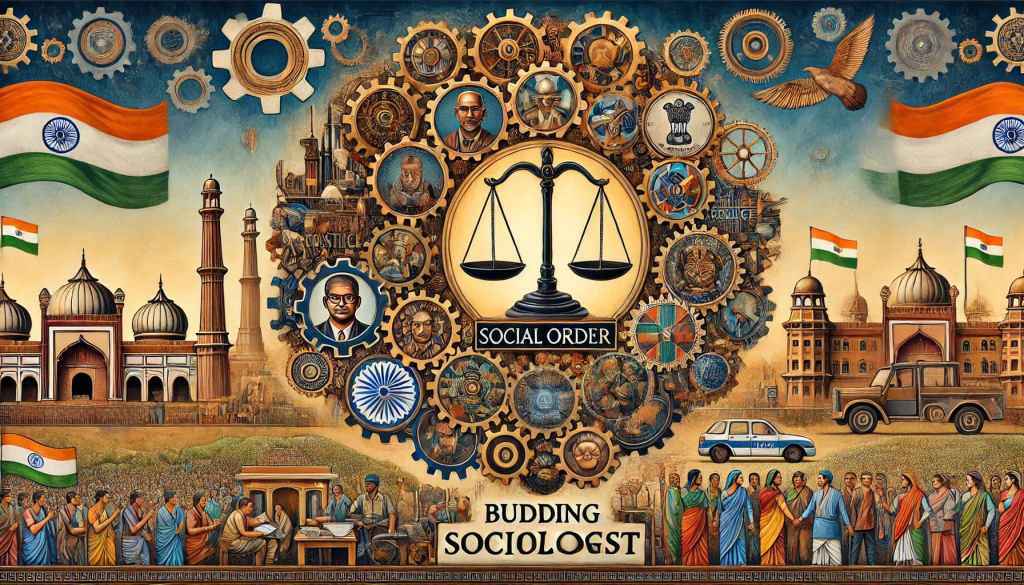
Social order refers to the structured way in which society is organized and maintained to ensure stability, predictability and cooperation among individuals. It is upheld through shared norms, values, laws and institutions that regulate human behaviour and interactions. Social order can be maintained through formal mechanisms such as government, law enforcement and legal systems, as well as informal means like customs, traditions and social expectations. It plays a crucial role in preventing chaos and promoting harmony, enabling societies to function smoothly. Factors such as cultural beliefs, economic structures and political systems influence how social order is established and sustained.
However, social order is not static; it evolves over time as societies adapt to new challenges, technologies and ideologies. Conflicts, social movements and revolutions can disrupt existing social orders and lead to the creation of new systems. Ultimately, social order is essential for societal progress, providing a foundation for cooperation, security and the well-being of individuals within a community.
Social order is the framework that enables societies to function cohesively by establishing rules, norms and institutions that regulate human behaviour. It ensures stability, predictability and cooperation among individuals, allowing for the smooth operation of social, economic and political structures. Social order is maintained through both formal mechanisms, such as laws, law enforcement, government institutions and judicial systems, and informal mechanisms, including cultural traditions, religious beliefs and social expectations. These mechanisms work together to guide individuals in their interactions, ensuring that conflicts are minimized and cooperation is encouraged.
A well-maintained social order contributes to social harmony, economic development and political stability by creating an environment in which people can coexist peacefully and work towards common goals. It promotes trust among citizens and provides a sense of security, which is essential for both individual and collective well-being. However, social order is not rigid or permanent; it evolves as societies change due to technological advancements, economic shifts and political transformations. Social movements, revolutions and ideological shifts can challenge existing structures and lead to the formation of new social orders.
Different societies have distinct ways of maintaining social order, often influenced by their cultural, historical and economic contexts. In democratic societies, social order is often based on laws that protect individual freedoms while ensuring collective responsibility. In more authoritarian systems, social order may be maintained through strict government control and limited individual liberties. Despite these variations, the fundamental purpose of social order remains the same: to create a stable and functional society where individuals can live, work and interact with minimal conflict.
While social order is generally seen as necessary for progress and stability, it can also be a tool for maintaining power structures that benefit certain groups over others. Social inequality, discrimination and systemic injustices can be embedded within social orders, leading to resistance and demands for change. Movements advocating for social justice, equality and human rights often challenge traditional social orders to create more inclusive and fair systems.
In conclusion, social order is the foundation of any functioning society, shaping the ways in which individuals interact and institutions operate. While it is essential for stability and progress, it is also subject to change as societies evolve. Understanding the mechanisms of social order and the factors that influence its transformation is crucial for promoting a just and equitable world.
Characteristics of Social Order
Following are the characteristics of Social order:
1. Norms and Rules: Social order is maintained through established norms, customs, laws and regulations that guide individual and group behaviour. These norms help define acceptable and unacceptable actions, ensuring predictability in social interactions. When individuals follow these rules, society functions smoothly with minimal conflicts.
2. Social Institutions: Institutions like family, education, government and religion play a vital role in sustaining social order by organizing and regulating societal functions. They provide structure and stability, ensuring that individuals fulfill their roles effectively. Without these institutions, societies would struggle with disorganization and instability.
3. Authority and Power: Social order relies on authority figures, such as government leaders, law enforcement and religious heads, to enforce rules and maintain stability. Authority ensures discipline and harmony by implementing justice and resolving disputes. A lack of legitimate authority can lead to chaos and disorder.
4. Social Unity: A sense of unity and belonging among members of society helps in maintaining order, reducing conflicts and ensuring cooperation. When people share common goals and values, they are more likely to work together peacefully. Strong social bonds contribute to trust and collective well-being.
5. Social Control: Mechanisms like rewards, punishments, peer pressure and laws help regulate behaviour and reinforce conformity. Formal control (laws and legal systems) and informal control (family, traditions) play crucial roles in shaping individuals’ actions. Without social control, deviant behaviour may increase, disrupting social order.
6. Role and Status: Individuals have specific roles and statuses within society, which help in organizing interactions and preventing chaos. Every person contributes to society by fulfilling responsibilities related to their status, such as being a student, parent or worker. Clear role expectations reduce misunderstandings and ensure smooth functioning.
7. Conflict Resolution: Dispute resolution mechanisms such as courts, mediation and community discussions contribute to sustaining harmony and preventing disorder. Effective conflict resolution promotes peace by addressing grievances fairly. Societies that lack proper resolution systems often experience prolonged unrest and instability.
8. Cultural Values and Beliefs: Shared values, traditions and ideologies help in shaping social order by influencing acceptable behaviours and practices. Cultural beliefs provide a moral foundation that guides decision-making and social interactions. A strong cultural identity enhances social unity and cooperation.
9. Economic Stability: A well-functioning economy with job opportunities and fair resource distribution supports social order by reducing inequalities and social unrest. When people have financial security, they are less likely to engage in criminal activities or protests. Economic disparities, however, can lead to social divisions and conflicts.
10. Adaptability and Change: Social order is dynamic and evolves with societal progress, technological advancements and changing cultural values while maintaining stability. Adaptability ensures that societies can respond to crises and new challenges effectively. Resistance to necessary change can lead to stagnation and social tensions.
Domination: An Introduction
Domination refers to the exercise of power and control by an individual, group or entity over others, often in a way that limits their freedom, autonomy or decision-making ability. It can manifest in various forms, including political, social, economic and psychological domination. Throughout history, domination has been a key factor in shaping societies, influencing relationships between rulers and subjects, employers and workers or even within personal relationships. While some forms of domination may be enforced through force and oppression, others can be subtle, operating through cultural norms, ideologies or economic dependencies. In contrast, many philosophical and political movements advocate for resistance against domination, emphasizing equality, justice and empowerment. Understanding the mechanisms of domination is essential for addressing issues related to power imbalances and promoting a more equitable society.
Domination can be observed in various domains, such as politics, economics, social structures and even personal relationships. Political domination, for instance, occurs when a government or ruling class imposes its will on the people, sometimes through authoritarian rule, colonialism or systemic oppression. Economic domination is evident when powerful corporations or wealthy individuals control resources, markets and labour, creating differences in wealth and opportunities. Social domination is often reinforced through cultural norms, traditions and ideologies that maintain hierarchies based on gender, race, class or other social factors. Psychological domination occurs when individuals or groups manipulate others through force, propaganda or emotional control, limiting their ability to think or act independently. In many cases, domination persists because those in power create systems that justify and normalize their control, making it difficult for the dominated to recognize or resist it.
Throughout history, various movements and ideologies have emerged to challenge domination, advocating for justice, equality and human rights. Democratic governance, labour unions, feminism, decolonization movements and civil rights activism are all examples of resistance against different forms of domination. While some believe that a certain level of hierarchy and authority is necessary for maintaining order, others argue that true progress comes from dismantling oppressive structures and promoting cooperation, mutual respect and shared power. Understanding domination and its mechanisms is crucial for building a more just and equitable world where individuals and communities can thrive without undue control or exploitation.
Characteristics of Domination
Following are the characteristics of Domination:
1. Control and Authority: Domination involves exerting control over individuals, groups or systems, often by establishing authority. The dominant entity dictates rules, policies and decisions that others must follow. This control can be exercised in political, social, economic or personal relationships.
2. Power Imbalance: There is a clear hierarchical structure where one party has significantly more power than the other. This imbalance can stem from wealth, knowledge, social status or physical force. It often leads to limited opportunities for those in subordinate positions to challenge or alter their circumstances.
3. Influence and Compliance: The dominant entity influences decisions, behaviours and actions, often expecting compliance without question. This can be achieved through persuasion, manipulation or the enforcement of strict norms. Over time, those dominated may internalize these expectations, making resistance less likely.
4. Force: In some cases, domination involves force or manipulation to maintain control. This can be seen in oppressive political regimes, abusive relationships or exploitative labour systems. The use of fear, threats or punishment ensures that the dominated remain submissive.
5. Psychological Impact: Those under domination may experience fear, dependence or a loss of autonomy, which can affect their mindset and actions. Over time, they may develop learned helplessness, where they stop trying to change their situation. This can lead to low self-esteem, anxiety, or even resentment toward the dominant entity.
6. Persistence Over Time: Domination is often long-term, with entrenched structures and systems that reinforce the dominant position. Social institutions such as laws, media and education may support and normalize the dominant group’s control. Breaking free from this cycle requires significant effort, often through collective action or systemic change.
7. Resistance and Conflict: In response to domination, there may be resistance, rebellion or struggle for equality and freedom. This can take the form of protests, revolutions or intellectual movements that challenge the status quo. In some cases, resistance leads to social change, while in others, it results in suppression or further control.
8. Legitimacy and Justification: Sometimes, domination is justified through ideology, tradition, laws or social norms that make it seem acceptable or inevitable. Cultural narratives, religious doctrines or economic theories may be used to rationalize why one group or individual holds power over another. These justifications help maintain the existing order and discourage questioning of the dominant position.
Authority: An Introduction
Authority refers to the legitimate power to give orders, make decisions and enforce obedience. It plays a crucial role in governance, organizations and social structures, ensuring order and stability. Authority can be derived from various sources, such as legal systems, expertise, tradition or personal influence. In politics, authority is often associated with government institutions and leaders who create and enforce laws. In organizations, managers and executives hold authority to direct employees and make strategic decisions. However, authority is most effective when it is accepted and respected by those under it, making legitimacy a key factor. While authority can maintain discipline and efficiency, misuse or abuse of authority can lead to resistance, conflict or loss of trust. Therefore, balancing authority with fairness, transparency and accountability is essential for effective leadership and governance.
Authority is a fundamental concept in society, governance and organizations, as it establishes a framework for order, decision-making and control. It is the legitimate power granted to individuals or institutions to guide, direct and regulate behaviour within a specific domain. Authority can stem from various sources, including legal mandates, traditional customs, expertise or personal influence. In political systems, authority is often derived from constitutions, laws and elected leadership, ensuring that governments function within a structured framework. In workplaces, authority is embedded in hierarchical structures, where managers and executives oversee operations and ensure efficiency.
The effectiveness of authority depends largely on legitimacy and acceptance. When people recognize and respect authority as fair and just, they are more likely to comply and cooperate. However, when authority is misused, corrupt or oppressive, it can lead to resistance, conflict and even societal unrest. Therefore, responsible exercise of authority requires ethical leadership, transparency and accountability to maintain trust and order.
Furthermore, authority is not absolute; it often comes with checks and balances to prevent abuse. Democratic systems, for example, ensure that authority is distributed among different branches of government to promote fairness and accountability. In modern organizations, decentralization and participatory leadership models allow employees to have a voice in decision-making, leading to a more inclusive and effective use of authority.
Ultimately, authority is essential for maintaining structure and stability in various aspects of life. However, its power must be wielded with wisdom, fairness and responsibility to ensure that it serves the greater good rather than becoming a tool for oppression or exploitation.
Characteristics of Authority
Following are the characteristics of Authority:
1. Legitimacy: Authority is often recognized as legitimate, meaning that the individuals or institutions exercising authority have the right or power to do so. This legitimacy is generally accepted by those under its influence. Legitimacy creates a sense of trust, as people are more likely to follow those they perceive as having a rightful position of power. Without legitimacy, authority can be challenged, leading to instability or resistance.
2. Power to Influence: Authority is the power to influence others’ behaviour or decisions. This power is typically rooted in the respect or obedience it commands from others. Authority figures use their influence to guide individuals or groups towards desired outcomes, whether through direct orders or persuasive means. The greater the perceived authority, the more likely it is to shape the thoughts and actions of others.
3. Social Recognition: For authority to be effective, it must be recognized and accepted by society or the group it governs. Without recognition, authority has little impact. Social recognition is often built over time through actions that align with the values and expectations of the group. A lack of recognition can lead to the erosion of authority, making it difficult to enforce rules or maintain order.
4. Responsibility: Those in authority are generally accountable for their actions, decisions and the consequences that arise from them. This sense of responsibility ensures that authority is exercised fairly and ethically. Authority figures must be transparent and answerable to those they govern, promoting trust and maintaining their legitimacy. Without accountability, abuse of power becomes a significant risk.
5. Control and Enforcement: Authority often involves the ability to control and enforce rules, laws or guidelines. This includes the capacity to impose sanctions or rewards based on compliance or non-compliance. The threat or promise of consequences can motivate individuals to act in accordance with the authority’s directives. However, excessive control can lead to resentment or rebellion if perceived as unjust or overly strict.
6. Source of Power: Authority may stem from different sources such as tradition, law, expertise or charismatic leadership. Each type of authority draws its power from a different basis, whether it’s societal norms, legal structures or personal qualities. The source of authority influences how it is perceived and accepted, with legal or expert authority often seen as more rational, while charismatic authority is rooted in personal traits or emotions.
7. Impersonality: In many cases, authority is exercised in an impersonal manner, meaning that decisions are made based on established rules or procedures rather than personal preference or emotion. This helps create fairness and consistency in the exercise of power, as rules apply equally to everyone. However, it can also lead to a lack of empathy and the perception of authority as distant or unfeeling.
8. Hierarchy: Authority is often structured in a hierarchical manner. The higher one is in the hierarchy, the more authority they wield, with a clear chain of command and levels of responsibility. This structure helps organize power and responsibilities within large groups or organizations, ensuring clear lines of decision-making. However, hierarchical authority can also stifle creativity and flexibility if too rigid.
9. Obedience: Authority is closely tied to the expectation of obedience. People under authority are typically expected to follow directives or rules without question, though this expectation can vary depending on the nature of the authority. Obedience is crucial for maintaining order, but it can sometimes lead to blind compliance, especially when authority is questioned or seen as illegitimate. Critical thinking is necessary to balance obedience with moral considerations.
10. Influence on Social Order: Authority plays a crucial role in maintaining social order and stability, ensuring that individuals or groups behave in ways that are consistent with the rules, regulations or goals of the community or organization. Without authority, societies can descend into chaos, as rules and boundaries would lack enforcement. Authority also helps in resolving conflicts, providing solutions that benefit the collective well-being of society.
In summary, authority is a multifaceted concept that involves power, legitimacy, responsibility and social recognition. Its effectiveness depends on the respect and acceptance it commands from those it governs.
Law: An Introduction
Law is a system of rules and guidelines that are created and enforced by social or governmental institutions to regulate behaviour. Its primary purpose is to maintain order, protect property and individual rights, and promote justice within a society. Laws are designed to provide a framework for resolving disputes, regulating social conduct and ensuring fairness in various aspects of life, including business, family and criminal justice. Legal systems vary across different cultures and nations but generally share core principles like equality before the law, the right to a fair trial and the presumption of innocence until proven guilty. The enforcement of law ensures that individuals and entities adhere to these rules, contributing to a more structured and harmonious society. Ultimately, law is a cornerstone of civilization, safeguarding the rights and freedoms of individuals while maintaining collective order.
Law is an essential pillar of any society, serving not only to regulate interactions between individuals but also to ensure the smooth functioning of institutions and governments. It governs various aspects of daily life, such as contracts, property ownership, business practices and personal relationships. In doing so, it provides a sense of security and predictability, allowing people to make decisions based on established rules. The rule of law is foundational, ensuring that laws are applied equally to all individuals, preventing arbitrary rulings or biased decisions.
The creation and evolution of law is influenced by historical, cultural and moral factors. As societies develop, so too do the legal frameworks that govern them. Law adapts to changing circumstances, responding to shifts in technology, social values and economic systems. For instance, new forms of crime such as cybercrime have led to the development of laws specifically aimed at protecting individuals and organizations in the digital age. Moreover, international law governs the relationships between countries, addressing issues such as human rights, trade and conflicts, which have become increasingly significant in an interconnected world.
In addition to its regulatory role, law also serves a moral function. It reflects the collective values and ethical standards of society, ensuring that justice is upheld and wrongdoers are held accountable. Courts play a crucial role in interpreting laws, setting legal precedents and ensuring that legal standards evolve to meet societal needs. Judicial independence is vital to ensure that judges can make decisions without undue influence from political or social pressures.
In modern legal systems, law is not only enforced by government agencies but also relies on legal professionals (lawyers, judges and law enforcement officers) who work together to interpret, apply and uphold legal standards. Legal education and advocacy ensure that individuals and communities have access to justice and understand their rights and responsibilities.
Ultimately, the law exists to balance the needs of individuals and the collective society. It shapes the relationships between citizens, the state and other entities, and its enforcement is crucial for maintaining peace, order and fairness. While it may not be perfect, law remains a crucial mechanism through which societies strive to uphold justice and protect the welfare of their people.
Characteristics of Law
Following are the characteristics of Law:
1. Universality: Laws apply equally to all individuals within a jurisdiction, ensuring fairness and equality before the law. This emphasizes that no one is above the law. It ensures that individuals, regardless of their position, status or power, are subject to the same legal rules and procedures, promoting trust in the legal system. Equal application of the law helps prevent discrimination and bias in its enforcement.
2. Rule of Conduct: Laws provide guidelines for behaviour. They outline what is permissible and what is not in a given society, ensuring order and predictability in interactions. These rules shape social conduct and influence how individuals and groups behave in their daily lives. Without clearly defined rules, there would be confusion and potential chaos in society.
3. Enforceability: One of the most important characteristics of law is its ability to be enforced. Governments or authorized institutions (e.g., courts) ensure that the law is applied and violators face consequences. This enforcement mechanism is crucial for maintaining respect for the law and deterring potential offenders. The effectiveness of enforcement helps to uphold the integrity and credibility of the legal system.
4. Coercive Nature: The law is backed by authority and has the power to impose sanctions on individuals who break it. These can include fines, imprisonment or other forms of punishment. The threat of punishment serves as a deterrent to criminal or harmful behaviour, encouraging compliance. It ensures that those who violate legal norms face the consequences of their actions and protects society as a whole from disruptive behaviour.
5. Formalization: Laws are often written down and codified in legal documents such as constitutions, statutes and regulations. This makes the law clear, precise and accessible to everyone. Written laws prevent ambiguity and provide a reference point for interpreting legal matters. The formalization of laws also enables transparency, as the public can read and understand their rights and obligations under the law.
6. Justice and Fairness: Laws aim to deliver justice and promote fairness in society. They are designed to resolve disputes, protect rights and maintain peace. The law ensures that individuals’ rights are respected and that any grievances are addressed impartially. When justice is properly administered, the public’s confidence in the legal system and social order is strengthened.
7. Dynamic and Evolving: Law is not static. It adapts to societal changes, new technological advancements and evolving moral values. Legislators regularly update laws to address new challenges. This flexibility allows the law to remain relevant and responsive to emerging issues, ensuring it aligns with contemporary needs and ethics.
8. Public Recognition: For a law to be effective, it must be recognized and accepted by society. If laws are seen as illegitimate or unjust, they are less likely to be followed. Public support for the legal system is vital for its smooth functioning, as widespread compliance depends on collective belief in the fairness and validity of the law. Engagement with the public helps lawmakers maintain the law’s credibility.
9. Prevention of Harm: Laws are often established to protect individuals from harm, whether physical, emotional or financial, and to promote public welfare. They set boundaries for behaviour to prevent harm to people and society. By preventing harm, laws help create a safer environment and contribute to the well-being of all members of the community.
10. Regulation of Social Behaviour: Laws govern the actions of people in all aspects of life, such as business, family, property, crime and government. This helps to maintain order and protect rights and duties. By regulating social behaviour, laws ensure that individuals can coexist peacefully and respectfully. This regulation reduces conflict and promotes cooperation within society.
Contestation: An Introduction
Contestation refers to the act of challenging, disputing or opposing something, often in a formal or legal context. It is the process by which one party asserts its disagreement or challenges the validity, accuracy or fairness of another’s claim, action or decision. In legal matters, contestation may involve the disputing of a will, an election result or even the terms of a contract. It can also be seen in various contexts such as academic, political or social debates where individuals or groups seek to challenge established ideas or norms. Contestation is often driven by a desire for justice, fairness or a different interpretation of facts or laws. Ultimately, it serves as a mechanism for ensuring that all perspectives are heard and considered in a particular issue or decision-making process.
Contestation is a fundamental aspect of democratic and legal systems, where it plays a vital role in ensuring transparency, accountability and the protection of rights. Through contestation, individuals or groups can challenge decisions they believe are unjust, flawed or harmful, promoting a dynamic environment where power is not absolute and can be questioned. Whether in the courts, legislative bodies or public discourse, contestation allows for the presentation of alternative viewpoints, which can lead to the correction of errors or the refinement of policies and laws.
In legal terms, contestation might be used in civil cases, such as disputes over property ownership or in criminal law when defendant challenges evidence or the legality of a search. Contestation is also evident in the political sphere, where candidates and parties contest elections and governments or institutions contest legal rulings or social policies. Social movements frequently use contestation to challenge societal norms, advocate for marginalized groups or address perceived injustices.
While contestation is often seen as a form of resistance, it is not always adversarial in nature. It can be a constructive and necessary part of discourse, encouraging reform and improvement. However, it can also escalate tensions, particularly when it involves deeply held beliefs or entrenched systems of power. Ultimately, the ability to contest allows societies to evolve, ensuring that they remain fair and just as new challenges and perspectives arise.
Characteristics of Contestation
The characteristics of contestation can vary depending on the domain in which it’s applied, but some key characteristics include:
1. Disagreement: Contestation is rooted in disagreement or opposition to an existing norm, structure or viewpoint. It involves pushing back against prevailing ideas or practices. This opposition can be ideological, cultural or political, and it often reflects a desire for change or transformation in the status quo. The disagreement may be expressed through protests, writing or alternative ways of thinking and acting.
2. Power Dynamics: Often, contestation occurs in contexts where there is an imbalance of power. Contesting can be a way for marginalized groups or individuals to resist domination and assert their own voice or perspective. This power struggle is often central to the contestation process, as those in power may attempt to suppress or ignore the challenges posed by dissenting voices. Contestation can reveal and challenge unjust power structures, making them visible to a wider audience.
3. Negotiation and Debate: Contestation can involve debates, discussions or negotiations where parties present their arguments, challenge each other’s views and seek to influence or change the status quo. This exchange of ideas often reveals the underlying values, assumptions and interests of each party involved. In these negotiations, there is an opportunity to build alliances or understand the complexity of the issues at hand.
4. Conflict: In some cases, contestation can escalate into conflict, particularly when the opposing sides become entrenched in their positions. This can occur on both ideological and physical levels. The conflict may be direct, such as strikes or demonstrations or more subtle, like cultural or intellectual resistance. Regardless of the form, it highlights the intensity of the contestation and the stakes involved in the struggle for change.
5. Social Change: Contestation can be a catalyst for social or political change. Historically, many movements for civil rights, labour rights or environmental protection have stemmed from acts of contestation that sought to disrupt or reform existing systems. It often signals the beginning of societal shifts, as public consciousness around an issue is raised. Over time, successful contestation can lead to policy changes, legal reforms or shifts in cultural attitudes.
6. Visibility and Amplification: Contestation often seeks to draw attention to an issue, making it more visible to the broader public or decision-makers. This can be through protests, media or other forms of public expression. Visibility helps to validate the contested issue and can generate broader support. The amplification of the message ensures that the concerns being raised are not easily dismissed or ignored.
7. Resistance and Empowerment: Contestation can empower those who feel marginalized or oppressed by providing a platform to express their dissatisfaction and demand change. It enables individuals and groups to reclaim agency, challenge inequities and promote solidarity. Through resistance, people may feel more connected to a collective cause and more determined to confront systems of injustice.
8. Fluidity and Dynamism: Contestation is often not static, it evolves over time as different factors, perspectives and contexts influence the conversation or struggle. As new ideas emerge and circumstances change, contestation may take on new forms or directions. This fluidity ensures that contestation remains relevant and adaptable, as it can evolve in response to shifting power structures, public sentiment or new challenges.
In summary, contestation is a dynamic and multifaceted process that plays a crucial role in challenging the status quo, advocating for change and promoting social justice.
Crime: An Introduction
Crime refers to actions that violate laws established by society or legal system and are subject to punishment by legal authorities. It encompasses a broad spectrum of unlawful behaviours, ranging from minor infractions, like petty theft, to more serious offenses, such as murder and organized crime. Crime not only harms the direct victims but also disrupts the broader social fabric, leading to fear, mistrust and economic instability. The criminal justice system is designed to deter crime, punish offenders and rehabilitate individuals.
Crime is a complex and multifaceted phenomenon that not only violates the law but also undermines the sense of security within a community. The consequences of criminal acts extend beyond the immediate victims, affecting families, neighbourhoods and society at large. Some crimes are driven by personal motives, such as revenge or greed, while others, such as gang violence or terrorism, stem from group dynamics, ideology or socio-political conditions.
The causes of crime are often rooted in a combination of individual, societal and environmental factors. Poverty, lack of education, unemployment and social marginalization are common contributors to criminal behaviour. Additionally, the breakdown of family structures, exposure to violence in early life, substance abuse and mental health issues can increase an individual’s likelihood of engaging in criminal activities. Cultural and societal norms, as well as peer influence, also play a role in shaping behaviours, especially among young people.
Law enforcement agencies, courts and correctional institutions work together to prevent crime and maintain public order. However, the criminal justice system faces challenges such as systemic inequalities, racial profiling, overcrowded prisons and difficulties in rehabilitation. As a result, many advocate for reforms that focus not only on punishment but also on addressing the root causes of crime. This includes initiatives like improving education, promoting social equality, enhancing mental health services and providing employment opportunities.
In addition to law enforcement, community-based approaches to crime prevention, such as neighbourhood watch programs, restorative justice and youth engagement, have shown promise in reducing crime rates. These approaches focus on building trust, promoting cooperation and creating safer environments for individuals to thrive. Ultimately, tackling crime requires a multi-faceted approach that involves cooperation between government institutions, community organizations and citizens to build a safer, more just society.
Characteristics that define a crime
Crime can be defined as any act that violates established laws and is punishable by the legal system. Following are several key characteristics that define a crime:
1. Illegality (Legality): For an act to be considered a crime, it must be prohibited by law. An illegal act is one that goes against legal statutes, regulations or codes of conduct. If an act is not outlawed, it cannot be classified as a crime, even if it is morally wrong.
2. Punishable: A crime is subject to a legal penalty. The severity of the punishment can vary depending on the nature of the crime, ranging from fines or probation to imprisonment or even death sentences in extreme cases.
3. Mens Rea (Guilty Mind): In many legal systems, an essential characteristic of crime is the intention or mental state of the perpetrator. A person must generally have the “guilty mind” (mens rea) to commit a crime, meaning they must intend to commit the unlawful act or show recklessness or negligence in their actions.
4. Actus Reus (Guilty Act): This refers to the physical act or conduct that constitutes the commission of the crime. It could involve actions like theft, assault or fraud and the perpetrator must have engaged in this act either voluntarily or with intent.
5. Harm: Most crimes involve harm to a person, property or society. For instance, physical harm may result from assault, financial harm from fraud or societal harm from drug trafficking.
6. Causation: The perpetrator’s actions must directly cause the harm or injury. If a crime results from a complex chain of events that the perpetrator could not foresee or control, causation may be questioned.
7. Socially Unacceptable: Crimes generally involve actions that are considered socially harmful or unacceptable by the majority of people. These actions disrupt social order and can create fear, insecurity or damage to the community.
8. Intent: Many crimes require proof of the perpetrator’s intent. This can range from premeditated (planned) actions to spontaneous criminal acts committed in the heat of the moment.
9. Victim: There is usually a victim involved in a crime, whether it is an individual, a group or society at large. The harm done to the victim is a central aspect of criminal acts.
In summary, crime is a social and legal construct that involves illegal actions, harmful consequences and punishable offenses. The specific elements, such as intent, harm and causation, can vary across different legal systems, but these fundamental characteristics remain the same.
Violence: An Introduction
Violence is the use of physical force to harm, damage or destroy something or someone. It can take many forms, ranging from physical attacks and war to psychological and emotional harm. At its core, violence stems from an individual’s or group’s desire to control, dominate or express anger, fear or frustration. This destructive force can have long-lasting effects on the victim and the broader community, often leading to a cycle of retaliation and further violence. Societies around the world are continually grappling with the causes of violence, which may include poverty, inequality, political instability and mental health issues. While physical violence is often more immediately visible, psychological violence, such as bullying, manipulation and abuse can be equally damaging. Combating violence requires not just legal and political efforts but also cultural and societal shifts to promote understanding, conflict resolution and empathy.
The root causes of violence are complex and multifaceted. Economic disparities, lack of education and social exclusion are often cited as contributing factors that drive individuals toward violent behaviour. In many instances, people who experience violence in their early years are more likely to perpetuate violence later in life, creating a cyclical pattern of harm. Additionally, media and popular culture sometimes glorify violence, desensitizing individuals to its consequences and potentially encouraging violent behaviour as an acceptable means of conflict resolution.
On a psychological level, violence can have profound effects on the mental health of both victims and perpetrators. Victims may experience trauma, anxiety, depression and post-traumatic stress disorder (PTSD), which can affect their quality of life and relationships. Perpetrators may also suffer from guilt, emotional numbness or unresolved anger, which can contribute to a cycle of violence that is hard to break. Preventing violence requires a holistic approach that addresses both the personal and societal factors that perpetuate it, such as better mental health support, social services and education.
Efforts to combat violence must involve a combination of legal measures, social programs and cultural change. On a global scale, international organizations such as the United Nations work toward promoting peace and security, while local governments focus on crime prevention and intervention programs. Furthermore, community-based initiatives that encourage non-violent communication, conflict resolution and empathy can create a foundation for peaceful coexistence.
Characteristics of Violence
The characteristics of violence can vary depending on its form, but some general traits include:
1. Intentionality: Violence is often premeditated, with the individual or group engaging in violent behaviour having a clear purpose, whether it’s to gain control, inflict harm or retaliate. It may also stem from anger, fear or a perceived injustice.
2. Physical Harm: This is a common characteristic of violence, especially in forms like assault, murder or warfare. It involves bodily injury, which can be severe or minor and may result in temporary or permanent damage to the body.
3. Psychological Impact: Violence can also cause significant emotional and mental distress. This includes trauma, anxiety, depression and post-traumatic stress disorder (PTSD). The psychological scars of violence may persist long after physical wounds heal.
4. Power Imbalance: Violence often occurs in contexts where there is an imbalance of power. This might be between an individual and a larger group, between people of different social or economic standings or between parties with differing resources.
5. Fear and Threat: The threat of violence can be just as potent as the act itself. Fear of violence often influences behaviour, curbing freedom, choices and actions in various settings, from homes to public spaces.
6. Cultural and Societal Factors: Violence is sometimes shaped by cultural norms, historical contexts or societal structures that condone or perpetuate certain forms of violence, such as domestic violence, racial violence or political violence.
7. Impact on Communities: Beyond individuals, violence has far-reaching effects on communities. It can destabilize social structures, breed distrust and create cycles of retaliation, making it difficult to break free from its grip.
8. Variety of Forms: Violence manifests in many forms, including physical, sexual, emotional, psychological and economic violence. It can also be structural, where societal systems or policies harm certain groups over time.
9. Prevalence in Conflict: In times of war or civil unrest, violence becomes even more widespread, taking the form of armed conflict, terrorism and genocide. Violence in these contexts often affects not only combatants but also civilians, leading to massive displacement and suffering.
References and Readings:
Sociology by C.N. Shankar Rao, https://amzn.to/41A3Wh4
Sociology Themes and Perspectives by Michael Haralambos and Martin Holborn, https://amzn.to/4ibTgdY
Social Order, by Robert Bierstedt, https://amzn.to/3XykTWD
The Foundations of Social Order, by Rousas John Rushdoony, https://amzn.to/4h9Ld07