- Introduction
- Characteristics of Social Problems
- Causes of Social Problems
- Types of Social Problems
- Consequences of Social Problems
- Policies and Interventions
Introduction
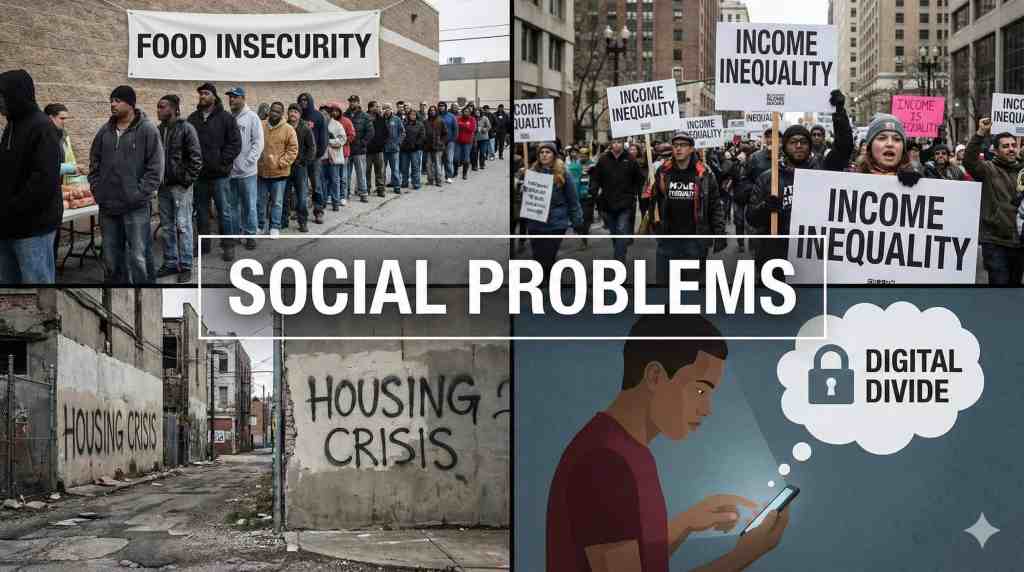
A social problem refers to any condition, behaviour or institutional pattern that a substantial part of society recognises as harmful, undesirable or requiring collective intervention. Such concerns emerge when existing norms, structural arrangements or cultural expectations fail to safeguard the well-being, dignity and equitable treatment of individuals and groups. Social problems are shaped not only by objective indicators such as poverty levels, crime trends, inequality, health disparities or discrimination but also by society’s interpretations of what threatens social order, human welfare or moral standards.
In contemporary societies, the complexity and scope of social problems have expanded significantly due to rapid globalisation, technological transformations, demographic transitions and political shifts. Issues such as unemployment, gender-based violence, communal and ethnic tensions, substance dependence, poverty, environmental degradation, digital exploitation, forced displacement and unequal access to education and healthcare appear in different forms across diverse societies. These challenges now unfold within highly interconnected systems, where developments in one region influence social conditions, public welfare and stability in places far beyond their point of origin, thereby intensifying the scale and urgency of collective responses.
Social problems exert profound effects on individuals, families, communities and institutions. Their roots often lie in deeply embedded structural inequalities, including caste hierarchies, racial discrimination, class divisions, gendered power relations and unequal distribution of resources. Such systemic disparities generate enduring patterns of marginalisation that can persist across generations. Moreover, public policy frameworks, media narratives, cultural norms and social movements play decisive roles in determining how particular issues are perceived, prioritised and addressed within public discourse.
An accurate understanding of social problems therefore requires an integrated and interdisciplinary perspective, drawing upon sociological, economic, political and psychological analyses. Although certain problems such as poverty, social conflict, exploitation or violence appear universally, their underlying causes and manifestations vary according to cultural, economic and regional contexts. The diversity between rapidly developing societies and highly industrialised ones, between urban and rural environments or between digitally integrated and resource-constrained settings illustrates the varied ways in which social problems are experienced and interpreted.
Addressing social problems has become essential for promoting social justice, protecting human rights and achieving inclusive and sustainable development. Effective solutions demand comprehensive policy measures, institutional reforms, community engagement and cross-sector collaboration. Scholarly examination of social problems, covering their defining characteristics, types, origins, consequences and policy responses provides a critical foundation for evidence-based interventions. Such academic inquiry strengthens theoretical understanding while supporting the creation of equitable, resilient and socially responsible societies.
Characteristics of Social Problems
Examining the characteristics of social problems is essential for understanding how specific conditions come to be recognised as matters of public concern. These features help differentiate broader societal issues from individual challenges and clarify why certain situations demand collective attention and remedial action. Recognising these characteristics provides a structured foundation for analysing the nature, scope and significance of social issues. Following are the characteristics of social problems:
1. Socially Recognised Condition: A condition becomes a social problem only when a significant segment of society acknowledges it as harmful and worthy of concern. Even if an issue objectively exists, it gains the status of a social problem only after collective awareness develops through public discussion, media attention or shared experience. This recognition reflects society’s consensus that the condition threatens common welfare and requires organised attention.
2. Conflict with Established Social Values and Norms: Social problems arise when certain practices, behaviours or structural arrangements contradict widely held moral standards, cultural expectations or societal principles. When an issue violates the shared values that guide social life such as fairness, equality, dignity or safety it generates a sense of moral urgency. This contradiction between what society expects and what actually occurs is a central factor in identifying a condition as problematic.
3. Causes Measurable Harm to Individuals and Communities: A defining characteristic is the presence of tangible or intangible harm that affects people’s physical, psychological, economic or social well-being. The detrimental effects may involve suffering, loss of livelihood, social exclusion, stigma, unsafe living conditions or reduced life opportunities. These harms extend beyond individuals and often disrupt families, neighbourhoods and broader institutional functioning.
4. Embedded in Structural and Institutional Inequalities: Many social problems stem from deep-rooted inequalities woven into economic, political, educational or cultural institutions. Disparities related to class, caste, race, gender, disability or resource distribution create environments where certain groups consistently experience disadvantage. These systemic forces shape life chances and make some communities more vulnerable to social challenges than others, indicating that social problems often have structural rather than purely individual origins.
5. Persistent, Recurrent and Resistant to Quick Solutions: Social problems typically endure over long periods and reappear despite various interventions. Their persistence reflects the complexity of the underlying causes, which may include entrenched norms, institutional barriers, generational inequalities or slow-moving socio-economic processes. As a result, they cannot be resolved through short-term strategies, instead, they require sustained, multi-layered efforts and long-term policy commitment.
6. Interconnected with Multiple Social Issues: A social problem often overlaps with other issues, creating chains of influence that make the situation more difficult to address. For example, poverty is linked to illiteracy, poor health, unemployment and social discrimination. These interconnected relationships mean that addressing one problem often requires examining several related conditions simultaneously. This characteristic highlights the need for holistic and integrated approaches.
7. Requires Coordinated and Collective Intervention: Because social problems affect broad sections of society, they cannot be effectively resolved through individual actions alone. Their solutions demand coordinated efforts involving government agencies, legal frameworks, civil society organisations, academic researchers, community groups and sometimes cross-border or interregional cooperation. Collective action ensures that structural changes, resource allocation and policy reforms are implemented in an organised and sustained manner.
8. Dynamic, Evolving and Responsive to Social Change: The nature and intensity of social problems shift over time as societies undergo technological, economic, demographic and cultural transformations. New issues emerge in response to changing conditions such as digital exploitation or cybercrime while older problems may intensify, diminish or take new forms. This dynamic quality means that what is considered a major social concern in one era or region may not hold the same significance in another.
9. Involves Multiple Stakeholders with Divergent Perspectives: Social problems often generate debate because different groups interpret the causes, seriousness and appropriate responses in distinct ways. Stakeholders including policymakers, activists, scholars, affected communities and interest groups may hold conflicting opinions shaped by their social positions, values and priorities. These differing viewpoints can influence public discourse, policy decisions and the direction of reform efforts.
10. Open to Systematic Research, Policy Evaluation and Reform: Social problems can be studied scientifically, allowing scholars and policymakers to analyse their causes, extent, patterns and long-term impacts. This research provides the evidence necessary for designing effective interventions, formulating policies and evaluating the success of existing programs. The ability to subject social problems to systematic investigation makes them amenable to planned social change, institutional reform and evidence-based policymaking.
Causes of Social Problems
Social problems do not arise spontaneously, they emerge from a complex interaction of structural, cultural, economic, political and individual factors operating within society. These causes are deeply embedded in the historical, institutional and socio-economic dynamics that shape human behaviour and social organisation. Understanding the root causes is essential because it enables scholars, policymakers and practitioners to identify where interventions are most needed and how preventive strategies can be effectively designed. The causes often overlap, reinforcing one another and creating persistent patterns of inequality, exclusion and marginalisation. Recognising following core causes is essential for designing effective policies and sustainable interventions that address social problems at both societal and community levels:
1. Inequality in Wealth and Opportunities: Inequality in the distribution of wealth, income and life opportunities is a primary driver of numerous social problems. When large segments of society lack access to quality education, healthcare, employment or housing, it creates deep structural disadvantages that are passed from one generation to the next. Such disparities reinforce cycles of marginalisation and perpetuate poverty, reduced social mobility and exclusion from public life. Over time, unequal access to essential resources contributes to social unrest, crime and instability, making it a central cause of persistent societal challenges.
2. Unemployment and Underemployment: The lack of adequate and secure employment opportunities has significant social and economic consequences. Individuals facing unemployment often experience financial insecurity, stress, loss of dignity and reduced participation in community life. Long-term unemployment weakens family cohesion, increases vulnerability to exploitation and may push individuals toward crime or substance abuse. At the societal level, high unemployment rates strain public resources, widen inequality and limit economic growth, thereby intensifying social problems across communities.
3. Poverty Cycles: Poverty functions as both a catalyst and an outcome of social problems. Families living in poverty often lack access to education, nutrition, healthcare and stable income sources, which restrict their ability to escape deprivation. These limitations reinforce intergenerational poverty, trapping individuals and communities in a cycle that is difficult to break. Persistent poverty also heightens exposure to exploitation, child labour, homelessness, health risks and limited social mobility, making it a foundational cause of multiple social issues.
4. Weak Governance and Poor Policy Implementation: When governance systems fail to enforce laws, safeguard rights or deliver essential services, social problems intensify. Weak governance is reflected in inadequate institutions, a lack of transparency, delayed responses and insufficient oversight. Such conditions undermine public trust and create gaps that allow social injustice, exploitation and inequality to flourish. Poorly implemented policies further weaken the state’s ability to address poverty, health issues, environmental concerns and social conflicts, resulting in long-term societal dysfunction.
5. Corruption and Abuse of Power: Corruption diverts public resources away from essential sectors such as education, healthcare, infrastructure and welfare. When individuals in positions of authority misuse power for personal gain, it worsens inequality, reduces institutional efficiency and weakens democratic processes. Corruption erodes public confidence in institutions and prevents equitable access to services, thereby contributing to poverty, limited opportunities and widespread social frustration. This makes corruption a significant systemic cause of social problems.
6. Discriminatory Cultural Norms and Prejudices: Cultural norms based on gender, caste, religion, ethnicity or race often create and sustain social inequality. Prejudiced attitudes and discriminatory practices restrict access to education, employment and social participation for marginalized groups. Such cultural barriers reinforce stereotypes, justify exclusion and perpetuate injustices across generations. These discriminatory norms hinder social cohesion and prevent the creation of equitable, inclusive societies, thereby functioning as long-standing causes of social problems.
7. Traditional Practices and Social Stereotypes: Certain traditional practices such as child marriage, dowry demands, caste-based segregation or rigid gender roles continue to generate and reinforce social problems. These practices diminish individual freedom, limit opportunities for development and increase vulnerability to violence, exploitation and inequality. Social stereotypes further shape negative perceptions and justify discriminatory behaviour, contributing to challenges related to education, gender justice and social mobility. Such traditions, when misused or unexamined, become powerful causes of persistent social issues.
8. Rapid Technological Advancement: Technological progress, while beneficial, often outpaces societal adaptation and regulation. Sudden changes in job markets due to automation lead to unemployment and economic displacement. Communities lacking technological access or digital literacy face new forms of inequality, creating a digital divide. Additionally, emerging technologies may facilitate misinformation, privacy violations and unregulated surveillance, introducing new vulnerabilities that evolve into significant social problems.
9. Cyber Risks and Digital Exploitation: The expansion of digital platforms has produced risks such as cyberbullying, identity theft, online fraud and exploitation. Low digital literacy, inadequate cyber security and weak regulatory mechanisms increase vulnerability to these threats. Victims often experience psychological harm, financial loss and violations of privacy. As societies become more dependent on digital systems, cyber risks emerge as serious contributors to social instability and personal distress.
10. Institutional Failures: Social institutions, including education systems, healthcare networks, legal bodies and family structures are responsible for upholding stability and welfare. When these institutions fail due to mismanagement, insufficient funding or lack of accountability, individuals lose essential support. Institutional failure leads to inadequate education, poor health outcomes, ineffective justice systems and social neglect, all of which contribute significantly to the emergence and persistence of social problems.
Types of Social Problems
Social problems are conditions, practices or institutional arrangements that negatively affect the well-being of individuals, groups or society as a whole and are recognised by society as requiring collective attention. These problems often emerge from complex interactions among economic, political, cultural and social factors and are frequently interrelated, meaning that one issue can exacerbate others. Understanding the main types of social problems is crucial for developing effective policies, interventions, and social reforms to improve societal welfare and stability. The following are the types of social problems:
1. Poverty: Poverty continues to trap millions in a relentless cycle of deprivation, denying them the basic essentials of life. It refers to the lack of sufficient resources to meet basic human needs, including food, shelter, clothing, healthcare and education. Poverty arises due to multiple interrelated factors such as structural inequalities, lack of employment opportunities, inadequate social welfare systems, economic instability and systemic discrimination against marginalized groups. Its consequences extend beyond material deprivation, affecting physical and mental health, educational attainment, social mobility and overall quality of life. Families living in poverty often experience malnutrition, increased susceptibility to diseases, reduced educational opportunities for children and social exclusion. Furthermore, poverty contributes to broader societal challenges, including increased crime rates, social unrest and economic stagnation. Addressing poverty requires comprehensive and coordinated strategies such as targeted welfare programs, education and skill development initiatives, access to healthcare, economic inclusion and policies aimed at reducing structural inequalities to ensure equitable opportunities for all citizens.
2. Unemployment: The lack of gainful employment has emerged as a formidable barrier to individual and societal progress. Unemployment refers to the condition where individuals who are willing and able to work are unable to secure suitable employment. It stems from economic slowdowns, industrial restructuring, inadequate skill development, technological advancement and population growth that outpaces job availability. Unemployment has far-reaching effects for individuals and society. Financial insecurity resulting from joblessness often leads to psychological stress, anxiety, reduced self-esteem and social frustration. High unemployment rates may increase the likelihood of engagement in criminal activities, substance abuse and social unrest. Additionally, prolonged unemployment affects family cohesion, limiting access to healthcare, education and social participation. Addressing unemployment requires coordinated economic policies, investment in vocational training and skill development, entrepreneurship promotion and efforts to stimulate employment across emerging and traditional sectors of the economy.
3. Gender Inequality: Gender inequality continues to deny half of humanity its rightful opportunities and social recognition. Gender inequality refers to the systematic disparities in access to opportunities, resources and decision-making power based on gender. It is perpetuated by cultural norms, patriarchal social structures, discriminatory practices and inadequate legal protections. Gender inequality manifests in various spheres, including unequal access to education, wage gaps, limited representation in political and leadership positions and restricted participation in economic and social life. Its consequences are profound. Women often face marginalisation, lower income, limited career prospects and vulnerability to domestic violence or social exclusion. Gender inequality not only affects individuals but also hinders overall societal development by limiting human capital and perpetuating social inequities. Combating this problem requires policy interventions promoting gender equity, awareness campaigns, legal reforms, education for girls and the removal of barriers to women’s full participation in public and economic life.
4. Domestic Violence: Domestic violence remains a hidden crisis that shatters families and undermines community well-being. Domestic violence encompasses physical, psychological or sexual abuse occurring within families or intimate relationships. It is primarily rooted in unequal power dynamics, patriarchal attitudes, cultural acceptance of abuse and inadequate legal enforcement. Victims of domestic violence often experience severe physical injuries, emotional trauma, social isolation and economic dependency. Children exposed to domestic violence may suffer long-term psychological effects, including behavioural problems, reduced educational outcomes and perpetuation of violent behaviour in future generations. The social consequences of domestic violence are extensive, as it undermines family cohesion, reduces community well-being and contributes to broader patterns of social instability. Addressing this issue requires stringent legal measures, community awareness programs, support services for victims, counselling facilities and societal efforts to challenge and change harmful gender norms.
5. Child Labour: Child labour refers to the engagement of children in work that interferes with their education, health and overall development. Its root causes include poverty, lack of access to education, family financial pressures and economic exploitation by employers. Child labour perpetuates cycles of poverty and marginalisation, as children deprived of education are less likely to access higher-paying jobs or social mobility in adulthood. Beyond educational deprivation, child labour often exposes children to hazardous working conditions, physical injuries, malnutrition and psychological stress. Socially, child labour weakens community development, limits human capital formation and contributes to broader inequalities. Effective solutions involve strict enforcement of child protection laws, accessible and quality education, poverty alleviation programs and community awareness initiatives emphasizing the importance of childhood and education.
6. Illiteracy / Educational Inequality: Illiteracy continues to deny individuals the power to transform their lives and society. Illiteracy and educational inequality remain significant barriers to social and economic development. They stem from factors such as poverty, inadequate school infrastructure, gender discrimination, regional disparities and cultural biases. These problems limit employment opportunities, reduce social mobility, hinder political participation and perpetuate cycles of inequality. Communities with low literacy rates experience slower economic growth, lower civic engagement and reduced capacity to adopt technological and social innovations. Addressing educational inequality requires investment in educational infrastructure, teacher training, scholarship programs for marginalized groups, inclusive education policies, and community-driven awareness campaigns to promote the value of education for all.
7. Substance Abuse and Addiction: Substance abuse threatens the well-being of individuals, families and society at large. Substance abuse and addiction involve the excessive use of drugs, alcohol or other addictive behaviours that negatively affect individuals, families and communities. Causes include unemployment, social alienation, peer pressure, psychological stress and inadequate access to awareness and rehabilitation services. The consequences are extensive, including deterioration of physical and mental health, disruption of family and social relationships, reduced productivity, criminal behaviour and increased burden on healthcare systems. Communities affected by substance abuse often experience reduced social cohesion, higher crime rates and diminished economic productivity. Addressing substance abuse requires integrated strategies, including prevention and awareness programs, counselling and rehabilitation services, strong law enforcement and social support initiatives.
8. Corruption: Corruption erodes trust in institutions and undermines the foundations of equitable development. Corruption is the misuse of authority or power for personal or group gain, affecting both public and private institutions. Causes include weak governance, lack of transparency, inadequate legal enforcement and societal tolerance of unethical practices. Corruption undermines public trust, diverts resources from development and welfare programs, and increases social inequalities. It also hampers economic growth and perpetuates poverty, educational disparities and health inequalities. Combating corruption requires strong legal frameworks, transparent administrative systems, accountability mechanisms, active civic engagement and sustained efforts to promote ethical practices in public and private sectors.
9. Health Inequalities: Health inequalities deprive communities of the right to equitable well-being and longevity. Health inequalities refer to disparities in access to healthcare services, quality of treatment and health outcomes across different social groups. They are caused by poverty, geographical barriers, social discrimination, inadequate healthcare infrastructure and unequal resource distribution. Vulnerable populations, including the poor, elderly and marginalized communities, are disproportionately affected. Health inequalities result in higher disease prevalence, reduced life expectancy, increased mortality and diminished quality of life. They also impede societal productivity and economic development. Addressing this problem requires equitable healthcare policies, investments in health infrastructure, universal access to preventive and curative services and public awareness campaigns promoting health literacy.
10. Crime and Violence: Crime and violence continue to threaten societal safety and disrupt social harmony. Crime and violence, including theft, assault, organised crime and cybercrime, are significant social problems that threaten the safety and stability of communities. Causes include poverty, unemployment, social inequality, substance abuse and ineffective law enforcement. The consequences extend beyond victims to the broader society, creating fear, undermining social cohesion, disrupting economic activity and straining legal and social systems. Addressing crime and violence requires a combination of effective policing, social support programs, education, employment opportunities and interventions targeting the root social and economic causes.
11. Communal and Ethnic Conflicts: Communal and ethnic conflicts continue to challenge social cohesion and national unity. Communal and ethnic conflicts arise from tensions among social, religious or ethnic groups. Causes include historical grievances, competition over resources, political manipulation and social prejudice. These conflicts lead to violence, loss of life, property damage, social fragmentation and hindered economic and social development. Addressing these conflicts requires conflict resolution mechanisms, legal protection of minority rights, equitable resource distribution, promotion of social cohesion and educational programs promoting tolerance and mutual understanding.
12. Homelessness: Homelessness exposes the most vulnerable to physical, social and economic risks. Homelessness is the lack of safe and secure housing, often resulting from poverty, unemployment, family breakdown or social marginalisation. Consequences include exposure to unsafe living conditions, increased health risks, social exclusion and vulnerability to exploitation. Homelessness undermines human dignity and social stability. Policy measures to address this problem include affordable housing initiatives, employment generation, social welfare support and community-based programs aimed at reintegrating homeless populations into society.
13. Forced Migration / Displacement: Forced migration disrupts lives and communities, creating humanitarian and social crises. Forced migration and displacement occur when individuals or groups are compelled to leave their homes due to conflicts, natural disasters, economic hardships or political persecution. Causes include war, environmental crises, political instability and socio-economic inequality. The consequences include disrupted livelihoods, limited access to education and healthcare, social alienation, psychological stress and long-term dependence on humanitarian aid. Addressing forced migration requires coordinated humanitarian assistance, rehabilitation programs, access to basic services, conflict resolution and policies facilitating the integration of displaced populations into host communities.
14. Cybercrime and Digital Misuse: The rise of digital technologies has created a new frontier for crime that threatens both individuals and institutions. Cybercrime and digital misuse have emerged as society became increasingly dependent on the internet, online transactions and social media. Activities such as hacking, identity theft, online fraud and cyberbullying have risen sharply, exposing vulnerabilities in digital systems and highlighting the urgent need for cybersecurity awareness and regulation.
15. Substance Abuse and Addiction: Modern pressures and social influences have fuelled a rise in substance misuse, endangering individual and community health. Substance abuse and addiction have emerged due to urbanization, peer influence, stress and easy access to alcohol, drugs and other addictive substances. Additionally, behavioural addictions such as gambling and online gaming reflect the influence of technology and changing recreational habits. These problems affect individuals’ physical and mental health and disrupt family and community life.
16. Mental Health Challenges: The pace and stress of contemporary life have brought mental well-being to the forefront of social concerns. Mental health challenges have emerged due to urban stress, competitive work environments, social isolation and weakening support systems. Anxiety, depression and stress-related disorders are becoming more prevalent, while stigma and lack of awareness continue to hinder timely intervention, affecting productivity and social cohesion.
17. Gender Inequality and Discrimination: Even in modern societies, gender-based disparities continue to limit opportunities and equality. Gender inequality and discrimination have emerged from deeply rooted patriarchal norms, socio-economic disparities and cultural expectations. Women continue to face unequal opportunities in education, employment and leadership, along with harassment and domestic violence, reflecting the ongoing struggle for equality in modern society.
18. Urbanization and Overpopulation Issues: Rapid urban growth has intensified the pressure on infrastructure, resources and social services in cities. Urbanization and overpopulation have emerged due to migration from rural areas and industrial concentration in cities. Challenges such as inadequate housing, traffic congestion, slum development and overburdened public services have intensified socio-economic inequalities and created pressures on infrastructure and community life.
Consequences of Social Problems
Social problems generate profound and far-reaching consequences that influence the stability, development and well-being of societies. Their effects extend beyond individual suffering, shaping economic performance, public health, social order, political legitimacy and the everyday functioning of communities. These consequences are interconnected and often reinforce one another, creating long-term challenges that hinder sustainable progress. Understanding these impacts is crucial for formulating effective interventions and addressing the systemic roots of social issues. Following are the consequences of social problems:
1. Social Disintegration: Social problems erode the shared values, trust and cooperative spirit that hold communities together. When individuals experience persistent inequality, discrimination or insecurity, their faith in social relationships weakens. This leads to fragmentation of families, neighbourhoods and support networks, making it difficult for society to maintain unity and collective responsibility. Over time, weakened social cohesion results in reduced participation in community life and declining social solidarity.
2. Rise in Crime and Public Insecurity: Conditions such as unemployment, exclusion, poverty and social frustration create fertile ground for criminal activities. Individuals who lack economic or social opportunities may turn to theft, violence, drug trafficking or other unlawful behaviour. As crime rates rise, public fear intensifies, reducing people’s freedom of movement and trust in their surroundings. Increased insecurity disrupts daily routines, undermines community life and places additional pressure on policing and judicial systems.
3. Deterioration of Physical Health: Social problems directly impact physical well-being by exposing individuals to unhealthy living conditions, inadequate nutrition, hazardous environments and limited healthcare access. Populations facing poverty or marginalisation are more vulnerable to chronic diseases, infectious illnesses and preventable health complications. Poor physical health further limits productivity, increases healthcare demands and widens health disparities across social groups.
4. Escalation of Mental Health Issues: Stress, trauma, discrimination, social isolation, violence and economic instability contribute to widespread mental health challenges, including anxiety, depression and emotional exhaustion. People experiencing prolonged hardship or insecurity often struggle to cope, which affects their ability to function, work and maintain relationships. Over time, untreated mental health issues burden families, workplaces and healthcare systems, creating additional social and economic strain.
5. Economic Productivity Decline: When individuals are affected by social problems such as illness, inadequate education or substance abuse, their capacity to work and contribute to the economy diminishes. Reduced labour efficiency, skill shortages and absenteeism negatively impact national productivity and economic growth. Over time, these conditions limit innovation, weaken competitiveness and slow overall development.
6. Increased Burden on Public Resources: Governments must allocate substantial financial resources to address the outcomes of social problems. Spending rises on healthcare, social welfare schemes, law enforcement, rehabilitation services and emergency relief. These growing expenditures divert funds from long-term developmental priorities such as infrastructure, education, research and sustainable economic planning, thereby slowing national advancement.
7. Political Distrust and Institutional Instability: Social problems expose gaps in governance, fairness and service delivery, leading citizens to question the credibility and effectiveness of political institutions. When corruption persists or public needs remain unmet, dissatisfaction increases, resulting in social unrest, protests and weakened political stability. Prolonged mistrust hampers democratic functioning and reduces citizen participation in public affairs.
8. Educational Disruption and Lower Learning Outcomes: Children and young people affected by hunger, violence, discrimination or domestic instability struggle to focus on education. These conditions lead to absenteeism, reduced academic performance and higher dropout rates. Poor educational outcomes restrict future opportunities, reinforce cycles of poverty and diminish the overall human capital essential for national development.
9. Intergenerational Transmission of Inequality: Social problems create persistent disadvantages that are passed from one generation to the next. Families experiencing inadequate income, poor health or limited access to education often remain trapped in deprivation. Children raised in such circumstances encounter restricted mobility and fewer opportunities, perpetuating long-term inequality and limiting social advancement.
10. Marginalisation of Vulnerable Groups: Women, children, the elderly, persons with disabilities, minorities and other disadvantaged groups suffer disproportionately from social problems. They often face heightened barriers to healthcare, education, legal protection and economic opportunities. Continued marginalisation reduces their participation in social and economic life, increasing inequality and weakening the overall inclusiveness of society.
Policies and Interventions
Effective policies and interventions form the backbone of efforts to address social problems, offering structured frameworks to promote equity, justice and sustainable development. These measures operate across legal, economic, institutional, technological and community levels, aiming not only to mitigate existing social issues but also to prevent their recurrence. The following points highlight the most significant and widely accepted interventions implemented worldwide:
1. Strengthening Social Protection Systems: Strong social protection systems remain a cornerstone of national strategies to reduce vulnerability and improve societal resilience. These measures include cash support for low-income families, subsidised food distribution, affordable housing, health insurance and employment guarantee programmes. By providing a minimum level of economic security, such interventions prevent individuals from falling below subsistence levels and help break long-standing cycles of poverty. They also reduce the socioeconomic shocks caused by unemployment, illness or disasters, thereby creating a more stable and inclusive society.
2. Expanding Access to Quality Education: Education policies focus on ensuring universal, equitable and high-quality learning opportunities for all citizens. Governments invest in school infrastructure, improved curricula, teacher training, digital learning platforms and scholarships for disadvantaged groups. Such measures address educational disparities, encourage social mobility and strengthen the competencies required in modern labour markets. A well-educated population contributes to national productivity, promotes critical thinking and reduces the likelihood of social exclusion, thereby helping to mitigate several social problems at their root.
3. Improving Healthcare and Public Health Infrastructure: Health-focused interventions aim to deliver accessible, affordable and equitable healthcare through strengthened public health systems. Initiatives include nationwide immunisation programmes, maternal and child health support, disease-prevention campaigns, rural health centres and national health insurance schemes. By reducing disease burden, improving life expectancy and ensuring timely medical attention for vulnerable groups, these policies enhance societal well-being and reduce health-related inequalities. A strong healthcare system also improves economic productivity and social stability.
4. Advancing Gender Equality and Protection: Gender equality policies play a critical role in addressing discrimination, violence and unequal access to opportunities. Governments enact laws against domestic violence, sexual harassment, trafficking and workplace discrimination while also promoting women’s political participation, reproductive rights and economic empowerment. Support services such as legal aid, shelter homes and rehabilitation centres strengthen protection mechanisms. These interventions uphold human dignity, safeguard fundamental rights and promote inclusive development by ensuring women and girls can participate fully in social, economic and political spheres.
5. Strengthening Child Protection and Welfare: Child protection measures aim to ensure that every child grows in a safe and nurturing environment. Policies addressing child labour, trafficking, abuse, neglect and malnutrition involve strict legal enforcement, rescue operations, rehabilitation and access to education. Welfare schemes provide nutritional support, early childhood care and social security for vulnerable children. These interventions safeguard developmental rights, promote psychological and physical well-being and prevent long-term intergenerational disadvantages.
6. Implementing Environmental and Climate Action Strategies: Environmental and climate policies focus on reducing ecological degradation, managing resources sustainably and mitigating climate change impacts. Key interventions include pollution-control regulations, renewable-energy expansion, climate-resilience planning, biodiversity conservation and ecosystem protection. Such strategies address rising environmental stresses, protect human health and ensure long-term ecological stability. They also contribute to sustainable development by balancing economic growth with environmental responsibility.
7. Reforming Governance and Enhancing Institutional Accountability: Efficient governance is essential for implementing policies effectively and maintaining public trust. Reforms include decentralisation of administrative power, anti-corruption measures, transparent procurement systems, performance-based evaluations and citizen-oriented service delivery. Strengthening institutional accountability ensures that public services operate fairly, efficiently and without bias. Transparent governance enhances legitimacy, reduces misuse of resources and creates a more responsive and trustworthy state apparatus.
8. Promoting Human Rights and Social Justice Frameworks: Human rights policies protect individuals and groups from discrimination, oppression and exclusion. These frameworks ensure equality before the law, promote access to justice and safeguard civil, political, economic and cultural rights. National human rights commissions, legal support mechanisms and anti-discrimination laws help create inclusive societies where dignity and fairness prevail. Such interventions are essential for addressing structural injustices and preventing socio-political marginalisation.
9. Strengthening International Cooperation and Global Commitments: Global frameworks such as the Sustainable Development Goals (SDGs), climate agreements and human rights conventions establish universal guidelines for addressing social problems. Participation in these international agreements promotes shared responsibility, resource cooperation, policy alignment and collective action. Countries benefit from global expertise, financial support and technological exchange, which enhance national capacity to tackle complex, cross-border challenges.
10. Empowering Community and Civil Society Initiatives: Community-based organisations, NGOs and grassroots movements play a vital role in implementing solutions tailored to local needs. They engage in awareness campaigns, social mobilisation, community monitoring and service delivery in areas such as health, education, environment and gender empowerment. Their close engagement with communities ensures that interventions are culturally appropriate, inclusive and responsive. Such initiatives amplify citizen participation and strengthen social cohesion.
Conclusion: Social problems emerge from a complex interplay of structural, economic, political, cultural and global forces that shape the lived experiences of individuals and communities. They do not arise in isolation, rather, they reflect deeper systemic imbalances, institutional shortcomings, historical patterns of inequality and evolving socio-economic transformations. As societies modernise, new challenges also surface, ranging from technological disruptions and environmental degradation to widening social disparities and weakening community cohesion. These issues, whether traditional or contemporary, require multidimensional understanding and coordinated efforts for meaningful resolution.
References and Readings:
Social Problems, by Ram Ahuja, https://amzn.to/3Mv3kEg
Indian Social Problems, by C N Shankar Rao, https://amzn.to/48xoiLu
Social Problems: Community, Policy and Social Action, by Anna Leon-Guerrero, https://amzn.to/4rTf6so
Social Ills in Rich Countries: New Evidence on Levels, Causes, and Mediators, Jan Delhey & Leonie C. Steckermeier, DOI: 10.1007/s11205-019-02244-3
Socioeconomic inequality in psychological distress among older adults in India: a decomposition analysis, by Shobhit Srivastava, Naina Purkayastha, Himanshu Chaurasia & T. Muhammad, DOI: 10.1186/s12888-021-03192-4