- Social Structure: An Introduction
- Meaning of Social Structure
- Characteristics of Social Structure
- Components of Social Structure
- Functions of Social Structure
- Changes in Social Structure
Social Structure: An Introduction
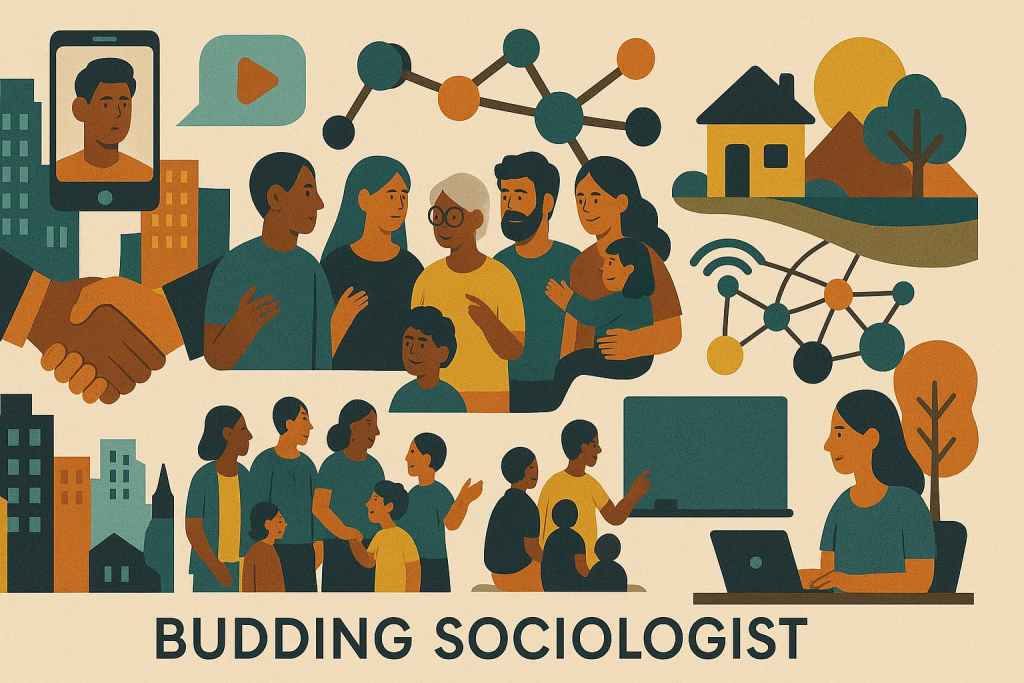
The term “social structure” refers to the systematic network of institutions and relationships that shape how people interact within a community. It establishes norms guiding behaviour and fosters stability by shaping how individuals and groups relate to one another. This framework includes roles, which define expected behaviours tied to specific positions; statuses, representing an individual’s social standing; and institutions like family, education and government, which uphold societal order.
Rather than focusing on individuals, social structure examines the systematic arrangement of relationships, emphasizing recurring patterns that transcend personal or group dynamics. These patterns are often shaped by factors such as class, ethnicity, gender and age, which influence societal roles and hierarchies. By creating predictable rhythms in daily interactions—whether through familial obligations, workplace hierarchies, or legal systems—social structures ensure cohesion and continuity.
In essence, social structure provides a blueprint for collective functioning, embedding shared values into institutional practices. It highlights how societies organize themselves not through random connections, but through enduring, interconnected systems that sustain stability across generations.
Social systems play a key role in guiding behaviour and maintaining order, promoting stability and continuity within communities. These frameworks are dynamic and adaptable, evolving in response to advancements in technology, cultural transformations, and collective activism. Such shifts can redefine societal norms and interpersonal dynamics. For instance, shifts in gender equality and economic pressures have transformed traditional family models, altering roles and interactions among household members.
These systems also shape individuals’ access to opportunities and resources. Socio-economic divisions, for example, often restrict entry to quality education, healthcare and career pathways, reinforcing cycles of disparity. Similarly, expectations tied to gender and racial hierarchies influence how power and advantages are allocated. Through these mechanisms, social frameworks not only organize collective life but also sustain systems of privilege and disadvantage, affecting how resources flow within society.
Meanwhile, social structures contribute to shaping collective identities and fostering belonging. Cultural frameworks embedded in these systems outline shared values and guide how individuals view themselves and others. Yet these structures are not fixed; they can be contested or reimagined by groups seeking to address exclusion or injustice. Movements advocating for civil rights, gender equity, or racial justice illustrate organized efforts to reform or dismantle inequitable systems, aiming to create fairer societal foundations.
Meaning of Social Structure
The concept of “structure” implies an organized setup made up of different components or parts. Similarly, society also possesses a structure. A social structure represents the organized relationships and patterns among individuals and groups within a society. These systems are made up of social groups or categories of people.
In every society there is a structural system, the society want to preserve it and without any specific reason (s) society is not interested to change. Social structure is one of the basic concepts of sociology as it requires to work the social system smoothly. No social system can function without it’s structure. Briefly speaking, a good structure is one in which there is a regularity and a kind of permanency.
On the basis of above description, it can be stated that since a social system is composed of interrelated acts (function) of the people and the structure must have some degree of regularity and permanence. In this system, roles are always more stable than the role occupants (individuals). The role occupants (individuals) divide themselves into sub-groups and some such sub-groups live much longer than the individual members e.g., family will live much longer than any individual member.
Characteristics of Social Structure
Social structure is the organized pattern of relationships, institutions, and roles within a society that shapes individual and group behaviour. It is dynamic and evolves over time, influenced by cultural, economic, political, and technological factors. Key components of social structure include social institutions, roles, statuses, norms and hierarchies, all of which work together to maintain order. Understanding social structure helps analyze how societies function and how individuals interact within them, as well as how social dynamics and change occur:
1. Social Institutions: Social structure is comprised of various institutions such as family, education, religion, economy and government, each of which plays a crucial role in shaping the behaviour and actions of individuals within society. These institutions provide the framework within which individuals interact and perform their roles. For example, the family institution influences values, behaviour patterns and early education, while the educational system plays a significant role in shaping knowledge, socialization and professional roles. Together, these institutions create a cohesive social framework that maintains social order and stability.
2. Role and Status: Every individual occupies a certain status, or social position, within society. Status can be ascribed (given at birth, such as gender or ethnicity) or achieved (earned through personal actions, such as career or education). Along with status, individuals are expected to perform specific roles, which are behaviours and duties associated with that status. For example, a teacher (status) is expected to educate students (role). These roles define how people are expected to behave in different situations and help ensure the functioning of society by providing predictability in social interactions.
3. Social Norms and Values: Social norms are the unwritten rules that govern behaviour within a society, while social values represent the shared beliefs about what is important. Norms and values serve as the foundation of social structure, guiding individual actions and creating cohesion within a community. For example, norms around punctuality in professional settings or honesty in personal relationships help maintain order. Values, such as individualism in Western societies or collectivism in Eastern societies, shape what is considered acceptable behaviour and influence how people interact within the social structure.
4. Hierarchy and Stratification: Social structure is often characterized by a hierarchy, where individuals or groups are ranked according to criteria such as power, wealth, or prestige. This ranking leads to social stratification, a system in which society’s members are divided into different classes. The upper class may have more access to resources and opportunities, while the lower class may face disadvantages. Stratification influences many aspects of life, including access to education, healthcare and political power. This division creates unequal opportunities and can perpetuate cycles of poverty and privilege across generations.
5. Patterns of Relationships: The relationships between individuals and groups form the basis of social structure. These relationships can be familial, professional or communal, and they are often guided by social expectations. For instance, relationships within the family (e.g., parent-child, spouse-spouse) are typically structured by roles, while professional relationships (e.g., employer-employee, colleague-colleague) often follow hierarchical lines based on authority. These patterns are crucial for understanding how people interact, cooperate and sometimes conflict within a society, helping to maintain the overall social order.
6. Social Control: Social control encompasses the various methods a society uses to influence and guide individual behaviour, encouraging adherence to established norms. This regulation can occur through official channels, such as laws and policies, or through unofficial methods, including societal expectations and peer influence. For example, formal institutions may punish rule-breaking with legal consequences, whereas families and communities often promote conformity through encouragement or social validation. These systems of control play a crucial role in preserving social stability and deterring disorder by promoting behaviour deemed appropriate by the broader community.
7. Social Change: While social structure provides stability and order, it is also subject to change. Over time, social structures evolve in response to new ideas, technological advances, or social movements. For example, the rise of digital technology has significantly impacted the economy, family structures, and even education systems. Similarly, movements advocating for civil rights or gender equality have reshaped social norms and laws. Social change can be gradual or sudden, but it is an inevitable aspect of social structure, reflecting the adaptability of society to new circumstances or challenges.
8. Interdependence: Social structure is marked by the interdependence of its various components. Changes in one area can have cascading effects on other areas. For instance, changes in the economic system, such as a shift from an industrial-based economy to a service-based economy, can affect family dynamics, educational requirements, and even cultural values. Similarly, political decisions can influence social policies, which in turn impact social institutions like healthcare or welfare. This interdependence ensures that the functioning of society is complex and interconnected, where no part operates in isolation from others.
9. Cultural Influence: Social structure is heavily influenced by culture, as cultural values, traditions, and beliefs dictate how society is organized and how individuals interact within it. Culture shapes everything from language to moral codes, and these cultural influences are embedded within the social structure. For instance, in some cultures, the concept of family and kinship is central to social organization, while in others, individual achievement may be prioritized. The cultural context provides the foundation for social norms and roles, guiding individuals on how to behave and interact within the established structure.
10. Global and Local Dimensions: Social structure operates on both local and global levels, with individuals and communities being shaped by forces from both. Globalization, for example, has interconnected societies around the world, leading to changes in local social structures. The spread of technology, ideas, and economic systems can influence local cultures and institutions. At the same time, local social structures can also impact global phenomena, such as how local social movements contribute to global discussions on issues like climate change or human rights. Understanding social structure requires considering both the global influences on local societies and the local variations within broader global trends.
In conclusion, the concept of social structure is fundamental to understanding how society is organized and how individuals interact within it. It is shaped by various elements, including social institutions, roles, norms, and values, which collectively guide behaviour and maintain order. Social structure also reflects the hierarchies and stratifications that influence access to resources and opportunities, while fostering relationships that are interdependent and continuously evolving. Social control mechanisms ensure conformity, but social change highlights the dynamic nature of society, responding to new challenges and cultural shifts. Ultimately, the global and local dimensions of social structure demonstrate its complexity and adaptability, making it a vital framework for analyzing both the stability and transformation of societies across time and space.
Components of Social Structure
Social structure encompasses the intricate system of relationships, institutions, groups, and norms that guide how people interact within a society. It serves as a framework that organizes individuals and outlines their roles, behaviours and expected conduct. Core elements of social structure include statuses and roles, institutions, social groups and organizations, networks, cultural norms and values, social hierarchy, and systems of power and authority. These components are essential in influencing social dynamics and upholding societal stability:
1. Statuses and Roles: Status and role are fundamental elements of social structure, as they define an individual’s position and expected behaviour in society. A status is the social position of an individual within society. It can be ascribed, meaning assigned at birth (e.g., gender, ethnicity, royalty) or achieved, which is earned through effort and choice (e.g., doctor, lawyer, athlete). Some statuses become a person’s master status, meaning they dominate other statuses and strongly influence identity (e.g., a person known primarily as a celebrity or as disabled).
Roles are the set of behaviours, duties, and responsibilities associated with a particular status. Each individual plays multiple roles in society, known as a role set (e.g., a teacher acts as an educator, mentor, and evaluator). When a person experiences difficulty fulfilling multiple roles simultaneously, it leads to role conflict (e.g., a working mother struggling to balance job and family responsibilities). Similarly, role strain occurs when the expectations within a single role create stress (e.g., a doctor making difficult ethical decisions). These concepts help explain how individuals navigate their responsibilities in a structured social environment.
2. Social Institutions: Social institutions are organized structures that fulfill essential societal functions. They provide stability and continuity by regulating behaviour and ensuring the smooth functioning of society. The family is the primary institution responsible for socialization, reproduction, and emotional support. It varies across cultures, from nuclear families (parents and children) to extended families (multiple generations living together). Education plays a vital role in transmitting knowledge, cultural heritage, and interpersonal skills, while also influencing social mobility and the organization of societal hierarchies.
The economy decides the way goods and services are produced, distributed and consumed in a system. It determines employment patterns, wealth distribution and social inequality. Political institutions, such as government and law enforcement, establish rules, distribute power and maintain order within a society. Different governance systems, including democracy, monarchy and authoritarian rule, shape political structures. Lastly, religion provides moral and ethical guidance, influencing cultural beliefs, traditions and social cohesion. While some religions unite communities, others may contribute to social divisions based on differing beliefs and ideologies.
3. Groups and Organizations: Groups and organizations are essential for social interaction and collective identity. There are two types of groups i.e., primary groups and secondary groups. Primary groups, such as family, are small and intimate, forming the basis of relationships. In contrast, secondary groups, such as workplaces and schools, are larger and goal-oriented, with interactions based on specific roles rather than personal bonds.
Another key idea is reference groups—groups that individuals look to when assessing themselves and shaping their sense of identity. For example, individuals may compare themselves to celebrities, professionals, or peer groups to define their aspirations and behaviours. Groups can also be categorized as in-groups, where individuals feel a sense of belonging and loyalty, and out-groups, which are perceived as different or opposed. These distinctions often influence social cohesion and conflicts. Formal organizations are organized groups that operate under defined rules and specific goals. Bureaucracies, such as government agencies and corporations, are characterized by hierarchy, specialization, and efficiency. Meanwhile, voluntary organizations, such as non-governmental organizations (NGOs) and social clubs, form around common interests and social causes.
4. Social Networks: Social networks represent the intricate connections between individuals, groups, and organizations. These networks play a crucial role in the exchange of information, resources, and opportunities across society. Close personal relationships, like those with family and close friends, form strong ties that offer emotional support and provide stability over time. On the other hand, weak ties, such as acquaintances and professional contacts, are vital for career advancement, social mobility, and the dissemination of innovative ideas. As digital communication continues to evolve, online networks have gained increasing importance. Social media, online platforms, and virtual communities now shape the way people interact and influence social behaviour. Furthermore, social networks have a significant impact on political movements, cultural shifts, and economic prospects, underscoring their influence in today’s world.
5. Social Norms and Values: Norms and values are the guiding principles that regulate behaviour and maintain social order. Social norms are established rules that dictate acceptable behaviour within a society. They range from folkways, which are informal customs (e.g., table manners), to mores, which carry moral significance (e.g., honesty, respect). Laws are formal norms enforced by institutions (e.g., property rights, traffic regulations), while taboos are prohibitions against deeply unacceptable behaviours (e.g., incest, cannibalism). Social values reflect a society’s shared beliefs about what is desirable or important. They influence norms and shape collective behaviour. Examples of social values include individualism vs. collectivism, where some societies prioritize personal freedom while others emphasize community well-being. Similarly, values like freedom, equality, and justice vary across cultures and historical periods, influencing legal systems and public policies.
6. Social Stratification: Social stratification refers to the hierarchical arrangement of individuals and groups based on socio-economic factors. It creates structured inequality by distributing resources, power, and opportunities unequally. The class system is a typical form of social stratification that organizes people according to their income, educational background, and type of employment. It permits social mobility, enabling individuals to rise or fall within the social hierarchy. However, in rigid systems like the caste system, social status is hereditary, limiting mobility and maintaining traditional divisions. Another form of stratification is meritocracy, where social position is determined by individual achievement and talent. However, social mobility is often influenced by external factors such as education, economic background, and social networks. Access to quality education, financial stability, and social capital play significant roles in determining one’s ability to move up the social ladder.
7. Power and Authority: Power and authority determine how influence and control are exercised within a society. Power refers to the ability to influence or control others, and it can be exercised through coercion, persuasion or legitimate authority. Sociologist Max Weber identified three types of authority: traditional authority, which is based on customs and heritage (e.g., monarchs, tribal leaders); charismatic authority, which stems from personal appeal and leadership qualities (e.g., revolutionaries, religious leaders); and rational-legal authority, which is based on established laws and institutions (e.g., elected officials, law enforcement). In contemporary societies, power is spread across political, economic, and social institutions. Governments enforce laws, corporations control economic resources, and media outlets influence public opinion. Social movements and activism challenge existing power structures, advocating for change and social justice. The distribution of power influences social stability, governance and the advancement of society.
The components of social structure interact to create an organized framework that influences human behaviour, relationships and institutions. While these structures provide stability and predictability, they are also dynamic and evolve over time. Technological advancements, cultural shifts, and social movements continuously reshape social institutions, norms and power dynamics. Understanding these components is crucial for analyzing social inequalities, governance, and the mechanisms that sustain or challenge social order.
Functions of Social Structure
Social structure is fundamental in organizing society, guiding behaviour, and ensuring stability. It provides a framework for interactions, shaping the roles and relationships within a community. The following are the key functions of social structure:
1. Provides Stability and Order: One of the primary functions of social structure is to maintain stability and order in society. It does this by establishing a set of predictable patterns that regulate interactions and relationships. Social institutions such as the government, legal system, and educational organizations create rules and regulations that individuals follow, reducing chaos and uncertainty. Through role expectations, people understand their responsibilities, leading to an organized way of life. For example, in a workplace, employees follow structured hierarchies and job roles, ensuring smooth business operations. Without a stable social structure, societies would struggle with disorder and inefficiency, making it difficult for individuals to cooperate and function effectively.
2. Facilitates Socialization: Social structure plays a crucial role in socialization—the process by which individuals learn cultural norms, values, and expected behaviours. From birth, individuals are introduced to societal norms through family, education, peer groups, religion, and media. Families teach basic etiquette and moral values, schools instill discipline and knowledge, and peer groups influence personality and interests. Media and religious institutions further reinforce social expectations and shape worldviews. For instance, a child raised in a society that values education will grow up understanding its importance and striving for academic success. Socialization ensures continuity by passing cultural knowledge from one generation to the next, allowing societies to preserve their identity and traditions.
3. Regulates Behaviour through Norms and Laws: A well-structured society maintains control over individual behaviour through established norms, rules, and laws. Social norms are both formal (laws) and informal (customs and traditions) which is known as set expectations for behaviour, guiding individuals on what is acceptable or unacceptable. Laws, enforced by institutions such as the police and judiciary, provide legal consequences for deviant actions like theft or violence, ensuring that individuals act responsibly. Informal norms, such as showing respect to elders or dressing appropriately in certain settings, help maintain social harmony. These regulations prevent anarchy and create a sense of security among people, reinforcing the stability of social interactions. Without such mechanisms, societies would face lawlessness, conflict, and unpredictability in human behaviour.
4. Enables Cooperation and Collective Action: Social structure fosters cooperation among individuals by organizing them into groups and institutions that work together towards common goals. Division of labour, for example, ensures that different people perform specialized roles that contribute to the overall functioning of society. Farmers produce food, teachers educate students, and healthcare workers treat illnesses—each playing a part in maintaining societal well-being. Institutions such as governments, businesses, and non-profit organizations facilitate large-scale projects like infrastructure development, disaster relief, and public services. For example, during a natural disaster, different agencies coordinate their efforts to provide aid and rebuild communities. Social structure enables individuals to contribute to a greater collective good, ensuring progress and development.
5. Maintains Social Integration and Unity: A well-defined social structure fosters a sense of belonging and unity among individuals. It creates social bonds through shared cultural values, traditions, and institutions, which help people feel connected to their society. Families, religious communities, and national identities contribute to this integration by reinforcing common beliefs and goals. Events such as national holidays, festivals, and public ceremonies bring people together, strengthening social cohesion. Furthermore, institutions like the legal system provide mechanisms for conflict resolution, preventing divisions within society. For instance, a diverse country with multiple ethnic groups can maintain unity through laws that promote equal rights and social policies that encourage inclusivity. Social integration ensures that people work together harmoniously despite differences in background, beliefs, or social status.
6. Facilitates Social and Economic Mobility: Social structure creates pathways for individuals to improve their social and economic status. Education, employment, and skill development opportunities enable people to rise in the social hierarchy based on merit and effort. A well-organized educational system, for example, provides students with the knowledge and qualifications needed for better job opportunities, allowing them to move from lower to higher social classes. Economic institutions, such as banks and labour markets, create avenues for entrepreneurship and wealth accumulation. Government programs, such as scholarships and affirmative action policies, support marginalized communities, ensuring that social mobility is not restricted by factors like caste, race or gender. An open and flexible social structure allows individuals to achieve upward mobility, improving their quality of life and contributing to societal progress.
7. Adapts to Social Change and Innovation: Social structure is not rigid; it evolves in response to technological advancements, economic shifts, and cultural changes. As societies progress, their institutions, norms, and values adjust to accommodate new realities. Technological developments, such as the rise of the internet and artificial intelligence, have transformed industries and communication patterns, leading to new social structures like remote work and digital economies. Social movements, such as the fight for gender equality and environmental sustainability, influence policies and reshape societal expectations. Globalization has also led to cultural exchanges, introducing new lifestyles, languages and traditions to different parts of the world. For instance, in many societies, traditional gender roles have evolved due to economic changes and feminist movements, allowing more women to enter the workforce. This ability to adapt ensures that societies remain functional and progressive in an ever-changing world.
8. Provides Identity and Sense of Belonging: Social structure helps individuals form their identities by assigning them roles and defining their position within society. These roles and identities, whether tied to family, occupation, or nationality, influence both how people view themselves and how they are seen by others. For example, being a parent, teacher, or student not only defines a person’s responsibilities but also creates a sense of belonging to a particular group or community. Social structures, such as religious or cultural affiliations, offer frameworks for individuals to identify with larger groups, providing them with a sense of purpose and belonging. In a globalized world, these identity markers whether related to ethnicity, religion or political affiliation which are crucial in forming strong social ties and creating a sense of cohesion.
9. Promotes Social Control and Conformity: A fundamental function of social structure is promoting social control, ensuring that individuals conform to established norms, values and laws. Social control functions through both formal and informal means. Formal control is exercised by institutions such as the law, education system, and government, which establish laws and regulations that must be followed (e.g., criminal laws, workplace regulations). Informal control is exercised through societal expectations, peer pressure, and the desire to conform to the norms of one’s community (e.g., dressing according to societal fashion or adhering to cultural practices). These mechanisms work together to maintain order and prevent disruptive or deviant behaviour, ensuring that society remains functional and harmonious. In the absence of effective social control, the breakdown of societal norms could lead to increased conflict and disorder.
10. Facilitates Resource Distribution and Access: Social structure also governs the distribution of resources, such as wealth, education, and healthcare, and determines who has access to them. Through the social stratification system, resources are allocated based on factors like class, race, and gender. For example, higher social classes often have better access to quality education, healthcare, and employment opportunities, while lower classes may face barriers to these resources. Social structure thus plays a key role in maintaining or exacerbating social inequalities. However, systems of redistribution, such as social welfare programs, tax policies, and affirmative action, aim to ensure that resources are more equitably distributed, offering support to disadvantaged groups and helping them improve their socio-economic conditions. The ability to control resource distribution influences power dynamics in society and contributes to the shaping of social hierarchies and opportunities for social mobility.
Social structure is essential for maintaining stability, guiding human behaviour, and ensuring social order. It provides individuals with roles and norms that facilitate cooperation, integration, and economic progress. Through mechanisms like socialization, regulation, and institutional coordination, social structure helps societies function smoothly. At the same time, it is flexible enough to adapt to change, allowing progress and development. Understanding these functions allows us to appreciate the complexity of human interactions and the mechanisms that sustain society over time.
Changes in Social Structure
Social structure is not static; it evolves and adapts in response to various factors that shape society. Changes in social structure reflect the dynamic nature of human societies and the constant interplay between individual actions, collective behaviour, and institutional developments. These changes can be gradual or rapid, depending on the context. Following are main factors influencing changes in social structure:
1. Impact on Work and Labour: Technological innovations, such as the advent of machinery, automation, and the internet, significantly alter social structures by changing the nature of work. For instance, the Industrial Revolution transformed agrarian societies into industrial ones, reshaping family structures, labour markets and social hierarchies. Similarly, the digital revolution has led to the rise of the gig economy, remote work, and new industries, reshaping traditional workplace dynamics.
2. Communication and Social Networks: Advances in communication technologies, from the printing press to social media platforms, have reshaped how individuals interact and form relationships. Social networks, once localized and face-to-face, are now global and virtual. This has led to the emergence of new forms of social interaction, such as online communities, and has contributed to the breakdown of traditional boundaries (e.g., geographic, cultural).
3. Access to Information: The spread of digital information has democratized knowledge and influenced social mobility. People can access education and resources online, which has the potential to reduce social stratification but can also exacerbate inequalities in access to technology and education.
4. Civil Rights and Equality Movements: Movements advocating for racial, gender, and sexual equality, such as the Civil Rights Movement in the U.S. or the feminist movement, challenge traditional social hierarchies and norms. These movements push for changes in the legal, political, and economic structures of society, influencing laws, policies and cultural attitudes. As a result, social structures become more inclusive and equitable over time.
5. Labour Movements: Labour unions and workers’ rights movements have historically fought for better working conditions, fair wages, and the reduction of economic inequalities. These movements have led to reforms such as labour laws, social security systems, and healthcare programs, altering the way labour markets are structured and how workers relate to employers.
6. Environmental and Sustainability Movements: Growing awareness about environmental issues and the need for sustainable living has led to changes in social values and organizational structures. Green technologies, sustainable businesses, and governmental policies aimed at reducing environmental footprints have impacted industries, consumer behaviour, and even global relations.
7. Industrialization: The transition from agrarian economies to industrialized societies in the 18th and 19th centuries marked a profound shift in social structure. Industrialization brought about the rise of cities, factory work, and new social classes (e.g., industrial working class, capitalist bourgeoisie). Urbanization changed family structures, with people moving from rural areas to cities for employment.
8. Globalization: Globalization has resulted in greater interconnection among countries, economies, and cultures, leading to significant changes in social structures. Labour markets have become global, cultures are merging and influencing each other, and new international bodies (such as the United Nations and multinational corporations) are influencing national governance. While globalization can foster economic growth, it also has the potential to deepen inequalities, especially in developing nations.
9. Economic Crises: Financial crises, such as the Great Depression or the 2008 global recession, disrupt economic structures and lead to significant changes in social organization. Economic downturns can lead to higher unemployment rates, rising poverty, and shifts in the class structure. In response, societies may implement social welfare programs, alter labour laws or witness social unrest.
10. Shifts in Values and Beliefs: Changes in cultural values and beliefs often lead to shifts in social structure. For instance, the changing attitudes toward marriage, family, and gender roles in the late 20th and early 21st centuries have led to greater acceptance of diverse family forms and gender identities. The rise of individualism and personal freedom has challenged traditional collective structures, such as those based on religion or patriarchal norms.
11. Religious and Ideological Movements: New religious movements, secular ideologies, or philosophical shifts can prompt changes in social structure. The Reformation and the Enlightenment were key historical moments that altered societal structures by challenging the authority of the church and advocating for reason, science, and individual rights. In modern times, secularism, post-modernism, and human rights movements have transformed social and political structures.
12. Legal Reforms: Changes in laws, such as the abolition of slavery, women’s suffrage, or the legalization of same-sex marriage, directly affect the social fabric of society. Legal reforms can alter the status of individuals and groups, challenge traditional gender roles, and shift societal norms. For example, the legalization of same-sex marriage has prompted shifts in family structures and social acceptance of diverse sexual orientations.
13. State and Welfare Systems: The expansion of state welfare programs, such as universal healthcare, unemployment benefits, and pension systems, has redefined the role of the state in social structure. These changes can reduce social inequality by providing economic security and access to essential services, but can also create new tensions around funding and access to resources.
Changes in social structure are driven by a complex mix of technological, economic, cultural, political, and demographic factors. These shifts can result in profound transformations in society, from the breakdown of old hierarchies to the establishment of new forms of social organization. Understanding how social structure changes over time helps sociologists analyze social trends, predict future developments, and address the challenges that arise as societies evolve.
References and Readings:
Sociology by C.N. Shankar Rao, https://amzn.to/41A3Wh4
Sociology Themes and Perspectives by Michael Haralambos and Martin Holborn, https://amzn.to/4ibTgdY