- Introduction
- Concept of Sustainable Development
- Meaning of Sustainable Development
- Pillars of Sustainability
- Sustainable Development Goal: Agenda 2030
Introduction
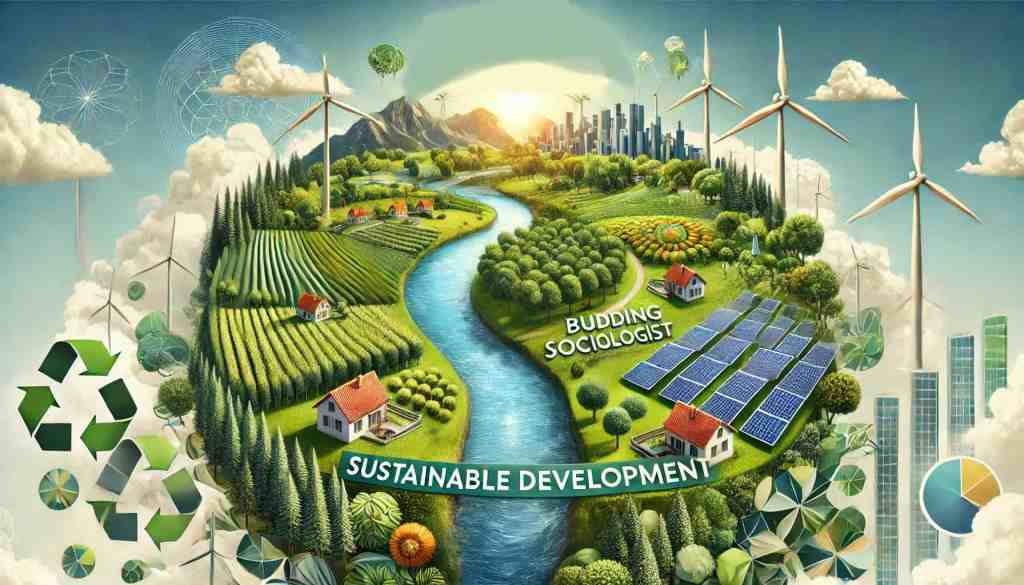
“Sustainable Development” has emerged as a highly debated subject, sparking contentious discussions between proponents of development and environmental preservation. This issue holds immense relevance in contemporary discourse. Sustainable development, often abbreviated as SD, denotes a mode of development that caters to present needs without jeopardizing the capacity of future generations to meet their own requirements. Coined by the Brundtland Commission, this definition remains widely cited, emphasizing the importance of ensuring development does not compromise the well-being of future societies.
Distinguishing itself from sustainable development, “Green Development” places a primary emphasis on environmental sustainability, prioritizing ecological concerns over economic and cultural factors. However, advocates of sustainable development argue that it offers a comprehensive framework for enhancing overall sustainability, especially in contexts where achieving cutting-edge green development proves challenging.
“Inclusive green growth” is posited as the pathway to achieving sustainable development. It represents the only viable approach to balancing the imperative for rapid growth, particularly in developing nations striving for prosperity, while simultaneously addressing the needs of the nearly 1 billion people still grappling with poverty. Furthermore, it aligns with the urgent global mandate for environmental conservation and improvement.
Concept of Sustainable Development
The concept of “Sustainable Development” originated from the Cocoyoc Declaration in 1970, marking its initial introduction into discourse. Over time, this term gained traction and recognition, evolving into a widely embraced solution for various developmental challenges at both national and international levels.
The United Nations Commission on Environment and Development played a pivotal role in popularizing the term in 1987, notably through the publication of the Brundtland Report. Subsequent international gatherings, such as the IUCN Report in 1980 and 1990, as well as the World Commission on Environment and Development (WECD) Report titled ‘Our Common Future’ in 1987, extensively deliberated on the concept of Sustainable Development.
Named after Norwegian Prime Minister Brundtland, the influential Brundtland Commission underscored sustainability as the imperative remedy for mitigating the escalating threats to humanity’s future. The Earth Summit in Rio de Janeiro in 1992 further reinforced the commitment to Sustainable Development as the overarching strategy for long-term human progress.
Meaning of Sustainable Development
The concept of ‘sustainable’ denotes a commitment to development that addresses fundamental human concerns such as poverty, environmental preservation, equality, democracy, development, and peace.
A widely embraced definition of Sustainable Development, originating from the 1987 Brundtland Commission, emphasizes meeting present needs without compromising the ability of future generations to meet their own needs.
Outlined objectives for holistic human development include:
- Recognition of a shared future.
- Inclusive participation from all societal sectors in the development process.
- Unity in objectives, allowing for diverse approaches.
- Harmony between development and nature.
- Emphasis on continuity and long-term outlook.
- Prioritization of equitable distribution and social justice.
- Integration and coordination of all development efforts.
Robert Repetto (1986), in “Global Possible,” characterizes sustainable development as an ongoing process that leverages both natural and human resources toward specific goals without conflicting with nature’s processes but aligning with them instead.
Pillars of Sustainability
The concept of sustainability relies on three foundational principles, which serve as a robust framework for addressing sustainable development challenges. These principles are intricately connected, and if any one of them is compromised, the entire system becomes unsustainable. Visual representations of these three pillars are commonly depicted in various forms. Below are descriptions of each pillar:
1. Social Sustainability: Social sustainability refers to the capacity of a social unit, whether it be a nation, a household, or an institution, to maintain a certain level of social welfare and cohesion over the long term. Indications of social unsustainability include issues such as warfare, persistent poverty, systemic injustice, and inadequate education.
2. Environmental Sustainability: Environmental sustainability refers to the capacity of the environment to maintain a specified standard of environmental health and to sustainably extract natural resources over time. Despite being one of the most pressing global issues, it often receives insufficient attention due to the delayed consequences of inaction. As a result, it remains a challenge to address effectively.
3. Economic Sustainability: Economic sustainability refers to an economy’s capacity to maintain a consistent level of economic output over the long term. Following the Great Recession of 2008, it has emerged as a paramount concern globally, overshadowing progress due to challenges in environmental sustainability.
Sustainable Development Goal: Agenda 2030
Since the introduction of the Sustainable Development Goals (SDGs) in 2015, the 2030 Agenda has served as a roadmap for fostering collective prosperity within a sustainable global framework. It envisions a world where all individuals can lead productive, vibrant, and peaceful lives on a thriving planet, encapsulated in 17 distinct objectives. Nations are encouraged to incorporate these goals into their national development strategies, utilizing the latest data available to monitor global progress towards SDG-2019. These 17 points constitute a strategic agenda for a sustainable future, commonly referred to as the Sustainable Development Goals.
The SDGs represent a comprehensive set of 17 global aspirations aimed at forging a better and more sustainable future for everyone. Adopted by the United Nations General Assembly in 2015, these goals are slated for achievement by the year 2030 as part of UN Resolution 70/1, known as the 2030 Agenda. With a total of 169 targets accompanying the goals, each objective is supported by 1 to 3 indicators (for a grand total of 232 approved indicators) to gauge progress towards their realization. Below, we outline these goals in detail:
Goal-1: No Poverty: “End poverty in all its forms everywhere” is a mission of Goal-1. Extreme poverty has seen a significant decrease by over fifty percent since 1990; however, approximately one in every ten individuals still subsists on less than the international benchmark of $1.25 per day. The first Sustainable Development Goal (SDG 1) aims to eradicate extreme poverty worldwide by 2030. Poverty encompasses more than just financial deprivation; it also entails lacking access to fundamental services such as healthcare, security, and education. Moreover, individuals in poverty often endure hunger, social marginalization, and exclusion from participating in decision-making processes.
Goal-2: Zero Hunger: “End hunger, achieve food security and improved nutrition, and promote sustainable agriculture”, is the mission of goal-2.By 2030, the aim is to eradicate hunger and all forms of malnutrition. This goal entails doubling agricultural productivity and incomes for small-scale food producers, with a particular emphasis on empowering women and indigenous communities. Agriculture stands as the largest employer globally, supporting the livelihoods of 40% of the world’s population and serving as the primary income source for impoverished rural families. However, gender disparities persist, with women constituting 43% of the agricultural labor force in developing nations, and over 50% in certain regions of Asia and Africa, yet only owning 20% of the land. To address these challenges, the objective includes preserving seed genetic diversity, enhancing land accessibility, fostering agricultural markets, and combating malnutrition and undernourishment among children.
Goal-3: Good Health and Well-being: “Ensure healthy lives and promote well-being for all at all ages”, is mission of this goal. This objective seeks to enhance life expectancy and mitigate prevalent causes of child and maternal mortality. From 2000 to 2016, the global under-five mortality rate saw a significant decline of 47%, dropping from 78 deaths per 1,000 live births to 41 deaths per 1,000 live births. However, the persistent reality remains stark: in 2016 alone, 5.6 million children died before reaching the age of five, a figure that continues to rise steadily. The aim of this objective is to decrease under-five mortality to no more than 25 per 1,000 live births. Yet, if present trajectories persist, over 60 countries are projected to fall short of achieving the SDG target for neonatal mortality by 2030. Furthermore, the objective targets reducing maternal mortality to below 70 deaths per 100,000 live births.
Goal-4: Quality Education: The objective of this aim is to ensure that everyone has equal access to quality education and the chance to learn throughout their lives. Significant strides have been taken in improving access to education, particularly in primary schools, for both genders. Despite progress, there remain at least 22 million children in 43 nations who lack access to primary schooling, and access alone doesn’t guarantee quality education or completion of primary education. Moreover, globally, 103 million young people still struggle with basic literacy, with over 60 percent of them being female. In a quarter of nations, over 50% of youngsters did not attain the required level of math proficiency by the conclusion of their elementary schooling. Similarly, at the lower secondary stage, this figure stood at one-third of countries. The objective is aimed at guaranteeing that by 2030, every girl and boy receives unrestricted, fair, and high-quality primary and secondary education.
Goal-5: Gender Equality: “Achieve gender equality and empower all women and girls.” The United Nations asserts that achieving gender equality is not only a fundamental human right but also a crucial element for fostering a peaceful, prosperous, and sustainable global community. Ensuring that women and girls have equal access to education, healthcare, fair employment opportunities, and representation in political and economic decision-making processes is essential for cultivating sustainable economies and advancing societies worldwide. Despite progress, as of 2014, 52 countries had yet to enshrine gender equality in their constitutions, highlighting the persistent challenge of gender discrimination ingrained in legal systems and social norms in many regions. Efforts to combat issues like child marriage are underway, with a target to eliminate it by 2030. The overarching aim is to achieve gender equality and empower all women and girls, underpinning the core objective of this initiative.
Goal-6: Clean Water and Sanitation: “Ensure availability and sustainable management of water and sanitation for all.” The objective here is to guarantee access to clean water and proper sanitation. Globally, a majority of people lack reliable sanitation services, and a significant portion don’t have access to safe water. Having clean water and hygienic toilets not only prevents diseases but also fosters economic productivity within societies. Uninterrupted attendance at schools and workplaces is crucial for effective education and employment. Thus, it’s essential to prioritize the installation of toilets in educational institutions and workplaces. Additionally, there’s a focus on “equitable sanitation” to address the particular requirements of women and girls.
Goal-7: Affordable and Clean Energy: “Ensure access to affordable, reliable, sustainable and modern energy for all.” By 2030, the objectives aim to ensure accessible and dependable energy while elevating the proportion of renewable sources within the worldwide energy portfolio. This endeavor entails bolstering energy efficiency measures and fostering global collaboration to promote broader availability of clean energy technologies and increased investment in clean energy infrastructure. Special emphasis is placed on bolstering infrastructure in regions such as the least-developed nations, small islands, and landlocked developing countries. As of 2017, merely 57 percent of the global populace predominantly utilizes clean fuels and technologies for cooking, underscoring the ambition to deliver more dependable, sustainable, and contemporary energy solutions for all by 2030.
Goal-8: Decent Work and Economic Growth: Development economists from the World Pensions Council (WPC) contend that there has been insufficient emphasis placed on the dual priorities of long-term economic growth and investment in infrastructure. In the context of the least developed nations, the economic objective is to achieve a minimum annual GDP growth rate of 7%. This necessitates a focus on enhancing productivity through diversification, technological advancement, innovation, entrepreneurship, and the promotion of small- and medium-sized enterprises (SMEs). Efforts are also directed towards reducing youth unemployment, with the aim of fully implementing the Global Jobs Pact of the International Labour Organization (ILO) by 2030. Additionally, there is a concerted push to formulate sustainable tourism policies, which not only generate employment but also bolster domestic financial institutions in support of sustainable economic progress.
Goal-9: Industry, Innovation, and Infrastructure: The objective outlined here is to establish durable infrastructure, encourage inclusive and sustainable industrial growth, and nurture innovation. Manufacturing plays a vital role in employment generation. However, there exists a significant gap in manufacturing value added per capita between the least-developed countries and regions like Europe and North America. While the latter boasts around US$4,621, the former merely reaches approximately $100. In industrialized economies, manufacturing contributes about 80% to the total output, whereas in least-developed countries, this figure stands at a mere 10%. The aim is to bridge this gap and elevate it to around 90% by 2030. There has been substantial improvement in mobile-cellular signal coverage, especially in areas previously considered unconnected. Presently, approximately 85% of people residing in these regions have access to coverage. Globally, this coverage extends to about 95% of the population.
Goal-10: Reducing Inequality: “Addressing income disparity both within nations and globally is a key objective. One aspect involves fostering sustained income growth for the bottom 40 percent of the population, surpassing national averages—a concept termed ‘shared prosperity.’ This objective aligns with SDG-1, the aim to eradicate extreme poverty, and is pertinent worldwide. Additionally, it targets lowering transaction costs for migrant remittances to below 3 percent. Presently, post offices and money transfer entities levy 6 percent fees, while commercial banks charge 11 percent. Although prepaid cards and mobile money services impose 2 to 4 percent charges, accessibility has been limited in typical remittance routes since 2017. This commitment extends to promoting equality across all sectors, including service provision.”
Goal-11: Sustainable Cities and Communities: The aim is to cultivate inclusive, safe, flexible, and sustainable urban environments and human settlements. By 2030, the objective is to ensure universal access to safe and affordable housing. An important indicator of progress is the percentage of urban residents living in slums or informal settlements. This percentage declined from 39 percent to 30 percent between 2000 and 2014. However, despite this decrease, the actual number of people living in such conditions increased from 792 million to an estimated 880 million during the same period. The migration from rural to urban areas has intensified due to population growth and the absence of viable housing options. By 2030, the aim is to provide affordable, secure, flexible, and sustainable formal housing to all urban inhabitants, regardless of their employment status. Additionally, efforts are focused on reducing rural-to-urban migration and offering rural youth affordable, accessible, and dignified livelihood opportunities.
Goal-12: Responsible Consumption and Production: The objective of this goal is to promote sustainable consumption and production patterns, emphasizing the use of environmentally friendly production techniques and waste reduction. By 2030, there should be an increase in national recycling rates, measured by the amount of material recycled. Additionally, businesses are encouraged to adopt sustainable practices and disclose sustainability reports. This goal aims to implement the 10-Year Framework of Programmes on Sustainable Consumption and Production, a global initiative endorsed by member states during the United Nations Conference on Sustainable Development. This framework commits to expediting the transition to sustainable consumption and production across both developed and developing nations. To facilitate this transition, initiatives such as the One Planet Network have been established, employing various implementation strategies to advance Goal 12.
Goal-13: Climate Action: Prompt action is required to address the challenges of climate change and its consequences by implementing regulations on emissions and fostering advancements in renewable energy sources. Discussions and negotiations within the United Nations have underscored the connections between the post-2015 Sustainable Development Goals (SDGs) process, the Financing for Development process concluded in Addis Ababa in July 2015, and the COP-21 Climate Change Conference in Paris in December 2015. The ambitious climate agreement reached in Paris in 2015 holds the potential to facilitate the achievement of sustainable development goals and objectives. Climate change mitigation is essential for realizing the SDGs; without addressing it, economic progress, poverty alleviation, gender equality, and universal access to sustainable energy remain unattainable. The UN advocates for proactive measures by the public sector to mitigate the adverse environmental impacts of development.
Goal-14: Life Below Water: Promote the conservation and sustainable utilization of oceans, seas, and marine resources to facilitate sustainable development. With this guiding principle, the objective is to devise effective strategies to address the detrimental effects of rising ocean acidification, ensuring the sustainable utilization of marine environments. The expansion of protected marine biodiversity zones has led to heightened investment in oceanic research, crucial for safeguarding marine resources. The global trend of coastal water degradation, stemming from pollution and nutrient overflow (coastal eutrophication), mirrors factors contributing to climate change, posing threats to oceanic ecosystems and marine biodiversity. Without concerted action, coastal eutrophication is projected to escalate in 20 percent of major marine ecosystems by 2050.
Goal-15: Life on Land: The objective is to safeguard, rejuvenate, and advocate for the sustainable utilization of terrestrial ecosystems, including the responsible management of forests, combating desertification, and reversing land degradation alongside biodiversity decline. The focus lies on preserving biodiversity within various ecosystems like forests, deserts, and mountains relative to total land area. The ultimate aim is to achieve a state where land degradation is balanced out, achieved through efforts such as reforesting degraded areas and reclaiming land affected by droughts and floods. Additionally, there’s emphasis on preventing the encroachment of alien species and enhancing the protection of endangered ones. Forests play a pivotal role in the Agenda 2030, contributing significantly to ecosystem services, livelihoods, and the green economy. However, to ensure their effectiveness, it’s crucial to establish clear priorities, address inherent trade-offs, and capitalize on synergies with other Sustainable Development Goals (SDGs).
Goal-16: Peace, Justice, and Strong Institutions: Advance the cause of peaceful and inclusive societies for sustainable progress, ensure equitable access to justice, and establish accountable and participatory institutions at every level is the overarching objective of this mission. This endeavour is focused on mitigating violent crime, combatting sex trafficking, eradicating forced labour, and preventing child abuse on a global scale through fostering peace and justice via robust law enforcement mechanisms within the international community. As of 2017, the UN has made strides in identifying victims of trafficking, with a noticeable trend of more women and girls being affected compared to men and boys. Over the years, there has been a reduction in instances of sexual exploitation, albeit a rise in cases of forced labour persists.
Goal-17: Partnerships for the Goals: Enhancing the mechanisms for implementation and rejuvenating the worldwide collaboration for sustainable development are paramount. It’s widely recognized that heightened international collaboration is essential for realizing all 16 preceding goals. Goal 17 is specifically designed to ensure that nations and entities engage in cooperation rather than rivalry. Establishing partnerships involving multiple stakeholders to exchange knowledge, skills, technology, and financial backing is deemed indispensable for the comprehensive achievement of the SDGs. This objective encompasses enhancing cooperation between developed and developing nations as well as fostering public-private partnerships, with a particular emphasis on involvement from civil societies.