- Introduction
- Job Displacement and Workforce Transformation
- Creation of New Jobs and Economic Growth
- Skill Gaps and the Need for Workforce Reskilling
- Wage Polarization and Income Inequality
- Regional and Sectoral Differences
Introduction
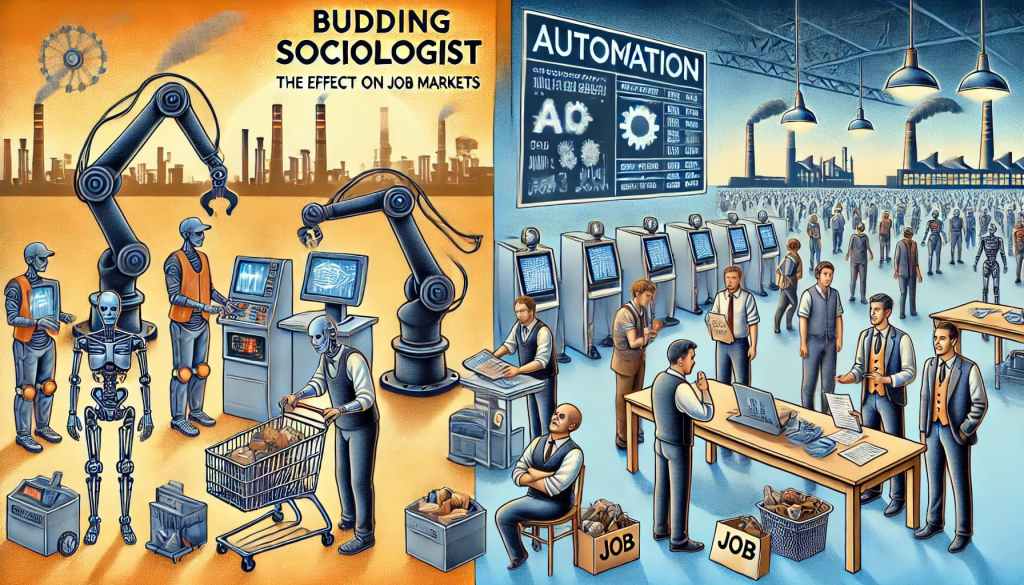
The rapid advancement of automation, driven by artificial intelligence (AI), robotics and machine learning, is changing job markets worldwide significantly. Automated systems are becoming increasingly common in various industries, from manufacturing and transportation to finance and customer service. While these technologies boost productivity and efficiency, they also raise concerns about job displacement, income inequality and the need for workers to acquire new skills to stay competitive.
The effects of automation on employment are complex and depend on factors such as industry type, job roles and economic conditions. Certain jobs, particularly those involving repetitive tasks, are more vulnerable to automation, reducing the demand for human labour in those areas. At the same time, new opportunities are emerging in fields such as artificial intelligence development, data analysis and cybersecurity. While some industries may experience disruptions, others could see technology complementing human roles rather than replacing them.
As automation continues to reshape economies, it is crucial to understand its broader implications for employment and workforce development. The key challenge lies in balancing technological progress with sustainable employment strategies, ensuring that workers are equipped with the skills needed for the evolving job market. This article explores both the benefits and challenges of automation, highlighting its impact on job availability, workforce transformation and economic growth.
Job Displacement and Workforce Transformation
Automation is significantly altering the global job market, replacing certain roles while simultaneously transforming others. Technological advancements such as artificial intelligence (AI), robotics, and machine learning have automated tasks that were previously performed by humans, leading to both job losses and the evolution of new employment opportunities.
1. Impact of Automation on Traditional Jobs: The rapid advancement of automation is reshaping job markets by taking over repetitive and structured tasks through artificial intelligence (AI), robotics, and machine learning. Industries that depend on manual labour, such as manufacturing, retail, and transportation, are undergoing significant changes. While automation enhances productivity and reduces costs for businesses, it also raises concerns about job displacement and employment security for workers in roles that can be easily automated.
2. Manufacturing Industry and Industrial Automation: The manufacturing sector has been one of the earliest adopters of automation, significantly altering its workforce requirements. Robotics and AI-powered machinery have replaced human workers in assembly, welding, and packaging tasks, leading to a decline in factory jobs. Automobile manufacturers, for example, use robotic systems for assembling car parts with increased precision and efficiency. While automation has improved production capacity, it has also reduced the need for manual labour in traditional manufacturing hubs, affecting employment rates in industrial regions.
3. Retail and Customer Service Changes: The retail sector is increasingly relying on automation to streamline operations. The introduction of self-service checkout systems, automated kiosks, and AI-powered customer support chatbots has reduced the demand for human cashiers and sales representatives. Stores that operate without cashiers, using AI and sensors to track purchases, illustrate the shift toward a more automated retail environment. While this enhances efficiency and customer convenience, it also diminishes job opportunities for low-skilled workers in retail and service roles.
4. Automation in the Transportation and Logistics Sector: The transportation industry is undergoing a major transformation due to advancements in self-driving technology and automated logistics systems. Autonomous trucks, delivery drones, and AI-powered ride-sharing services pose a potential threat to jobs in trucking, delivery, and taxi services. Large companies are investing in driverless vehicle technology, aiming to reduce operational costs and improve efficiency. Similarly, automated warehouses use robotics to sort, pack, and move products, minimizing the need for human labour in supply chain operations.
5. AI’s Role in Administrative and Clerical Jobs: Many clerical and administrative tasks are being automated using AI-driven technologies, reducing reliance on human workers for routine tasks. AI-powered software is now handling responsibilities such as data entry, document processing, bookkeeping, and customer inquiries. Automated accounting tools have minimized the need for traditional accountants, while AI-based legal research systems assist in analyzing legal documents, reducing the workload for legal clerks. As a result, employees in administrative roles must acquire new skills to remain relevant in an AI-driven workplace.
6. Job Transformation Rather Than Elimination: While automation is replacing certain job functions, many roles are being reshaped rather than completely eliminated. Instead of performing repetitive tasks, workers are transitioning to positions that require overseeing and managing automated systems. For example, factory workers now focus on monitoring and maintaining robotic equipment, while retail employees assist customers with digital payment systems and self-checkout technologies. These transformations highlight the need for workers to upskill and adapt to evolving job requirements.
7. Collaboration Between Humans and Machines: Automation is not solely about replacing human labour; rather, it often enhances human capabilities by enabling collaboration between workers and machines. In healthcare, AI-powered diagnostic tools assist doctors in detecting diseases with greater accuracy, but human expertise remains essential for treatment and patient care. Similarly, AI-based educational tools support teachers by providing personalized learning experiences, yet human educators remain necessary for mentoring and emotional support. The integration of AI in various fields underscores the importance of human oversight and interaction.
8. Emerging Job Opportunities in Technology-Driven Fields: While automation reduces demand for certain occupations, it also generates new job opportunities in advanced technology sectors. There is increasing demand for professionals skilled in AI development, robotics, cybersecurity, and data science. As companies invest in automation, they require specialists to design, implement, and maintain AI-powered systems. Additionally, emerging industries such as renewable energy, space exploration, and smart city development are creating new career paths, offering employment opportunities in fields that require technical expertise.
9. The Importance of Reskilling and Upskilling: To adapt to automation-driven changes in the job market, workers must continuously update their skills. Companies, educational institutions, and governments are investing in training programs to help workers transition into technology-driven roles. Some organizations provide free courses in fields like artificial intelligence, cloud computing, and digital marketing to prepare employees for evolving job demands. Online learning platforms are also making education more accessible, allowing workers to gain new skills and remain competitive in an increasingly automated job market.
10. Government and Corporate Responsibility in Workforce Transition: Managing the effects of automation on employment requires collaboration between governments, businesses, and educational institutions. Policymakers must implement strategies to support displaced workers through reskilling programs, social safety nets, and incentives for companies to invest in workforce development. Encouraging businesses to provide upskilling opportunities can help workers transition into new roles while ensuring economic stability. By promoting innovation alongside fair labour policies, governments can ensure that automation benefits both businesses and employees, leading to a balanced and sustainable job market.
Conclusion: The rise of automation is bringing significant changes to the job market by displacing certain roles while creating new opportunities. While routine-based jobs in industries such as manufacturing, retail, transportation, and administration are increasingly automated, workers who acquire new skills and embrace evolving job roles can continue to thrive. The collaboration between humans and AI-driven systems is becoming more common, making it essential for workers to adapt and engage in continuous learning. With the right policies and workforce training programs, automation can lead to economic progress while ensuring a fair and inclusive job market for all.
Creation of New Jobs and Economic Growth
While automation leads to job displacement in certain sectors, it also stimulates economic growth and creates new job opportunities. Automation enhances productivity, reduces production costs, and improves efficiency, which often results in the expansion of industries and the emergence of entirely new job categories. Below are some key ways in which automation contributes to job creation and economic progress:
1. Expansion of Technology and Engineering Careers: The integration of automation across industries has significantly increased the demand for professionals in technology and engineering. Careers in artificial intelligence, robotics, and data science are thriving as businesses require experts to develop, maintain, and improve automated systems. The need for software engineers, cybersecurity specialists, and automation technicians has grown, ensuring a steady rise in job opportunities within the tech sector.
2. Growth in Renewable Energy and Sustainability Fields: As industries transition towards eco-friendly alternatives, automation has become a crucial component of renewable energy solutions. The deployment of automated energy management systems has created opportunities for solar panel technicians, wind turbine operators, and environmental analysts. Professionals are needed to oversee, maintain, and optimize these systems, making sustainability-focused jobs more prevalent in the modern workforce.
3. Transformation of Healthcare and Medical Technology Roles: Automation is revolutionizing the healthcare industry, giving rise to new job roles in areas such as telemedicine, AI-assisted diagnostics, and robotic surgery. Advanced healthcare technologies require skilled professionals to operate and interpret automated systems, increasing the demand for biomedical engineers, medical data analysts, and telehealth coordinators. This trend is improving healthcare accessibility while generating employment in high-tech medical fields.
4. Expansion of E-Commerce and Logistics Employment: The rapid adoption of automation in e-commerce and supply chain management has led to a surge in job opportunities. While robotics and AI handle routine warehouse operations, human workers are needed to manage logistics, maintain automated systems, and enhance customer experiences. Additionally, digital marketing experts and e-commerce specialists are in high demand as businesses leverage AI to personalize customer interactions and optimize online sales.
5. Boost in Productivity Leading to Business Growth: Automation allows businesses to streamline operations, reduce costs, and enhance efficiency, leading to overall economic expansion. As companies increase their productivity, they often reinvest in innovation and workforce expansion. This leads to the creation of new job roles in management, sales, customer support, and research and development, ultimately strengthening the labour market and fostering economic progress.
6. Rise of Smart Cities and Infrastructure-Related Jobs: The development of smart cities relies heavily on automation, creating job opportunities in urban planning, sustainable infrastructure, and technology-driven public services. AI-powered traffic systems, energy-efficient buildings, and automated waste management solutions require professionals to oversee and optimize their implementation. Careers in IoT (Internet of Things) solutions, environmental monitoring, and urban data analysis are growing in response to this technological shift.
7. Increase in Remote Work and Freelance Opportunities: Automation has contributed to the rise of flexible work arrangements, allowing professionals to take advantage of remote work and freelance opportunities. AI-driven platforms enable individuals to work in fields such as graphic design, content creation, software development, and consulting. The accessibility of digital tools and automated project management systems has led to increased employment prospects for freelancers and independent contractors.
8. Emergence of AI Ethics and Regulatory Compliance Careers: As automation becomes more widespread, concerns regarding ethical practices, data privacy, and regulatory compliance have created demand for professionals specializing in AI governance. Businesses and governments need experts to ensure AI systems operate fairly, securely, and transparently. Roles in AI ethics, legal compliance, and cybersecurity policy have become essential as automation continues to evolve.
9. Encouraging Innovation and Human-Centered Professions: Rather than replacing human workers entirely, automation enables individuals to focus on creative, strategic, and problem-solving tasks. While AI manages repetitive processes, professionals in design, marketing, education, and research can dedicate more time to innovation and customer engagement. This shift fosters the development of new industries and encourages the workforce to adapt to more intellectually stimulating roles.
10. The Role of Governments and Businesses in Workforce Development: To ensure automation leads to positive job market outcomes, both governments and businesses must support workforce development initiatives. Investment in reskilling programs, technical education, and digital training can help workers transition into new roles created by automation. Businesses can also implement upskilling opportunities to help employees stay competitive in the evolving job landscape. A collaborative approach between the public and private sectors is essential to fostering a workforce that thrives in an automated economy.
Conclusion: Automation is not solely a threat to employment; it also acts as a catalyst for job creation, business expansion, and economic advancement. While certain roles may become obsolete, many new positions emerge in technology, healthcare, renewable energy, and urban development. Through strategic workforce adaptation, continuous learning, and innovation, societies can harness the benefits of automation while ensuring long-term economic stability.
Skill Gaps and the Need for Workforce Reskilling
Automation is rapidly reshaping job markets by replacing routine tasks with artificial intelligence (AI), robotics, and machine learning. As industries embrace automation, the skills required for employment are shifting, creating a skill gap—a mismatch between the skills that workers currently have and those needed for emerging jobs. Addressing this gap is critical to ensuring that workers remain employable and economies continue to thrive.
1. Shifting Skill Requirements: The rise of automation is redefining job roles by taking over repetitive and routine tasks. As a result, the skills required in today’s workforce are evolving. Traditional manual labour and administrative jobs are gradually being replaced by roles that demand expertise in technology, data interpretation, and problem-solving. Those who do not upgrade their skills may struggle to remain employable in this rapidly changing job landscape.
2. The Rise of Technical Proficiency: As businesses integrate artificial intelligence, cloud computing, and robotics into their operations, employees must develop digital and technical capabilities to stay relevant. Skills such as programming, cybersecurity, and robotic process automation (RPA) are becoming essential in various industries. Gaining proficiency in these areas allows workers to adapt to new technologies and secure future job opportunities.
3. The Growing Value of Soft Skills: While technical know-how is crucial, human-centered skills are just as important in an automated world. Creativity, adaptability, leadership, and emotional intelligence are attributes that machines cannot replicate. Employers are looking for professionals who can think critically, collaborate effectively, and navigate complex workplace dynamics, making soft skills a vital component of the future workforce.
4. Industries Facing the Greatest Impact: The effects of automation vary by industry, with some sectors requiring more urgent reskilling than others. Manufacturing employees, for instance, need to transition from manual labour to operating and maintaining robotic machinery. Similarly, retail workers must develop e-commerce and digital customer service skills, while finance professionals need to adapt to AI-driven analytics and automation in banking.
5. Upskilling vs. Reskilling: The Key to Career Longevity: Reskilling and upskilling are two essential strategies for adapting to automation. Reskilling involves training individuals for entirely new professions, such as transitioning from factory work to robotics maintenance. Upskilling, on the other hand, helps employees refine and enhance their existing knowledge, enabling them to use automation tools more efficiently in their current roles. Both approaches are crucial for ensuring job security in a changing work environment.
6. Government Support for Workforce Development: Governments play a critical role in equipping workers with the skills needed for an automation-driven future. Public funding for vocational training, incentives for lifelong learning, and collaboration with private sector companies can help bridge the skill gap. Nations that prioritize education in science, technology, engineering, and mathematics (STEM) will be better positioned to handle workforce transformations.
7. The Responsibility of Businesses in Skill Development: Companies must take an active role in preparing their employees for automation. Many organizations are already investing in corporate training programs, tuition reimbursement for skill development, and online learning resources. By fostering a learning culture, businesses can enhance productivity, retain valuable talent, and mitigate the risks of job displacement.
8. The Expansion of Online Learning and Flexible Education: Online platforms have revolutionized the way people acquire new skills. Digital learning resources, such as Coursera, Udemy, and edX, offer accessible and affordable courses on topics like artificial intelligence, data science, and cloud computing. Additionally, microlearning—bite-sized, focused lessons—allows working professionals to upskill without disrupting their careers, making continuous education more feasible.
9. Challenges in Closing the Skill Gap: Although reskilling efforts are increasing, significant barriers remain. Many workers struggle with the cost of education or lack access to high-quality training programs. Some individuals, particularly older employees, may resist learning new technologies due to unfamiliarity or fear of change. Additionally, the rapid evolution of automation makes it difficult for educational programs to stay up to date, requiring ongoing curriculum adjustments.
10. Embracing Lifelong Learning for Career Stability: In a technology-driven economy, learning must be a continuous process rather than a one-time event. The future of work will favour individuals who are open to acquiring new knowledge throughout their careers. Emerging trends, such as AI-assisted learning, virtual reality-based training, and industry-specific certifications, will help workers stay adaptable. By prioritizing lifelong learning, individuals and businesses can turn automation into an opportunity for growth rather than a challenge.
Conclusion: Automation is reshaping the job market, creating both challenges and opportunities. As traditional roles become obsolete, the demand for technical expertise and human-centric skills is rising. Bridging the skill gap through reskilling and upskilling is essential to ensure workforce adaptability. Governments, businesses, and individuals must collaborate to invest in lifelong learning, vocational training, and digital education. While automation may replace certain jobs, it also creates new career paths for those willing to evolve. By fostering a culture of continuous learning, society can transform automation from a threat into a driver of economic growth and innovation.
Wage Polarization and Income Inequality
Automation has a profound effect on wage structures, leading to wage polarization—where high-skilled workers see wage increases, while low- and middle-skilled workers experience stagnation or job displacement. This trend contributes to growing income inequality, as the benefits of automation are unevenly distributed across different segments of the workforce.
1. The Growing Divide in Wages: Automation is reshaping the workforce, creating a significant gap between high-income and low-income workers. Jobs that require advanced skills in technology and data science are becoming more valuable, leading to wage increases for specialized professionals. Meanwhile, those in routine-based roles are facing job losses or stagnant wages, contributing to economic disparity.
2. High-Skilled Workers Benefit: As businesses integrate AI, robotics, and machine learning into their operations, the demand for specialists in these fields continues to grow. Professionals with expertise in automation-related industries experience greater job security, career advancement, and higher earnings. This trend further concentrates wealth among those with technical knowledge, while others struggle to keep up with the evolving job market.
3. Declining Demand for Middle-Skilled Jobs: Many roles that involve repetitive tasks, such as clerical work, factory jobs, and administrative support, are being replaced by automated systems. This shift has significantly reduced employment opportunities in middle-wage sectors, forcing many displaced workers to either pursue further education or take up lower-paying jobs in different industries.
4. Increased Pressure on Low-Wage Workers: While jobs in retail, hospitality, and caregiving are less susceptible to automation, they now face greater competition from displaced middle-skilled workers. This oversupply of labour in low-wage sectors keeps salaries low and increases job insecurity. As a result, many individuals in these roles find it difficult to achieve financial stability or career growth.
5. Profits Accumulate Among Business Owners and Investors: Companies that adopt automation often reduce labour expenses and increase efficiency, leading to higher profit margins. However, the financial benefits are largely retained by business owners, corporate executives, and investors, rather than being distributed to workers. This dynamic contributes to a growing economic divide, as wealth concentrates in fewer hands while many employees struggle with stagnant wages.
6. Regional Disparities in Economic Impact: The effects of automation vary by location. Urban centers with strong technology and finance sectors tend to benefit from job growth and rising wages, while rural and industrial regions dependent on manufacturing experience higher unemployment rates. This uneven distribution of economic opportunities exacerbates geographic inequalities, leaving certain communities behind in the transition to automation.
7. Differences Between Developed and Developing Economies: Advanced economies are rapidly adopting automation to reduce labour costs and enhance productivity, leading to both job creation and job losses. In contrast, developing countries with lower labour costs have been slower to implement automation. However, as technology becomes more accessible and affordable, even lower-wage economies may face job disruptions in labour-intensive industries.
8. The Need for Skill Development and Training: To remain employable in an increasingly automated world, workers must acquire new skills that align with the changing job landscape. Governments, companies, and educational institutions must collaborate to provide vocational training, digital literacy programs, and continuous learning opportunities to prepare workers for future roles. Without such initiatives, many individuals risk being left behind.
9. Policy Measures to Address Wage Inequality: Governments can implement strategies such as raising minimum wages, strengthening labour protections, and taxing companies that benefit from automation to reduce income disparities. Additionally, policies that promote investments in human-centered industries, such as healthcare and education, can help create sustainable employment opportunities in sectors less affected by automation.
10. Turning Automation into an Opportunity: While automation presents challenges, it also has the potential to improve job quality, reduce working hours, and increase overall efficiency. If managed responsibly, automation can lead to a more equitable and prosperous society by ensuring fair access to education, job training, and economic opportunities for all workers. By focusing on inclusivity and workforce adaptation, societies can benefit from technological advancements while minimizing negative impacts.
Conclusion: Automation is transforming the job market, creating a divide between high-skilled, well-paid professionals and low-wage workers facing job insecurity. While businesses and investors benefit from increased efficiency, many workers experience wage stagnation or displacement, deepening income inequality. Regional and global disparities further widen this gap, making skill development essential for economic resilience. Governments and institutions must implement policies supporting reskilling, fair wages, and equitable job opportunities to ensure automation leads to inclusive growth. If managed responsibly, automation can enhance productivity while creating a more balanced workforce, fostering innovation and economic stability for both current and future generations.
Regional and Sectoral Differences
The impact of automation on job markets is not uniform; it varies significantly across regions and industries due to differences in economic development, labour costs, technological infrastructure and workforce skills. While some sectors and regions benefit from automation through increased efficiency and job creation, others face job losses and economic displacement.
1. Differences in Automation Adoption Across Nations: The effect of automation on employment varies considerably between developed and developing nations. Wealthier countries, such as the United States, Germany, and Japan, have embraced automation more quickly due to advanced technology and higher labour costs. On the other hand, developing countries, including India and Nigeria, have been slower to adopt automation, as human labour remains more cost-effective, and technological advancements are still emerging.
2. Labour Costs Influence Automation Implementation: The affordability of labour is a crucial factor in the extent to which automation is introduced. In regions where wages are high, companies see automation as a cost-efficient alternative to human workers. For example, many European nations, where labour laws ensure high wages and worker protections, have integrated robotics into their industries. In contrast, nations with low labour costs, such as Vietnam and Bangladesh, continue to rely on manual labour since automation may not be economically justifiable.
3. The Role of Government Policies: Policies set by governments play a significant role in determining how automation affects the workforce. Some nations actively support the expansion of automation through tax benefits, subsidies, and incentives for tech-driven companies, accelerating the adoption of AI and robotics. Others implement measures to slow automation’s impact in order to safeguard jobs. Additionally, social programs, such as retraining initiatives and basic income schemes, help mitigate job displacement in highly automated economies.
4. Industries Most and Least Affected by Automation: Not all industries experience automation at the same pace. Sectors that involve routine, repetitive tasks, such as manufacturing, logistics, and retail, are the most vulnerable to automation-driven job losses. In contrast, industries requiring human judgment, creative thinking, and interpersonal skills—such as healthcare, education, and the arts—are less likely to be replaced by machines and artificial intelligence.
5. Manufacturing Sector and Industrial Automation: Automation has significantly transformed the manufacturing industry, particularly in countries with advanced industrial sectors. Automated machinery, robotic assembly lines, and AI-driven quality control systems have replaced many manual tasks in automobile, electronics, and consumer goods production. In developed nations, this shift has increased efficiency but reduced employment in traditional factory jobs. Meanwhile, in some developing economies, labour remains a more viable option due to lower costs and limited access to automation technology.
6. Automation in Retail and Customer Service: The retail industry has been impacted by automation, particularly in cash handling, inventory management, and customer service. Technologies such as self-checkout kiosks, AI-powered chatbots, and robotic warehouse systems have led to reduced demand for cashiers and sales assistants in places like the U.S. and the U.K. However, in regions where labour costs are lower, traditional retail operations continue to dominate, slowing the widespread adoption of these technologies.
7. Effects on Transportation and Logistics: The transportation sector is undergoing significant changes due to automation, particularly with the development of self-driving vehicles, drones, and AI-driven supply chain management. In technologically advanced countries, companies such as Tesla and Waymo are pioneering autonomous vehicle technologies that could eventually reduce the demand for drivers. Additionally, companies like Amazon have integrated robotic systems into their warehouses. In contrast, in developing nations, transportation and delivery services still heavily depend on human labour due to the high costs of automation and regulatory uncertainties.
8. Healthcare Industry’s Interaction with Automation: Unlike some sectors where automation replaces human workers, healthcare is experiencing a shift where technology enhances efficiency while still requiring human expertise. AI-powered diagnostic tools, robotic-assisted surgeries, and telemedicine services are improving healthcare delivery, but doctors, nurses, and medical professionals remain essential for patient care. In well-developed healthcare systems, automation helps reduce administrative burdens, while in areas with limited access to medical services, human healthcare workers are still indispensable.
9. Resilience of Creative and Human-Centric Jobs: Professions that require originality, emotional intelligence, and human connection are less likely to be disrupted by automation. Artists, writers, teachers, therapists, and social workers continue to play vital roles in society, as AI cannot fully replicate creativity, critical thinking, or empathy. While AI tools can assist in creative tasks, human input remains crucial. Consequently, industries relying on human insight and expression remain more resistant to automation than those focused on repetitive processes.
10. The Need for Adaptation Based on Region and Industry: Given that automation does not impact all regions and industries uniformly, strategies for adaptation must be customized accordingly. Advanced economies must prioritize reskilling programs, digital education, and policy frameworks that support tech-driven job transitions. Meanwhile, developing nations should balance automation adoption with efforts to maintain employment opportunities and increase digital literacy. Collaboration between governments, businesses, and educational institutions is essential to ensure that workers worldwide are equipped for the evolving job landscape driven by automation.
Conclusion: Automation’s impact on job markets is highly uneven, influenced by regional economic conditions, labour costs, and industry-specific factors. While developed nations experience rapid automation adoption, leading to job displacement and reskilling initiatives, developing economies continue to rely on human labour due to lower wages and technological constraints. Similarly, sectors with repetitive tasks, such as manufacturing and retail, face higher automation risks, whereas creative and human-centric industries remain resilient. To ensure a balanced transition, governments, businesses, and educational institutions must implement policies that promote workforce adaptability, invest in digital skills, and create opportunities for sustainable employment in an automated future.
References and Readings:
- Acemoglu, D., & Restrepo, P. (2018). Artificial intelligence, automation and work (Working Paper No. 24196). National Bureau of Economic Research. https://doi.org/10.3386/w24196
- Autor, D. H. (2015). Why are there still so many jobs? The history and future of workplace automation. Journal of Economic Perspectives, 29(3), 3-30. https://doi.org/10.1257/jep.29.3.3
- Brynjolfsson, E., & McAfee, A. (2014). The second machine age: Work, progress, and prosperity in a time of brilliant technologies. W.W. Norton & Company.
- McKinsey Global Institute. (2017). Jobs lost, jobs gained: Workforce transitions in a time of automation. McKinsey & Company. https://www.mckinsey.com/featured-insights/employment-and-growth/jobs-lost-jobs-gained-what-the-future-of-work-will-mean-for-jobs-skills-and-wages
- World Economic Forum. (2020). The future of jobs report 2020. https://www.weforum.org/reports/the-future-of-jobs-report-2020