- Introduction
- Historical Context and Evolution of Labour Unions in the USA
- Challenges Faced by Unions in Modern Times
- Role of Unions in Modern Labour Movements
- Role of Unions in the 21st Century
Introduction
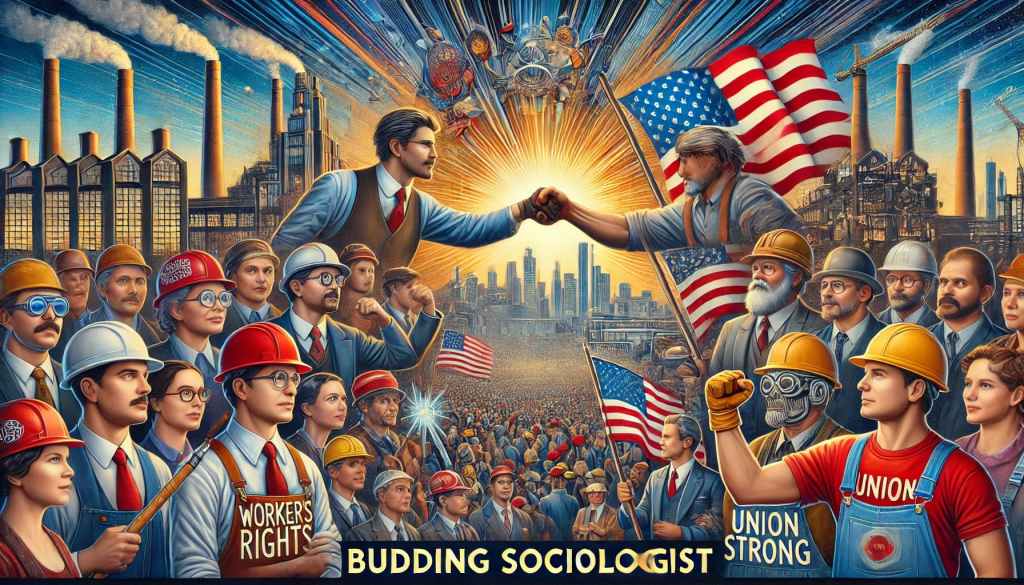
Labour unions have played a important role in advocating for workers’ rights in the United States of America (USA), pushing for fair wages, safer working conditions and job security. Their influence has varied over time due to political, economic and technological changes, yet they continue to be a significant force in advocacy for labour. Today, unions focus on issues such as healthcare, benefits and workplace safety while also addressing broader social concerns like economic inequality.
A labour union is a group of workers united to collectively protect and advance their interests. By negotiating with employers, unions aim to secure better pay, reasonable working hours, social benefits and improved workplace conditions. Their primary goal is to ensure fair and just treatment for employees and provide a collective voice to advocate for rights and standards of the workplace.
In recent years, labour movements have widened their focus beyond traditional concerns like wages and job stability. They now also address social issues such as racial and gender equity, as well as environmental sustainability. As globalization, AI automation and shifting job markets reshape the economy, unions have adapted to protect workers’ rights in emerging and evolving industries.
The history of labour unions in the U.S.A. dates back to the Industrial Revolution, when workers began organizing for demand of safer working conditions, fair wages and reasonable hours. Unions became highly influential in the mid-20th century, helping to shape policies that contributed for their economic security. However, in recent times, union membership has declined due to factors such as industrial decline and the rise of gig and contract-based employment. These changes have sparked discussions about the future of organized labour, yet unions continue to evolve, tackling contemporary issues like income inequality, the rights of immigrant workers etc.
In today’s workforce, unions are expanding their presence beyond traditional industries like manufacturing and construction. They are increasingly active in fields such as healthcare, education and technology. As the labour market becomes more service-oriented and diverse, unions are developing new strategies to organize workers and address modern labour issues and challenges. The growing influence of multinational corporations and the weakening of labour protections in certain regions highlight the ongoing need for union advocacy. Through collective bargaining, unions continue to push for fair compensation and improved working conditions in sectors where organized labour has historically been less prevalent.
Politics also play a significant role in shaping the labour movement. Unions often face opposition from business interests and policymakers who support “right-to-work” laws, which can limit union influence. At the same time, shifting political ideologies and public debates have reignited discussions about the role and effectiveness of unions in today’s economy.
By examining the history and current initiatives of labour unions, this article highlights their lasting impact on the American workforce. Despite ongoing challenges, unions remain key players in advocating for workers’ rights and equitable labour practices in a constantly changing economic environment.
Historical Context and Evolution of Labour Unions in the USA
Labour unions in the United States have played a crucial role in championing workers’ rights, influencing economic policies, and shaping industrial relations. Originating in the 18th century, these organizations have evolved alongside the nation’s economic and political transformations. Their influence has fluctuated over time, driven by changes in industry, government regulations, and public perception of labour movements and can be described in more precise way as follows:
1. Early Labour Movements (Late 18th – Mid 19th Century): The origins of labour unions in the United States trace back to the late 18th century, a period marked by the country’s transition from an agrarian economy to the industrial capitalism. Skilled tradespeople, including carpenters, shoemakers, and printers, were among the first to unite in an effort to protect their wages and working conditions. One of the earliest recorded strikes took place in 1794 when Philadelphia shoemakers organized to demand better pay. These initial unions primarily consisted of craftsmen who sought to establish fair wages and industry standards.
As industrialization progressed in the 19th century, local trade unions began coordinating to strengthen their influence. A significant milestone came in 1834 with the establishment of the National Trades’ Union (NTU), one of the earliest nationwide labour organizations. However, unions faced strong resistance from employers and government authorities. Companies frequently blacklisted union members to prevent them from finding work, while courts often ruled against labour groups, using conspiracy laws to deem strikes and collective bargaining unlawful. Despite these challenges, the early labour movement laid the foundation for future struggles and eventual advancements in workers’ rights.
2. Rise of Industrial Unions and National Organizing (Mid-to-Late 19th Century): During the latter half of the 19th century, industrialization reshaped society at a rapid pace, but it also brought severe hardships for workers. Factories, railroads, and mines became sites of intense labour, where employees faced long shifts, hazardous conditions, and minimal protections against exploitation. In response, labourers began organizing to demand improved working conditions and fair treatment.
One of the earliest major labour organizations was the Knights of Labour, founded in 1869. Unlike earlier unions that focused on specific trades, this group aimed to unite workers across skill levels, genders, and racial backgrounds. It pushed for significant labour reforms, including an eight-hour workday, equal wages for women, and better protections for employees. However, the organization lost momentum following the Haymarket Affair in 1886, when a labour rally in Chicago turned violent. The incident led to public distrust of labour movements and weakened the influence of the Knights of Labour.
As the Knights declined, the American Federation of Labour (AFL) rose to prominence in 1886 under the leadership of Samuel Gompers. Unlike its predecessor, the AFL concentrated on skilled workers and prioritized collective bargaining over broader political reforms. This era saw several intense labour conflicts, including the Great Railroad Strike of 1877, the Homestead Strike of 1892, and the Pullman Strike of 1894. Many of these strikes ended in violent confrontations, with federal troops or private security forces, such as the Pinkertons, intervening to break them up. Despite these challenges, labour unions endured, laying the foundation for significant workers’ rights improvements in the 20th century.
3. Progressive Era and Early Legal Protections (1900-1930s): In the early 20th century, growing awareness of the harsh conditions faced by industrial workers led to significant labour reforms. One of the most influential labour movements of the time was the Industrial Workers of the World (IWW), founded in 1905. Known as the “Wobblies,” the IWW sought to unite all workers into a single, powerful labour organization, with a strong focus on advocating for marginalized groups, including immigrants and unskilled labourers. However, their radical socialist and anarchist ideologies drew intense government opposition, resulting in severe crackdowns.
A pivotal event of the Progressive Era was the Triangle Shirtwaist Factory fire in 1911, which tragically claimed the lives of 146 garment workers, primarily young immigrant women, due to locked exits and a lack of safety measures. Public outrage over the disaster spurred significant improvements in workplace safety regulations. Around the same period, the federal government introduced policies more favourable to workers. The Clayton Antitrust Act of 1914 ensured that antitrust laws could not be used to weaken labour unions, reinforcing workers’ rights to strike. Similarly, the Railway Labour Act of 1926 granted railway employees the right to organize and engage in collective bargaining, setting a precedent for broader labour protections.
The economic hardships of the 1930s during the Great Depression heightened labour unrest, prompting government intervention. This era saw the implementation of President Franklin D. Roosevelt’s New Deal, which introduced some of the most transformative labour protections in U.S. history. These reforms reshaped the relationship between workers, employers, and the government, ushering in a new chapter for labour rights.
4. The Golden Age of Unions (1930s-1950s): The New Deal era marked a pivotal shift for labour unions in the United States, as the federal government began actively advocating for workers’ rights. A key piece of legislation from this period was the National Labour Relations Act of 1935, commonly known as the Wagner Act. This law established the National Labour Relations Board (NLRB) to oversee labour disputes and granted workers the legal right to unionize and negotiate collectively with employers. These changes significantly strengthened organized labour by providing a solid legal foundation.
In the same year, the Congress of Industrial Organizations (CIO) was founded under the leadership of John L. Lewis. Unlike the American Federation of Labour (AFL), which primarily represented skilled workers, the CIO focused on organizing employees in major industries such as; steel, automobile manufacturing, and rubber. This approach expanded union influence and contributed to major legislative victories, including the passage of the Fair Labour Standards Act in 1938. This law introduced crucial labour protections, such as a federal minimum wage, overtime pay, and restrictions on child labour.
Union membership peaked during World War II and the economic expansion of the 1940s and 1950s, with approximately 35% of American workers belonging to a union. These organizations played a crucial role in securing better wages, pensions, and job stability, helping to strengthen the middle class. However, as unions gained more influence, they also faced growing opposition, leading to the enactment of laws aimed at limiting their power and signaling a shift in the labour movement’s trajectory.
5. Decline of Union Power (1950s-1980s): Following the World War-II, labour unions encountered increasing difficulties due to economic shifts, mounting political opposition, and the growing impact of globalization on industries. A major blow came in 1947 with the enactment of the Taft-Hartley Act, which curtailed union power by prohibiting closed shops—workplaces where union membership was mandatory for employment. This law also enabled states to implement right-to-work policies, further weakening unions, and imposed limitations on strikes and union-funded political activities.
During the Cold War, unions faced additional challenges as widespread anti-communist sentiment led to accusations against labour leaders, eroding public confidence in union organizations. At the same time, technological advancements such as automation began displacing jobs in manufacturing, a sector historically dominated by unions. Companies also increasingly outsourced jobs to lower costs and adopted aggressive tactics to resist unionization, making it harder for unions to maintain their influence.
By the 1980s, these combined pressures had significantly diminished union membership, with fewer workers choosing to join. The labour landscape had undergone profound changes, leaving unions struggling to adjust to evolving economic and political conditions.
6. Unions in the Modern Era (1980s-Present): Throughout the late 20th and early 21st centuries, labour unions experienced a steady decline due to major political and economic shifts. A key turning point occurred in 1981 when President Ronald Reagan fired more than 11,000 striking air traffic controllers, paving the way for stricter anti-union policies. At the same time, the expansion of the service and gig economies created new challenges, with companies like Uber and Amazon actively resisting unionization efforts.
In recent years, however, labour activism has gained momentum. Movements such as the Fight for $15 have successfully pushed for higher minimum wages, while workers at major corporations like Starbucks and Amazon have begun forming unions. The 2023 strikes by Hollywood writers and actors highlighted the continued strength of collective action. Although union membership remains lower than in past decades, the modern labour movement is adapting, striving to secure fair wages, job stability, and workers’ rights in a rapidly evolving economy.
Challenges Faced by Unions in Modern Times
Labour unions in the United States have played a crucial role in advocating for workers’ rights, including fair wages, safe workplaces, and essential benefits. However, in today’s rapidly changing economy, unions are struggling to maintain their influence and organize workers as effectively as they once did. Several factors contribute to these difficulties, including shifts in the economy, legal barriers, corporate opposition, and changes in the workforce. At present, following are some of the major challenges being faced by the unions in the U.S.:
1. Declining Membership and Union Density: Unions today face a major challenge: a steady decline in membership over the past several decades. In the 1950s, about 35% of U.S. workers were union members, but now that number has dropped to around 10%, with only about 6% of private-sector workers belonging to a union. Several factors have contributed to this decline. One of the biggest is the shift from a manufacturing-based economy to the services-based economy, where unions have struggled to gain a foothold. Industries that once had strong union representation, like auto and steel manufacturing, have seen jobs disappear due to automation and offshoring.
Employer opposition has also played a major role. Many companies actively work to discourage unionization, using legal tactics and internal policies to dissuade workers from organizing. Some even launch direct anti-union campaigns, making it harder for unions to gain support. Cultural and political factors also come into play. In certain regions, unions face more hostility, making it even more difficult to maintain or grow membership. As unions shrink, their bargaining power weakens, limiting their ability to secure better wages and working conditions for workers.
2. Right-to-Work Laws and Anti-Union Legislation: Right-to-work laws pose a major challenge to unions in the U.S. Currently in place in 27 states, these laws allow employees in unionized workplaces to opt out of paying union dues or fees. Supporters claim this protects individual choice, but in reality, it weakens unions by cutting off a key source of funding. Without these financial resources, unions struggle to organize workers, provide legal support, and negotiate contracts, leading to declining membership and reduced bargaining power.
Beyond right-to-work laws, other legal barriers also restrict union influence. The Taft-Hartley Act of 1947 imposed significant limits on union activities, including restrictions on certain strikes and industry-wide organizing. More recently, the 2018 Supreme Court decision in Janus v. AFSCME dealt another blow to public-sector unions by banning mandatory union fees for government employees. This decision led to a major drop in union revenue, forcing unions to shift their focus toward retaining and recruiting members rather than advocating and bargaining directly.
3. Rise of the Gig Economy and Independent Contractors: The rise of gig work, driven by companies like Uber, Lyft, DoorDash, and TaskRabbit, has created a workforce that is difficult to organize under traditional labour laws. Since gig workers are classified as independent contractors rather than employees, they are not protected by the National Labour Relations Act (NLRA) and do not have the legal right to unionize or negotiate collectively. This classification also means they miss out on standard labour protections such as minimum wage laws, unemployment benefits, and employer-provided healthcare.
Organizing gig workers comes with additional challenges. Many do not stay with a single platform long enough to participate in long-term efforts, and the decentralized nature of gig work—where workers operate individually rather than in a shared workplace—makes it harder to build solidarity. Some labour organizations, like the Service Employees International Union (SEIU), have pushed for laws that would classify gig workers as employees, but companies have fought back. In California, for example, the state passed AB-5 to reclassify gig workers as employees, but companies successfully pushed for Proposition 22, which exempted app-based gig workers from the law. The fight for gig worker rights continues, reflecting the difficulties of organizing in a shifting labour landscape.
4. Automation, AI and the Future of Work: The rise of automation and new technologies is becoming a major challenge for labour unions, as more workers—both blue-collar and white-collar—face the threat of job displacement. In manufacturing, robots and automated systems have already replaced many jobs, reducing the number of potential union members. The retail and service industries are also feeling the impact, with self-checkout machines, AI-driven customer service, and automated warehouses cutting down the need for human workers.
Trucking and logistics, which have long been strongholds for unions, are now at risk as well. The push for self-driving trucks and fully automated warehouses could result in massive job losses for unionized workers in the near future. To stay relevant, unions need to adapt by pushing for job retraining programs, advocating for policies that support displaced workers, and negotiating agreements that require companies to retrain employees rather than simply replacing them. If unions fail to take action, they risk losing even more members as automation continues to reshape the workforce.
5. Increased Corporate Union-Busting Tactics: Companies have become more strategic in their opposition to unions, using increasingly aggressive tactics to prevent workers from organizing. Many businesses hire specialized consultants to dissuade employees from supporting unions, often through mandatory meetings that present misleading or fear-driven arguments.
Some employers take it even further by retaliating against workers who try to organize, sometimes firing or demoting them under the guise of performance issues. Another common tactic is delaying union recognition through legal challenges and drawn-out contract negotiations. Even when employees successfully vote to unionize, companies can stretch the bargaining process over years, leading to frustration and dwindling support.
In extreme cases, businesses have shut down locations where workers attempted to organize. For example, Starbucks Workers United has accused the company of closing stores to suppress union efforts. With legal penalties often minimal, corporations feel emboldened to continue resisting unionization without significant consequences.
6. Legal and Political Barriers to Union Expansion: Unions in the U.S. face major legal and political hurdles that make organizing a tough challenge. While the National Labour Relations Act (NLRA) sets the basic rules for union rights, it doesn’t cover everyone—agricultural workers, independent contractors, and some other groups are left out. On top of that, the penalties for violating labour laws are weak, allowing employers to push back against unions with little fear of real consequences.
Politically, unions often run into opposition from Republican lawmakers and business groups, who argue that unions drive up costs and limit economic flexibility. Democrats generally support labour rights, but efforts to pass stronger protections—like the Protecting the Right to Organize (PRO) Act—have stalled due to political gridlock. Without strong federal protections, unions face even greater obstacles in conservative states with restrictive labour laws.
7. Changing Workforce Demographics and Worker Expectations: The makeup of the workforce is shifting, bringing both challenges and opportunities for labour unions. Younger workers, especially Millennials and Gen Z, tend to be more supportive of unions than previous generations. However, their expectations about work are different—they value flexibility, remote work, and a better work-life balance. Traditional union structures, which are built around securing long-term job stability and benefits, may not always fit the needs of workers who change jobs more frequently.
To stay relevant, unions must also focus on diversity and inclusion. The workforce is becoming more diverse, with more women, people of colour and immigrants in various industries. Unions need to ensure their leadership and advocacy efforts reflect this shift. Expanding into emerging industries like technology and healthcare will also be key to maintaining their influence in the future.
8. Globalization and Outsourcing: Globalization has significantly affected labour unions, especially in manufacturing and other historically unionized industries. Many American companies have moved production to countries like China, Mexico, and India, where wages are lower and worker protections are weaker compared to the U.S. As a result, many jobs have disappeared, and unions have struggled to negotiate better wages and benefits for their members.
Additionally, globalization has intensified competition between domestic and international workers. Companies often use the possibility of moving jobs overseas as a bargaining tool, pressuring unions to accept lower wages and reduced benefits to keep jobs in the U.S. This puts unions in a tough spot, forcing them to choose between job security at lower pay or potential job losses. Some unions have pushed for stronger trade protections and better labour standards in international agreements, but progress has been slow. The growing dependence on global supply chains makes it even harder to enforce labour regulations, limiting unions’ ability to hold corporations accountable for fair working conditions.
9. Negative Public Perception and Media Influence: Public opinion on labour unions has shifted over time. Some people see them as crucial for protecting workers’ rights, while others view them as bureaucratic, corrupt, or obstacles to business growth. Companies, media, and politicians often push anti-union messages, claiming that unions drive up costs, reduce efficiency, and lead to job losses. This discourages workers—especially in industries with low union participation—from joining.
Past cases of corruption and mismanagement have also fueled negative perceptions. High-profile scandals, like financial misconduct within the Teamsters or accusations of union leaders prioritizing personal gain, have damaged trust. While most unions operate ethically and advocate for workers, these negative stories make it easier for businesses and policymakers to push anti-union policies. To rebuild trust, unions need to focus on transparency, accountability, and effective communication. Connecting with younger workers through social media, public outreach, and education can highlight the benefits of union membership and show their relevance in today’s workforce.
10. Internal Leadership and Structural Challenges: Unions also face internal challenges, including leadership structures, decision-making processes, and shifting worker priorities across generations. Many still follow a top-down leadership model that doesn’t always reflect the expectations of today’s workforce—especially younger employees, who prefer collabourative decision-making and decentralized leadership. This generational gap can lead to tensions, making it harder to unite workers around common goals. Bureaucratic inefficiencies are another obstacle. Some unions struggle to adapt quickly to changing labour conditions, and larger, more established organizations can be slow to embrace new organizing tactics or expand into fast-growing industries like technology, healthcare, and renewable energy. Without modernization, unions risk losing relevance among workers in these evolving sectors.
Unions must also navigate the diverse priorities of their members. Older workers may be more focused on pension security, while younger employees often prioritize job flexibility and career growth. To stay effective, unions need to be adaptable and inclusive, ensuring their policies and advocacy efforts reflect the needs of all workers.
Conclusion: On the basis of above description, it can be stated that unions still play a crucial role in fighting for workers’ rights, despite the challenges they face. Their future, however, depends on how well they adapt to a changing economy, find new ways to organize, and push for stronger legal protections. By tackling these issues directly, unions can continue to be a strong advocate for fair wages, better working conditions, and economic justice.
Role of Unions in Modern Labour Movements
Labour unions have long been instrumental in advocating for workers’ rights and shaping economic policies in the United States. They have fought for better wages, improved working conditions, and fair treatment, often influencing key legislation along the way. Over time, their role has adapted to new challenges, including economic changes, technological advancements, and shifts in the workforce which can be described in more precise way as follows:
1. Historical Importance of Unions: Labour unions have played a vital role in improving workplace rights in the United States. They have been key in securing essential protections like the eight-hour workday, minimum wage laws, and workplace safety regulations. During the early 20th century, the growing influence of unions led to the passage of major labour laws, including the National Labour Relations Act of 1935, which gave workers the legal right to organize and negotiate collectively. Unions have also helped establish job security measures, pension plans, and employer-sponsored healthcare benefits—improving conditions for both union and non-union workers alike.
2. Decline in Union Membership: Union membership in the U.S. has been on the decline since the 1980s, despite its long-standing role in protecting workers’ rights. Several factors have contributed to this shift. Globalization has led to the outsourcing of manufacturing jobs to countries where labour is cheaper, reducing the number of unionized positions. At the same time, the rise of gig and contract work has changed the employment landscape, making it harder for unions to organize workers. Many corporations have actively opposed unionization, using legal battles and lobbying efforts to weaken labour movements. Additionally, laws like right-to-work legislation in several states have made it easier for workers to avoid paying union dues while still benefiting from collective bargaining, further undermining union strength.
3. Recent Resurgence of Union Activity: In recent years, more workers have been organizing unions, especially in industries where unions weren’t common before. Employees at major companies like Amazon, Starbucks, and Apple have been pushing for better wages, job security, and working conditions through collective bargaining. The COVID-19 pandemic highlighted problems like unsafe workplaces and insufficient healthcare benefits, leading to increased worker activism. Younger employees, in particular, have shown strong support for unions, viewing them as a way to challenge corporate influence and reduce economic inequality. The recent success of labour strikes and protests shows that interest in unionization is growing, even in industries where unions have traditionally been rare.
4. Legislative and Political Influence: Unions play a crucial role in shaping labour policies at both state and national levels. They push for higher minimum wages, better healthcare benefits, paid leave, and stronger worker protections through laws like the Protecting the Right to Organize (PRO) Act. Organizations such as the AFL-CIO and SEIU actively support political candidates who advocate for workers’ rights, keeping labour issues at the forefront of policy discussions. However, unions also face resistance from business groups and political opponents who attempt to curb their influence through restrictive labour laws and court decisions.
5. Unions and Emerging Labour Challenges: Unions are tackling several challenges in today’s workforce. One major issue is the rise of the gig economy, where many workers, including those at companies like Uber, Lyft, and DoorDash, lack essential protections such as healthcare, paid leave, and job security. To address this, unions are advocating for stronger labour laws that guarantee fair pay and benefits for gig workers.
Another growing concern is the impact of automation and artificial intelligence, which threaten to replace millions of jobs across different industries. In response, unions are pushing for policies that support retraining programs and protect workers from job losses caused by new technology. Unions also play a key role in promoting workplace equity and inclusion. They work to ensure fair wages and opportunities for marginalized groups, including women, minorities, and immigrant workers, helping to create a more just and balanced work environment.
6. The Future of Unions: As the job market changes, unions must evolve to stay relevant. With more people working remotely, rapid technological progress, and shifting corporate structures, unions need fresh strategies to support and organize workers effectively. Strengthening collective bargaining in growing sectors like tech and service industries will be essential for their survival. At the same time, unions must confront corporate pushback and advocate for stronger labour protections. Despite the challenges, the renewed momentum behind labour movements suggests that unions will remain a key force in shaping the future of work in the U.S.
7. Impact of Unions on Wage Growth and Income Inequality: Unions have long been instrumental in narrowing income gaps by fighting for better wages and benefits. Workers in unions typically earn more than those who aren’t unionized, and their efforts often lead to wage improvements across entire industries. By negotiating fair pay, unions help bridge the gap between workers and executives while also addressing pay disparities related to gender and race. As income inequality continues to grow, unions remain a vital force in pushing for economic fairness and a more balanced distribution of wealth.
8. Unionization Efforts in White-Collar and Tech Industries: Unions have long been linked to industries like manufacturing, construction, and public sector jobs. But in recent years, more white-collar professionals—especially in tech—have begun organizing. Employees at major companies like Google and Microsoft have formed unions to push back against unfair labour practices, advocate for workplace ethics, and fight for job security. This shift shows that unionization is no longer limited to traditional labour sectors. Instead, it’s gaining momentum in new industries where workers want a stronger collective voice.
9. Unions and Workplace Safety Advocacy: Unions have always prioritized safe working conditions, and that commitment continues today. They push for stronger safety regulations, especially in high-risk industries like construction, manufacturing, and healthcare. During the COVID-19 pandemic, unions played a key role in securing better protective measures, paid sick leave, and hazard pay for frontline workers. With workplace safety still a major concern, unions remain essential in ensuring employers uphold safe and fair working environments.
10. The Role of Public Sector Unions: Public sector unions represent government employees like teachers, police officers, and postal workers, advocating for better pay, pensions, and job security. However, they often encounter political resistance, especially in states where lawmakers prioritize budget cuts and privatization. Despite these obstacles, these unions remain a powerful force, striving to secure fair wages and benefits for millions of public employees.
Conclusion: Unions have long been a driving force behind labour movements in the United States. Despite challenges like declining membership and pushback from corporations, recent waves of union activity across different industries show that they still hold significant influence in the fight for workers’ rights. As workplaces continue to change, unions must evolve by reaching new industries, tackling modern workplace issues, and pushing for stronger labour protections. Their success in safeguarding workers, narrowing income inequality, and improving job conditions will shape their lasting role in the American workforce.
Role of Unions in the 21st Century
As the U.S. job market changes, labour unions continue to play a crucial role in fighting for fair wages, better working conditions, and workers’ rights. However, they face significant challenges, including declining membership, the rise of gig work, and resistance from corporations. To stay relevant, unions are adapting by organizing in new industries, advocating for gig workers, addressing job losses due to automation, and using strikes to strengthen their bargaining power. They also influence labour laws and push for greater workplace equity. The following is a closer look at the essential roles unions play in today’s labour movement:
1. Collective Bargaining and Wage Advocacy: Unions play a vital role in helping workers secure better wages, benefits, and job stability through collective bargaining. Over the years, unionized employees have consistently earned higher salaries than their non-union counterparts, with studies showing a pay gap of 10–20% for similar roles. This wage boost is especially important for women and minority workers, as unions help reduce racial and gender pay disparities.
Beyond individual workplaces, unions advocate for broader economic policies, such as raising the minimum wage. The Fight for $15 campaign, led by the Service Employees International Union (SEIU) and other labour groups, successfully pushed many states and cities to increase their minimum wage. Unions also fight for essential benefits like healthcare, paid sick leave, retirement plans, and stronger job protections—perks that are often lacking in non-union jobs. By using their collective strength, unions continue to shape labour policies and push for fair compensation across various industries.
2. Expanding into New Industries: Unions have historically been strong in manufacturing and public-sector jobs, but as the economy has shifted toward service, retail, technology, and healthcare, they have expanded into these industries. The tech sector, once resistant to unionization, has seen growing labour movements, including the formation of the Alphabet Workers Union (AWU) for Google employees.
In retail and service, companies like Amazon, Starbucks, and Walmart have faced increasing unionization efforts. A major breakthrough came in 2022 when the Amazon Labour Union (ALU) successfully organized a warehouse in Staten Island, marking a significant victory against the e-commerce giant. Similarly, Starbucks Workers United has mobilized employees nationwide, advocating for better wages, stable schedules, and safer working conditions. The healthcare industry has also experienced strong union activity, with organizations like National Nurses United (NNU) fighting for better staffing, patient safety, and fair wages for medical professionals. These movements show how unions are adapting to economic changes and organizing workers in industries that previously had little labour representation.
3. Addressing the Gig Economy and Independent Contractors: One of the biggest labour challenges in the modern era is the rapid expansion of the gig economy, where companies like Uber, Lyft, DoorDash, and Instacart rely on independent contractors instead of traditional employees. Because these workers are classified as contractors, they miss out on key protections such as minimum wage guarantees, health benefits, paid leave, and the ability to unionize.
Unions and worker advocacy groups have pushed to change this classification so gig workers can receive the same rights and benefits as regular employees. In California, for example, Assembly Bill 5 (AB5) aimed to reclassify gig workers as employees, but it faced legal battles and strong opposition from corporations. Since current labour laws make unionizing difficult for gig workers, alternative movements like Gig Workers Rising and Rideshare Drivers United have stepped in to fight for better pay and working conditions. As the gig economy continues to expand, unions and advocacy groups will play a critical role in pushing for fair labour standards and securing essential protections for millions of workers who currently lack job stability and basic benefits.
4. Protection Against Automation and Job Outsourcing: Automation and new technologies are rapidly changing industries, putting millions of jobs at risk, especially in manufacturing, transportation, and customer service. Labour unions are playing a crucial role in protecting workers by negotiating job security agreements, pushing for retraining programs, and advocating for policies that support those affected. In the auto industry, for instance, the United Auto Workers (UAW) has worked to ensure that employees in traditional car manufacturing aren’t left behind as companies transition to electric vehicles. Similarly, unions in logistics and retail are pushing back against excessive automation that eliminates jobs without offering alternative employment opportunities.
Beyond job protection, unions also advocate for government-funded retraining and skill development programs, helping workers move into new roles instead of being forced into unemployment. As technology continues to reshape the job market, unions will remain essential in making sure economic progress doesn’t come at the expense of workers’ livelihoods.
5. Increased Use of Strikes and Labour Actions: Strikes have long been one of the most effective ways for unions to push for better wages, benefits, and working conditions, and they’ve been making a strong comeback in recent years. Some of the most notable strikes in the 21st century have shown that organized labour still holds considerable power.
In 2023, the Writers Guild of America (WGA) and the Screen Actors Guild (SAG-AFTRA) went on strike, demanding fairer pay, higher residuals from streaming services, and safeguards against AI replacing creative jobs. Their efforts forced major entertainment companies to negotiate better contracts for writers and actors. That same year, the United Auto Workers (UAW) launched a major strike against Ford, General Motors, and Stellantis, securing significant wage increases and stronger job protections for autoworkers. Beyond these high-profile strikes, workers in various industries—including Starbucks baristas, UPS employees, and healthcare professionals—have also taken action, highlighting a growing wave of labour activism. Strikes remain one of the most powerful tools unions have, compelling corporations and policymakers to address worker concerns that might otherwise go unheard.
6. Political and Legislative Influence: Unions continue to play a crucial role in shaping labour policies and pushing for laws that benefit workers. One key piece of legislation they support is the Protecting the Right to Organize (PRO) Act, which aims to strengthen workers’ ability to unionize, hold employers accountable for labour law violations, and prevent companies from interfering in union elections.
Beyond the workplace, unions are also deeply involved in politics. They endorse candidates who advocate for worker-friendly policies and mobilize voters to make an impact during elections. Their influence extends to broader issues like paid family leave, universal healthcare, and workplace safety. By lobbying for stronger worker protections and backing politicians who support labour rights, unions continue to be a powerful force in shaping national labour policies
7. Promoting Workplace Equity and Inclusion: Unions today are not just focused on wages and job security—they are also working to create fair and inclusive workplaces. They advocate for better representation of marginalized groups, including women, people of colour, and LGBTQ+ employees, in labour movements. Over the years, unions have helped narrow gender and racial pay gaps, pushed for fair promotion policies, and fought against workplace discrimination. Many union agreements now include strong anti-discrimination measures and clear procedures for handling harassment complaints. Additionally, unions stand up for immigrant workers, pushing for legal work protections and safeguards against exploitation. By championing inclusivity and social justice, unions are helping to ensure that every worker, no matter their background, is treated fairly.
8. Strengthening Workplace Safety and Health Protections: Unions have long played a vital role in making workplaces safer and pushing for stronger health protections for workers. Their efforts remain just as important today. The COVID-19 pandemic underscored the need for better safety measures, particularly for frontline workers in healthcare, retail, and manufacturing. During this time, unions fought for essential protections like better access to personal protective equipment (PPE), paid sick leave, and hazard pay. Groups such as the American Federation of Teachers (AFT) and National Nurses United (NNU) pushed for stricter workplace health regulations to ensure safer working conditions.
Even beyond the pandemic, unions continue to advocate for safer work environments in industries like construction, warehousing, and transportation, where accidents and fatalities are still a major concern. Through collective bargaining, they negotiate for stronger safety measures, mandatory training, and employer accountability to prevent workplace injuries. Their advocacy also helps strengthen the enforcement of Occupational Safety and Health Administration (OSHA) standards, ensuring that companies follow safety regulations and prioritize worker well-being.
9. Advocating for Paid Leave and Work-Life Balance: As more workers seek flexibility and a better work-life balance, labour unions have been strong advocates for policies like paid family leave, remote work options, and reasonable working hours. The U.S. remains one of the few developed countries without a federal paid parental leave policy, and unions have been leading the fight to change that. Many union contracts already provide paid maternity and paternity leave, along with extended sick leave—benefits that many non-union workers don’t receive.
In fields like education and healthcare, unions have worked to prevent excessive workloads, burnout, and mandatory overtime, helping employees maintain fair schedules and personal well-being. With remote and hybrid work becoming more common, unions are now pushing for clear policies on remote work pay, digital privacy, and the right to disconnect, ensuring workers aren’t overburdened in today’s digital economy.
10. Supporting Immigrant and Undocumented Workers: Unions have long stood by immigrant workers, many of whom are employed in agriculture, construction, hospitality, and domestic work—industries where exploitation is common. In recent years, they have pushed for immigration reforms that offer legal protections to undocumented workers and prevent employers from using immigration status as a means of control. Groups like the United Farm Workers (UFW) and UNITE HERE have played a key role in securing fair wages, humane working conditions, and protection from the threat of deportation. Unions have also established education and legal aid programs to help undocumented workers understand their rights and access support when facing workplace abuses. By fighting for inclusive labour protections, they ensure that all workers, regardless of immigration status, have access to fair pay, safe conditions, and protection from employer retaliation.
References:
Union Members Summary, US Bureau of Labour Statistics
Major strike activity increased by 280% in 2023 (Report), by Margaret Poydock and Jennifer Sherer