- Introduction
- Types of Family
- Nuclear Family
- Characteristics of Nuclear Family
- Joint Family
- Characteristics of Joint Family
- Extended Family
- Characteristics of Extended Family
Family: An Introduction
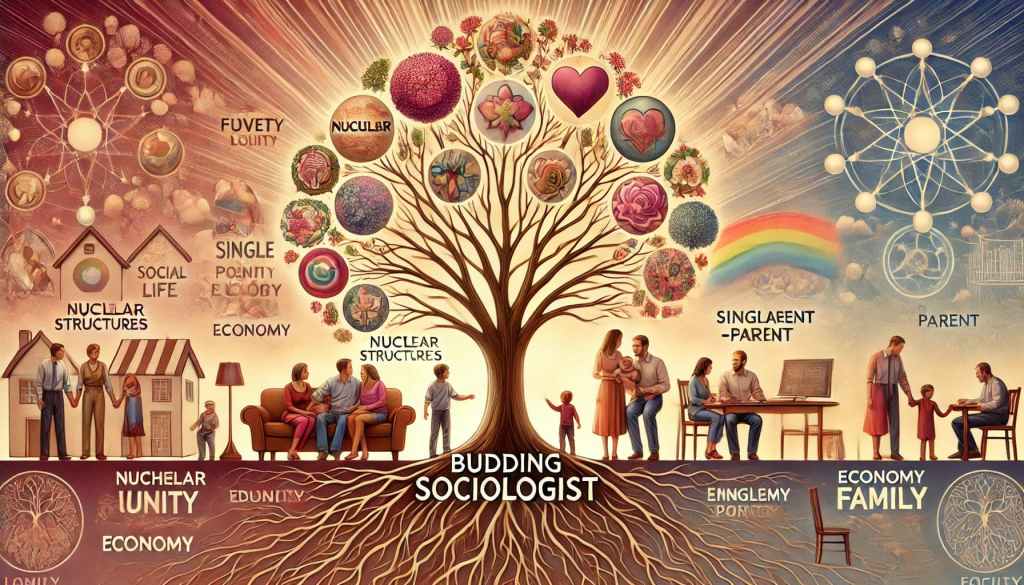
Human society is composed of various groups and institutions that form its structure. Among these, social institutions play a crucial role in shaping the framework of society, much like the threads in a woven fabric—warp and woof—where the warp runs lengthwise and the woof runs crosswise, creating a strong foundation. One of the most fundamental of these institutions is the family. Although it is the smallest unit of society, its significance is immense. The family is a vital social institution, serving as the primary group in which most people live. It plays a critical role in the socialization process, helping individuals learn the norms, values, and responsibilities of society. In many ways, the family is the first society to which a person belongs.
The family consists of parents and children, forming a biological unit. It is often described as the first school of socialization, where individuals begin to learn their roles in society. From birth to death, the family exerts a significant influence, offering emotional support and teaching important social responsibilities. The nurturing environment of the family helps develop self-discipline and social consciousness in children. As the backbone of the social structure, the family is the simplest and most essential group within a society. It establishes strong, enduring relationships and is typically composed of parents and children living together. These intimate connections, whether through blood, marriage or legal ties, have a profound and lasting impact on an individual’s life.
The family is the most basic social unit and the primary group found in every society. Its existence is fundamental to human civilization, providing stability, structure and safety as its members grow and contribute to the broader community. The family not only cares for its members but also upholds the well-being of society as a whole.
In a broad sense, a family typically refers to a group of parents and their children, but it can also include extended relatives living in the same household. Families often share a common residence and maintain reciprocal responsibilities toward each other. Additionally, the family plays a key role in the socialization of its members, which distinguishes it from other social groups. This combination of composition, shared residence, mutual responsibilities, and socializing functions makes the family a unique and indispensable institution in human society.
Types of Family
Family can be categorized in various ways, such as by structure (nuclear, joint, or extended), by authority (patriarchal or matriarchal), and by place of residence (patrilocal, matrilocal, or neolocal). However, the primary classification commonly employed in sociology is:
- Nuclear Family
- Joint Family
- Extended Family
Nuclear Family
The nuclear family consists of parents and their unmarried children, representing a central family structure in modern industrialized societies. This arrangement is often viewed as the most prevalent and ideal form of family life. In this setup, the primary relationships are between immediate family members, with parents playing crucial roles in caregiving, decision-making, and fulfilling the needs of their children. Across different cultures, the nuclear family is widely accepted as the preferred model for raising children and managing household responsibilities. Children in such families typically receive a high level of attention, care, and affection from their parents. Additionally, nuclear families are often independent and economically self-reliant.
One key aspect of the nuclear family is the close bond between parents and children, allowing for dedicated attention to the children’s development, education, and emotional growth. Parents generally share responsibilities, including financial support, household duties, and parenting tasks, fostering a spirit of cooperation within the household. This teamwork helps create a stable, supportive environment that promotes the well-being and personal growth of each family member.
Nuclear families are more commonly found in urban and suburban areas, reflecting a societal trend towards smaller households and greater emphasis on individual independence. This structure emphasizes privacy and autonomy, while still maintaining strong family ties through shared traditions and values.
While the nuclear family remains a dominant family unit, it has evolved in response to changing societal norms, economic conditions, and cultural practices. Variations such as dual-income households, single-parent families, and blended families illustrate the flexibility of this model to meet diverse needs.
Overall, the nuclear family is a fundamental social unit, characterized by its focus on parental roles, child-rearing, and the strengthening of family relationships. It plays a significant role in the emotional, social, and psychological development of its members and contributes to the stability and cohesion of broader society.
Characteristics of Nuclear Family
Following are the characteristics of nuclear family:
1. Social and Economic Independence: Nuclear families emphasize self-sufficiency and independence in both social and economic matters. In contrast to extended families, which frequently rely on shared resources and support systems, nuclear families strive to manage their own financial and household duties. This independence allows parents to make decisions about child-rearing, education, careers, and other family priorities without relying heavily on extended relatives.
2. Emotional Bonds: Emotional bonds in a nuclear family are characterized by closeness, trust, and mutual support. Parents play a vital role in nurturing their children’s emotional growth and providing a stable foundation for their development. These connections are deepened through shared experiences, celebrations and everyday interactions, fostering a sense of unity and belonging within the family.
3. Decision-Making: In a nuclear family, the responsibility of decision-making typically rests with the parents, who collaborate on key matters related to family life. They manage areas such as finances, education, and healthcare, while ensuring their children’s upbringing and well-being. This teamwork reflects the parents’ commitment to prioritizing their family’s needs and fostering unity within the household.
4. Roles and Responsibilities: In traditional nuclear families, roles are often assigned based on gender norms and personal preferences. Historically, fathers have been responsible for providing financially, enforcing discipline, and managing external affairs, while mothers have typically focused on domestic tasks such as caregiving, household chores, and tending to children’s everyday needs. However, modern nuclear families are more adaptable, with roles often distributed according to individual strengths, career demands, and the specific needs of the family.
5. Child Development: Child development is especially important in nuclear families, where parents take an active role in their children’s education, moral guidance, and social skills. By fostering a nurturing environment that prioritizes learning, creativity, and emotional health, parents significantly influence their children’s values, beliefs, and behaviours. This hands-on approach creates a supportive setting that encourages children’s academic, social, and emotional development.
6. Privacy and Intimacy: Privacy and intimacy play a crucial role in the nuclear family, promoting a safe space for open communication and strong connections. The home serves as a refuge, protecting family members from outside pressures and enabling them to share personal experiences, which deepens their relationships. This tight-knit atmosphere encourages trust, supports candid conversations, and nurtures emotional ties, ultimately leading to a supportive and harmonious family dynamic.
7. Cultural and Social Context: The nuclear family is recognized in numerous cultures around the world as a fundamental aspect of social structure. It reflects values such as stability, the continuity of generations, and responsibilities within families, aligning with cultural standards and societal expectations regarding marriage, parenting, and family relationships. While various family forms exist, the nuclear family remains a prevalent and enduring model that shapes individual identities and community connections.
8. Adaptability: Nuclear families demonstrate a remarkable ability to adjust to changing societal norms, economic conditions, and personal lifestyles. As social dynamics evolve and family roles diversify, these families frequently alter their daily practices, internal roles, and decision-making processes to tackle new challenges and embrace opportunities. This flexibility allows them to manage transitions such as job changes, relocations, and generational shifts, all while maintaining core values of unity, support, and resilience.
9. Geographical Mobility: Geographical mobility is often associated with nuclear families, as they may relocate in search of improved job opportunities, educational advantages, or a more desirable way of life. This movement enables family members to explore new environments, build diverse social networks, and engage in both personal and professional growth. Although relocating can pose difficulties in adjusting to new communities and preserving family relationships, it also offers opportunities for cultural enrichment, career growth, and the creation of shared experiences.
10. Socialization: Socialization in the nuclear family involves the sharing of cultural values, ethical standards, and social norms with children through everyday interactions and parental guidance. Parents play a crucial role in modeling appropriate behaviour, teaching social skills, and instilling moral principles, all of which influence how children engage with others. This developmental journey prepares children to comprehend societal expectations, build meaningful relationships and positively impact their communities.
Conclusion: The nuclear family embodies crucial values like unity, parental responsibilities and emotional support in a domestic setting. Recognized globally, this family structure is adaptable to changing societal norms and individual preferences, while still upholding core principles such as intimacy, autonomy and cultural continuity. Examining the characteristics of the nuclear family provides important insights into its influence on personal development, the strengthening of family bonds, and its contribution to fostering community cohesion across diverse cultural contexts.
Joint Family
In joint families, at least three generations typically live together in a single household, sharing a kitchen, a space for worship, financial resources and common property management, all under the guidance of a family head. This setup creates a self-sufficient unit that meets various needs—economic, emotional, educational, medical and recreational—acting as both an institution and an association, particularly prevalent in India.
This traditional family structure promotes strong relationships, promoting unity, mutual support and a deep sense of belonging. It usually includes grandparents, parents, siblings and sometimes extended relatives, all participating in household chores, childcare and financial responsibilities. Such an arrangement not only strengthens family bonds but also provides emotional security and a reliable support network during life’s challenges. Although changing societal norms and urbanization have led many to adopt nuclear family models—where each household operates independently—the joint family system remains culturally significant in many communities, embodying values like cooperation, respect for elders, and collective well-being.
The joint family system consists of multiple related households living together in harmony. This often includes grandparents, parents, siblings and sometimes other relatives, either sharing a single home or living nearby. The focus is on collectively managing resources and responsibilities. Each member contributes according to their abilities, taking part in household tasks, financial obligations and childcare. This collaborative approach not only alleviates individual burdens but also strengthens family ties through shared duties and mutual support.
In a joint family, older members play crucial roles as respected figures, admired for their wisdom and life experiences. They have significant influence in decision-making and are vital in transmitting traditions, values and cultural heritage to younger family members. This intergenerational interaction promotes respect, understanding and a sense of continuity within the family.
Living in a joint family provides emotional security and a built-in support network. Celebrations and family gatherings are lively events that enhance joy and reinforce cultural practices. During challenging times, such as illness or financial hardship, the family unites to provide care, comfort, and practical support, demonstrating a strong system of mutual assistance.
In many urban areas, the prevalence of extended families has declined due to economic mobility, career opportunities, and changing social norms that favour nuclear family arrangements. While nuclear families offer greater privacy, autonomy and independence, they may miss the close community feel and strong familial ties characteristic of extended families.
Nonetheless, the extended family system remains culturally significant in various societies, serving as a custodian of customs, values, and social connections. It embodies principles of collaboration, mutual support, and respect for elders, enhancing the overall well-being and resilience of its members across generations.
Characteristics of Joint Family
Following are the characteristics of joint family:
1. Multiple Generations: In a joint family setup, several generations reside together or nearby, encompassing grandparents, parents, children and occasionally great-grandparents. This arrangement promotes daily interactions between family members of varying ages, strengthening relationships and facilitating the transmission of knowledge and traditions from elders to the younger members. It cultivates a sense of continuity and ties to family heritage that can last for many years.
2. Shared Residence: Joint families typically reside in a single home, where each nuclear family occupies its own private area while sharing communal spaces for leisure. This living arrangement enhances relationships among family members, promotes frequent interactions and supports the collective celebration of festivals and events. Additionally, it encourages a cooperative approach to household management and chores.
3. Pooling of Resources: In joint families, members often pool their financial resources, share household tasks and take on caregiving responsibilities together. This cooperative approach helps meet everyone’s needs while balancing the workload. By collaborating on economic matters, joint families can enhance financial security and utilize resources such as transportation, utilities and shared amenities more effectively.
4. Cultural Continuity: Joint families play a crucial role in preserving and passing down cultural traditions, customs and values through generations. The older members of these families serve as keepers of cultural heritage, imparting stories, rituals and beliefs to the younger generation. This exchange of cultural knowledge across generations promote a strong sense of identity and belonging, ensuring that shared practices continue to define the family’s character over time.
5. Support System: A major advantage of being part of a joint family is the built-in support system it provides. Family members can rely on each other for emotional support during tough times, practical assistance with daily tasks and financial help when needed. This mutual support promote a sense of safety and belonging, strengthens family bonds and enhances overall well-being.
6. Decision Making: In joint families, decisions are often made through discussions among all adult members, placing considerable importance on the opinions of the elders. Key choices that affect the whole family, such as financial issues, children’s education and planning family events, are typically reached collaboratively. This shared decision-making process ensures that everyone’s views and interests are considered, promoting harmony and cooperation within the family.
7. Social Cohesion: Residing in a joint family promotes strong relationships among its members. Children gain from having multiple role models, including grandparents and older siblings, which greatly aids their social development. These connections are strengthened through family gatherings, religious events and communal celebrations, providing important chances for interaction and the creation of enduring ties within the extended family.
8. Challenges of Privacy: Joint families offer significant advantages but can also present challenges related to privacy and personal space. The collaborative approach to decision-making and shared living spaces may restrict the independence of individual members regarding their choices and lifestyles. Finding a balance between the need for personal space and the benefits of communal living requires open communication, respect for each other’s boundaries and a willingness to compromise among family members.
9. Adaptability: Joint families demonstrate a significant ability to adjust to changing circumstances and evolving family structures. They welcome new members through marriages or births, modify their living arrangements to accommodate aging parents or expanding families, and redefine roles and responsibilities as needed. This adaptability is essential for maintaining harmony and meeting the diverse needs of family members at various life stages.
10. Cultural Variations: The characteristics of joint families can vary significantly based on cultural practices, economic circumstances and regional customs. In certain cultures, joint family systems are regarded as vital for fostering social stability and providing mutual assistance. Conversely, other cultures may prefer nuclear families or alternative household arrangements, influenced by individual preferences, financial opportunities or changing social trends.
Conclusion: In conclusion, a joint family is a unique social structure where several generations coexist under one roof. This arrangement promotes shared responsibilities, rich cultural traditions and a strong support network. While maintaining harmony requires careful attention to relationships and resources, the benefits of mutual assistance, cultural continuity and social cohesion often render it a cherished and enduring family model in many parts of the world.
Extended Family
Extended families are vital across many cultures, offering support, connection and a sense of tradition. While immediate family includes parents and siblings, extended family encompasses a wider circle of relatives like grandparents, aunts, uncles and cousins. This larger network fosters belonging and continuity, providing both emotional and practical support. Family gatherings, celebrations, and rituals strengthen these relationships, deepening connections to heritage and collective history. Even when separated by distance, extended families often stay close through regular communication and the sharing of stories and traditions. In times of joy or hardship, these connections showcase resilience and unity, helping family members navigate life’s challenges and celebrate successes together.
Extended families consist of a broad range of relatives beyond the immediate household, forming an essential framework in societies worldwide. This network typically includes grandparents, aunts, uncles, cousins and sometimes more distant relatives, enriching individuals’ lives with diverse connections and cultural practices. Unlike the more concentrated interactions within nuclear families, extended family ties often span generations, preserving links to ancestral roots and traditions. They serve as custodians of shared history, keeping familial narratives, customs and beliefs alive, which shape personal identities and foster a sense of community.
The extended family serves an important function beyond just blood relations, forming a supportive community where emotional, practical and sometimes financial assistance is readily available. During significant occasions like births, weddings or funerals, extended family members gather to celebrate, mourn and honour traditional practices. These events not only reinforce family connections but also foster a sense of belonging and continuity, bridging gaps of time and distance.
Although modern society often leads to families being spread out geographically, advancements in communication technology facilitate regular interaction and virtual meet-ups. This means that even when physically apart, the emotional bonds within extended families remain strong, allowing shared values, experiences and support to flow freely across distances.
In challenging times, extended families often come together to provide a network of compassion, guidance and practical help. This collective support helps individuals navigate life’s uncertainties, emphasizing that no one faces hardship alone. Additionally, the diverse backgrounds found within extended families offer a range of perspectives and life lessons, encouraging personal growth and deeper understanding among members.
Characteristics of Extended Family
Following are the characteristics of extended family:
1. Multiple Generations: Extended families consist of several generations residing together as one household. This often includes grandparents, parents, children and sometimes great-grandparents or great-grandchildren. Each generation brings unique viewpoints, experiences and responsibilities to the family dynamic. This multigenerational arrangement encourages the sharing of knowledge, traditions and fundamental values from older to younger members, promoting a strong sense of continuity and cultural heritage within the family.
2. Geographical Proximity: Extended families often reside near one another or in the same community, promoting regular in-person interactions among relatives. This arrangement allows for impromptu visits, shared meals and communal events, which are essential for strengthening family ties and creating a sense of togetherness, unlike nuclear families that might live separately and at greater distances.
3. Shared Resources and Support: Extended families frequently engage in resource-sharing and mutual support. This may involve financial aid during tough economic times or practical assistance like childcare, household chores and caring for elderly relatives. By collaborating and pooling their resources and responsibilities, extended families create a safety net that provides stability and security for all members, particularly during challenging periods.
4. Cultural and Traditions Transmission: Extended families play a vital role in maintaining cultural heritage and traditions. They serve as essential conduits for transmitting customs, rituals, beliefs, and values from one generation to the next. Through celebrations, storytelling, and participation in cultural activities, family members deepen their understanding of their cultural identity and history, fostering a strong sense of pride and belonging.
5. Diverse Family Roles: In an extended family, members typically take on particular roles and responsibilities shaped by factors such as age, gender and their position within the family hierarchy. Older relatives often serve as guides and authority figures, sharing their wisdom and knowledge. In contrast, younger members may engage in caregiving tasks, assisting both children and older adults, which helps the family function effectively and meets everyone’s needs.
6. Emotional Bonds and Solidarity: Extended families promote strong emotional ties and unity among their members. By sharing experiences, creating treasured memories, and upholding longstanding traditions, they nurture a deep sense of belonging and mutual support. Whether they come together to celebrate joyful occasions like weddings and births or to offer comfort during challenging times such as illness or loss, family members collaborate to enhance their emotional connections and resilience as a united group.
7. Flexibility and Adaptability: Extended families demonstrate a noteworthy capacity to adapt to changing situations and challenges. They skilfully modify their roles, routines and support systems to integrate new family members, respond to economic shifts and address variations in health and well-being. This adaptability allows extended families to maintain cohesion and stability over time, successfully managing both external pressures and internal changes with resilience.
8. Complex Interpersonal Dynamics: Extended families frequently experience complex interpersonal dynamics stemming from regular interactions among numerous members. These dynamics include varying degrees of intimacy, styles of communication, as well as conflicts, rivalries and alliances among relatives. To effectively manage these complexities and maintain harmonious relationships, it is essential to promote strong communication skills, resolve conflicts effectively and show genuine respect for each person’s uniqueness.
9. Cultural Diversity: In multicultural societies, extended families frequently represent a wide array of cultural backgrounds and traditions. Members come from different ethnicities, nationalities and religious beliefs, creating a dynamic cultural tapestry within the family. This exposure to diverse languages, customs, and viewpoints promote tolerance, understanding and a profound respect for cultural diversity among all members.
10. Long-term Bonds: Extended families promote lasting bonds that extend beyond individual lifetimes. Events like reunions, anniversaries and gatherings provide opportunities for members to strengthen their connections, celebrate shared experiences and enrich relationships across generations. These enduring ties create a sense of continuity, identity and belonging, contributing to the overall cohesion and well-being of the extended family.
In summary, extended families are vital for providing support, promoting cultural identity, strengthening relationships and preserving traditions through the generations. These roles contribute to greater resilience, emotional well-being and cohesion within extended family systems.
References and Readings:
Sociology by C.N. Shankar Rao, https://amzn.to/41A3Wh4
Sociology Themes and Perspectives by Michael Haralambos and Martin Holborn, https://amzn.to/4ibTgdY