- Meaning of Urban Society
- Features of Urban Society
- Difference between Rural and Urban Societies
- Housing Problem in Urban Areas
- Causes of Problem of Housing
- Solutions to Overcome the Problem of Housing
- Meaning of Slum
- Characteristics of Slum
- Problems Related to Slums
Introduction
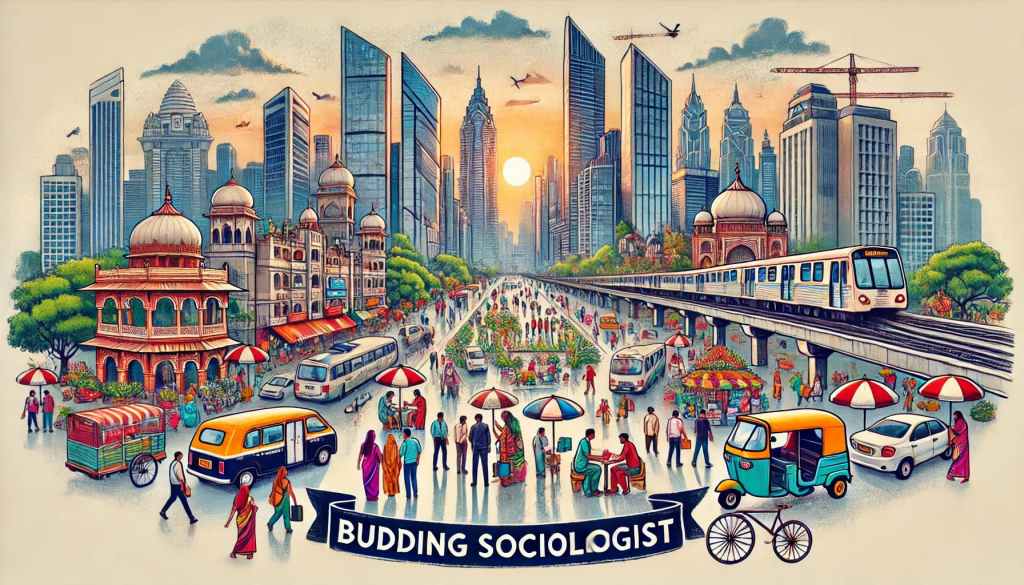
In contrast to rural society, urban society represent the epitome of modern industrial civilization, marked by cultural diversity, secular values, and an emphasis on individualism over integration. Unlike tribal or rural settings, urban environments embody a more sophisticated social structure, offering amenities conducive to contemporary lifestyles.
Urban societies are characterized by high population density, accessibility to essential resources, abundant employment opportunities, and an environment conducive to fulfilling various human desires. These communities reflect a lifestyle marked by affluence, luxury, and societal sophistication.
The social dynamics within urban settings are shaped by rapid and formal interactions, driven by factors such as education, technological advancements, industrialization, and urban development. Within these environments, a complex tapestry of social interactions emerges, bringing together individuals from diverse racial, professional, caste, and religious backgrounds in a largely anonymous manner. As a consequence, primary and formal relationships are often lacking, giving rise to a fast-paced and dynamic social landscape.
Features of Urban Society
Urban society refers to a collective of individuals distinguished by their adherence to a particular lifestyle commonly referred to as urban culture. This encompasses a set of values, norms, social behaviours, and relationships that collectively manifest as a distinct form of social structure. Presently, this structure is commonly linked with industrialized societies and the urban lifestyle.
Here are the main characteristics commonly observed in urban societies:
1. High Population Density: Urban areas exhibit a significant concentration of residences due to limited space, accommodating millions within a small radius.
2. Large and Multistory Dwellings: Urban housing consists of spacious, multistory structures constructed with modern materials like brick, stone, and marble, often valued at considerable sums.
3. Availability of Urban Amenities: Urban dwellers benefit from amenities such as electricity, gas, telecommunications, water supply systems, mobile networks, internet access, extensive road networks, airports, shopping centers and commercial hubs.
4. Formal Social Interactions: Interactions within urban communities tend to be formal, with emphasis placed on secondary groups and organizations to fulfill various needs.
5. Formal Group Dynamics: Group dynamics in urban settings are also formalized, formed around common interests and needs, fostering closer ties among members.
6. Specialized Division of Labour: Urban life entails a clear and intricate division of labour, with individuals trained for specific roles to meet societal demands.
7. Housing Shortages: Due to land scarcity and population pressures, urban areas often face housing shortages, impacting residents’ quality of life.
8. Established Social Institutions: Urban communities feature well-established social institutions and organizations that cater to the populace’s needs in a more structured manner compared to rural areas.
9. Rapid Social Change: Urban societies experience swift rates of social change, with residents readily embracing and adapting to new social norms and practices.
10. Anonymity and Crime: The high population density and fast-paced lifestyle in urban settings foster anonymity, contributing to increased incidences of crime and violence.
11. Elevated Standard of Living: Urban areas boast a higher standard of living attributed to access to civic amenities, industrial and commercial activities, and diverse economic opportunities.
12. Cultural Diversity: Unlike the cultural homogeneity of villages, urban areas exhibit cultural diversity, characterized by a mix of people, races, and cultures with varied food habits, dress styles, religious beliefs, and customs.
13. Emphasis on Individualism: Urban dwellers prioritize their own welfare and happiness, reflecting an individualistic mindset that often prioritizes self-interest over communal well-being.
14. Rational Decision-Making: Rationality prevails in urban societies, with decisions typically based on reason, cause-and-effect analysis, and considerations of gain or loss. Human relationships often operate on contractual terms, ending once the contract concludes.
Conclusion: Based on the aforementioned description, one can infer that urban society contrasts with rural society in several key aspects. Urban communities are often marked by formalities, practicality, secondary relationships, specialization, mechanization, and a modernized lifestyle that prioritizes rationality and individualism. In such settings, there is often a lack of concern for the well-being of others, presenting a stark contrast to the more communal and interconnected nature of rural life.
Housing Problem in Urban Areas
Housing stands as a fundamental necessity for humanity, alongside food and clothing. Despite over five decades of independence, the nation continues to grapple with escalating housing challenges, particularly among the impoverished. The situation is exacerbated by the rapid urban population growth, driven by rural-to-urban migration for various reasons.
Urban areas face a dire housing shortage, with the demand-supply gap widening by the day. Those most susceptible to homelessness are individuals with the fewest resources to secure adequate housing. Unable to afford homes or high rents, they settle for substandard accommodations with lower rents. Some, unable to pay any rent at all, resort to inhabiting open areas, resulting in the proliferation of slums. These individuals often migrate to urban centers for employment opportunities, with housing problems and slum expansion being immediate consequences of industrialization.
Causes of Problem of Housing
A deeper comprehension of the housing problem’s root causes can be elucidated through the following analysis:
1. Homelessness: Homelessness presents a multifaceted challenge, with the situations of those affected being diverse and stemming from various factors beyond just housing shortages. While inadequate housing is a significant contributor, it’s not the sole cause. Several key factors contribute to homelessness:
- Housing Shortages: When there’s a scarcity of available homes, it inevitably leads to some individuals being left without shelter, typically impacting the most economically disadvantaged.
- Land Ownership Rights: In order to avoid homelessness, individuals often resort to constructing makeshift shelters initially, which gradually evolve into more permanent settlements over time.
- Housing Entitlement: Even in the absence of a visible housing shortage, individuals can still face homelessness if they lack the entitlement to access available housing. Financial constraints are a primary factor in this exclusion from housing opportunities.
- Personal Circumstances of the Homeless: Homelessness is frequently linked to either personal factors, such as substance abuse or mental illness, or broader social issues like unemployment and family breakdown. However, individuals only find themselves homeless when they’re unable to access housing or secure alternative accommodation due to various circumstances.
2. Congestion: In urban settings, numerous households grapple with growing congestion, though this isn’t a universal experience. As high-rise and multi-story buildings are erected to bolster housing availability, living conditions tend to ameliorate. However, for some economically disadvantaged families, cramped living situations persist due to family expansions and divisions, necessitating the cramming of more individuals into existing spaces to accommodate new households.
Consequences of Congestion: Following are some of the consequences of congestion (over crowdedness):
- Official estimates suggest a current shortage of approximately 7 million houses in urban areas, with around 19 percent of Indian families residing in less than 10 square meters of space. This leads to significant congestion, with approximately 44 percent of urban families inhabiting just one room.
- The economic and health toll of traffic congestion is substantial, with a heightened risk of accidents. Additionally, cities face elevated levels of airborne dust pollution.
- The issue of crowding in urban areas is escalating rapidly. Dwellings comprising a single room are often overcrowded, accommodating five to six individuals. This overcrowding fosters deviant behaviour, disease transmission, and creates conditions conducive to mental health issues, alcoholism, and civil unrest.
Solutions to Overcome the Problem of Housing
In 1998, in pursuit of the objective of ensuring housing for all, particularly the marginalized, the government implemented the Housing and Habitat Policy through a Public-Private Partnership (PPP) model. Concurrently, the Housing and Urban Development Corporation (HUDCO) commenced operations, backed by financial assistance from the Indian government, with a primary aim of facilitating housing solutions for economically disadvantaged segments, including both the economically weaker sections (EWS) and the low-income group (LIG). The government has implemented several initiatives aimed at addressing the housing issue:
1. Institutional Finance for Housing: To streamline the process of constructing homes, the government has established various financial institutions. These institutions include house building cooperative societies, which offer financial assistance to individuals. Prior to 1970, the only public financial institution providing housing finance to policyholders was LIC.
2. Village Housing Scheme: In 1957, the Village Housing Scheme was launched with the objective of offering support to rural areas in constructing and enhancing residential infrastructure. Additionally, it sought to allocate land for housing to agricultural labourers without property. However, due to insufficient prioritization from the states and a lack of effective administrative machinery, the scheme failed to achieve significant progress.
3. Research and Development: Apart from financial institutions, there exist organizations dedicated to advancing research and development within the realm of housing construction. Their focus spans from enhancing traditional construction materials and methods to embracing new materials, while also offering guidance and technical support to various entities and individuals involved in construction endeavours.
4. Rural House Construction Scheme: Initiated in 1971, this program aimed to provide both land and financial and technical support for constructing houses to rural landless agricultural labourers, as its name implies. It was integrated into the Minimum Needs Programme during the Fifth Plan. By the conclusion of the fifth 5-year plan, approximately 7.7 million sites were distributed, with around 5.6 lakh houses constructed. During the sixth five-year plan, 1.9 million families were accommodated, and the ninth plan aims to benefit 14.5 million families.
5. Indira Awas Yogana (lAY): The initiative was initiated during the 1985-86 period with the aim of offering complimentary housing units to impoverished individuals residing in rural regions, specifically those from scheduled castes, scheduled tribes, and individuals previously subjected to bonded labor. Over time, the program expanded its scope to encompass non-SC/ST underprivileged communities starting from 1993-94. Furthermore, it was later extended to include families of servicemen from armed and paramilitary forces who lost their lives in operations, beginning in 1995-96. Presently, the implementation of this scheme falls under the jurisdiction of DRDA.
6. State Housing Boards: State Housing Boards in several regions are responsible for the allocation, planning, and construction of residential units catering to diverse income brackets within urban locales. Property owners pay for these units in installments at government-approved rates. These residences are developed systematically, often in clusters, and incorporate essential amenities such as water supply, sewage systems, parks, commercial zones, and road networks to ensure a well-rounded living environment.
7. Valmiki Ambedkar Awas Yojana (VAMBAY): This initiative, inaugurated on December 2nd, 2001, targets urban slum residents living below the poverty line lacking sufficient housing. It aims to construct residential units and communal toilets in urban slums, with the Central Government covering 50% of the expenses and the remaining 50% being contributed by the State governments.
8. Development Scheme and Land Acquisition: The government believed that individuals belonging to the low-income and middle-income brackets would be capable of building their own homes if they had access to reasonably priced land. To facilitate this, a program was established wherein state governments could procure land and parcels in appropriate locations, develop them, and allocate them to those in need.
Conclusion: Furthermore, alongside the aforementioned actions, the government has implemented various fiscal and monetary policies aimed at incentivizing private sector involvement in housing construction. These measures include reducing interest rates on housing loans, providing income tax benefits for housing loans, streamlining rental policies, and enacting central laws. The government introduced National Housing Policies in 1988 and 1998 to offer directives for addressing the housing challenges in the nation. Additionally, the establishment of the National Housing Bank (NHB) in July 1988 was intended to facilitate housing finance.
Problems Related to Slums in Urban Area
In essence, a slum encompasses various elements such as limited access to safe water, inadequate sanitation facilities, substandard housing structures, overcrowding, and insecure residential conditions. It can be characterized as a compact settlement comprising poorly constructed dwellings, often temporary in nature, clustered together with insufficient sanitary and water provisions, fostering unhygienic environments.
The term “slum” originated in 19th-century London, initially referring to areas of low repute or neglected sections of the city, but its connotations and usage have evolved over time. Early definitions of slum living encompassed physical, spatial, social, and behavioural dimensions of urban poverty, but more recent interpretations have narrowed.
Arimah defines a slum as a community where individuals cohabit under one roof, lacking one or more of the following conditions: access to improved water sources, access to improved sanitation facilities, adequate structural quality and durability of housing, sufficient living space free from overcrowding, and secure tenure.
Slums represent a harsh reality for many countries worldwide, with over one billion people currently residing in such conditions, a number on the rise. The expansion of urban centers in India, for instance, has largely occurred without adequate planning, resulting in approximately one-fourth of the urban population residing in slums and squalid settlements.
Conclusion: Based on the preceding description, one could argue that a slum represents an inhospitable environment lacking essential life amenities. However, the UN’s definition considers legality and may encompass all marginalized areas, not just those officially designated as slums by governments. The accurate count and distribution of slum dwellers in India remain contentious. In essence, a “slum” denotes a community characterized by low socioeconomic status and homelessness.
Characteristics of Slum
Based on the analysis of various definitions, the characteristics or features of slums can be identified as follows:
1. Lack of Essential Services: Slums typically lack access to basic services such as improved sanitation facilities, clean water sources, waste management systems, electricity, proper roads, street lighting and drainage systems.
2. Substandard Housing: Housing standards in slums often fall below minimum requirements, with many structures made from inadequate materials like mud, straw, or other unsuitable materials. These dwellings frequently disregard building regulations.
3. Overcrowding and High Density: Slum areas are marked by overcrowding, with limited space per person, high occupancy rates, and often multiple families living in single-room units used for various purposes like cooking, sleeping, and living.
4. Unsanitary Living Conditions: The absence of basic services leads to unhealthy living conditions characterized by open sewers, lack of pathways, unregulated waste disposal, and pollution.
5. Hazardous Locations: Slums are often situated in locations unsuitable for human habitation, such as floodplains or areas near industrial sites with toxic emissions or waste disposal facilities.
6. Insecure Tenure and Informal Settlements: Residents of slums typically lack formal documentation granting them rights to occupy the land or structures, indicating the illegality of their possession. Informal settlements are common in slum areas, often established on illegally occupied land.
7. Poverty and Social Exclusion: Poverty is a significant factor driving people to live in slum conditions, which in turn perpetuates their poverty. Slums create physical and legal barriers to social and human development, fostering social exclusion and contributing to high levels of crime and social disruption.
8. Minimum Settlement Size: Many definitions of slums include a minimum size requirement to distinguish them from individual houses. For example, in Kolkata, a slum must occupy a minimum of 700 square meters with huts, while according to Indian census criteria, a slum must have at least 300 people or 60 households living in a clustered settlement.
Conclusion: Based on the mentioned traits, it can be inferred that the experience of residing in a slum encompasses various facets. While some slum regions may exhibit only a subset of these adverse features, the most dire scenarios typically entail substandard housing conditions, lack of basic amenities, precarious land structures, absence of secure property rights, and inhabitants facing poverty, marginalization and vulnerability.
Problems Related to Slums
Following are the problems associated with slums:
1. Prone to Disasters and Climate Change: Due to their geographical positioning, impoverished urban settlements face heightened susceptibility to natural calamities and exhibit diminished capacity to withstand and recover from such events. Phenomena like storms, floods, and earthquakes disproportionately impact these marginalized areas, causing significant damage due to the fragility of the substandard housing, which often succumbs to collapse or inundation. Additionally, inadequate waste disposal and drainage systems exacerbate the consequences of disasters, compounding the vulnerabilities of slum communities situated in hazard-prone locales such as coastal zones, railway corridors, underpasses, riverbanks and near refuse sites.
2. Political Ignorance: Residents of urban slums often find themselves in a state of limbo, lacking recognition from the governments of their host countries. This lack of acknowledgment results in their exclusion from various development initiatives, voting processes, and the enjoyment of fundamental rights.
3. Social Exclusion: Living in a slum while being an outsider can result in social isolation. The influx of people from rural areas to urban areas is a significant factor contributing to the expansion of slums in cities. These migrants leave their hometowns to work in cities and settle in slums, often facing social exclusion from both the urban community and their home state.
4. Lack of Education: Children residing in impoverished urban areas frequently face barriers to accessing education, a pervasive issue with multifaceted causes. These children are often compelled into labor at meager wages, depriving them of their fundamental entitlement to education, recreation and childhood play. Consequently, a significant number of these youngsters never experience formal schooling, with only a scant few managing to complete primary education.
5. Health and Child Mortality: Inadequate living conditions in slums present a significant challenge, characterized by perilous environments and insufficient access to essential amenities like clean water, sanitation, and proper sewage systems. This situation contributes to the proliferation of various life-threatening illnesses such as malaria, cholera, and diarrhoea, exacerbating the already high rates of child mortality.
6. Problem with Safety of Women: Ensuring the safety of women remains a critical issue within slum communities. Instances of violence against women are unfortunately commonplace. Sanitation infrastructure in these areas is often inadequate or entirely absent, with shared toilets lacking privacy and proper maintenance. Consequently, leaving women unaccompanied in such environments poses significant risks. Moreover, domestic violence further compounds the challenges faced by women residing in slums.
7. Finance related Problems: Banks frequently decline loan requests from slum residents, deeming them “unbankable.” Consequently, these individuals are forced to resort to moneylenders who impose exorbitant interest rates, exacerbating their financial struggles.
8. Social and Political Exclusion: Governments frequently disregard residents of slums, leaving them marginalized from the voting process, urban development initiatives, and comprehensive legal protection. Deprived of the same rights and representation as other citizens, individuals residing in slums endure persistent political and social isolation.
9. Disasters related Problems: In numerous developing nations, inhabitants of slums face the looming threat of sea level escalation. City slums bear the brunt of storms, earthquakes, and various calamities more severely than other regions, with their inadequate housing structures collapsing and inefficient drainage exacerbating prolonged inundation.
10. Poor House Planning: The absence of economical housing options and inadequate urban planning fosters the proliferation of slums. The Millennium Development Goals advocate for member nations to achieve a substantial enhancement in the quality of life for at least 100 million slum residents by the year 2020.
11. Poverty as a major Problem: Urban poverty fosters the creation and necessity of slums. As people increasingly transition from rural to urban living, poverty follows suit, concentrating in urban settings. Those from impoverished backgrounds arrive in urban areas with optimism but scant resources. They often lack access to adequate shelter, essential urban utilities, and social infrastructure.
12. Vulnerable to Hazards: Slum areas frequently find themselves situated in locations prone to both natural calamities like landslides and floods, as well as human-induced disasters. This is especially challenging in cities built on hilly terrain, where accessing or providing aid to these areas during emergencies becomes a significant issue.
13. Unemployment and Informal Economy related Problems: The high unemployment rates among slum dwellers stem from a combination of insufficient skills and education, coupled with fiercely competitive job markets. Consequently, many are compelled to seek work within the informal economy, either within the confines of the slum itself or in nearby developed urban areas, despite the inherent risks involved.
Conclusion: Based on the preceding description, it is evident that slums represent living conditions often deemed substandard, yet due to various circumstances, people find themselves compelled to inhabit them. Typically, the dwellings in slums are makeshift structures constructed from materials such as bricks, mud, tin sheets, bamboo, and tarpaulin. Basic household amenities are often lacking, forcing residents to perform daily activities like cooking, bathing, and sleeping in open spaces. Access to common water sources and public facilities is shared among the community. Poverty stands out as the primary catalyst behind the formation of slums. Therefore, urgent attention is required to prioritize addressing this issue, enabling residents to access the same benefits enjoyed by other citizens of the nation.