- Introduction
- Meaning of Village
- Characteristics of Village Community
- Structure of Village Community
- Evolution of Village Community
- Changes in Village Community
Introduction
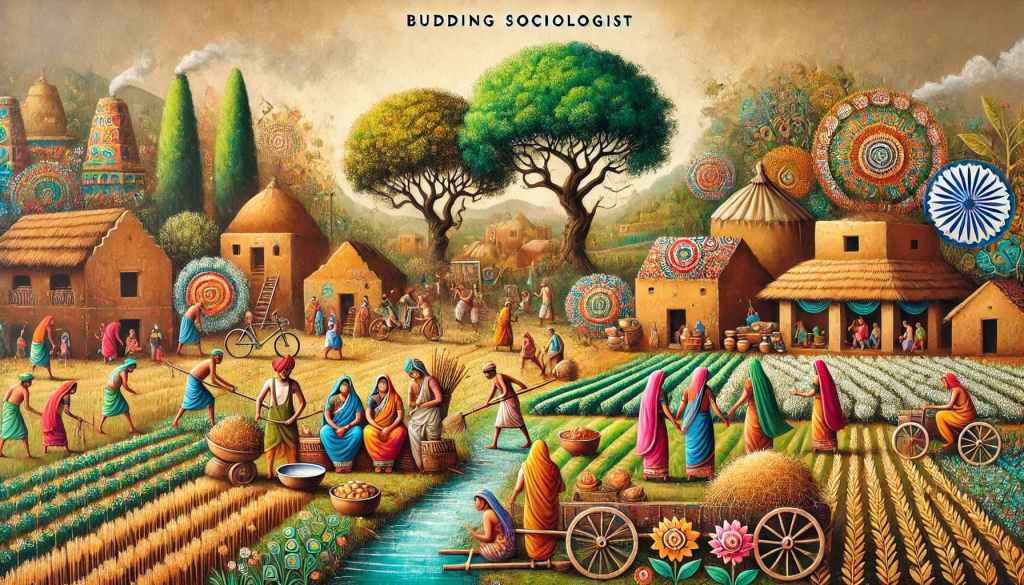
Villages hold significant importance within Indian society, having served as integral units of social structure since ancient times. These rural settlements, characterized by small populations, primarily engage in agriculture, which not only sustains their livelihoods but also embodies their way of life. Despite their localized nature, villages remain interconnected with the broader societal fabric, contributing to and being influenced by the overall civilization.
Historically, villages emerged millennia ago, evolving as communal settlements nestled within natural surroundings. Populated by a modest number of inhabitants, these communities cantered their existence around agricultural practices. Agriculture isn’t merely an occupation for villagers; it embodies their ethos and influences every facet of their daily lives. Indeed, villages are often described as the ancestral homes of agrarian societies, serving as the foundational units of rural life.
India’s landscape is predominantly rural, with the majority of its populace residing in villages. According to the 2011 census, approximately 75 percent of the country’s population still calls these rural settlements home. With over 5,75,721 villages dotting the nation, their structure and dynamics vary based on population distribution.
| Villages with Population of | Number of Villages |
| Less than 500 | 3,18,611 |
| Between 500 and 999 | 1,32,873 |
| Between 1,000 and 1,999 | 81,911 |
| Between 2,000 and 4,999 | 35,992 |
| Between 5,000 and 9,999 | 4,976 |
| 10,000 and over | 1,358 |
Meaning of Village
In essence, a village community can be understood as a collective of individuals inhabiting a specific geographic region, united by a sense of kinship, shared customs, and frequent social interactions. Typically characterized by agricultural pursuits, a village embodies not just an occupation but a holistic way of life. Defining a village precisely proves challenging, yet it stands as one of humanity’s oldest enduring settlements.
From these descriptions, it becomes evident that a rural village community comprises interconnected families dwelling in close proximity within a defined area. They bond over common interests, predominantly centered around agricultural activities. Thus, the village emerges as a vital social unit, integral to the lives of its inhabitants, who simultaneously participate in broader societal structures and contribute to the overarching fabric of civilization.
Characteristics of Village Community
Based on the preceding discourse, it is apparent that despite the advancements of contemporary society, rural areas continue to embody the ethos of simplicity and profound contemplation. The inhabitants of villages lead uncomplicated lives characterized by serenity and distance from the hustle and bustle of urban existence. Although defining the village community by specific traits proves challenging, an endeavour is made here to underscore several noteworthy features commonly observed in Indian rural communities:
1. Bases of Social Organization: In India, the vast landscape is dotted with over five hundred thousand villages, serving as the primary residence for eighty percent of the country’s populace. As such, the trajectory of India’s future is intricately intertwined with the progress and prosperity of its rural areas.
2. Group of People: A village denotes a community where individuals do not necessarily engage in a specific common pursuit. Instead, they share fundamental aspects of daily life while residing within a defined geographic area.
3. Small in Size: Typically, villages tend to be compact in scale. According to the census conducted in India, a settlement with 5000 residents qualifies as a village community. The data reveals that approximately 80% of villages in India consist of populations numbering fewer than 1000 individuals each.
4. Importance of Neighbourhood: Neighbourly connections represent a significant aspect of village existence. This is fueled by two key elements: the close physical proximity typical of rural living and the prevailing atmosphere of camaraderie, empathy, and mutual affection found in rural communities. These factors cultivate strong bonds among villagers, fostering a sense of communal belonging akin to that of a close-knit family. Consequently, villagers rely on each other for both practical support and emotional well-being, creating a tightly knit social fabric within the village.
5. Predominance of Primary Relations: A rural community is predominantly composed of primary relationships, making it commonly referred to as a primary group. These relationships are marked by personal connections that are relatively long-lasting. Human interactions within the community exhibit simplicity and sincerity, with kinship groups holding significant importance in shaping social bonds.
6. Joint Family System: The communal living arrangement of the joint family system serves as the foundational structure within village communities. Within this setup, all household members reside together under one roof, share meals prepared in a central kitchen, collectively own property, engage in communal worship, and are bound by specific familial ties. However, in contemporary times, there is a noticeable decline in the prevalence of joint families within rural areas as individuals increasingly migrate to urban centers.
7. Agricultural Economy: Agriculture stands as the predominant occupation in rural India, ingrained deeply within the fabric of daily existence. It defines not just a means of livelihood but also shapes the social dynamics, habits, and attitudes of the populace. While a minority engage in non-agricultural pursuits like carpentry, pottery, or basket making, these activities remain intricately tied to the agricultural core, reflecting the symbiotic relationship between different facets of rural life.
8. Caste System: The caste system stands as a distinctive characteristic within the Indian village community. It plays a pivotal role in shaping the roles, statuses, occupations, and marital connections of rural dwellers. The profound impact of the caste system on village life is often likened to being the fundamental cornerstone, dictating various aspects of societal functioning.
9. Jajmani System: The Jajmani system, integral to ancient village life in India, operated on a barter basis. Within this system, individuals from different castes would provide services to one another without the exchange of money. Those receiving services were known as Jajmans, while those providing them were called Kamins. Compensation for services rendered typically took the form of crops or grains, dispensed either annually or semi-annually. Additional payments were made to Kamins during significant life events such as marriages, births, and deaths. This system fostered enduring, hereditary relationships among families of various castes. However, contemporary socio-economic and political shifts in India have significantly weakened the Jajmani system.
10. Faith in Religion: Religion holds significant importance within the fabric of village life. Its influence permeates through every significant event, from agricultural practices like sowing and harvesting to key life milestones such as birth, marriage, illness, and death. Villagers mark these occasions with religious ceremonies, be it through Puja, Mela, or kirtan. This robust adherence to religious practices underscores the profound faith deeply embedded within rural communities.
11. Panchayat: The operational dynamics of the village as both a political and social unit facilitated the integration of individuals from diverse castes. A customary institution known as the village panchayat, functioning akin to a village council, undertook a range of responsibilities. These included upholding law and order, resolving conflicts, organizing festivals, and overseeing infrastructure projects such as road, bridge, and tank construction. Concurrently, matters pertaining to caste regulations, property and familial disagreements, as well as other significant affairs, were addressed by the caste panchayat.
12. Informal Social Control: In rural communities, social regulation operates through informal and immediate means. Key entities such as families and neighbourhoods wield significant influence as agents of social control. Additionally, the conventional village and caste councils play a substantial role in managing the behavior of individuals who deviate from societal norms.
13. Status of Women: Typically, women residing in rural areas tend to have limited access to education, resulting in a lower social standing in comparison to their urban counterparts. Various factors contribute to this disparity, including the prevalence of child marriage, the persistence of joint family structures, adherence to traditional values, and a lack of educational opportunities. These elements collectively contribute to the diminished status of women in rural communities.
Conclusion: Based on the description provided, it can be inferred that despite facing economic challenges, villagers find contentment in the simplicity of their lives. However, it is important to acknowledge that these observations are largely theoretical. With the passage of time, the purity of these traits has been compromised to some extent due to societal changes such as industrialization and urbanization. Nonetheless, these qualities generally remain intact, albeit not entirely unchanged, in the face of modern influences.
Structure of Village Community
Since the dawn of human civilization, evidence of village communities has been apparent. Initially, early humans resided in forests, banding together primarily for survival, particularly for hunting. The advent of the Neolithic era brought about settled lifestyles with the discovery of fire and the cultivation of crops, giving rise to village communities. From then until the present day, villages and their communities have played crucial roles in the lives of people.
Originally, village structures varied, but over time, changes occurred due to population growth and other factors. This evolution has captured the interest of numerous rural sociologists, social anthropologists, and scholars. The study of villages provides insights into various social institutions and cultural norms within rural settings. While rural sociologists haven’t unanimously agreed upon a standardized classification of rural communities, several criteria have been proposed to understand their structures. Below are two such criteria concerning village structures:
1. According to a classification system, villages can be categorized into three types:
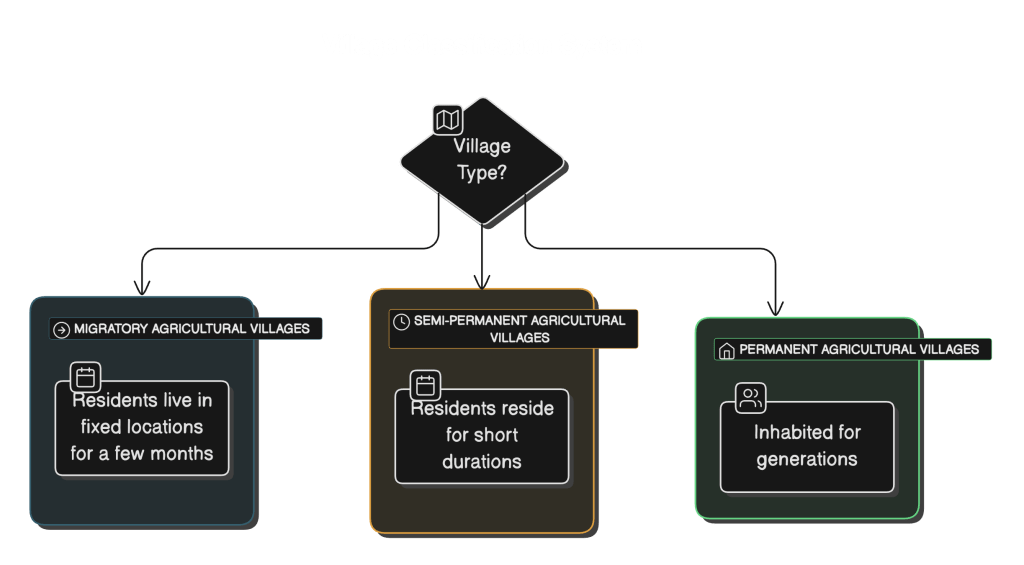
- Migratory Agricultural Villages: These are villages where residents live in fixed locations for only a few months at a time.
- Semi-permanent Agricultural Villages: In these villages, people reside for short durations, typically for a few months.
- Permanent Agricultural Villages: These settlements are inhabited for generations, indicating a long-term residency pattern among the population.
2. According to an alternative classification system, villages can be categorized into five distinct types:
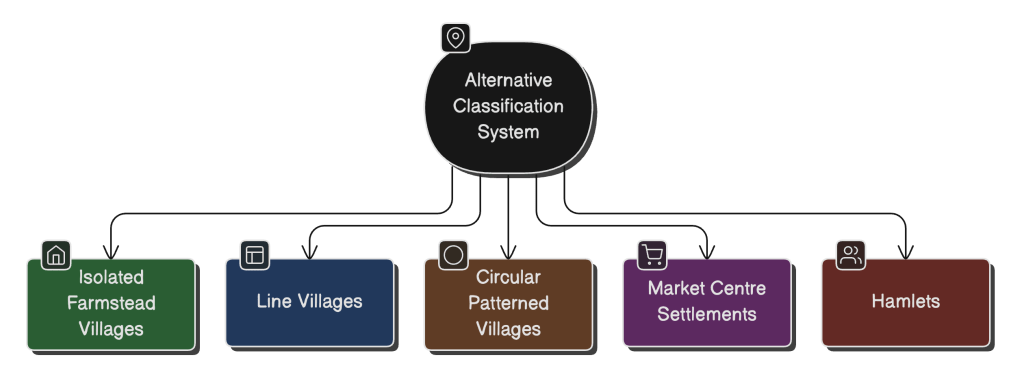
- Isolated Farmstead Villages: These villages are characterized by individuals living on their farms, surrounded by their own farmland. This settlement pattern emphasizes the clustering of rural inhabitants along with their agricultural land.
- Line Villages: In line villages, residences are closely situated and easily accessible to one another, while still being located within their respective farm areas.
- Circular Patterned Villages: The houses in these villages are arranged in a circular fashion, enclosing a central area where houses and yards are positioned at the apex of a triangular plot.
- Market Centre Settlements: These settlements primarily house merchants involved in the trade of agricultural products, as well as bankers, shopkeepers, and other related professions.
- Hamlets: Hamlets are groups of small villages consisting of a few houses each, lacking the amenities and services readily available in larger villages.
Before categorizing villages according to different criteria, it’s important to consider the following four main factors:
- Permanency: This refers to the shift from a nomadic lifestyle to a settled village life.
- Settlement: This relates to the arrangement of residences within a social group in accordance with ecological patterns.
- Social Stratification: This encompasses the various forms and degrees of social differentiation within the village, including ranking within a social hierarchy, mobility within the system, and patterns of land ownership.
- Social Organization: This refers to how village communities organize their collective life.
Based on these criteria, villages can be classified as follows:
1. The Nucleated Village: Nucleated villages, alternatively referred to as grouped villages, are a prevalent settlement pattern. Here, the residences of farmers and artisans are clustered together within the village, while the land they cultivate is situated outside the village boundaries at varying distances. Livestock are typically housed either alongside the villagers or in close proximity. Despite varying shapes, these villages share a common feature: a tightly-knit social structure facilitated by close residential proximity, frequent interaction, communal bonds, and shared values. This pattern is particularly prominent in Indian regions where paddy cultivation is predominant.
2. The Linear Village: In the linear settlement pattern, homes are arranged in parallel rows without distinct boundaries marking the end of one village and the start of another. Natural features like streams or mountains often separate these villages, acting as organic borders. Fields are typically situated a short distance away from the residential area. This layout offers both the social benefits of close-knit communities and the economic advantages of living directly on one’s land. Examples of such settlements can be observed in regions like Kerala and the delta areas of Bengal.
3. Dispersed Villages: A dispersed village refers to a settlement where the homes are spread out across the area rather than clustered together. This kind of village is typically located in hilly regions such as the foothills of the Himalayas or in elevated areas like the highlands of Gujarat. Unlike more organized villages, dispersed villages lack a distinct shape or layout, and there are no designated village streets. Instead, footpaths connect the various clusters of homes. Each family residing on their own farm tends to keep all their livestock and belongings within their property.
4. The Mixed Village: A mixed village exhibits a blend of nucleated and dispersed settlement patterns. These villages typically feature a central compact settlement surrounded by several smaller hamlets scattered at a distance. This type of settlement can be found in both flat plains and hilly terrains. The arrangement, distribution, and internal structure of these mixed villages can vary significantly.
Evolution of Village Community
The village community has passed through different stages:
1. Primitive Village Community: The primitive village community possessed two distinctive characteristics: the significant role of kinship and its collectivist foundation. Typically comprising ten to twenty families, these communities were closely knit, largely due to the limited means of communication and transportation that kept them isolated from neighboring settlements. This isolation led to considerable inbreeding, resulting in a substantial portion of community members being related by blood. Additionally, the land in these villages was cultivated collectively, regarded as communal property, fostering a strong sense of community cohesion and shared responsibility among its inhabitants.
2. Medieval Village Community: In this society, familial ties no longer held significant sway in uniting its members, nor did the land remain collectively owned by the community. The emergence of the feudal system resulted in land ownership being attributed to various figures such as lords, kings, or nobles. The tenants, who were serfs, worked the land under the authority of feudal lords who held mastery over them.
3. Modern Village Community: With the advent of industrialization in contemporary society, urbanization has taken center stage, with urban populations gaining prominence in civilization. Despite this trend, a significant portion of India’s population continues to reside in rural areas. The modern rural community starkly differs from its primitive counterpart, as evidenced by the breakdown of traditional kinship ties due to population growth and the shift away from collective land cultivation. This creates a clear distinction between rural and urban communities.
Change in Village Community
Transformation is an inherent aspect of nature and an essential requirement for survival. Human societies naturally undergo change over time. While rural communities may appear more resistant to change compared to urban settings, it would be inaccurate to claim that they remain stagnant. Throughout the course of human civilization, villages have indeed witnessed significant transformations. Although the pace of change may be slower in rural areas, alterations are observable across various aspects of village life:
1. Change in Caste System: British colonial governance in India significantly undermined the entrenched caste system within villages. Through their economic policies and legislative measures, the British administration encouraged individuals from various castes to explore occupations beyond their traditional roles. Consequently, a person’s standing in the village became more closely tied to their economic status and personal achievements rather than their caste affiliation.
The rigid constraints imposed by the caste system on dietary habits, clothing, lifestyle choices, and other aspects gradually eroded under British rule. Moreover, the practice of untouchability saw a decline. While the traditional grip of the caste system has loosened in villages, the resurgence of caste-based politics poses a new challenge. Self-serving political agendas have fuelled the resurgence of casteism, albeit in altered forms, perpetuating divisions and tensions within society.
2. Change in Jajmani System: The Jajmani system, a cornerstone of social stratification in Indian village communities, has witnessed a decline. This shift can be attributed to government initiatives aimed at elevating the status of lower castes, alongside the influence of urbanization. Occupations within villages are no longer strictly hereditary or dictated by caste lines. Additionally, the compensation for services provided by lower castes has transitioned from predominantly in-kind payments to cash transactions.
3. Change in Traditional Family System: The traditional joint family structure is gradually diminishing within village communities, making way for nuclear families. This shift is accompanied by a decline in familial authority over matters such as dietary choices, clothing preferences, and marriage decisions. Economic functions once exclusively managed within the family unit are now outsourced to external entities. Additionally, various services that were previously conducted internally are now outsourced to outside agencies. Moreover, with increased education for village girls, the societal status of rural women is on the rise.
4. Change in Marriage System: Marriage, a fundamental social institution, has witnessed transformation within rural communities. While inter-caste unions remain uncommon and parental influence persists in selecting partners, there’s a notable shift where parents now involve their children in the decision-making process. Love marriages and divorces are exceedingly rare. Today, emphasis is placed on individual attributes such as education, career aspirations, and physical attractiveness rather than solely on familial status. This shift has led to reduced wedding expenses and simplified marriage ceremonies. The outdated practice of child marriage is gradually fading away. However, alongside these positive changes, there’s a trend towards extravagant displays of wealth during weddings, with villagers investing significant sums of money in elaborate celebrations.
5. Change in Living Standards: The village community’s standard of living is steadily rising. There have been noticeable shifts in dietary habits, with an increased consumption of vegetables, milk, bread, and tea, along with items like ghee. Clothing choices are becoming more urbanized, with even elderly women opting for blouses over traditional shirts. Gold and diamond jewelry are becoming more prevalent, replacing the once popular heavy silver ornaments. Cosmetics are now being used by young boys and girls in rural areas. Housing infrastructure has seen significant improvements, with more sturdy and well-ventilated structures that are furnished and equipped with electricity. Lanterns have largely replaced earthen lamps in households. Sanitary practices have also advanced, with soap being used for bathing and laundry, reflecting a growing awareness of health concerns. Additionally, the village community has embraced family planning initiatives, resulting in smaller family sizes. Furthermore, the establishment of schools, colleges, and other educational institutions has contributed to the overall development of the community.
7. Change in Economic System: Transformation is evident in the economic landscape as well. Educated young individuals from rural areas now prefer seeking employment opportunities in urban areas instead of pursuing agrarian lifestyles. This shift has led to a rising demand for advanced agricultural technologies and tools. Farmers are being introduced to innovative cultivation techniques to enhance their yields, while village communities are being facilitated with access to seeds, fertilizers, and credit. Furthermore, there’s a noticeable trend of increasing bank establishments in rural regions. The government is actively providing financial aid and other resources to encourage the establishment of industries within villages.
8. Change in Political System: The establishment of panchayats has sparked a surge in political awareness among rural communities. Media platforms such as newspapers, radio, and television have significantly contributed to villagers’ understanding of politics. However, the influence of political parties has resulted in factionalism and division among the populace. Nowadays, panchayat representatives are leveraging social media to stay connected with villagers. Unfortunately, this trend has diminished the sense of community and fostered a rise in self-interest and individualism.
Conclusion: The depiction above suggests that Indian villages are far from static; they’re dynamic entities. Currently, these villages are undergoing a period of transition. Sociologically, traditional social structures and bonds are eroding, leading to a decline in community solidarity. Political influences have permeated village life, fragmenting residents into political and sub-caste factions. The foundational social institutions within these communities are weakening. It’s imperative to reconsider strategies to preserve the traditional fabric of village life before irreversible damage occurs. Urban centers alone cannot accommodate the entire rural population, emphasizing the necessity of revitalizing agriculture for food security. Reverting to agricultural practices is essential to ensure sustenance for the populace.
References:
India’s Changing Villages: Human Factors in Community Development, by S. C. Dube, https://amzn.in/d/iNgxmsf
The Village in India, edited by Vandana Madan, https://www.exoticindiaart.com/book/details/village-in-india-nal709/
Unit 16, IGNOU Study Material, https://egyankosh.ac.in/bitstream/123456789/22290/5/Unit-16.pdf